By Anish PuriUpdated 31 Oct 202614 min readResearched, not tested by us
Research guide. WhiskerFinds may earn a commission from links, at no extra cost to you.
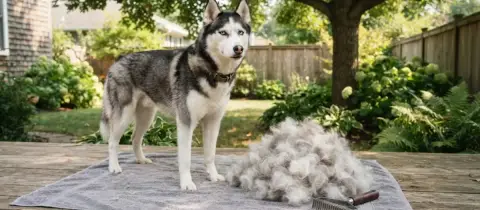
Quick answer: The best dog clippers for most home trims are a cordless clipper with guard combs, plus a small trimmer for paws and faces. Our top pick is the oneisall clipper for thick coats. Don't shave a double-coated dog unless a vet or groomer advises it, because the coat protects against heat and sun.
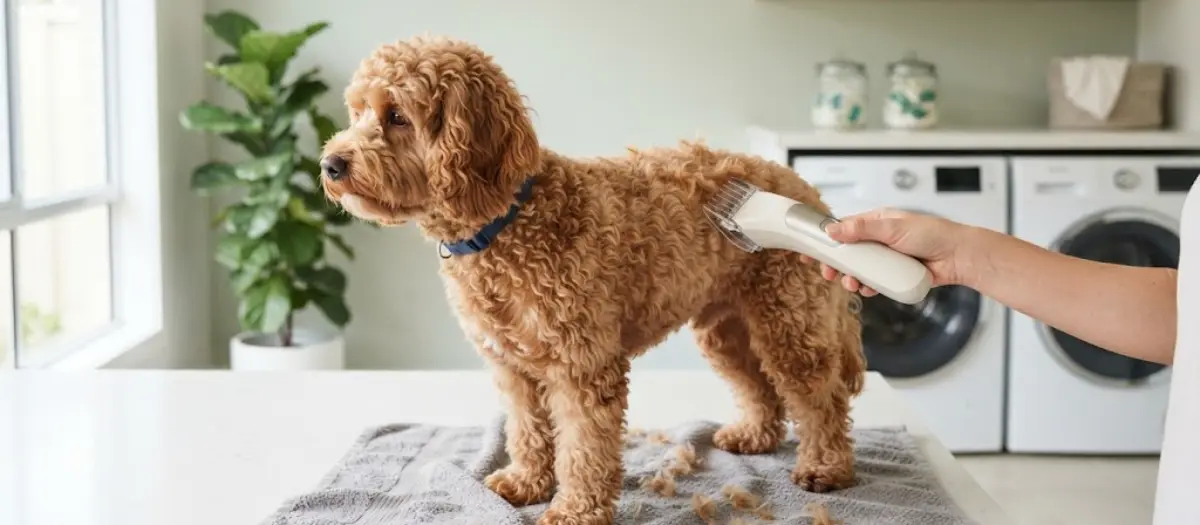
Illustration, not the actual product
Our top pickoneisall dog clippers for thick heavy coats
Clippers suit dogs whose hair keeps growing, like poodle crosses, and they can tidy paws and faces on other coats. This guide compares three options on Amazon Australia and covers safe clipping. For the wider toolkit, see our dog grooming kit guide. Nails are a separate job, covered in our dog nail clippers guide.
Quick picks
Our top pickBest overall for thick coats
oneisall dog clippers for thick heavy coats
Detachable stainless steel blade and guide combs, cordless
Pictures are illustrations, not the actual products.
Not sure which you need? The sections below explain which coats suit clipping and what the combs do.
Which dogs need clipping (and which don't)?
Dogs with continuously growing hair, like poodles and poodle crosses, usually need regular clips to stop mats forming. Short-coated and double-coated dogs usually don't need a body clip at all. For them, a small trimmer for paws and tidy-ups is often enough, plus regular brushing.
A quick way to sort your dog:
Hair keeps growing (poodle crosses, doodles, bichons, many terriers): regular clipping or professional grooming is normal. Clippers with guard combs suit these dogs.
Double coat (golden retrievers, huskies, border collies, many shepherds): brushing and deshedding matter more than clipping. Use a deshedding brush and see the next section before any body clip.
Short smooth coat (staffies, whippets, kelpies): no body clip needed. A paw trimmer at most.
Long silky coat: trimming around paws, feet and sanitary areas is common. Longer lengths are best done with grooming scissors, as Wahl's comb guide points out (see our dog grooming scissors guide).
For brushing by coat type, see our best dog brush guide. A clipper won't fix a coat that is tangled right down to the skin (more on that below).
Should you shave a double-coated dog?
No, not unless a vet or groomer advises it. The undercoat insulates your dog, helping it handle heat as well as cold, and shaving removes that layer. The AKC says it can raise heat stroke risk, and that the coat can regrow patchy or changed in texture.
The outer coat also shields skin from sunburn. Texas A&M's vet school likewise advises against shaving double-coated dogs, saying the coat traps cool air, and recommends regular brushing to remove loose undercoat. Matting is the usual reason a professional might clip a lot of coat, and the vet school says that job should be done by a professional to avoid injury (AKC, page read 31 October 2026; Texas A&M Veterinary Medicine, page read 31 October 2026).
Hot weather is better handled with shade, water, cool floors and walks in the coolest part of the day. Our guide to keeping your dog cool has more. If a dog is struggling in the heat, a vet can help you decide whether any trim is appropriate.
Our picks in detail
1. oneisall dog clippers for thick heavy coats: best overall for thick coats
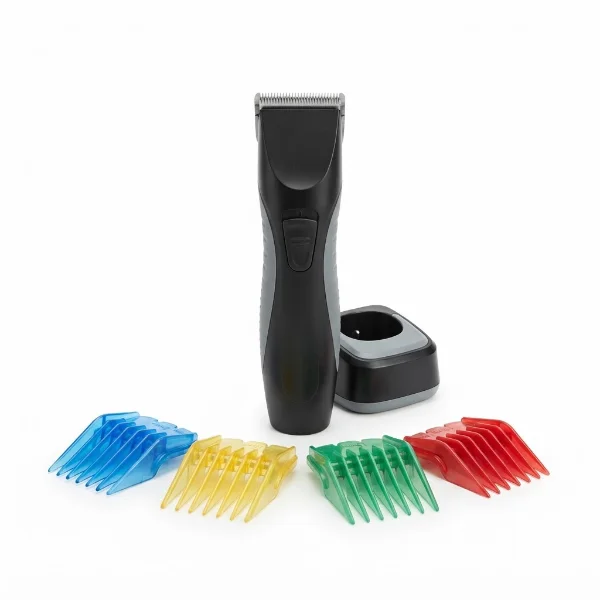
A cordless clipper with a detachable stainless steel blade. The listing says the 6800 rpm motor is designed to reduce hair pulling on thick coats, and that the unit runs for 240 minutes after a 2 hour charge. It lists 10 guide combs, an oil bottle, a cleaning brush and a protective cover. The listing also says it's IPX7 waterproof and can be rinsed under water, and has a lock so it won't switch on by accident. Cutting length is listed from 1.5 mm to 13 mm.
Pros: detachable blade; many combs; oil and cleaning brush included; USB-C or USB charging; rinsable per the listing
Cons: the listing says 10 combs but names eight sizes, up to 25 mm, while also giving a maximum cutting length of 13 mm, so check what arrives; the warranty wording is mixed (it says both 24 month support and a lifetime warranty); the listing's "low noise" claim is the brand's own, so introduce it gently
Best for: curly or thick-haired dogs that need regular home trims, like doodles
Skip it if: your dog has a double coat that shouldn't be shaved, or a coat matted down to the skin
2. oneisall cordless paw trimmer with double blades: best for paws and face
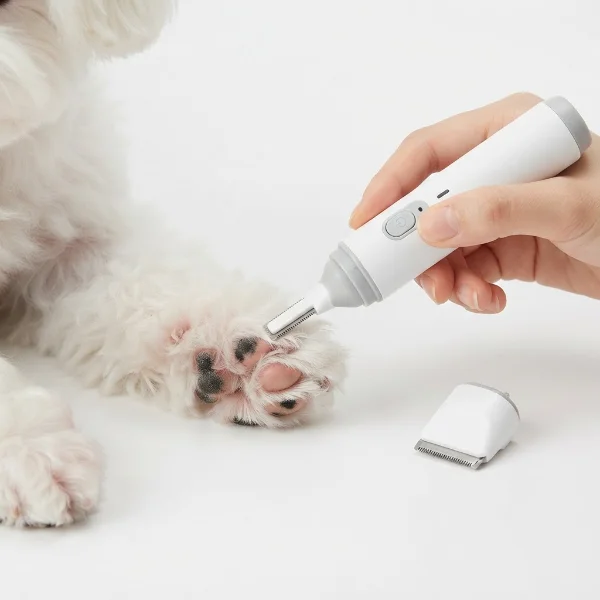
A small trimmer for the awkward spots: paw hair, ears, face and rump. It comes with a small blade and a middle blade, a cleaning brush and a USB cable. The listing says about 2 hours of use after a 2 hour charge, and that it has a charge indicator light and a detachable head. The details list the blades as ceramic, though one bullet calls the fixed blade stainless steel, so the listing conflicts. It weighs 0.22 kg and is 14.2 cm long.
Pros: small and light; suits double-coated and short-coated dogs that just need tidying; USB rechargeable
Cons: not meant for full body clips; one bullet in the listing calls it a "nail trimmer", which is confusing, and it doesn't trim nails; the listing conflicts on blade material
Best for: tidying paw hair and trimming around eyes and ears on any coat type
Skip it if: you want one tool for the whole body, or you need a nail tool (see our nail grinder guide)
Our guide to trimming dog paws shows how short to go between the pads.
3. oneisall 4 in 1 clippers with paw trimmer and nail grinder: best combo kit
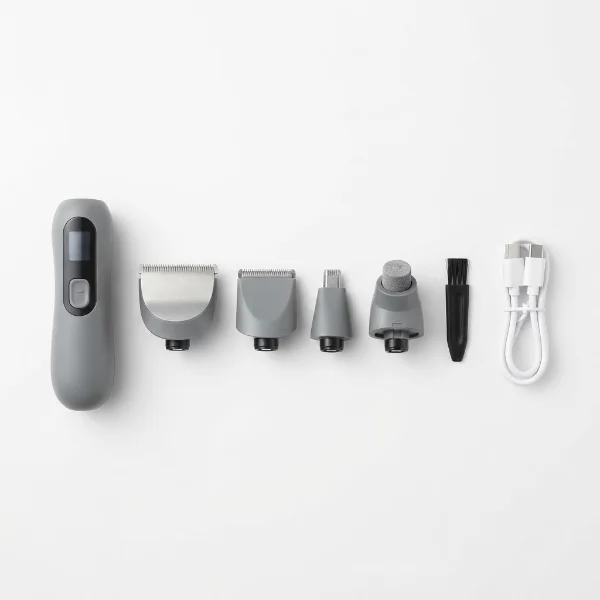
A small dog kit with three trimmer heads and one nail grinder head. The listing says it has two speeds (5300 and 6300 rpm), a 120 minute runtime and noise under 50 dB, and that the blades are stainless steel and ceramic. It weighs 0.28 kg.
Pros: trimmer heads and nail grinder in one handle; a lower speed for faces and ears; cordless
Cons: aimed at small dogs; the listing doesn't list guard combs or their lengths; the charging connector is proprietary, so a lost cable is harder to replace; grinder use needs the same care as any nail tool
Best for: small dogs and cats that need paw, face and nail care
Skip it if: your dog is medium or large, or has a thick coat. Our nail grinder guide covers stronger grinders
Guard combs and blades explained
A guard comb is a plastic attachment that snaps over the blade and sets how much hair is left. A higher number or longer millimetre figure means longer hair. A bare blade cuts much closer to the skin, so combs are the safer choice at home.
Wahl's guide to its combs lists sizes from No. 1 at 3 mm up to No. 8 at 25 mm, and says rounded comb ends soften the cutting edge, which helps protect the dog if the blade slips. For anything longer than 25 mm, it suggests scissors (Wahl UK, page read 31 October 2026). Other brands use their own sizes, so check the numbers for the clipper you buy.
Some simple rules of thumb:
Start longer than you think. You can always go shorter on a second pass, but hair doesn't go back on.
Line the comb up properly. Push it on until it snaps over all the blade's teeth.
Skip the bare blade at home unless you're confident and the coat is short.
Dog clippers compared
Details from each Amazon Australia listing, checked on 31 Oct 2026.
We searched Amazon Australia for dog clippers and grooming kits, then shortlisted products against these checks:
Well rated: a strong average rating with plenty of buyer reviews.
No red flags: no pattern of poor reviews, safety complaints or listing problems.
Available on Amazon Australia when we checked.
Guard combs included, with their lengths listed, for the body clippers. Detail trimmers don't take them, and we say so where a kit's listing leaves them out.
Cordless or corded stated on the listing.
Blade material stated.
Cleaning instructions or a cleaning tool supplied.
A trimmer for paws where the coat needs one.
These are researched picks, not products we've personally tested. We compared the specifications and features shown on each Amazon Australia listing, checked on 31 Oct 2026. We didn't accept payment from any brand, and no brand saw this page before it was published.
Left out this time: clipper kits with a pattern of motors stopping or blades pulling hair in buyer feedback, professional brands whose Amazon Australia listings had too few buyer reviews when we checked, and a grooming vacuum kit whose listing doesn't offer an Australian plug.
How to clip your dog at home
Brush first, clip a clean and dry coat, work in small sections with a guard comb, and check the blade's heat often. Go slowly and use treats. Stop if your dog is stressed. If in doubt, a professional groomer is a safer choice than rushing.
Brush out the coat. Remove tangles before you clip, because a tangle-free coat clips more evenly. Our dog brush guide helps you pick the right brush.
Bathe and dry if the coat is dirty. Dirt dulls blades. Use a dog shampoo, never human shampoo; see our dog shampoo guide.
Fit a guard comb longer than you think you need.
Clip in small sections, moving the clipper steadily with the direction the hair grows unless your clipper's manual says otherwise. Hold the skin flat and take care around loose skin, armpits and the belly, where it's easy to nick.
Check the blade often. Clipper blades can get hot enough to burn a dog. Turn the clipper off, touch the blade to your wrist or hand, and let it cool or swap blades if it feels warm. A lubricated blade runs cooler (clippers, blades and maintenance guide, page read 31 October 2026).
Reward and take breaks. Give treats and finish while your dog is still calm. Do a few areas a day rather than the whole dog in one go.
Never cut mats out with scissors, because a dog that moves suddenly can be badly cut.
Can you clip a matted dog?
If a mat is small and new, brush it out. If it won't brush out, don't clip it close yourself. The ASPCA advises seeing a groomer or vet, since a badly matted dog may need sedation and a full clip. Mats tight to the skin are not a home job.
The ASPCA also warns never to cut mats out with scissors, as sudden movement can cause serious cuts (ASPCA, page read 31 October 2026). Skin under mats can be sore or irritated, which is another reason for a professional to look first. Brushing little and often is the best prevention.
Clippers and nervous dogs
Many dogs dislike the buzz and vibration. Let your dog sniff the clipper while it's off, then on at a distance, and give a treat each time. Keep sessions short, and stop before your dog gets worried.
The AKC's nail-trimming routine shows the same gradual approach: sniff and treat, then touch, then run the tool near your dog so it gets used to the sound and vibration, all before any trimming (AKC, page read 31 October 2026). Results vary, and some dogs need more time. Brand noise figures, like the 55 dB and 50 dB on these listings, are the brands' own claims, and a quiet clipper still feels strange to some dogs. If your dog panics or snaps, stop and ask a groomer or a reward-based trainer for help.
Cleaning and oiling clipper blades
Brush hair off the blades after every use, and follow your clipper's manual for oiling. Oil reduces friction and heat, keeps blades sharp and stops rust. Wipe off the excess with a lint-free cloth.
One clipper maintenance guide recommends oiling blades before, during and after every groom, and brushing out hair after every use. Wahl advises washing guard combs in soapy water and putting a drop of oil on a stiff comb hinge (clippers, blades and maintenance guide; Wahl UK). The oneisall thick coat clipper comes with an oil bottle and cleaning brush per the listing, but check each brand's own instructions, since not all blades can be rinsed or soaked.
When to see a vet
See your vet or a groomer if a clipper cut bleeds, gapes or won't stop bleeding, if the skin looks red, sore, weepy or rashy after clipping (clipper irritation), or if you find hot, itchy or smelly patches. Don't keep clipping over sore skin.
A coat matted tight to the skin needs a groomer or vet, as the ASPCA advises (ASPCA, page read 31 October 2026). Itchy, red or flaky skin is worth a vet visit before you change products. See our dog itchy skin guide.
If your dog is struggling in hot weather, cool with cool (not ice-cold) tap water and go to the vet even if your dog seems better. See keeping your dog cool in summer.
Frequently asked questions
What clippers do dog groomers use?
Professional groomers often use corded or heavy-duty cordless clippers with detachable blades, so they can swap blades during a long groom. Home kits like the oneisall use a similar detachable blade and guard combs, but are lighter. If your dog has a complex coat, a groomer is still the better option.
How do you groom a dog with clippers at home?
Brush out tangles first, work on a clean and dry coat, and fit a guard comb that leaves more hair than you think you need. Clip in small sections with the direction of hair growth, check the blade's heat often, and give treats. Stop if your dog is stressed.
Can you use human clippers on a dog?
It's not a good idea. Dog coats are denser and the blades and guard combs on pet clippers are designed with that in mind, such as the oneisall listing's motor for thick coats. Human hair clippers may struggle or pull. Choose clippers made for dogs and follow their manual.
What blade length should I use on my dog?
Use a longer guard comb than you think you need, then go shorter on a second pass. Wahl's combs run from 3 mm to 25 mm. Double-coated dogs shouldn't be shaved down at all, so ask your groomer or vet before choosing a short length.
Should I clip my dog in summer?
For most dogs, no. A double coat protects against heat and sun, and AKC and Texas A&M both advise against shaving it. Some continuously growing coats do suit a summer trim, but leave some length, as the AKC says to leave at least one inch (about 2.5 cm) for single-coated breeds, and keep shade and water handy.
How do I stop clipper blades getting hot?
Keep the blades oiled, brush out hair often, and turn the clipper off to check the blade against your wrist. If it feels warm, let it cool or swap in a second blade. Don't press hard, and take breaks. Dull blades pull hair and can run hotter.
What is the difference between a clipper and a trimmer?
A clipper is the larger tool with a wider blade, used with guard combs for the body. A trimmer is smaller and lighter, for detail work on paws, ears, faces and rumps. The oneisall paw trimmer is the second kind, so it won't replace a body clipper.
Are quiet dog clippers worth it?
They can help, but "quiet" is the brand's own claim and no clipper is silent. The oneisall listings say under 55 dB and under 50 dB. Introduce the sound slowly with treats. A calm dog and short sessions matter more than the decibel figure.
Product details from each linked Amazon Australia listing, checked on 31 Oct 2026.
This guide provides general information and isn't a substitute for veterinary advice. If you're concerned about your dog's coat or skin, speak with your vet.