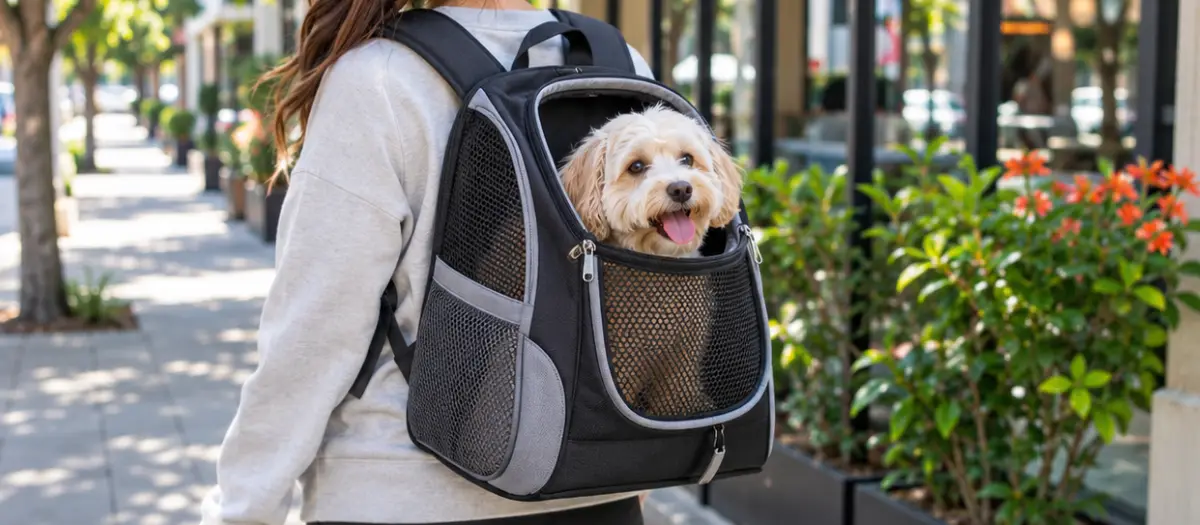
Best dog carriers: bags, slings and backpacks compared
By Anish PuriUpdated 2 Nov 202615 min readResearched, not tested by us
Research guide. WhiskerFinds may earn a commission from links, at no extra cost to you.
Quick answer: The best dog carrier is the one that matches your dog's weight and your trip. For most small dogs our top pick is the Morpilot foldable backpack, which keeps your hands free and has an inside safety strap. Choose a sling for short errands, a bag for the vet, or a basket for bike rides.
A carrier is for getting a small dog from A to B, not for long stays inside. This guide compares five carrier types on Amazon Australia and helps you pick by trip. If you want a closer look at one style, see our guides to the dog backpack carrier and the dog sling carrier.
Quick picks
Our top pickBest overall
Morpilot foldable backpack carrier
Foldable backpack with mesh on four sides, lockable zips and an inside safety strap
Pictures are illustrations, not the actual products.
Every carrier here has a stated weight limit, and the smallest is far lower than the biggest. Check your dog's weight against the table further down before you click.
Which dog carrier suits your trip?
Match the carrier to the trip. A structured backpack suits a hike or long walk, a sling suits a quick errand with a tiny dog, a firm bag suits the vet or public transport, and a handlebar basket suits a short, calm bike ride. A short walk and a day hike need different gear, and the same dog may suit more than one.
For most small dogs, a structured carrier with mesh panels, an inside safety strap and a weight limit above your dog's weight is the safest way to carry them. A backpack spreads the load across both shoulders. A sling or bag suits short, calm trips where you can watch your dog's face.
Whichever you choose, hold the carrier steady when you bend over, keep your dog's head clear and make sure they can breathe easily. Offer breaks, because a carrier is a way to travel, not a place to spend the day.
Our picks in detail
1. Morpilot foldable backpack carrier: best overall
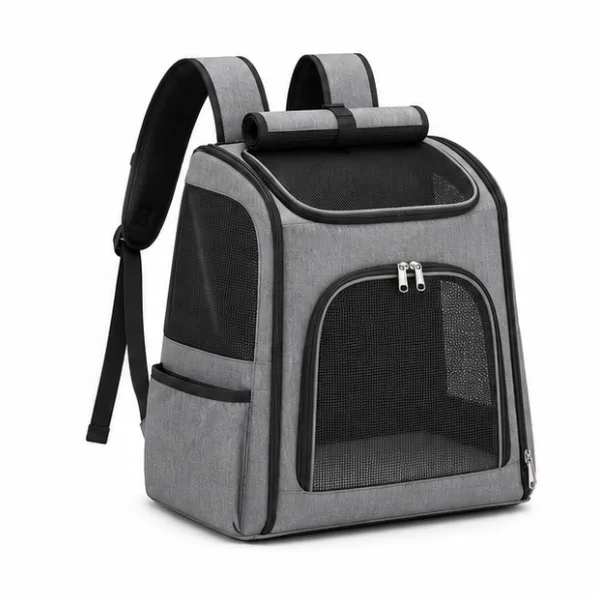
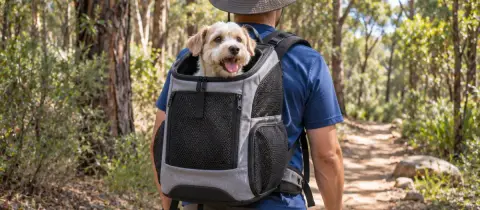
A foldable polyester backpack, 42 x 28 x 33 cm outside. The listing says it has mesh on four sides, a sunshade you can fold back, and a top that can stay open so your dog can look out. It says there is a built-in safety strap, and that the top, bottom and front zips can be locked. Widened mesh shoulder straps and adjustable chest and waist straps are listed. A double-sided cushion lifts out to wash, and there are side pockets and a folding bowl.
The listing is for cats and small dogs, with a "dog breed size: small" entry. The weight limit is given as 6.8 kg in the details and about 7 kg in the text, so treat 6.8 kg as the ceiling. The listing says it suits hiking, travel and camping.
Pros: hands-free; mesh on four sides; lockable zips; inside safety strap; removable washable cushion; folds flat
Cons: the lowest backpack weight limit here; the listing gives two slightly different limits; the sunshade doesn't make it safe for hot days
Best for: a small dog under about 6 kg, for walks, travel and short hikes
Skip it if: your dog is close to 7 kg or has a long body, or you need a frame that holds firm for long carries
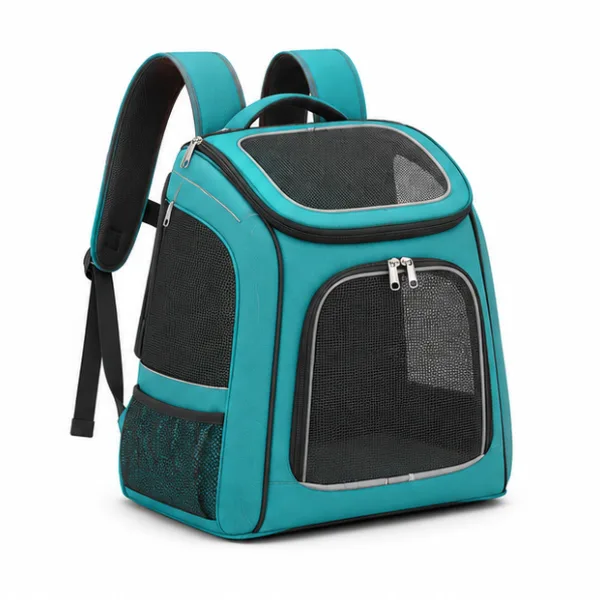
A firmer backpack for dogs who need more room. The listing gives 12.5 x 10.2 x 16.3 inches and a weight limit of 8.17 kg (18 lbs), and says it is built with a reinforced structure so it won't collapse. There are two side entries, three mesh windows and a sherpa-lined base. An interior safety strap attaches to the pet's collar per the listing, so clip it to a harness instead. Padded shoulder straps, waist strap and chest buckle share the weight.
It comes with a collapsible bowl and a name tag. The listing says it is TSA approved and airline approved, so check your airline's own rules before you rely on that. Our airline approved pet carriers guide lists the size limits to check. Care is spot cleaning with soapy water. It is also featured in our dog backpack carrier guide.
Pros: firm structure; two side entries; padded straps with waist and chest buckles; higher weight limit than the Morpilot; includes bowl
Cons: spot clean only; the listing says to attach the strap to a collar, which we don't advise; the listing's pet type entry says cat, so check the fit for your dog
Best for: a small to medium dog up to 8 kg who likes to look out and sits calmly
Skip it if: your dog is over 8 kg, or you want something fold-flat
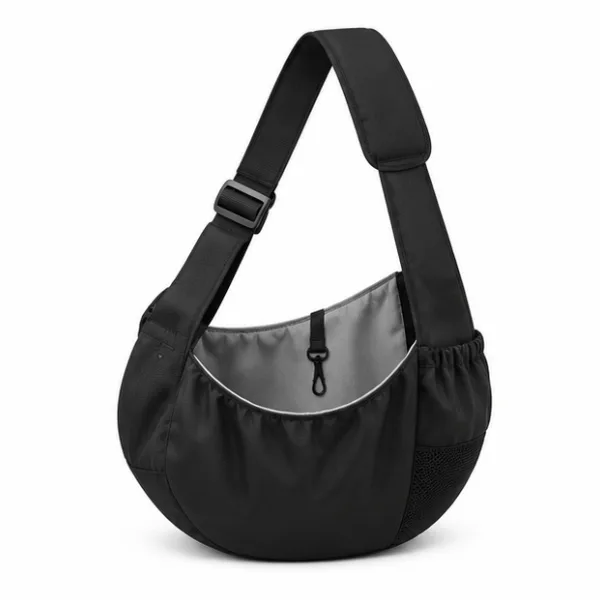
A one-shoulder cotton sling, reversible, 21 x 12 inches, with a 15 inch shoulder strap. The listing says it holds small pets up to 12 lbs (5.44 kg) and names Chihuahua-sized breeds. It has a safety hook and a buckle at the opening, a pocket on the strap for a phone or keys, and it is machine washable per the listing.
The wording on the listing is patchy and sometimes unclear, so go by the measurements and weight limit rather than the descriptions. The listing says the hook can attach to a collar or harness. Use the harness. See our dog sling carrier guide.
Pros: light and washable; reversible; strap pocket; close and hands-free; lowest bulk of the five
Cons: lowest weight limit here; less structure and support than a bag or backpack; unclear listing wording
Best for: a very small, calm dog on a short walk, errand or cafe stop
Skip it if: your dog is over 5 kg, wriggles a lot, or you want to carry them for a long time
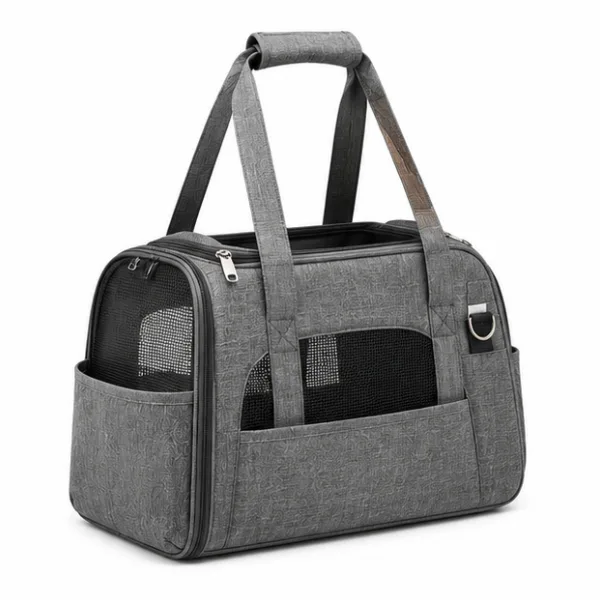
A structured tote, 17 x 8 x 11 inches, with a weight limit of 8.17 kg. The listing says the whole top opens, there is a zipped cover flap for privacy, and the structure is reinforced so it doesn't collapse on your dog. It has a sherpa-lined base, mesh pockets, a front pocket, a poop bag dispenser, and an inside safety strap and buckle. The handle can be carried by hand or on the shoulder. It is covered in our dog carrier bag guide.
Pros: firm structure; full top opening; privacy flap; sherpa base; holds a bowl and supplies
Cons: carried on one side, which can tire your shoulder; the listing says airline approved, so check with your airline; clip the inside strap to a harness, not a collar
Best for: vet visits, public transport and trips where your dog will settle
Skip it if: you want to walk long distances or keep your hands free
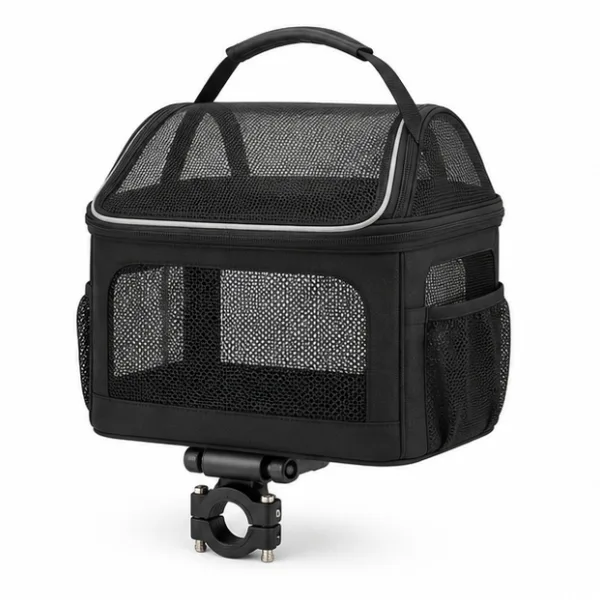
A handlebar basket that ties on with hook and loop fasteners, with no tools. The listing gives 11 x 9 x 12 inches and an 8.17 kg limit. It has a drawstring mesh top, a mesh front window, an interior safety strap, a bike handle safety strap and a reflective front strap. It also converts to a backpack, shoulder carrier or booster seat, per the listing. See our dog bike basket guide.
A basket changes how your bike handles, so try it with your dog's weight at walking pace before a real ride.
Pros: quick to fit; mesh top and window; reflective strap; converts to other carry modes
Cons: puts weight at the front of the bike; the listing's car booster use isn't a crash-tested restraint; spot clean only
Best for: a small, calm dog on short, gentle rides on quiet paths
Skip it if: your dog is nervous, bolts or lunges, or you ride on busy roads
What size carrier does my dog need?
Check two numbers: your dog's weight against the listed weight limit, and your dog's body against the inside size. The PetAmi listings ask you to measure your dog first, from neck to base of tail for length and from floor to top of shoulder for height, and that method works for any carrier here.
A dog at the very top of the weight limit may feel cramped, so leave some room. Puppies grow quickly, so recheck the weight before each trip.
Dog carriers compared
Details from each Amazon Australia listing, checked on 2 Nov 2026.
A backpack is better for longer carrying and hiking, a sling is better for very small dogs on short errands, and a bag is better for vet visits and public transport. None of them is best for every dog, so match the style to your dog's size and temperament.
A backpack keeps your hands free and holds shape, but your dog sits behind you where you can't see them. A sling keeps your dog close and visible, though a limp pouch gives less support. A structured bag stays firm and suits a dog who likes to settle. A basket suits a calm dog on gentle rides.
Are dog carriers safe in the car?
Not the soft carriers on this page. RSPCA Australia says a restraint, crate or carrier used in a car should have passed safety or crash tests and be secured in the vehicle, and notes that Australia has no formal crash-testing standard for dog restraints or carriers (RSPCA Australia, page read 2 November 2026).
Some listings mention car seats or seat straps, but none of these five says it has been crash tested. For driving, use a car harness with a short seat belt tether, or a secured crate. See our dog car harness guide, our dog car crate guide and the dog car restraint guide. Restraint rules differ between states, so check yours.
How long can a dog stay in a carrier?
There is no safe set time, so keep carrier trips short and watch your dog. Offer breaks out of the carrier, with water and a chance to stretch and toilet, and stop if your dog pants hard, struggles or goes quiet and still. Never leave a dog inside a carrier in the sun.
Carriers aren't for leaving a dog at home or in a parked car. RSPCA Australia says never to leave a dog unattended in a car, because heat stress can become fatal quickly, even in mild weather. For hot days, see how to keep your dog cool in summer.
Do dog carriers suit puppies?
They can, for short, calm trips such as a first vet visit, as long as your puppy is well under the weight limit and fits comfortably. Pick a carrier with a firm base and an inside safety strap, and keep the first sessions at home so it feels familiar.
Puppies grow fast, so a carrier that fits now may be outgrown in weeks. A very wriggly puppy may do better in a bag with a closed top than in a sling. See our puppy training schedule for building calm habits.
How we chose
We searched Amazon Australia for dog carriers, backpacks, slings, purse bags and bike baskets, then shortlisted carriers that met all of these checks:
Well rated: a strong average rating with plenty of buyer reviews.
No red flags: no pattern of poor reviews, safety complaints or listing problems.
Available on Amazon Australia when we checked.
A stated weight limit on the listing.
A stated dog size or inside measurements.
Ventilation: mesh panels or windows for airflow.
An inside safety clip or strap to attach to a harness.
How it is worn: the listing makes clear whether it goes on the back, the shoulder, the arm or the bike.
These are researched picks, not products we've personally tested. We compared the specifications and features shown on each Amazon Australia listing, checked on 2 Nov 2026. We didn't accept payment from any brand, and no brand saw this page before it was published.
Left out this time: carriers with no stated weight limit.
Getting your dog used to a carrier
Begin indoors, with the carrier unzipped and sitting where your dog already likes to rest. A treat tossed inside now and then does more than any coaxing, and calm sniffing earns quiet praise. Next, close the zip for a few seconds, then lift it a little. Build up slowly and stop if your dog seems worried.
Clip the inside safety strap to a well-fitted harness, never a collar, so any tug doesn't land on the neck. If your dog pulls on walks, our no-pull harness guide can help. Results vary, so watch how your dog responds.
Carrier safety checklist
Keep your dog under the listed weight limit, with room to spare.
Clip the inside strap to a harness, not a collar.
Keep the head supported and the airways clear.
Check zips are closed, with the lock engaged if there is one.
Never leave a dog in a carrier in the sun, in a car or alone.
Skip carriers on hot days, and ask your vet if your dog is flat-faced.
Take breaks for water, a stretch and a toilet stop.
Caring for your carrier
Follow each listing's care notes. Spot clean the PetAmi backpack and bike basket with soapy water, as their listings say, wipe the purse carrier with a damp cloth, wash the Morpilot cushion separately and machine wash the sling, which its listing says is machine washable. Check straps, zips and stitching before every trip, and stop using a carrier that is frayed or torn.
When to get help
Call your vet if your dog seems distressed, pants heavily, struggles to breathe, collapses or seems limp after being carried or kept warm. These can be signs of overheating or stress, so move to shade and cool air and call a vet straight away. RSPCA Australia warns that dogs can suffer heat stress very quickly, even on mild days (RSPCA Australia, page read 2 November 2026).
See your vet if your dog hates the carrier or seems scared when travelling. A carrier won't treat anxiety. Talk to your vet or a qualified, reward-based behaviour professional.
Frequently asked questions
Is it OK to carry a small dog in a carrier every day?
It can be, in short stretches, as long as your dog also gets proper walks, sniffing time and toilet breaks on the ground. A carrier is a tool for getting past crowds, hot footpaths or a long day out, not a replacement for exercise. Watch for stiffness or wriggling and put your dog down when they ask.
What size dog carrier do I need?
Check your dog's weight against the listed limit, then measure from neck to base of tail and floor to shoulder, as the listings advise. Your dog should be able to sit and turn comfortably. If your dog is near the top of the weight limit, choose the next size up.
Are backpack carriers good for dogs?
They can be, for the right dog. A backpack frees your hands and spreads the weight, but you can't see your dog's face. Pick a firm one with mesh panels and a safety strap, introduce it slowly, and watch your dog. Our backpack carrier guide has more.
Is a sling or a bag better for a small dog?
A sling is lighter and keeps your dog close, so it suits tiny, calm dogs on short trips. A structured bag gives more support and room, so it suits vet visits and public transport. Choose by weight limit and whether your dog will settle in it.
Can I carry my dog in a bike basket?
Some small, calm dogs manage short rides, but it isn't right for every dog. Use a basket with a safety strap, clip it to a harness, keep to quiet paths and wear a helmet yourself. Check bike and pet rules with your council or state.
Can a dog carrier be used in the car?
Not these soft carriers. RSPCA Australia says a crate or carrier used in a car should be secured and have passed safety or crash tests, and notes there is no formal Australian standard for dog restraints or carriers. None of these listings claims crash testing, so use a car harness with a short tether or a secured crate, and check your state's rules.
Can I put my cat in a dog carrier?
Some listings here say they suit cats too, but cats do best in a carrier made for them, with a secure top, good ventilation and a clip for a cat harness. Check the weight limit and inside size against your cat. See our cat carriers guide or cat backpack carrier guide for picks.
Do dogs like being carried?
Some do and some don't. A dog who is relaxed and sits quietly may enjoy the view. A dog who stiffens, wriggles or seems stressed is telling you something, so go back to short, calm practice sessions or choose another way to travel.
Product details from each linked Amazon Australia listing, checked on 2 Nov 2026.
This guide provides general information and isn't a substitute for veterinary advice. If you're concerned about your dog's comfort or safety, speak with your vet.