Quick answer: Cat conjunctivitis is inflammation of the pink tissue around the eye, and it's most often caused by infection, though allergies and irritants can do it too. Look for squinting, redness and watery or thick discharge. Any cat with a sore or gunky eye needs a vet check, and a cloudy, bulging or shut eye is an emergency.
A red, weepy eye is easy to spot and hard to judge. This guide explains the signs, what sits behind them, how fast to get help and what a vet usually does. If your cat is also sneezing, see our cat sneezing guide, because the two often go together.
What are the signs of conjunctivitis in cats?
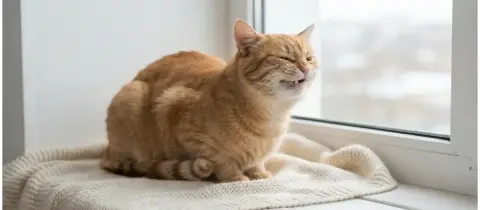
The usual signs are squinting, frequent blinking, red or swollen tissue around the eye and discharge. Cornell Feline Health Center says the discharge may be watery and clear or thick and dark, that one or both eyes can be affected, and that the third eyelid is often involved too (Cornell Feline Health Center, page read 24 November 2026).
Look at the whole cat as well as the eye:
- Is the eye held half shut, or does your cat paw at it?
- Is the discharge clear, or thick and coloured?
- Is the white of the eye red, or is the third eyelid (the pale flap in the inner corner) showing?
- Is your cat sneezing, off its food or quieter than usual?
Discharge colour alone doesn't diagnose anything. Dial A Vet, an Australian online vet service, says yellow or green discharge may point to infection, and Webvet's vet team lists thick or coloured discharge among the signs to get checked within a day. Only a vet can say what is behind it.
What causes cat eye infections?
Most cases come from infection. Cornell says the most common triggers are herpesvirus, calicivirus and the bacteria chlamydophila and mycoplasma, and that the body's inflammatory response to these accounts for the great majority of cases. Dust, airborne chemicals and certain outdoor plants can also set it off, so it isn't always an infection.
| Possible cause | What it may look like | What a vet considers |
|---|---|---|
| Viral or bacterial infection (the most common group) | Watery, then thicker discharge; squinting; redness; sometimes in both eyes | Herpesvirus, calicivirus, chlamydophila, mycoplasma; whether other cat flu signs are present |
| Cat flu more broadly | Eye discharge with sneezing, nose discharge, low appetite, sometimes eye or mouth ulcers | RSPCA Australia lists eye discharge and eye ulcers among the signs |
| Allergy | Watery eyes that may come and go, sometimes with sneezing or itchy skin | Cornell says allergic conjunctivitis can follow exposure to certain outdoor plants; VCA lists eye discharge among possible allergy signs |
| Irritants | Watery, red eyes after dust, smoke or sprays | Cornell lists dust and airborne chemicals; we cover dust in our low-dust litter guide |
| Weakened immunity | Eye problems that keep returning | Cornell says cats with FIV or FeLV are more prone |
| Something more serious | A cloudy, bulging or visibly injured eye, a shut eye, obvious pain | A scratch, ulcer or pressure problem that needs urgent care (Webvet) |
The last row is why a vet should look at every sore eye. Cornell says it often clears without medication, but that a cat with eye discomfort and discharge should be checked to rule out more serious eye disorders. For the allergy side, see our allergies in cats guide.
Is a cat eye problem an emergency?
Some are, and the wording matters. Webvet's vet team sorts red or runny eyes into three groups: go now, see a vet today, and see a vet within a day. Use the table to decide, and if you're unsure, phone your vet and describe what you see (Webvet, last reviewed 22 June 2026, page read 24 November 2026).
| How fast | What you see |
|---|---|
| Go now | A cloudy, bulging or visibly injured eye; an eye your cat can't open; sudden severe pain; any sign your cat's vision has changed |
| Same day | Squinting, holding the eye shut, pawing at the eye or obvious pain |
| Within a day | Thick or coloured discharge, or an eye that isn't better after a day |
Webvet says a cloudy or bulging eye can point to a deep ulcer or a pressure problem and can threaten sight. That's why we don't suggest waiting more than a day for an eye that isn't improving. Eye problems (red, cloudy, squinting, pawing at the eye, discharge, a visible third eyelid or a lump) need a vet the same day or soon. Never use human eye drops or leftover drops.
What will the vet do?
The vet will look closely at the eye, ask about other signs and decide whether it's a surface problem or something deeper. Cornell says treatment is typically antibiotic drops or ointment three or four times a day for two to three weeks, with antiviral drops added if herpesvirus is suspected. Your vet decides what suits your cat.
Cornell adds that antivirals can't cure herpesvirus. Treatment aims to clear the surface of the eye so it can heal. That's also why vets don't guess: Webvet explains that steroid-containing drops can make a herpes-related eye infection worse and deepen an ulcer. An eye that looks like simple conjunctivitis may not be, and the wrong drop can do harm.
Tips for the visit:
- Note when it started, which eye it is and what the discharge looks like. A photo helps if it changes through the day.
- Tell your vet about sneezing, appetite changes, new cats at home and any recent boarding or stress.
- Bring any drops you've used so far. If you haven't used any, that's fine.
- A carrier your cat is happy to go into makes the trip calmer. See our guide to getting a cat into a carrier and our cat carriers guide.
Follow the vet's instructions exactly, and finish the course even when the eye looks better. Results vary from cat to cat, so ask your vet when to book a recheck.
What can I do at home while I wait?
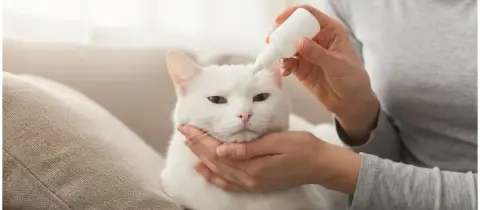
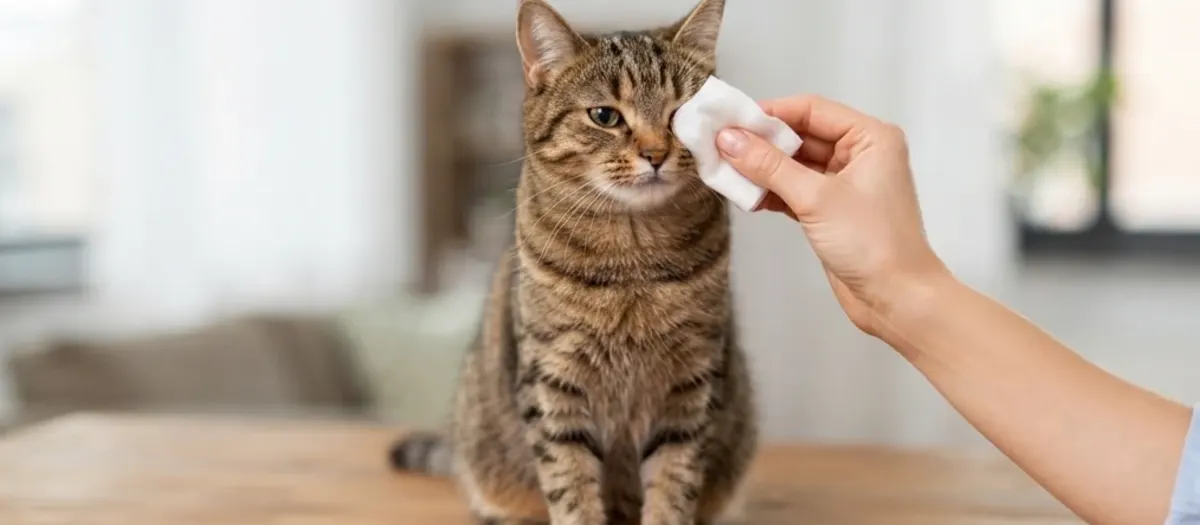
Keep it simple: keep other cats away from shared bowls, wipe discharge away gently, and don't put anything in the eye. Webvet says you can wipe discharge with a clean, damp cloth, using one wipe per eye. Home care supports the vet visit. It doesn't replace it, and it doesn't treat an infection.
The table shows where cleaning stops and a vet starts:
| Situation | What helps | What to avoid |
|---|---|---|
| Crusty discharge around a comfortable, open eye | Wipe gently from the inner corner outward with a clean damp pad, a fresh one for each wipe (Webvet and Dial A Vet) | Rubbing hard, using the same cloth on both eyes |
| A product made for cats and labelled for cleaning | Use it only as the label says. See our cat eye drops and washes guide | Treating a wash or wipe as medicine |
| Squinting, pawing, a shut, cloudy or bulging eye | Phone your vet now | Waiting to see if it settles |
| Left-over drops, human drops, tea bags, honey or other home remedies | Nothing: ask your vet first | All of them. Webvet warns against human, leftover and steroid-containing drops |
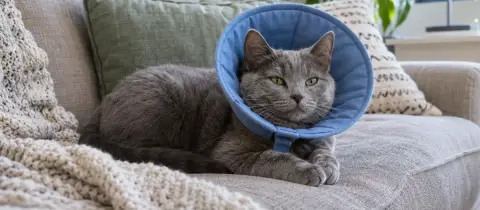
| A cat that keeps pawing or rubbing | Ask your vet whether a cone suits. Our cat cone guide explains the options | Letting your cat scratch the eye while you wait |
If you have more than one cat, think about cat flu. RSPCA Australia says it spreads through tears, eye and nose discharge, and indirectly through shared bowls, bedding, litter trays and hands. It suggests keeping a sick cat apart from other cats until recovered, usually about two weeks but sometimes longer, and washing the bowls, trays and bedding separately (RSPCA Australia Knowledgebase, page updated 7 March 2023, read 24 November 2026). Wash your hands between cats.
Useful guides
Gear is a support, not a treatment. These guides may help while your vet's plan does the work:
- Cat eye drops and washes, for gently cleaning debris from a comfortable eye, never as treatment
- Cat cones, to stop pawing and rubbing while the vet's plan works
- Low-dust cat litter, if dust seems to irritate your cat
When to see a vet
Go to a vet now if your cat's eye is cloudy, bulging, visibly injured or won't open, or if your cat seems in sudden severe pain. Phone ahead if you can.
See a vet today for squinting, holding the eye shut, pawing at the eye or obvious pain.
See a vet within a day for:
- thick or coloured discharge
- an eye that isn't better after a day
- a kitten, a senior cat or a cat with another illness
- eye signs with sneezing, nose discharge or a cat that isn't eating (see our cat sneezing guide)
- eye problems that keep coming back
Never use human eye drops, leftover drops or any home remedy in your cat's eye. Breathing trouble, such as an open mouth, blue or pale gums or collapse, is an emergency.
Frequently asked questions
Can cat eye infections heal on their own?
Some mild cases settle without medication, as Cornell notes, but you can't tell which at home. A vet needs to rule out more serious eye problems, so don't wait it out. If the eye isn't better after a day, or your cat is squinting, see your vet.
Can I use human eye drops on my cat?
No. Webvet says not to use human, leftover or steroid-containing drops without a vet's advice, because steroid drops can worsen a herpes-related infection and deepen an ulcer. Only use drops your own vet prescribed for this eye problem, exactly as directed. If you're unsure, phone your vet first.
Is cat conjunctivitis contagious to other cats?
It can be when the cause is infectious. RSPCA Australia says cat flu viruses spread through tears and eye and nose discharge, and through shared bowls, bedding, litter trays and hands. Keep the sick cat apart, wash bowls and bedding separately and ask your vet about the other cats.
How long does cat conjunctivitis last?
It varies with the cause and your cat. Cornell says antibiotic drops or ointment are typically given for two to three weeks, and antivirals may be added. Don't stop early because the eye looks better. Ask your vet when to expect improvement and when to come back for a recheck.
Why does my cat have one red, runny eye?
One eye can be affected in conjunctivitis, but a single red, runny eye can also come from a scratch, an ulcer, a foreign body or a pressure problem. Squinting or pawing at one eye is a same-day vet visit, and so is a cloudy eye.
Can allergies cause conjunctivitis in cats?
Yes. Cornell says allergic conjunctivitis can follow exposure to certain outdoor plants, and VCA lists eye discharge among possible allergy signs. But VCA also says these signs can come from other conditions, so a vet should check. Our allergies in cats guide covers the types and how vets find the cause.
Is a little eye gunk in the corner normal?
A small amount of clear discharge can be normal, as Dial A Vet notes. Dial A Vet says to see a vet if discharge lasts more than a day, or if there is persistent redness, swelling or pawing. Yellow or green discharge may point to infection. When in doubt, ask your vet.
Why does my cat keep getting eye infections?
Herpesvirus is one possible reason. Cornell says most cats develop immunity, but cats that carry herpesvirus may have flare-ups from time to time, much like cold sores, and RSPCA Australia says many cats stay lifelong carriers after cat flu and may shed virus during stress. Repeat episodes deserve a vet visit, because FIV or FeLV can also play a part.
Related guides
- Cat sneezing: causes, cat flu and when to see a vet
- Allergies in cats: signs, common causes and what helps
- Cat eye drops and washes
- Cat cone: soft, plastic and donut cones
- Low-dust cat litter
- Ear mites in cats
- How to get a cat into a carrier for the vet
Sources
- Cornell Feline Health Center: Conjunctivitis, read 24 November 2026
- Webvet: Red or runny eyes in cats, last reviewed 22 June 2026, read 24 November 2026
- RSPCA Australia Knowledgebase: What is cat flu and how is it managed?, updated 7 March 2023, read 24 November 2026
- VCA Animal Hospitals: Allergies in cats, updated 24 April 2026, read 24 November 2026
- Dial A Vet: Can I use saline solution to clean my cat's eye?, read 24 November 2026
This guide provides general information and isn't a substitute for veterinary advice. If you're concerned about your cat's eyes or health, speak with your vet.