Quick answer: Bad breath in dogs is most often caused by dental disease: plaque, tartar and gum infection. It isn't normal, even in older dogs, so it's worth a vet check. Once your vet has ruled out other causes, regular brushing, VOHC-accepted dental chews and water additives can help keep breath fresher.
It's easy to assume "doggy breath" is just part of having a dog. But vets say bad breath isn't normal (PDSA), and it's one of the signs of dental disease (RSPCA Queensland). This guide explains the usual causes, what a change in smell can mean, what helps, and when to see your vet.
Quick picks
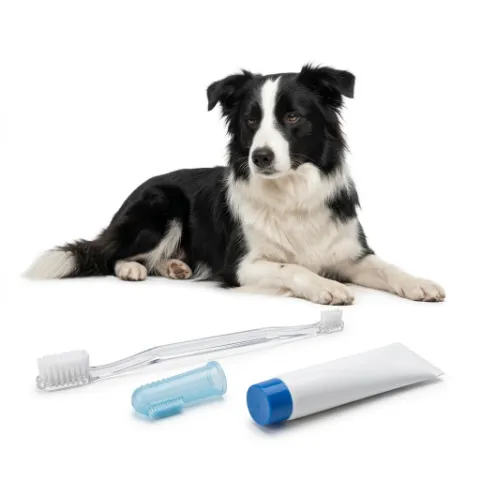
Virbac C.E.T. Oral Hygiene Kit
Brushing is the most effective home care; this kit has a brush, a finger brush and toothpaste
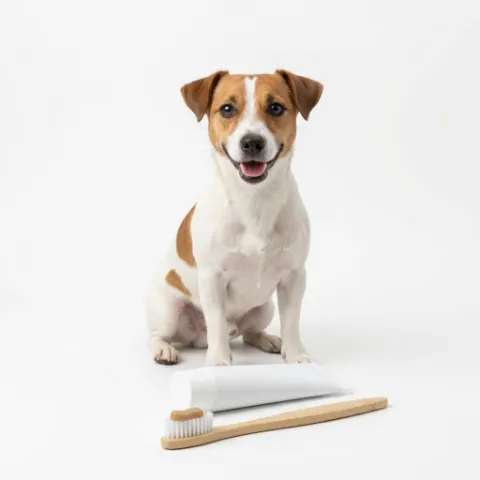
Virbac C.E.T. Enzymatic Toothpaste
Enzymatic, with no foaming agents, and labelled safe for pets to swallow
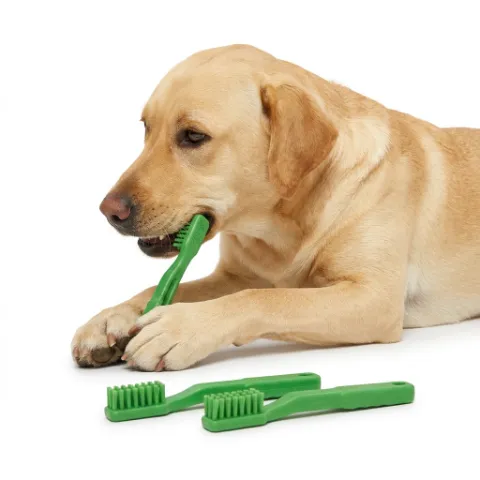
Greenies Original Dental Treats
VOHC accepted for plaque and tartar, as a once-a-day treat
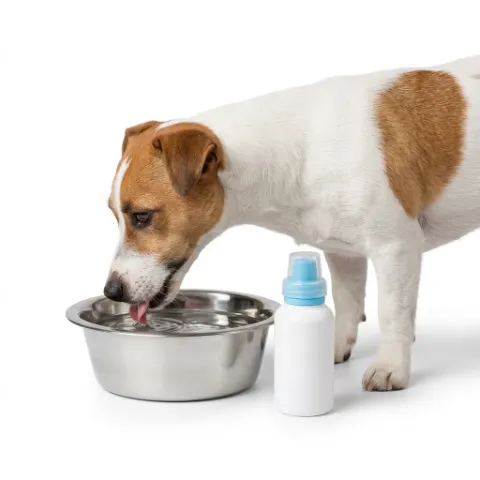
TropiClean Fresh Breath Water Additive
VOHC listed for plaque; you add it to the water bowl
Pictures are illustrations, not the actual products.
Get a vet check first, so you know what's causing the smell. These products then help keep teeth clean and breath fresher as part of a daily routine. For more choice, see our guides to dog toothbrushes, dog toothpaste and dental chews.
Why does my dog's breath smell?
The most common cause of bad breath in dogs is dental disease. Plaque and tartar build up on the teeth, bacteria grow along the gumline, and gum inflammation, infection or tooth root abscesses can follow. Less often, bad breath is linked to health problems elsewhere in the body, so a vet check is the best first step (PDSA).
The PDSA, a UK veterinary charity, lists these causes (PDSA):
- Dental disease: tartar, gingivitis, infection and tooth root abscesses. This is the most common cause.
- Kidney disease: waste products can build up in the body when the kidneys aren't working well.
- Diabetes: ketones can build up in the body.
- Something stuck in the mouth: a stick or piece of bone can cause a wound that becomes infected.
- Lumps in the mouth: these often become infected and can smell.
- Diet: what your dog eats can change how their breath smells.
Dental disease is very common. RSPCA Australia says around 80% of dogs have some level of it by the age of three (RSPCA Australia, 2022).
What do different dog breath smells mean?
A change in smell can be a clue, but only your vet can tell you the cause. The PDSA says breath that smells like ammonia or bleach can be linked with kidney disease, and sweet breath, like pear drops or nail polish remover, can be linked with diabetes. A fishy smell can come from a fish-based diet (PDSA).
| Breath smell | Can be linked with | What to do |
|---|---|---|
| Rotten or foul | Dental disease, infection, something stuck in the mouth | Book a vet check |
| Ammonia or bleach-like | Kidney disease | See your vet soon, especially if your dog drinks more or seems unwell |
| Sweet, like pear drops or nail polish remover | Diabetes | See your vet soon, especially if your dog drinks or wees more |
| Fishy | A fish-based diet | Mention it at your next vet visit if it's new or doesn't settle |
Look at the bigger picture rather than the smell alone. Changes in eating, drinking, energy or weight alongside bad breath are a reason to see your vet sooner.
Should I be worried if my dog has bad breath?
Bad breath isn't something to panic about, but it isn't normal either. The PDSA says it isn't considered normal even in older dogs, and recommends a vet check for any dog with bad breath (PDSA). See your vet promptly if your dog also seems in pain, has stopped eating, or seems unwell.
When to see your vet
See a vet straight away if your dog's bad breath comes with facial swelling, bleeding from the mouth, not eating, vomiting, or seeming very flat or unwell.
Book a vet check soon if your dog has:
- bad breath that's new, getting worse, or doesn't improve
- a sweet or ammonia-like smell to their breath
- drinking or weeing more than usual
- red or bleeding gums, brown tartar, or a broken or loose tooth
- pawing at their mouth, drooling, dropping food or chewing on one side
How do you get rid of bad dog breath?
Treat the cause first, then keep the mouth clean. If dental disease is the cause, your vet may recommend a professional clean under general anaesthetic, because tartar can only be removed that way (RSPCA Australia, 2022). After that, daily brushing with dog toothpaste is the most effective way to keep plaque, and the smell, from coming back.
A simple routine:
- Get a vet check to find the cause, and a professional clean if your vet recommends one.
- Brush daily if you can, and at least three times a week, with a soft dog toothbrush and dog toothpaste (VCA Animal Hospitals). Our step-by-step guide on how to clean your dog's teeth shows you how.
- Add a VOHC-accepted dental chew once a day. See our best dental chews for dogs.
- Consider a VOHC-accepted water additive for extra help, especially for dogs who won't accept a brush.
- Book a yearly health check that includes your dog's teeth, as RSPCA Australia recommends.
Ways to freshen your dog's breath compared
Bad breath usually comes from plaque and tartar, so the options that clean the teeth do the most. Listed in order of how much they help.
| Option and our pick | How it helps breath | Tackles the plaque behind it? | VOHC seal | Best for |
|---|---|---|---|---|
| Brushing: Virbac C.E.T. Oral Hygiene Kit | Removes plaque from the teeth and gumline | Yes, the most effective home care (RSPCA Australia, 2022) | Soft flat-head toothbrushes are on the list as a general entry | Every dog that will accept brushing |
| Toothpaste: Virbac C.E.T. Enzymatic Toothpaste | Makes brushing taste good, so it's easier to keep up | Used with brushing | Not this paste | Every brushed dog |
| Dental chew: Greenies Original | A daily chew that's VOHC accepted for reducing plaque and tartar | Partly | Yes, plaque and tartar | Extra help, once a day |
| Water additive: TropiClean Fresh Breath | Added to drinking water each refill | Partly | Yes, plaque | Dogs who won't accept a brush |
| Dental wipes: see our dog dental wipes guide | Wipes the tooth surfaces with your finger | Partly | No | Dogs learning to accept tooth cleaning |
None of these fixes bad breath caused by a health problem, or tartar that's already formed. That's why a vet check comes first.
How we chose
We searched Amazon Australia for dog dental and breath products, then shortlisted ones that met all of these checks:
- Well rated: a strong average rating with plenty of buyer reviews.
- No red flags: no pattern of poor reviews, safety complaints or listing problems.
- Available on Amazon Australia when we checked.
- Works on the cause: products that help clean the teeth, rather than sprays or mints that only cover the smell.
- Safe for dogs: no xylitol in the listed ingredients, and the VOHC seal where one is available.
These are researched picks, not products we've personally tested. We compared the specifications and ingredients shown on each Amazon Australia listing, and checked the VOHC accepted products list, on 18 Oct 2026. We didn't accept payment from any brand, and no brand saw this page before it was published.
Left out this time: a popular water additive whose listing mentions xylitol; another water additive whose listing claims to be the "first and only" clinically proven option, which we couldn't verify; and homeopathic breath drops.
Our picks in detail
1. Virbac C.E.T. Oral Hygiene Kit: best overall
Brushing removes the plaque behind most bad breath, and this kit gives you everything to start: a long-handled toothbrush with a large and a small head, a finger brush for nervous dogs, and a 2.5 oz tube of poultry C.E.T. toothpaste. The listing describes soft bristles and says to brush daily.
- Pros: tackles the most common cause of bad breath; brush, finger brush and paste in one box; two head sizes
- Cons: brushing takes a little training; premium price; the poultry paste isn't for dogs with a poultry allergy
- Best for: most dogs with dental-related bad breath, after a vet check
- Skip it if: your dog has sore gums or loose teeth (see your vet first)
2. Virbac C.E.T. Enzymatic Toothpaste: best toothpaste
A poultry-flavoured enzymatic toothpaste for dogs and cats. The listing says its enzyme system helps inhibit plaque, and that it has no foaming agents, so it's safe for pets to swallow. Never swap it for human toothpaste or mouthwash, which aren't made for dogs and can contain xylitol.
- Pros: labelled safe to swallow; a poultry flavour that makes brushing feel like a treat; no xylitol listed
- Cons: not on the VOHC list; you'll need a brush or finger brush too
- Best for: refilling your brushing kit, or pairing with a brush you already own
- Skip it if: your dog has a poultry allergy (ask your vet which paste suits them)
3. Greenies Original Dental Treats: best dental chew
A chewy, toothbrush-shaped treat on the VOHC accepted list for plaque and tartar. One a day adds a little extra cleaning between brushes. The listing describes breath-freshening ingredients, and Greenies come in four sizes (our Greenies guide covers sizes).
- Pros: VOHC seal for plaque and tartar; easy to add to the day; four sizes
- Cons: a treat, so count the calories; contains wheat and gelatin; the listing warns to watch your dog chew
- Best for: an easy daily extra alongside brushing
- Skip it if: your dog has a wheat allergy or gulps treats
4. TropiClean Fresh Breath Water Additive: best no-brush option
A water additive you mix into your dog's bowl each time you refill it. TropiClean's Fresh Breath Dental Water Additive for Dogs is on the VOHC accepted list for plaque (VOHC, read 18 October 2026), and the Amazon listing says the product is VOHC accepted. The listed ingredients are water, glycerin, sodium benzoate, citric acid, cetylpyridinium chloride, zinc gluconate and green tea leaf extract, with no xylitol listed. The directions say to add half a capful to a 237 ml (8 oz) bowl. We compare it with other additives, with doses by bowl size and an ingredient check, in our dog water additive guide.
- Pros: VOHC listed for plaque; no brushing needed; ingredient list on the listing
- Cons: it supports plaque control, but it's not a substitute for brushing or a vet clean; whenever you add anything to your dog's water, check they keep drinking normally, and stop if they drink less
- Best for: an extra layer of help, and dogs who won't let you brush
- Skip it if: your dog has a medical condition that needs their water intake monitored closely, unless your vet says it's fine
5. Dental wipes: for dogs not ready for a brush
Pre-soaked finger wipes are a gentle stepping stone for dogs who aren't ready for a toothbrush, but they aren't on the VOHC list and don't replace brushing. The Kopmath finger wipes we compare have an ingredient panel that lists purified water, glycerin, sodium benzoate, coconut oil, aloe, vitamin E and baking soda. See our dog dental wipes guide for the full comparison.
Do home remedies for dog bad breath work?
Home remedies can't fix the most common cause, dental disease, and some are risky. Never use human mouthwash, mints, sugar-free gum or human toothpaste: they aren't made for dogs, and sugar-free gum, mints and some toothpastes can contain xylitol, which is toxic to dogs.
VCA's vets also advise against brushing with baking soda, because it's very alkaline and tastes unpleasant to dogs (VCA Animal Hospitals).
Food-based remedies, like adding yoghurt, parsley or coconut oil to meals, can't remove plaque or tartar, which is behind most bad breath. If you'd like to try a food-based extra, check it against our toxic foods list first and ask your vet. The quickest real fix is to find the cause. Some owners add a kelp powder such as PlaqueOff to meals; our PlaqueOff for dogs guide explains what the evidence shows and who should avoid it.
Why does my puppy have bad breath?
A truly bad or foul smell isn't normal at any age, so ask your vet to check. Teething happens from about three and a half to four months, and most puppies have all their adult teeth by six to seven months (VCA Animal Hospitals). Dental problems, infection or something stuck in the mouth can cause it (PDSA).
Starting tooth brushing early, with a puppy-sized brush and puppy toothpaste, sets up good habits for life.
Frequently asked questions
What kills bad breath in dogs naturally?
Brushing with dog toothpaste is the most effective home care, according to RSPCA Australia, because it removes the plaque behind most bad breath. Food-based remedies like yoghurt or parsley can't remove plaque or tartar.
Can I give my dog a breath mint or human mouthwash?
No. Human mouthwash, mints and gum aren't made for dogs, and sugar-free mints and gum can contain xylitol, which is toxic to dogs. Use products made for dogs.
Does my dog's food cause bad breath?
It can. The PDSA says diet affects how a dog's breath smells, and a fish-based diet can make breath smell fishy. A sudden change in breath smell is still worth a vet check.
How can I get rid of the smell of rotting teeth in my dog's mouth?
A rotten smell usually means dental disease or infection, which needs a vet. Your vet may recommend a professional clean under anaesthetic and treat any bad teeth. Brushing afterwards helps keep the smell from coming back.
Is bad breath normal in older dogs?
No. The PDSA says bad breath isn't considered normal, even in older dogs. Dental disease is very common, affecting around 80% of dogs by the age of three, according to RSPCA Australia, so book a vet check.
Related guides
- How to get rid of dog smell in the house
- PlaqueOff for dogs
- Greenies dental treats: which size, and do they work?
- How to clean your dog's teeth at home
- Best dental chews for dogs
- Best dog toothpaste
- Best dog toothbrushes and finger brushes
- Best dog dental wipes
- Best dog water additives for teeth and bad breath
Sources
- PDSA: Bad breath in dogs (August 2024)
- RSPCA Australia: Importance of dental health (5 September 2022)
- RSPCA Queensland: Dog teeth cleaning and dental care (1 December 2020)
- VCA Animal Hospitals: Brushing your dog's teeth and Retained baby teeth in dogs
- Veterinary Oral Health Council (VOHC): accepted products list, read 18 October 2026
- Product details and ingredients from each linked Amazon Australia listing, checked on 18 Oct 2026.
This guide provides general information and isn't a substitute for veterinary advice. If you're concerned about your dog's breath, teeth or health, speak with your vet.