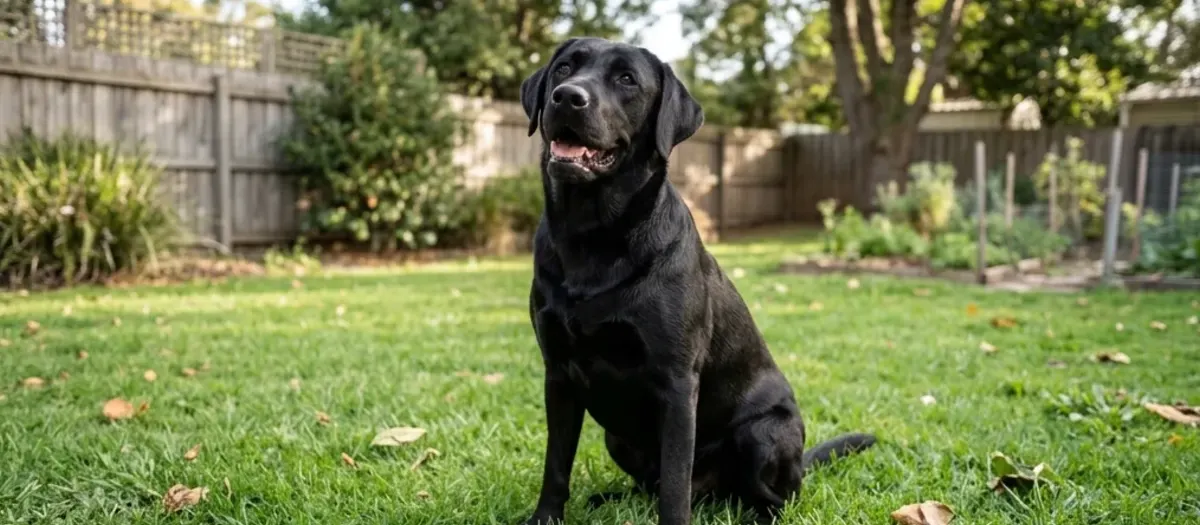
Quick answer: The labrador is a medium-to-large, short-coated gundog, usually around 25 to 36 kg as an adult. Labradors are often friendly, eager to please and very food motivated. They suit active households that can give daily exercise and training, and that will keep a close eye on weight.
Labradors are one of the most familiar dogs in Australian backyards, and that popularity can hide how much work a young, strong, hungry retriever really is. This guide covers size, temperament, exercise, grooming and health, plus the gear that suits a lab's size and coat.
Labrador at a glance
Heights and weights below are from the AKC breed standard, and individual dogs vary. The Dogs Australia standard sets a tighter height (dogs 56 to 57 cm, bitches 55 to 56 cm) and gives no weight. Labradors come in black, yellow and chocolate, and the colours share one standard.
| Male | Female | |
|---|---|---|
| Size category | Medium to large | Medium to large |
| Height at the shoulder | About 57 to 62 cm | About 55 to 60 cm |
| Weight | About 29 to 36 kg | About 25 to 32 kg |
| Lifespan | About 11 to 13 years (AKC) | About 11 to 13 years (AKC) |
| Coat and shedding | Short, dense double coat; sheds year round, often heavily in seasonal changes | Same |
| Energy | High, especially when young | High, especially when young |
| Kids and other pets | Often good with children and other pets, with supervision and training | Same |
| Grooming needs | Low to moderate: regular brushing, more in shedding seasons | Same |
How big do labradors get?
An adult labrador usually stands about 55 to 62 cm at the shoulder and weighs roughly 25 to 36 kg, with males larger than females. The AKC standard gives those ranges. A healthy lab should look athletic, with a visible waist, not round. Growth rates vary, so ask your vet how your young dog is tracking.
Measure your own dog rather than relying on the breed range. Our guide to measuring a dog for clothes shows where to put the tape for chest girth and back length.
How long do labradors live?
The AKC gives a life expectancy of 11 to 13 years, and the Royal Kennel Club breed profile says over 10. A lean body is one of the few lifespan factors owners can control. Health-tested parents, regular vet checks, dental care and a healthy weight all help. Joint problems and weight gain are the most common things that shorten a lab's comfortable years, so it pays to plan for them early.
What is a labrador's temperament like?
Many labradors are friendly, outgoing and keen to please, which is why the breed is so often used as a family dog and a working dog. The AKC describes them as affectionate, outgoing, friendly and energetic, and the Dogs Australia standard asks for a kindly nature with a strong will to please. Tendencies are not guarantees, though. A young lab can be bouncy, mouthy and easily distracted, and bored labradors may chew, dig or steal food.
They tend to be strongly food motivated, which makes training easier and weight control harder. Puppy classes, calm lead manners and lots of sniffing time all help. If your lab is chewing, see our guide to stopping dog chewing, and for a mouthy pup, how to stop puppy biting.
How much exercise does a labrador need?
Labradors are a high-energy gundog breed, and most healthy adults need plenty of daily activity. The Royal Kennel Club breed profile lists more than two hours a day, split into walks, play and training. Needs change with age, fitness and health, so ask your vet. Mix walks with retrieving, swimming and sniffing games. Our guide on how much exercise a dog needs covers how to judge it.
Young labradors are still growing, so avoid hard, repetitive running and jumping until your vet says their joints are ready. Retrieving suits the breed, and a ball launcher or Chuckit-style ball thrower saves your arm. On wet or hot days, puzzle toys and rainy-day games use up brain energy.
How do you groom a labrador?
Brush a labrador once or twice a week, and more often when they are shedding heavily. The Dogs Australia standard describes a short, dense coat with a weather-resistant undercoat. Most dogs shed all year, with bigger clearouts as seasons change.
A deshedding brush or grooming glove works well on the short coat. Bathe only when needed; our guide on how often to wash a dog explains why. Keep nails short, check the ears after swims, and brush teeth. Our dog toothbrush guide and how to clean dog's teeth help. For hair around the house, see our pet hair remover guide.
Common labrador health problems
Weight gain, joint problems and ear trouble are among the issues owners most often deal with. The Royal Kennel Club's health testing list for labradors includes hip and elbow dysplasia, eye testing, and DNA tests for progressive retinal atrophy and exercise-induced collapse. A 2016 University of Cambridge study found a gene variant linked to stronger food drive and extra weight, carried by about one in four labradors. None of this means your dog will have these problems, only that they are worth knowing about.
- Weight: extra kilos strain joints. Measure meals, count treats and use slow feeder bowls for fast eaters.
- Joints: limping, stiffness after rest or reluctance to jump are worth a vet check. See arthritis in dogs and dog limping.
- Ears: floppy ears and swimming can mean more ear trouble. Our dog ear cleaner guide is a starting point once your vet says it's fine.
- Itchy skin: see itchy skin in dogs and hot spots.
Ask breeders or rescue groups about health testing of the parents (hips, elbows and eyes are the usual checks), and keep up vaccinations and parasite control with your vet.
Is a labrador right for you?
A labrador suits you if you enjoy daily walks, training and swims, can give your dog company, and will manage food carefully. It may not suit you if you want a low-energy dog, dislike hair on everything, or are away most of the day. Labradors often struggle with long stretches alone; see our guide on dog separation anxiety.
Think about space, too. A lab can live in a unit if exercise needs are met, but a secure yard and a dog fence make life easier. Compare similar breeds if you are unsure: the golden retriever is a close cousin with a longer coat, while the border collie needs even more mental work.
Caring for a labrador in Australian weather
Heat is the big one. Labradors are sturdy and love exercise, so they can overheat on hot days without slowing down. Walk early or late, bring water and shade, and read our keep your dog cool in summer guide. A cooling mat can help at home, and our hot car warning applies to every dog.
Labradors love water, so a dog pool is popular, and a life jacket helps at the beach or on a boat. Rinse off afterwards. See our dog beach tips.
Ticks and snakes matter in many areas. Read our paralysis ticks guide and snake bite in dogs, and talk to your vet about tick prevention.
In winter, a short, lean or older lab may feel the cold, especially in rain and wind. A dog coat or raincoat with good chest and belly coverage can help, but a thick-coated, active young lab may not need one.
Gear that fits a labrador
- Harness: measure chest girth and choose a large dog harness or no-pull harness by the maker's size chart, since many adult labs sit in large or extra-large ranges. A front-clip harness can help a puller.
- Bed: choose a large dog bed based on your dog's length stretched out, and consider an orthopaedic bed for older or stiff dogs.
- Crate: measure standing height and nose to base of tail, then pick a large dog crate with room to stand, turn and lie flat. For a growing pup, see puppy crates.
- Brush: a deshedding brush or grooming glove suits the short double coat.
- Coat: match the coat's back length to your measurement. See dog coats and dog raincoats.
- Bowls and mealtimes: slow feeder bowls and a dog food container help with portion control.
- Water play: a life jacket and dog towel suit a swimming lab.
- Joint support: talk to your vet before trying joint supplements.
- Limping, stiffness, or trouble getting up or climbing stairs. See dog limping.
- Weakness, wobbling or collapse during or after exercise.
- Signs of heat stress: heavy panting, drooling, vomiting or wobbliness. See keeping your dog cool.
- Possible tick or snake bite. See paralysis ticks and snake bite.
- Head shaking, smelly ears or red, itchy skin.
- A swollen or hard belly, repeated vomiting, or eating something they shouldn't. See dog poisoning.
- Rapid weight gain or loss, or changes in eyesight, especially in the dark.
Frequently asked questions
Why are labradors always hungry?
Many labradors are strongly food motivated. A 2016 University of Cambridge study found a gene variant linked to stronger food drive in about one in four labs. Measure meals, count treats and use slow feeders. If your dog is very hungry or losing weight, ask your vet.
How easy are labradors to train?
Many labradors are quick to learn because they like pleasing people and working for food. They still need steady, kind training, particularly when young. Use short sessions with training treats, keep rewards small and stay consistent.
Do labradors bark a lot?
Labradors are not usually described as nuisance barkers, but individuals vary. Boredom, too little exercise or loneliness can all lead to barking, so look at what your dog is missing before trying to quieten the noise. More activity, company and training often help. See how to stop dog barking.
What colours do labradors come in?
Labradors come in black, yellow and chocolate. The AKC and Dogs Australia standards cover all three colours in one breed standard, and the Australian standard calls chocolate 'liver/chocolate'. Colour does not change size or care needs, and every lab needs the same care in the heat.
Can a labrador live in an apartment?
A lab can live in a unit if their exercise, training and company needs are met every day. Lack of exercise is the usual problem, not the floor space. Check your building's pet rules before you decide.
Are labradors good with children?
Many are friendly and gentle with kids, but a big, bouncy dog can knock over small children without meaning to. Supervise all play, teach calm greetings and give the dog a quiet place to retreat.
What is the difference between a labrador and a golden retriever?
Both are friendly, energetic gundogs that need plenty of daily exercise. The labrador has a short, dense coat that needs a brush about once a week, while the golden has a longer, feathered coat that needs brushing several times a week. Both shed. Compare them in our golden retriever guide.
Related guides
- Labrador dog food
- Golden retriever guide
- Staffy guide
- Groodle guide
- How much exercise does a dog need?
- Best dog beds
- Dog coats
Sources
- American Kennel Club, Official Standard for the Labrador Retriever: https://images.akc.org/pdf/breeds/standards/LabradorRetriever.pdf (page read 25 November 2026)
- American Kennel Club, Is the Labrador Retriever the Right Dog Breed for You?: https://www.akc.org/expert-advice/dog-breeds/labrador-retriever-right-for-you/ (page read 25 November 2026)
- Dogs Australia, Labrador Retriever breed standard: https://dogsaustralia.org.au/members/breeds/breed-standards/Labrador-Retriever (page read 25 November 2026)
- Royal Kennel Club (UK), Retriever (Labrador) breed profile and health testing list: https://www.royalkennelclub.com/search/breeds-a-to-z/breeds/gundog/retriever-labrador/ (page read 25 November 2026)
- University of Cambridge, Genetic variant may help explain why Labradors are prone to obesity (3 May 2016): https://www.cam.ac.uk/research/news/genetic-variant-may-help-explain-why-labradors-are-prone-to-obesity (page read 25 November 2026)
This guide provides general information and isn't a substitute for veterinary advice. If you're concerned about your dog's health, speak with your vet.