Labrador Dog Food: Picks for Puppies, Adults and Hungry Labs
By Anish PuriUpdated 27 Nov 202615 min readResearched, not tested by us
Research guide. WhiskerFinds may earn a commission from links, at no extra cost to you.
Quick answer: For most adult labs, our top pick of labrador dog food is Royal Canin Labrador Retriever Adult, a breed formula with an adapted calorie content. Labs carrying extra weight, puppies and big-bag budgets each have their own pick below. Whatever you choose, weigh every meal, count treats and ask your vet before starting a weight-loss food.
Illustration, not the actual product
Our top pickRoyal Canin Labrador Retriever Adult 3 kg
Labradors are famous for their appetite, so the food matters less than how much goes in the bowl. This guide compares five dry foods on Amazon Australia by bag size in kilograms, life stage and dog size, then covers appetite, weight and puppy growth. For the dog itself, see our labrador breed guide. If you're also looking at other big breeds, our golden retriever dog food guide and German shepherd dog food guide cover the same ground.
Quick picks
Our top pickBest overall
Royal Canin Labrador Retriever Adult 3 kg
Breed formula for adults over 15 months, with an adapted calorie content and a kibble shape the maker says promotes fullness
Pictures are illustrations, not the actual products.
Labrador dog food compared
Details come from each Amazon Australia listing, checked on 27 Nov 2026. All five are listed for large dogs, and Royal Canin Maxi Puppy for an adult weight of 26 to 44 kg. "Not shown" means the listing doesn't say.
Swipe sideways to see every column
Food
Bag
Life stage per listing
Starts with
Grain free
Royal Canin Labrador Adult
3 kg
Adult, over 15 months
Dehydrated poultry protein, rice, wheat, maize
No, wheat and maize listed
Hill's Perfect Weight + Joint Support
11.3 kg
Adult
Not shown
Not shown
Optimum Adult Large Breed
15 kg
Adult, 1 to 7 years (maker's range table)
Not shown (title says chicken, vegetables and rice)
No, title names rice
Royal Canin Maxi Puppy
4 kg
Puppy, 2 to 15 months
Maize, poultry meal, corn gluten feed
No, maize listed
Supercoat Large Breed Chicken
18 kg
Adult
Meat and meat by-products (chicken, beef), poultry by-products, wholegrain wheat
No, wheat, barley, sorghum and corn listed
Why do labradors always seem so hungry?
Many labradors really do feel hungrier than other dogs, and part of the reason is genetic. University of Cambridge researchers found a variant of the POMC gene, which helps regulate hunger and fullness, in about 23% of the labradors they studied, or around one in four. Each copy was linked with about 1.9 kg more body weight. It was a study of 310 dogs and shows an association, not a diagnosis, and the researchers noted that owners still control diet and exercise (University of Cambridge, "Genetic variant may help explain why Labradors are prone to obesity", 3 May 2016, page read 27 November 2026).
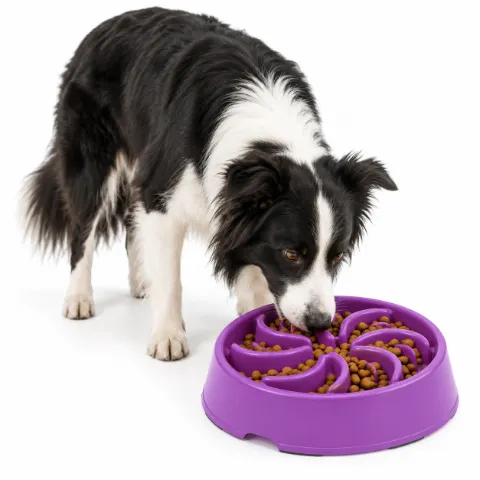
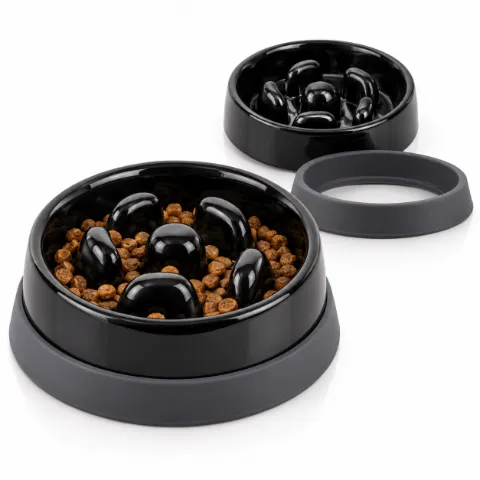
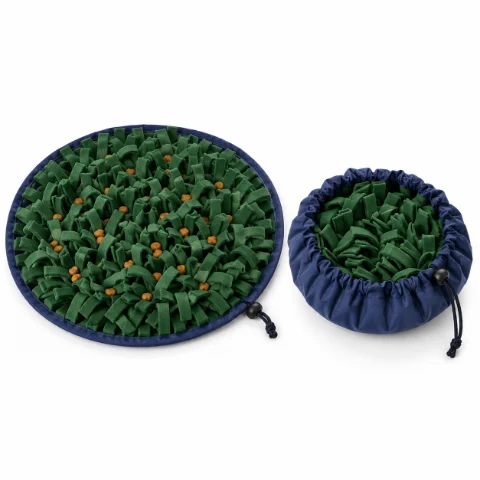
So a lab that begs after a full bowl is common, and not proof that the bowl is too small. Slow the meal down instead: a slow feeder bowl or a snuffle mat makes a measured meal last longer.
Our picks in detail
1. Royal Canin Labrador Retriever Adult 3 kg: best overall
The breed formula, made for adults over 15 months. The listing says the calorie content is adapted because the breed tends to gain weight, and that the kibble shape and formula are designed to promote fullness. Those are the maker's claims, so we can't say how it works for your dog. It lists protein at 30%, fat at 13%, EPA and DHA at 4 g/kg, fish oil, borage oil and sources of glucosamine and chondroitin. The ingredients start with dehydrated poultry protein, rice, wheat and maize.
The listing's allergen field says "allergen-free". That doesn't fit the ingredient list, so ignore it. Because it is only a 3 kg bag, a full-grown lab will get through it quickly.
Pros: made for the breed; adapted calorie content per the listing; fatty acids and joint ingredients listed
Cons: small bag for a dog of about 25 to 36 kg (see our labrador breed guide); premium tier; wheat and maize listed
Best for: adult labs over 15 months whose owners want a breed formula
Skip it if: you want value by the kilo, a wheat-free food, or your lab is under 15 months
2. Hill's Science Diet Perfect Weight + Joint Support Large Breed 11.3 kg: best for labs carrying extra weight
A weight management food in larger kibble for large-breed adults. The listing says it supports weight loss, joint function and hip health, and lean muscle, which are Hill's claims. A food doesn't treat joint problems, and it works only with measured portions and fewer treats. The listing doesn't show an ingredient list, so check the pack. It's also a pick on our weight control dog food guide, which compares the Perfect Weight range.
Ask your vet first. They can weigh your dog, set a target weight and rule out medical causes of weight gain.
Pros: larger kibble for large breeds; weight and joint wording from the maker; 11.3 kg bag
Cons: premium tier; no ingredient list on the listing; weight loss still needs measured meals
Best for: adult labs your vet has said need to lose weight
Skip it if: your lab is a healthy weight, a puppy, or hasn't had a vet check
3. Optimum Adult Large Breed Chicken, Vegetables and Rice 15 kg: best value large-breed bag
An everyday large-breed kibble in a 15 kg bag. The maker's range table on the listing gives 1 to 7 years for the adult recipes and ticks complete and balanced, no artificial colours or flavours, and made in Australia across the range. It says zinc and omega 6 support skin and coat and that the chicken is a natural source of arginine, which are the maker's claims.
The listing shows no ingredient list, so check the pack's panel if a particular grain matters to your dog.
Pros: big bag; made for large dogs; skin and coat nutrients named by the maker
Cons: one flavour; no ingredient list shown on the listing; needs an airtight container
Best for: healthy-weight adult labs
Skip it if: your lab is a puppy, a senior or overweight, or needs to avoid chicken
4. Royal Canin Maxi Puppy 4 kg: best for lab puppies
For large-breed puppies from 2 to 15 months with an expected adult weight of 26 to 44 kg, the listing says. It describes a moderate energy level for a long growth period, plus highly digestible protein and prebiotics to support digestion, which are the maker's claims. The first ingredients are maize, poultry meal and corn gluten feed.
Some female labs finish under 26 kg (our labrador breed guide gives about 25 to 32 kg for females), so ask your vet if your pup is on the small side.
Pros: made for large breeds; moderate energy per the listing; a 4 kg size that is easy to store
Cons: small bag that empties fast as a pup grows; maize listed first
Best for: lab puppies up to 15 months
Skip it if: your pup's expected adult weight is under 26 kg, or you want a bigger bag
5. Purina Supercoat Adult Large Breed Chicken 18 kg: best budget bag
The biggest bag in this guide, for big eaters. The listing says it is for adult health and maintenance of large breed dogs, with a protein to fat ratio to help maintain lean body mass, glucosamine, added calcium and no added artificial colours or flavours. The ingredients are grouped: meat and meat by-products (chicken, beef), poultry by-products, wholegrain wheat, barley, sorghum and corn.
Pros: 18 kg bag; made for large-breed adults; 7 to 10 day changeover guide on the listing
Cons: grouped ingredient list; contains chicken, beef and wheat; heavy to lift
Best for: two-lab homes and big eaters at a healthy weight
Skip it if: wheat, chicken or beef must be avoided, or your lab is already overweight
How do you keep a labrador at a healthy weight?
Weigh the food, count the treats and check your dog's shape every few weeks. RSPCA Australia says a dog at a healthy weight has a visible waist behind the ribs when seen from above, ribs you can feel under a light layer of fat, and a belly that tucks up from the side.
Weigh meals on kitchen scales, not a scoop, and follow the pack's guide for your dog's ideal weight, adjusting with your vet.
Keep treats to about 10% of daily calories, as VCA Animal Hospitals advises for puppies and as we say on our dog treats guide. Small training treats are easy to count.
Check shape with your hands, because a lab's short double coat can hide extra weight.
Ask about a weight food. If your vet says your lab should slim down, see pick 2 and our weight control dog food guide.
What should a labrador puppy eat?
A large-breed puppy food, fed in measured amounts. VCA Animal Hospitals says growth in large breeds should be carefully regulated, because growing too quickly can stress developing bones and joints, and that large-breed puppy foods have different calcium and phosphorus levels from other foods.
Pick 4 is made for that. For the wider puppy range, see our puppy food guide. Royal Canin also makes a Labrador-specific puppy formula and a 12 kg adult bag, sold through vet clinics and pet shops.
Choose by situation
Swipe sideways to see every column
Your lab
Start here
Why
Adult, healthy weight, owner wants a breed formula
Pick 1
Adapted calorie content and a kibble shaped for the breed, the listing says
Change it gradually, over about a week. Tufts' Petfoodology describes a common plan that starts at about 10% new food on day 1 and reaches 100% on day 7, and says some pets need 4 to 6 weeks. If a stool turns loose but your lab seems well, stay at the last ratio that caused no trouble for a day or two, then carry on more slowly (Tufts Cummings School, Petfoodology, "How do I switch my pet's food?", page read 27 November 2026).
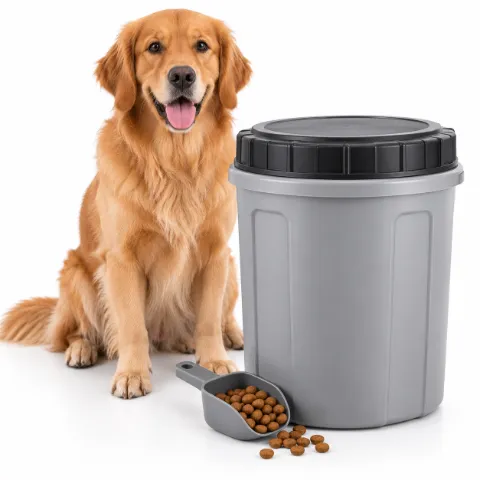
The Supercoat listing suggests 7 to 10 days. An airtight food container keeps a big bag fresh and out of reach of a food-mad lab.
Where else can you buy labrador dog food?
Royal Canin and Hill's are also sold at vet clinics and pet shops, which can help with sizes and your dog's weight. Optimum and Supercoat are also sold in supermarkets. Whichever way you buy, check the life stage and best before date on the bag. Our Royal Canin dog food guide covers the brand's wider range, and our dry dog food guide compares everyday kibble for other sizes.
How we chose
We searched Amazon Australia for dry foods made for large-breed and labrador dogs, then shortlisted foods that met all of these checks:
Well rated: a strong average rating with plenty of buyer reviews.
No red flags: no pattern of poor reviews, safety complaints or listing problems.
Available on Amazon Australia when we checked.
Bag size in kilograms stated on the listing or title.
Life stage and dog size stated, or flagged as "not shown".
Maker claims attributed: claims about weight, joints or digestion are the maker's, and we ignored listing fields that contradicted the listing text.
Not a prescription or veterinary diet.
These are researched picks, not products we've personally tried. We compared the specifications on each Amazon Australia listing, checked on 27 Nov 2026, and we didn't accept payment from any brand.
Left out this time: a Royal Canin diabetic food (a veterinary diet, which your vet decides on), small and medium breed formulas that are the wrong size for a lab, and breed formulas for other dogs. Prescription and veterinary diets are never picks here.
When to see a vet
Book a vet visit if you can't feel your lab's ribs easily or can't see a waist from above, or if their weight changes suddenly. A lab that is suddenly not interested in food is unusual for the breed and worth a check. See your vet too for lameness or stiffness, repeated vomiting or diarrhoea, and before you start any weight-loss food. Our dog diarrhoea guide and dog limping guide explain when to ring.
Go to a vet or emergency clinic straight away if your dog eats something toxic, or has a swollen, hard belly with retching. For a possible poisoning, call the Animal Poisons Helpline on 1300 869 738 (24/7). Our KONG recipes guide has the full list of foods dogs shouldn't eat.
Frequently asked questions
What is the best dog food for a labrador?
There isn't one best food, because age and weight matter more than brand. A healthy adult lab does well on a large-breed adult or breed formula, an overweight lab needs a vet-guided weight plan, and a puppy needs large-breed puppy food. The table above matches each situation to a pick.
How much should a labrador eat a day?
Follow the feeding guide on your pack for your dog's ideal weight, then adjust with your vet. The right amount depends on the food's energy content, your dog's age, activity and whether they're desexed. Weigh meals on scales and use your dog's body shape, not the bowl, as the guide.
When should a labrador puppy switch to adult food?
The listing for pick 4 covers puppies up to 15 months, but VCA says large breeds can take up to two years to reach adult weight. Ask your vet when to switch, and change over gradually across about a week when you do.
Is Royal Canin Labrador worth it?
It may suit owners who want a formula built for the breed, with an adapted calorie content per the listing. It costs more than general large-breed bags and lists wheat and maize. A general large-breed food fed in measured amounts can also work well, so decide with your vet.
How many meals a day should a labrador have?
RSPCA Australia says healthy adult dogs can be fed once or twice a day, and that large or deep-chested dogs at increased risk of bloat should be fed at least twice. VCA says most puppies do best on several small meals. Whatever the number, the daily total stays the same, and treats count in it.
Should a labrador eat wet or dry food?
Either can work. Dry food is easier to store and measure, while wet food has more moisture. If you mix them, count both in the day's total. Our wet dog food guide compares the two.
Some common foods are toxic to dogs, and a greedy lab will try anything within reach. Our KONG recipes guide has the full list, and our dog poisoning guide explains what to do. If you suspect your dog has eaten something toxic, call the Animal Poisons Helpline on 1300 869 738.
Product details from each linked Amazon Australia listing, checked on 27 Nov 2026.
This guide provides general information and isn't a substitute for veterinary advice. If you're concerned about your dog's weight or health, speak with your vet.