By Anish PuriUpdated 1 Nov 202617 min readResearched, not tested by us
Research guide. WhiskerFinds may earn a commission from links, at no extra cost to you.
Quick answer: The best dog bed is the one that matches how your dog sleeps and fits them stretched out. Curlers like a bolster or donut, sprawlers need a flat mattress, and stiff or older dogs need supportive foam. Our top pick is the Furhaven L-shaped chaise, with four more picks for other dogs.
Illustration, not the actual product
Our top pickFurhaven L-shaped chaise orthopedic dog bed
Choosing a dog bed is easier when you start with your dog, not the shop shelf. This guide sorts beds by sleeping style, size, age and where the bed will live, then compares five picks on Amazon Australia. Once you know the type, our sibling guides go deeper on large dog beds, small dog beds, crate beds and washable dog beds.
Quick picks
Our top pickBest overall
Furhaven L-shaped chaise orthopedic dog bed
Egg crate foam base, raised L-shaped bolsters and a removable cover, in three sizes
Pictures are illustrations, not the actual products.
Not sure which shape to look at first? The chooser below matches the bed to the dog.
Which type of dog bed suits your dog?
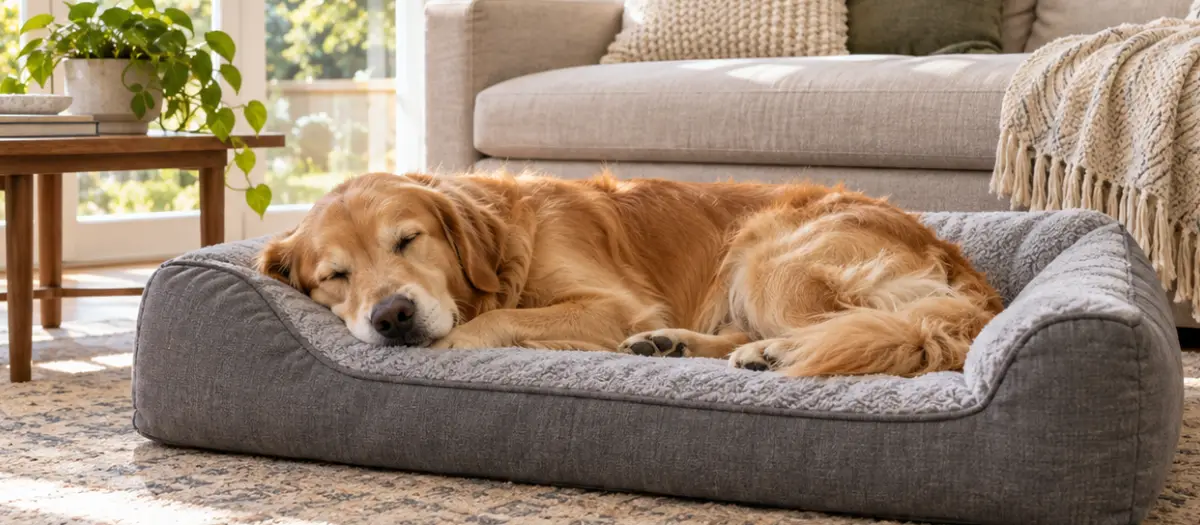
Watch how your dog sleeps for a few nights. Dogs that curl up like a snail often like sides to lean on, dogs that sprawl need open space, and dogs that are stiff need a thick, supportive base that is easy to step onto. A plain flat dog mattress suits dogs who sprawl and crates; a round bed suits dogs who curl. Puppies have their own guide: best puppy bed.
There's no single best type. The right one matches your dog's sleeping style, size and age: bolster or donut beds for curlers, flat mattresses for sprawlers, firm foam for big or older dogs, and flat mats for crates. Pick by the dog first, then by the fabric.
Here is how the main types differ:
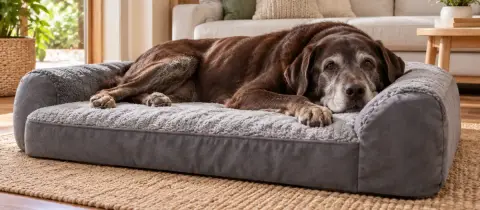
Bolster and chaise beds have raised edges to lean on. They suit dogs that rest their chin on something, and many dogs like the sense of a wall behind them.
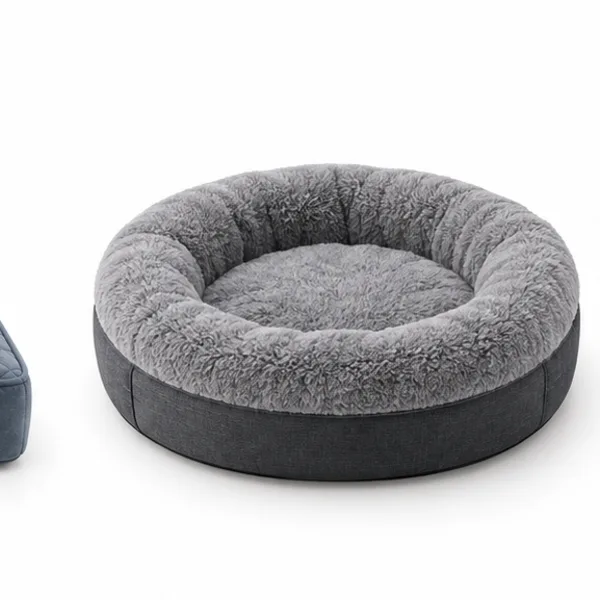
Donut beds are round with a raised rim and a soft centre. They suit small dogs that curl, though the high sides can be a step up for stiff dogs.
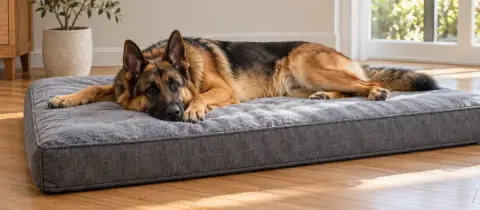
Flat mattress beds give a big open surface for sprawlers and are the easiest to climb onto.
Crate mats are thin, flat pads cut to fit a crate or cot. See our crate bed guide.
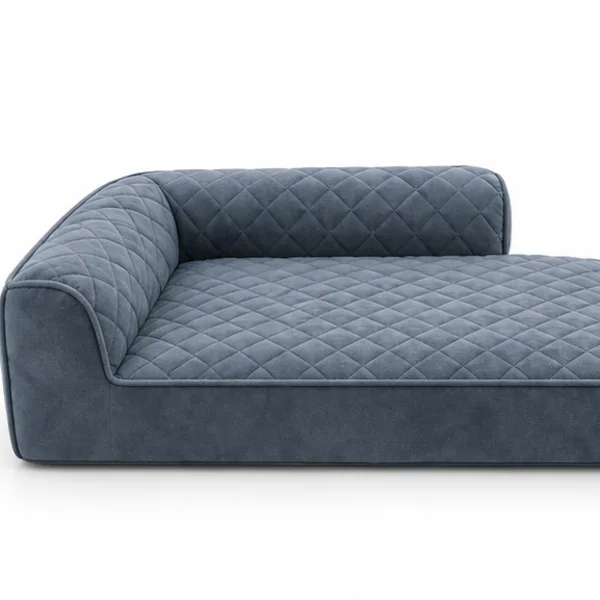
A rectangular bed with raised, rounded bolsters in an L shape, so your dog can lean into the corner or rest their chin on the edge. The listing says the base is egg crate orthopedic foam, 3 inches thick, with fluff-filled bolsters and a quilted cover. It comes in medium, large and jumbo, and the large we've listed has a sleep surface of approximately 32 x 23 inches. The listing describes a low profile, step-on design and says the cover is removable and machine washable.
Pros: bolsters to lean on; egg crate foam base; removable washable cover; low step-on design per the listing; three sizes
Cons: the large has a weight recommendation of 24.95 kg, so it is not for big dogs; the listing says it's not for unsupervised use by animals with chewing behaviours; the foam is spot clean only, with the cover washed separately
Best for: medium dogs and dogs that like to lean or rest their head on a bolster
Skip it if: your dog is big, a sprawler or a chewer. See large dog beds
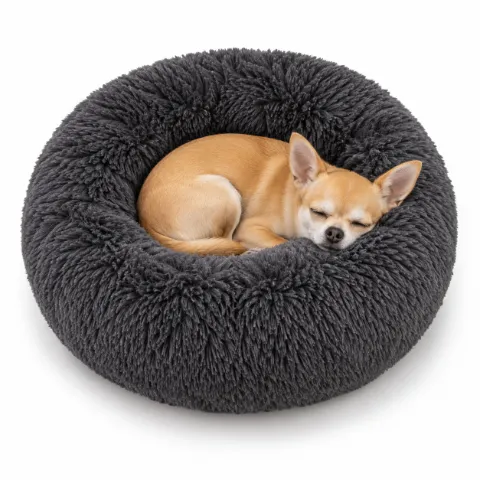
A round doughnut cushion with 4 cm long plush and a soft centre that the listing says is filled to the edge with polypropylene. It's 60 cm across and 20 cm high, and the listing says it suits cats and small dogs up to 11 kg. The listing says the non-slip nubs underneath help with grip, and the centre cushion comes out through a zip so the rest can be washed. It's also a calming-style bed, which means it is a comfort item. It doesn't treat anxiety. See calming dog beds.
Pros: cosy sides for curlers; non-slip base per the listing; centre cushion removes for washing
Cons: the listing says the size can differ by 2 to 3 cm and that the bed arrives vacuum packed, needing a shake and up to 48 hours to reach full size; the 20 cm high rim is a step up for stiff dogs; the listing says the plush doesn't fall off easily even with chewing puppies, but no bed is chew proof
Best for: small dogs and cats that curl up
Skip it if: your dog is over 11 kg, stiff or arthritic, or likes to sprawl
3. Sunheir XXL orthopaedic waterproof bed: best for big dogs
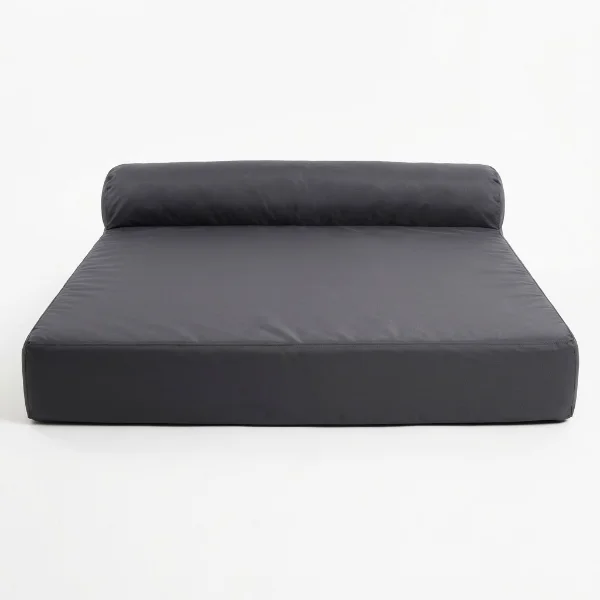
A large flat mattress, about 112 x 81 cm outside and 7.6 cm thick, so big dogs can stretch out. The listing says it has 3 inch high-density egg foam, a plush Sherpa top, a TPU waterproof layer inside a removable machine washable cover, and an anti-slip base. The listing also says the sides are bite-resistant, but we'd still call it a bed to supervise, not a chew proof one. It also appears in our waterproof dog bed guide. For more sizes, see large dog beds.
Pros: big sleeping area; waterproof liner per the listing; anti-slip base; flat and easy to step on
Cons: the listing gives a very high maximum weight of 136.08 kg, which we'd treat with caution, so judge by your dog's size and the foam thickness; the listing says it arrives compressed and needs 48 hours to recover; foam is 3 inches, which may be thin for the heaviest dogs
Best for: large dogs and sprawlers, and a bed for the lounge room or inside a big crate
Skip it if: your dog is small, or likes high sides to lean on
A round Sherpa fleece bed, 20 inches across, with a raised rim for head and neck support, an anti-slip bottom and a gentle cycle machine wash for the whole bed. The listing says it suits small to medium dogs or cats, and gives outside dimensions of about 51 x 48 x 15 cm. See our small dog bed guide for more options.
Pros: whole bed washes in the machine; non-slip base; rim for resting a head on
Cons: the listing's weight recommendation says 5 pounds, which conflicts with "small to medium dogs", so measure your dog and ask a question on the listing before you buy; the listing describes a soft fleece bed with no foam base mentioned, so expect soft comfort rather than firm support
Best for: small dogs and puppies that curl up
Skip it if: your dog is medium or larger, or needs firm joint support
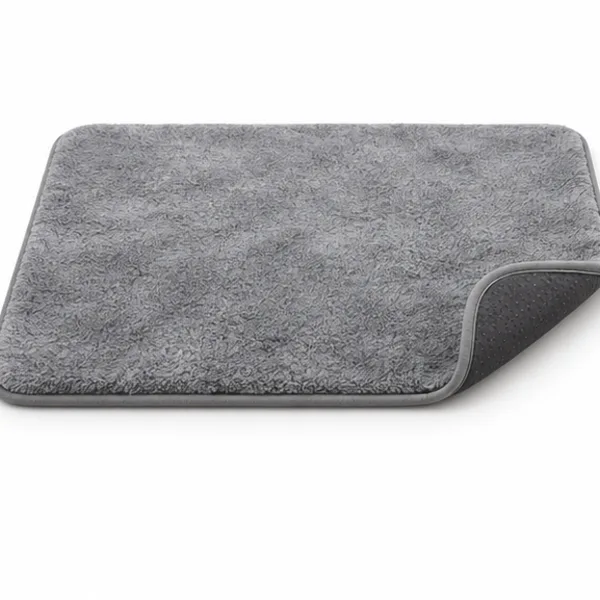
A flat velvet-covered pad with a down-alternative fibre fill, made for crates, cots and car use. The listing gives it as 41 x 27 inches (about 107 x 71 cm) for dogs up to 40.82 kg, and says it has a studded rubber base, four corner straps and that the whole mat can be hand or machine washed on a delicate cycle. It comes in five sizes. For other crate options, see our crate bed guide and crate buying guide.
Pros: flat and easy to fit; non-slip base and corner straps; machine washable; five sizes
Cons: it's a fibre-filled pad, not firm foam; the listing says chew resistant, but a determined chewer can still tear it; at 8.9 cm thick listed, it won't suit dogs who need thick support
Best for: dogs in a large crate or on a cot that need a washable pad
Skip it if: your dog chews bedding, or needs firm orthopaedic foam
What size dog bed do I need?
Measure your dog lying stretched out, nose to tail base, then compare that with the listing's inside sleeping area, not the outside size. Bolsters and thick edges eat into the space. Big dogs often need XL or XXL, and "large" means different things on different listings.
Here is how to work it out:
Let your dog stretch out on the floor, or measure them while they sleep on their side.
Measure from nose to the base of the tail, and note your dog's weight.
Look for the bed's sleeping area or inside size. If the listing gives just outside dimensions, expect less room inside.
If your dog curls up, a smaller bed may do. If your dog sprawls, size up.
Check the listing's weight guidance as well as the dimensions.
The Furhaven chaise shows why this matters. The listing gives the outside size as 36 x 27 inches (about 91 x 69 cm), but the sleep surface as approximately 32 x 23 inches (about 81 x 58 cm), and a weight recommendation of 24.95 kg. Our large dog bed guide and small dog bed guide go through sizes by breed.
Do dogs prefer beds with sides?
Many do, but not all. Dogs that curl up or like to rest their head on something often settle well in a bed with bolsters, while dogs that sprawl, run hot or find it hard to step over an edge usually do better on a flat mattress. Offering both is a good way to find out. Dogs who tunnel under blankets often settle best in a dog cave bed.
If you have a stiff or older dog, check the height of the front edge. PDSA suggests offering a choice of an enclosed bed or a flat mattress for dogs with arthritis, and says memory foam is gentle on joints (PDSA, page read 1 November 2026, arthritis in dogs). The Furhaven listing describes a low profile, step-on design, while the Feandrea doughnut has a 20 cm high rim.
Are orthopaedic dog beds worth it?
They can be, for big, older or stiff dogs, but "orthopaedic" has no standard meaning on pet beds. A brand can use it for any foam bed. Look at the features instead: foam thick enough that your dog doesn't sink to the floor, a low entry, a non-slip base and a washable cover.
Here is a quick test. Press your hand into the middle of the bed. If you can feel the floor, a heavier dog will too. Stiffness, trouble getting up, limping or reluctance to climb can have several causes, so book a vet check first. PDSA lists these among signs of arthritis and advises contacting your vet if you notice them (PDSA, page read 1 November 2026, arthritis in dogs). A bed is a comfort tool alongside your vet's plan, not a treatment. See orthopaedic dog beds and, if your dog struggles to reach your bed, dog stairs for bed.
How often should you replace a dog bed?
There's no set timeline. Replace a bed when the foam stays flat, the cover is torn, the base has lost its grip or odours won't wash out. Check it every few months and sooner if your dog starts sleeping on the floor instead.
Signs it's time:
The filling is lumpy or flat and your dog sinks to the floor.
The cover is torn or the stitching is coming apart.
Odours or damp stay after washing.
Your dog avoids the bed or gets up stiffly after lying on it.
Washing the cover on a regular schedule helps beds last, and a waterproof liner protects the foam. See our washable dog bed guide.
Where should a dog bed go in the house?
Put the bed somewhere quiet but not isolated, such as a corner of the living area or near your bedroom door. Keep it out of draughts, away from heaters and out of direct afternoon sun. A non-slip base helps on tiles and floorboards.
Dogs like to feel part of the family, so a bed near where people spend time often gets used more. For puppies and anxious dogs, a spot away from the front door and street noise can help. Beds and crates don't treat separation anxiety. If your dog struggles when alone, see is my dog bored? and talk to your vet. For a crate set-up, see our crate training guide.
Do dogs need a bed in summer?
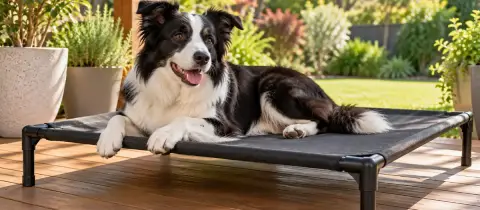
Yes, but the right kind. A thick, plush bed can be too warm on a hot day, so many dogs sprawl on tiles instead. Offer a raised cot or a cooling bed in warm weather, and keep shade, airflow and fresh water as the foundation.
We searched Amazon Australia for dog beds in each main style, then shortlisted beds that met all of these checks:
Well rated: a strong average rating with plenty of buyer reviews.
No red flags: no pattern of poor reviews, safety complaints or listing problems.
Available on Amazon Australia when we checked.
A clear bed style: bolster, flat mattress, donut or mat.
A stated size range and inside sleeping area where the listing gives one.
A washable cover.
A non-slip base.
These are researched picks, not products we've personally tested. We compared the specifications and features shown on each Amazon Australia listing, checked on 1 Nov 2026. We didn't accept payment from any brand, and no brand saw this page before it was published.
Left out this time: beds with stuffing for known chewers (see the crate bed and elevated bed guides), and beds whose listings don't give sizes.
Setting up a new bed
Put the new bed where your dog already likes to rest and add something that smells like home, such as an old T-shirt. Let your dog explore it in their own time and reward them for stepping on. Never push or force a dog onto it.
Many beds arrive compressed. Shake it out and let it expand, as the Feandrea and Sunheir listings advise. Wash covers before first use if the maker's care label says so, and fit crate mats snugly so they can't bunch up.
Keeping bed time safe
Supervise new beds, especially with puppies and chewers. No dog bed is truly chew proof, and brands that say so are describing their own product. If your dog chews the bed, take away torn foam or stuffing straight away.
Swallowed stuffing, foam or fabric can cause a blockage. PDSA advises contacting your vet immediately if your dog has eaten something it shouldn't, and never trying to make your dog vomit at home. Vomiting, a painful tummy, low energy and reduced appetite are among the signs of a blockage (PDSA, page read 1 November 2026, gut blockages in dogs). For chewers, a firm mat or a raised cot is often a safer choice than a plush bed.
Caring for a dog bed
Follow each bed's care label. Wash covers on the maker's cycle, dry them fully, and spot clean foam with mild soap, as the Furhaven listing advises. Shake and plump after washing, as the Feandrea listing suggests.
Vacuum the bed between washes to lift hair.
Dry covers and foam fully before putting them back, to avoid damp smells.
Keep beds away from heaters, as the Feandrea listing says to keep it away from heat sources above 40 degrees C.
A waterproof liner helps if your dog has accidents. See washable dog beds.
When to see a vet
Call your vet straight away if your dog has swallowed stuffing, foam or fabric from a bed, even if they seem fine. PDSA says not to wait and not to try to make your dog vomit at home (PDSA, page read 1 November 2026).
See your vet if your dog is stiff, slow to get up, limping, or reluctant to jump or use stairs. PDSA lists these among the signs of arthritis, and a new bed won't replace a proper check (PDSA, page read 1 November 2026). If your dog is panting heavily, drooling or collapsing in the heat, it's an emergency: cool them with cool, not ice-cold, tap water and go to the vet, even if they seem better.
Frequently asked questions
What is the best dog bed?
It depends on your dog. For a medium dog that likes to lean on a side, our top pick is the Furhaven L-shaped chaise. Curlers suit a donut like the Feandrea, big dogs need an XL mattress like the Sunheir, and crates need a flat mat. Use the chooser table above.
How do I measure my dog for a bed?
Measure your dog stretched out from nose to tail base, then pick a bed whose inside sleeping area is longer than that. Outside sizes include bolsters, so they overstate the space. Check the listing's weight guidance too, and size up if your dog sprawls.
Do dogs like beds with sides?
Many do, especially curlers and dogs that like to rest their chin on an edge. Dogs that sprawl, run warm or are stiff may prefer a flat mattress. If you're unsure, offer one of each and watch which your dog chooses.
Is an orthopaedic bed worth it for a young, healthy dog?
Usually not needed. A healthy young dog is fine on any supportive bed that fits, with a washable cover and a non-slip base. "Orthopaedic" has no standard meaning on pet beds, so pay for thicker foam when your dog is big, older or stiff, and ask your vet first if your dog seems sore.
What is the best dog bed for an older dog?
Choose a low-entry, supportive foam bed with a non-slip base, and consider a waterproof liner. A flat or low bolster bed is easier to step onto than a high rim. Check with your vet about stiffness. See our guide to beds for older dogs.
What is the best dog bed for a large dog?
Look for an XL or XXL flat mattress with thick foam so your dog doesn't sink to the floor. Check the inside sleeping area against your dog's stretched-out length. The Sunheir XXL is our pick, and our large dog bed guide has more.
Where should I put my dog's bed?
Somewhere quiet but close to the family, out of draughts, away from heaters and out of direct sun. Many dogs settle best near where people spend time. Beds don't treat anxiety, so if your dog struggles when alone, talk to your vet.
What is the best dog bed for hot weather?
A raised cot or a cooling bed. A thick plush bed can be too warm, so give your dog a lighter option in summer, plus shade, airflow and fresh water, which matter far more than the bed. See our guides to cooling dog beds and elevated dog beds.
Product details from each linked Amazon Australia listing, checked on 1 Nov 2026.
This guide provides general information and isn't a substitute for veterinary advice. If you're concerned about your dog's comfort or joints, speak with your vet.