Quick answer: The border collie is a medium-sized, lean herding dog, usually around 46 to 56 cm tall and 14 to 25 kg, with a rough or smooth double coat. Many are intense, quick learners that need daily exercise and real mental work. This guide helps you decide whether that suits your household.
Border collies were bred to work livestock, and a lot of what owners call "quirks" is that job showing up in the lounge room. This guide covers size, energy, training, grooming, health and the gear that fits, so you can plan for the dog you would actually be living with.
Border collie at a glance
Heights and weights below are the American Kennel Club's ranges, and the lifespan is from the Royal Kennel Club. Individual dogs vary, and working-line dogs can look different from show-line dogs.
| Border collie | |
|---|---|
| Size category | Medium |
| Height | Males about 48 to 56 cm, females about 46 to 53 cm |
| Weight | About 14 to 25 kg |
| Lifespan | Over 12 years (Royal Kennel Club) |
| Coat and shedding | Double coat, rough (longer, feathered) or smooth (shorter). Sheds, and more heavily at seasonal coat changes |
| Energy | Very high, with a strong need for mental work |
| Kids and other pets | Often affectionate with family, but herding instinct can show up as chasing or nipping, so supervise and teach early |
| Grooming needs | Regular brushing, more in shedding season. Rough coats tangle behind the ears, legs and tail |
How big do border collies get?
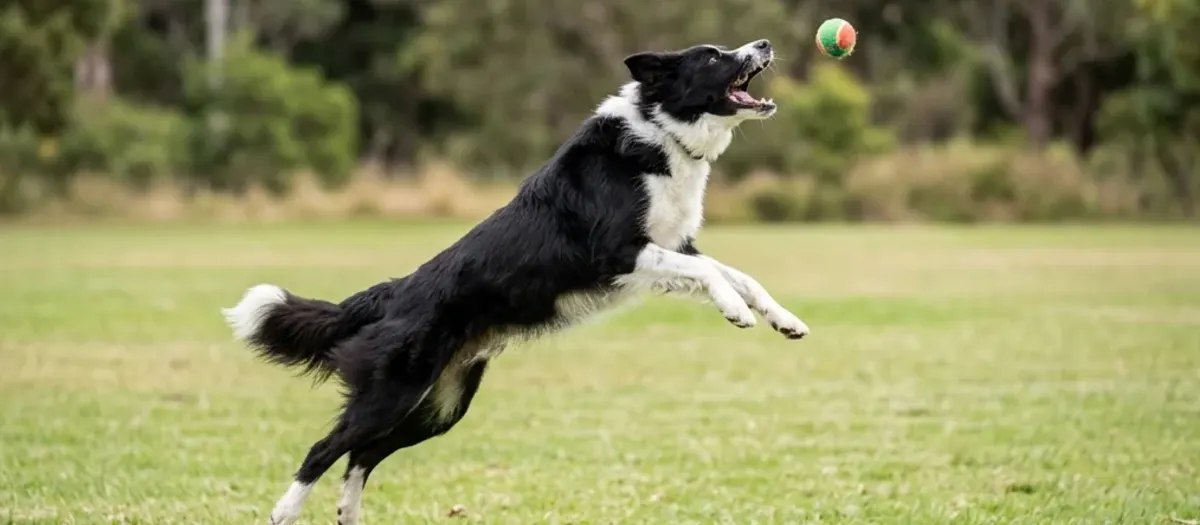
Most adult border collies stand roughly 46 to 56 cm at the shoulder and weigh about 14 to 25 kg, with females usually a little smaller than males. The Dogs Australia standard is a little tighter than the AKC range, at 48 to 53 cm for dogs and 46 to 51 cm for bitches, and gives no weight. It describes a well-proportioned working dog and calls any tendency to coarseness or weediness undesirable, so a healthy border collie should look lean and agile.
Because the breed is bred for work as much as looks, size varies between lines. If you are planning a crate, bed or harness, measure your own dog rather than relying on the breed range.
How long do border collies live?
The Royal Kennel Club breed profile gives a lifespan of over 12 years. That is a long commitment, and a dog that is bright and active at three will still need exercise and company at ten. Weight control, dental care and regular vet checks all help older dogs stay comfortable. Our arthritis in dogs guide covers what to watch for as joints age.
What is a border collie's temperament like?
Border collies are usually described as intelligent, energetic and eager to work, and many bond closely with their people. They tend to notice everything: movement, sounds and changes in routine. That sensitivity is part of why they learn fast, and also why some become anxious, noise-sensitive or fixated on moving things when their needs are not met.
These are tendencies, not guarantees. Early, calm socialisation matters, and some dogs are more reserved with strangers. If your dog already reacts to people, dogs or bikes, our reactive dog training guide is a good place to start, and a qualified, reward-based trainer can help with a plan.
How much exercise does a border collie need?
Plan on a lot, every day, and more than a walk around the block. The Royal Kennel Club breed profile lists more than two hours a day, and the AKC describes a very high-energy breed that needs substantial daily exercise along with mental stimulation. A tired body without a busy mind can still leave you with a restless dog, so mix running, fetch and games with training.
Sensible ways to spend that energy:
- Off-lead running in a safe, fenced area, with a reliable recall built up first.
- Fetch, frisbee or a flirt pole, kept in short bursts and not endless ball chasing, which can wind some dogs up and stress joints. See our guides to frisbees, flirt poles and ball launchers.
- Scent games, puzzle feeders and treat-dispensing toys for brain work.
- Trick training, agility or other dog sports. Our agility equipment guide covers home setups.
For general principles, see how much exercise a dog needs. Puppies and young dogs should not be over-exercised while their joints are growing, so ask your vet what suits your dog's age.
How do you train a border collie?
Start early and keep sessions short, varied and rewarding. Border collies usually learn quickly, which cuts both ways: they pick up good habits fast, and they pick up accidental ones just as fast. Reward what you want, such as calm behaviour on a mat, rather than waiting to correct what you do not.
Useful building blocks:
- Recall and a settle cue. The "off switch" is the most valuable thing you can teach a high-drive dog.
- Impulse control. Wait at doors, wait for the ball, leave it.
- Clicker training. A marker makes it easy to shape tricks and precise behaviour. See our dog training clickers and training treats guides.
- Calm walking. Pulling and lunging at movement are common. A comfortable no-pull harness helps while you train.
Use reward-based methods. Never use prong, choke or shock collars. They can hurt, and they can make a sensitive dog more fearful.
Why does my border collie nip heels or herd the kids?
Herding is instinct: stalking, staring, circling and nipping at heels are pieces of how a working dog moves stock. It is usually instinct, not aggression, but it can still hurt or frighten a child. Teach an alternative (a settle or a tug game), manage the environment with gates, and never leave a young child alone with a herding dog. If the behaviour is intense, see a qualified trainer or vet behaviourist. Our herding ball guide covers a safe outlet for the chasing urge.
How do you groom a border collie?
Brush a few times a week, and daily when the coat is blowing. Both rough and smooth coats are double coats, with a dense, insulating undercoat under a weather-resistant outer coat. Use a slicker brush or comb for the feathering behind the ears, legs, belly and tail, and an undercoat rake or deshedding tool for seasonal shedding.
Do not shave a double coat to keep the dog cool. The coat helps insulate against both cold and heat, and shaving can change how it grows back. Bathe only when needed, check ears and paws regularly, trim nails, and brush teeth. These guides help:
- Slicker brushes and dog brushes
- Deshedding brushes
- How often to wash a dog
- Dog nail clippers and how to clean a dog's teeth
Common border collie health problems
Border collies are often fairly robust, but the Royal Kennel Club's health testing list for the breed covers several inherited conditions:
- Hip dysplasia, where the hip joint forms loosely and can lead to arthritis.
- Collie eye anomaly, an inherited eye condition that can be screened for.
- Deafness and glaucoma risk, both of which have screening tests for parent dogs.
- Neuronal ceroid lipofuscinosis (NCL), an inherited neurological disease with a DNA test available.
- Sensitivity to some drugs (MDR1 gene change), seen in several herding breeds. Ask your vet whether testing is worth doing before certain medicines are used.
Responsible breeders health-test parent dogs, so ask what screening has been done. Injuries from high-speed play are also common in active dogs. If your dog limps after exercise, see our dog limping guide. A joint-friendly weight is one of the best things you can do, and a vet can advise on joint supplements if needed.
Is a border collie right for you?
A border collie can suit you if you are active most days, enjoy training, are home often, and see a dog that needs a job as a plus. It may be a poor fit if your household is out for long hours, you want a low-effort pet, or you have small children and no time to supervise.
| A good match if | Think again if |
|---|---|
| You enjoy daily running, training or dog sports | You want a dog that is happy with a short walk |
| You are home a lot or can arrange company | The dog would be alone for long stretches |
| You are patient with a sensitive, clever dog | You dislike dog hair or daily brushing in shedding season |
| You have a secure, well-fenced yard | Your fencing is low or your dog might escape |
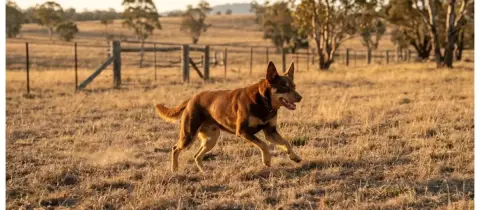
Border collies left with nothing to do may chew, dig, bark or find their own games. Our guides on separation anxiety, boredom and keeping a dog busy while you work explain what to look for. If you are also weighing up a similar working breed, see our kelpie guide.
Caring for a border collie in Australian weather
Heat is the main risk. A thick double coat and a love of running make overheating easy, so exercise early or late, bring water, rest in shade and never push a dog that is panting hard. Our keeping a dog cool in summer guide has the signs and the fixes, and never leave a dog in a hot car.
Ticks and snakes matter for dogs that run through bush and long grass. Know the paralysis tick season where you live, check your dog daily, and learn the steps for snake bite. Hot pavement can burn paws, so see burnt dog paws. Storms and fireworks distress many sensitive dogs, and our storm and fireworks guide can help.
Gear that fits a border collie
- Harness: measure your dog's chest at its widest point and choose by the maker's chart, since males and females differ. Medium to large sizes are typical. See no-pull harnesses and front-clip harnesses.
- Escape-proof harness: clever dogs can slip out of loose gear. See escape-proof harnesses.
- Lead: a long lead is handy for recall practice in open spaces.
- Brushes: a slicker plus an undercoat tool suit the double coat. See slicker brushes and deshedding brushes.
- Mental work: puzzle toys and lick mats, used under supervision.
- Crate: pick by adult size, with room to stand, turn and lie down. See medium dog crates.
- Bed: a supportive bed suits an active dog's joints. See orthopaedic dog beds.
- Cooling: a cooling mat or cooling vest can add comfort in warm weather but does not replace shade and water.
- Heavy panting, drooling, wobbling or collapse after exercise or in warm weather: this is an emergency. See our heat guide.
- A seizure, especially a first one, or unexplained twitching or confusion.
- Limping, stiffness or trouble rising that lasts more than a day or two, or sudden or severe pain. See dog limping.
- Signs of a tick or snake bite, such as sudden weakness, vomiting or wobbly back legs. See paralysis ticks and snake bite.
- Squinting, cloudy eyes or discharge from the eye.
- Sudden fearfulness, aggression or compulsive behaviour that is new for your dog.
Frequently asked questions
Are border collies good family dogs?
They can be, in the right home. Many are affectionate and loyal, but their herding instinct and high energy mean they need training, exercise and supervision around children. Teach kids to be calm and respectful, and don't leave small children alone with the dog.
Can a border collie live in a small home or unit?
Size of the home matters less than how much exercise, training and company the dog gets. A border collie that is walked, run and mentally challenged every day may cope, but a bored dog can become noisy or destructive. Check your local rules on barking and fencing.
What is the difference between a border collie and a kelpie?
Both are working herding breeds with plenty of drive. The border collie is known for a close, intense "eye" when herding, and the kelpie is an Australian breed developed for working stock in the heat. Both need daily activity and a job. Our kelpie guide has the details.
What about a kelpie cross border collie?
A cross has no breed standard, so size, coat and temperament vary with the parents. Expect a very active, clever dog that needs the same daily exercise and mental work as either parent, and ask your vet about health checks for both breeds.
When do border collies calm down?
There is no fixed age, and every dog is different. Many mature dogs settle somewhat with age and training, but a young border collie needs patient teaching of calm behaviour. Don't expect a high-drive dog to relax on its own without structure.
What should I feed a border collie?
Feed a complete and balanced food suited to your dog's age, size and activity, and adjust to keep a lean body condition. Active dogs often need more food, but extras add up. Ask your vet to check your dog's weight and food plan.
Do border collies bark a lot?
Some do, especially when bored, anxious or excited. Barking is communication, so look at the cause. Exercise, mental work and teaching a quiet cue help. Our barking guide explains what to try.
Related guides
- Border collie dog food
- Kelpie guide
- How much exercise does a dog need?
- Dog agility equipment
- Reactive dog training
- Keep your dog cool in summer
- Dog puzzle toys
Sources
- Dogs Australia, Border Collie breed standard: https://dogsaustralia.org.au/members/breeds/breed-standards/Border-Collie (page read 25 November 2026)
- Royal Kennel Club (UK), Border Collie breed profile and health testing list: https://www.royalkennelclub.com/search/breeds-a-to-z/breeds/pastoral/border-collie/ (page read 25 November 2026)
- American Kennel Club, Is the Border Collie the Right Breed for Your Lifestyle?: https://www.akc.org/expert-advice/dog-breeds/border-collie-right-for-you/ (page read 25 November 2026)
- American Kennel Club, Official Standard of the Border Collie: https://images.akc.org/pdf/breeds/standards/Border_Collie.pdf (page read 25 November 2026)
This guide provides general information and isn't a substitute for veterinary advice. If you're concerned about your dog's health, speak with your vet.