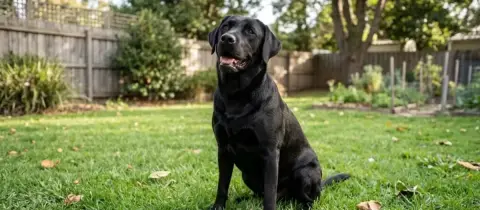
Quick answer: The golden retriever is a large, friendly gundog, usually roughly 25 to 34 kg as an adult (the Dogs Australia standard sets heights only), with a dense water-repellent coat that sheds a lot. Many are gentle, eager to please and good with families, but they need daily exercise, regular brushing and good health checks.
Goldens are popular for good reason, but they are big, hairy and full of energy for years. This guide covers what to expect so you can decide if one suits your home.
Golden retriever at a glance
| Typical range | |
|---|---|
| Size category | Large |
| Height at the shoulder | Dogs about 56 to 61 cm, bitches about 51 to 56 cm |
| Weight | Roughly 25 to 34 kg (the Dogs Australia standard sets heights only) |
| Lifespan | Over 10 years (Royal Kennel Club) |
| Coat and shedding | Dense, water-repellent double coat with feathering; sheds year-round, heavier in seasonal blows |
| Energy | High when young; needs daily exercise and mental work |
| Kids and other pets | Often good with children and other pets when well socialised; individual dogs vary |
| Grooming | Brush several times a week, daily in heavy shedding |
How big do golden retrievers get?
Golden retrievers are a large breed. Males commonly stand about 56 to 61 cm at the shoulder, while females are a little smaller and lighter. Adults weigh roughly 25 to 34 kg, though the Dogs Australia standard sets heights only. Growth rates vary, so ask your vet how your young dog is tracking.
Keep your dog lean. You should be able to feel the ribs under a light covering of fat, because extra weight puts strain on joints.
How long do golden retrievers live?
The Royal Kennel Club breed profile gives a lifespan of over 10 years, and many goldens live to around 10 to 12. Lifespan varies with genetics, weight, exercise and health care. Choosing parents with health testing, keeping your dog at a healthy weight and having regular vet checks all help give them the best chance of a long, comfortable life.
What is a golden retriever's temperament like?
Goldens are often described as friendly, intelligent, kind and keen to please. Many love people, enjoy training and get along with children and other pets. They were bred to retrieve, so they love carrying things in their mouths and many love water.
That friendliness means they are rarely guard dogs, and many dislike being left alone for long stretches. A bored young golden can become destructive, so plan for company, training and enrichment. Individual dogs vary, so look at the temperament of the parents too.
How much exercise does a golden retriever need?
Plan on a lot. The Royal Kennel Club breed profile lists more than two hours a day for an adult golden, which can be a couple of good walks plus time to play, sniff and swim. Needs change with age and health, so ask your vet. Fetch, swimming and training games suit them well. Mental exercise matters as much as physical, so mix in puzzle toys and short training sessions.
Puppies should not be over-exercised while their joints are developing, so ask your vet what is right for your dog's age. Our guide to how much exercise a dog needs has more detail.
How do you groom a golden retriever?
Brush a golden several times a week, and daily during heavy shedding, to remove loose undercoat and prevent mats behind the ears, under the legs and on the feathering of the tail and chest. A slicker brush and an undercoat rake or deshedding tool work well on this coat.
Bathe only as needed, because over-washing can dry out the skin. Don't shave a golden: the double coat helps protect against heat and sun when it is kept clean and brushed. Check and clean the ears regularly, since floppy ears and swimming go together. See how often to wash a dog and our dog grooming kit guide.
Common golden retriever health problems
The Royal Kennel Club's health testing list for goldens covers hip and elbow dysplasia, inherited eye conditions including progressive retinal atrophy, and ichthyosis, an inherited scaly skin condition. Vets also commonly see allergies, hot spots and ear trouble in thick-coated, water-loving dogs, and lumps should always be checked. Not every dog will be affected.
Ask the breeder about hip, elbow, eye and heart testing of the parents, and book regular vet checks. Keep your dog lean, and talk to your vet about joint care as your dog ages. Our guides to arthritis in dogs, hot spots and itchy skin are useful starting points.
Is a golden retriever right for you?
A golden may suit you if you want a social, trainable dog, have time for daily exercise and grooming, and can fit a large dog into your home and car.
It may not suit you if you are away from home most of the day, dislike dog hair on everything, or want a low-maintenance dog. Plan for a big dog's food, space and vet needs before you commit.
Caring for a golden retriever in Australian weather
That thick coat makes heat a real concern. Walk early or late in summer, always provide shade and fresh water, and never leave a dog in a car. Read how to keep your dog cool in summer and do dog cooling mats work.
In tick country, check your dog daily and talk to your vet about prevention. See our guide to paralysis ticks. Goldens that love the water also pick up ear trouble, so dry the ears after a swim. Our dog beach tips cover safe days out.
On food, choose a complete and balanced diet suited to your dog's age and size, and ask your vet about portions. Large breed puppies have particular needs. Our puppy food guide is a starting point.
Gear that fits a golden retriever
- Harness: Measure around the deepest part of the chest and match it to the size chart. See our large dog harness guide.
- Brush: Use a slicker brush plus an undercoat tool for the double coat: slicker brushes and deshedding brushes.
- Bed: Choose a large bed sized to your dog's length when stretched out: large dog beds and orthopaedic beds for older dogs.
- Crate: An adult golden needs a large crate they can stand, turn and lie down in: large dog crates.
- Cooling: Help a thick coat cope with heat with a cooling mat or a dog pool.
- Water play: Many goldens love retrieving, so see water toys for dogs.
- Ticks: Keep a tick remover handy.
- Go straight away for a swollen, bloated or hard belly, retching without bringing anything up, or restlessness and pain. This can be an emergency.
- Go straight away for collapse, or a suspected tick or snake bite with sudden weakness or wobbliness. See paralysis ticks and snake bite.
- Limping, struggling to stand, or reluctance to jump or climb stairs. See dog limping.
- Lumps that are new, growing or changing.
- Scratching, licking or chewing at the skin, or red, moist patches.
- Head shaking, or smelly or sore ears.
- Coughing, or tiring very quickly on walks.
- Eating something they shouldn't. See dog poisoning.
Frequently asked questions
Do golden retrievers shed a lot?
Yes. Goldens shed all year and have heavier periods when they lose undercoat, and the Royal Kennel Club profile lists the breed as shedding. Brushing several times a week keeps loose hair under control, but expect some on clothes, floors and the car. See our pet hair remover guide.
Are golden retrievers good family dogs?
Many are. The Dogs Australia standard describes a kindly, friendly and confident dog, and plenty of goldens are gentle and sociable with children. Even so, a large, bouncy young dog can knock a small child over, so supervise, train early, give the dog a quiet place to rest, and teach children to treat a dog politely.
Can golden retrievers be left alone?
Many goldens struggle with long periods alone, because they are bred to work closely with people. Build alone time up gradually, give exercise and attention first, and arrange company if you are out most of the day. Our guide to separation anxiety explains the signs to watch for.
Do golden retrievers bark a lot?
They are not usually known as heavy barkers, though individual dogs vary. A bored, lonely or under-exercised golden may bark more, so look at the cause before the noise. More exercise, company and training often help. See how to stop dog barking.
Do golden retrievers like to swim?
Many do. The breed was developed to retrieve, and the Dogs Australia standard describes a dense, water-resisting undercoat. Not every golden takes to water, though, so introduce it gently, never force it, and dry the ears afterwards. See how to teach a dog to swim.
Are golden retrievers easy to train?
Often, yes. The Dogs Australia standard calls the breed biddable and intelligent, and many goldens will work happily for food or a toy. Start early, keep sessions short and positive, and expect a young dog to be easily distracted. Our puppy training schedule is a good start.
Do golden retrievers chew a lot?
Young goldens can, especially when teething or bored, and as retrievers many like to carry things in their mouths. Offer safe chews and toys under supervision, put shoes and children's toys away, and give more exercise and training. See how to stop dog chewing.
Related guides
- Golden retriever dog food
- Labrador guide
- Groodle guide
- Border collie guide
- Keep your dog cool in summer
- Large dog harness guide
Sources
- Dogs Australia, Golden Retriever breed standard: https://dogsaustralia.org.au/members/breeds/breed-standards/Golden-Retriever (page read 25 November 2026)
- Royal Kennel Club (UK), Retriever (Golden) breed profile and health testing list: https://www.royalkennelclub.com/search/breeds-a-to-z/breeds/gundog/retriever-golden/ (page read 25 November 2026)
This guide provides general information and isn't a substitute for veterinary advice. If you're concerned about your dog's health, speak with your vet.