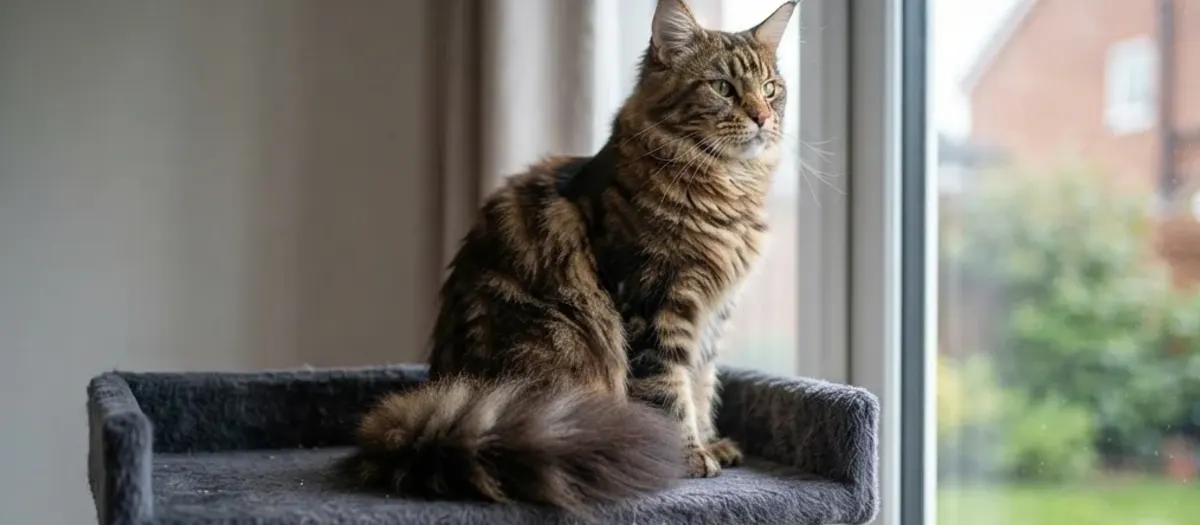
Quick answer: The Maine Coon is one of the largest pet cat breeds, with a shaggy coat, a bushy tail and a friendly, sociable nature. Males can reach about 9 kg, and the breed matures slowly. Maine Coons need regular combing, measured meals, gear sized for a big cat, and vet and breeder attention to heart and hip health.
Maine Coons are big, fluffy and easy to love, but a cat this size changes what you buy and what you check. This guide covers size, personality, grooming, health and gear. If you're comparing breeds, our ragdoll cat guide sits alongside it.
Quick picks
Ordinary cat gear is often too small for an adult Maine Coon. These are the bigger items we'd look at first, plus a few related extras.
| Pick | Product | Why |
|---|---|---|
| Food | Royal Canin Maine Coon Adult, 4 kg | The maker's breed formula for adult cats over 15 months. Optional, not required. |
| Cat tree | PAWZ Road Solid Cat Tree, 150 cm | A tall wooden tree with a 60 by 56 cm base for a heavy climber. |
| Litter box | suzzipaws Stainless Steel Litter Box XL | A long, high-sided tray for a long cat. |
| Comb | Andis Steel Comb, 190 mm | A steel comb for working through a shaggy coat to the skin. |
Maine Coon at a glance
Sources describe the breed in broadly similar terms. Individual cats vary, so treat these as typical ranges, not promises.
| Maine Coon | |
|---|---|
| Size category | Large; the Cat Fanciers' Association calls it the largest pedigreed cat |
| Weight | About 3.6 to 9 kg overall (VCA gives 8 to 20 lb); males can reach or pass 9 kg (CFA) |
| Time to full size | Slow; up to about three years (CFA), so expect gradual growth |
| Lifespan | About 12 to 15 years (VCA) |
| Coat and shedding | Thick, shaggy, silky coat, shorter at the shoulders and longer on the sides, belly and back legs |
| Energy | Moderate; sociable and playful, not frantic |
| Good with kids and other pets | Often, when introductions are gentle |
| Grooming needs | Combing about one to three times a week, more in heavy shedding |
How big do Maine Coons get?
Maine Coons are among the biggest pet cats. The Cat Fanciers' Association says a mature male can reach or pass 20 lb (about 9 kg), and females are usually smaller. VCA gives a wider range of 8 to 20 lb, or roughly 3.6 to 9 kg. Individual cats vary a lot.
They grow slowly. The Cat Fanciers' Association says the breed can take up to three years to reach full growth, so a young Maine Coon may keep filling out well after the kitten stage. Length and coat make them look even bigger than the scales say, which matters for carriers, beds and litter boxes.
Big does not mean overweight. VCA says extra weight raises the risk of joint damage and osteoarthritis in cats, and its Maine Coon page advises several small meals a day rather than free feeding. Your vet can score your cat's body condition at each check and tell you what a healthy weight looks like for them.
What is a Maine Coon's personality like?
Maine Coons are usually friendly, sociable and gentle, which is why they're often called gentle giants. The Cat Fanciers' Association describes them as sweet-tempered, loyal and easy to train, but also fairly independent. VCA calls them mellow, and says they chirp and trill rather than meow loudly.
That describes a tendency, not a guarantee. Early handling and a calm home shape each cat. VCA notes that Maine Coons can be a bit clumsy when jumping, so place perches and steps with that in mind. Plenty of play, with a wand toy you control and put away afterwards, suits a big, intelligent cat. See our cat enrichment ideas for more.
How long do Maine Coons live?
VCA gives a typical lifespan of about 12 to 15 years for Maine Coons. Many cats do better or worse than a breed average, and it depends on genetics, weight, dental health, diet and whether the cat is kept safe indoors. A healthy weight, tooth care and regular vet checks help your vet catch problems early.
Cats from parents that have been screened for inherited heart and hip problems may have better odds, but screening lowers risk rather than removing it. Ask your vet what to expect for your own cat.
Do Maine Coons shed a lot, and how do you groom one?
Yes, they shed, and the long coat can mat. VCA rates shedding 4 out of 5 and suggests a metal comb once a week, while the Cat Fanciers' Association suggests combing two or three times a week to control shedding, hairballs and matting. A good rule is to start at the weekly end and comb more often when the coat is thick.
Use a slicker brush for the first pass, then a steel comb to the skin, since the comb is how you find tangles early. Check behind the ears, under the legs, along the belly and around the britches, where mats form. Never cut a mat out with scissors, because skin is easily nicked. Take tight or painful mats to a groomer or vet. Our cat brushes guide and how to groom a cat cover tools and technique, and a steel comb like the Andis 190 mm is the kind of tool we mean. Our ragdoll brush guide sets out the same slicker-then-comb routine step by step.
What health problems are Maine Coons prone to?
The best-known concern is hypertrophic cardiomyopathy (HCM), a thickening of the heart muscle. Cornell Feline Health Center lists Maine Coons among the breeds where HCM is more prevalent. The Cat Fanciers' Association also names hip dysplasia and HCM as the conditions breeders test for.
Not every Maine Coon will have these, and none can be diagnosed from a description online.
- HCM: many cats with it show no obvious illness for a long time. Cornell says a heart ultrasound (echocardiogram) is the diagnostic standard, and newer genetic tests may show a higher risk, though a vet should help interpret the result. Not every cat with a gene change goes on to develop the disease.
- Back-leg clots: Cornell says clots from a diseased heart can block blood flow, most often to the back legs, causing sudden pain or, in severe cases, paralysis. This is an emergency.
- Hip dysplasia: Cornell says it is rare in cats but seems more common in breeds such as Maine Coons, and that obesity adds pressure on the hip joints. Breeding cats are checked by x-ray. Limping, bunny-hopping or reluctance to jump are worth a vet visit.
- Weight: a heavy frame puts extra strain on joints, so keep your cat lean (VCA).
If you're buying a kitten, ask the breeder for the parents' heart and hip screening results, and have your own vet check the kitten soon after you bring them home.
What should a Maine Coon eat?
A Maine Coon needs a complete and balanced food that suits their life stage, fed in measured portions. No cat needs a breed formula. Royal Canin's Maine Coon food is an option, and its listing says it's for adult cats over 15 months. See our Maine Coon cat food guide for how the picks compare. Our ragdoll cat food and British Shorthair cat food guides use the same method for those breeds.
Because the breed is slow to mature, ask your vet or breeder when to move from kitten to adult food, and use the pack's feeding guide for your cat's weight. Wet food adds water to the day, and our wet cat food guide and kitten food guide help with that. The listing makes heart and joint claims for the breed formula; food does not prevent or treat heart or hip disease, so screening and vet care are what count. Keep treats to a small share of the day, as in how many treats a cat can have.
Can a Maine Coon be an indoor cat?
Yes. A Maine Coon can live happily indoors if there's plenty to climb, scratch and chase. Keeping a cat in, or in a secure enclosure, also protects them from cars, heat and ticks. Some Australian councils require cats to be contained, so check cat curfew rules for your area.
Give them tall, sturdy climbing space, daily play, and a catio or window catio for fresh air. A thick coat means a big cat feels the heat, so see keeping your cat cool in summer. If you live in a tick area, ask your vet about suitable cat products, and see our paralysis ticks page.
Is a Maine Coon right for you? Maine Coon or ragdoll?
A Maine Coon suits you if you want a big, sociable cat and will comb the coat, keep up vet checks and buy sturdier gear. It may not suit you if you want a low-fuss cat, or you're away for long days. Both Maine Coons and ragdolls are large and affectionate, and the practical difference is the coat and how they carry themselves.
- Coat: a Maine Coon's coat is shaggy with a bushy tail. Our ragdoll guide describes a silky coat with little woolly undercoat.
- Temperament: the Cat Fanciers' Association calls Maine Coons fairly independent as well as sociable. Ragdolls are often described as more floppy and docile.
- Health checks: both breeds are screened for HCM. See the ragdoll cat guide.
Meet adult cats of each if you can, because individuals vary more than breeds.
Gear that fits a Maine Coon
Match gear to the adult cat, not the kitten you bring home, and check each product's stated limits against your cat's weight and length.
- Cat tree: the PAWZ Road Solid Cat Tree is 150 cm tall with a 60 by 56 cm base. The listing says it's for cats up to 12 kg each and names Maine Coons. See cat trees for large cats.
- Litter box: the suzzipaws stainless steel box is about 60 by 41 cm and 30 cm high, with a 12 kg weight limit per the listing. The listing calls it both XL and Medium, so check the dimensions. Our litter boxes for large cats guide covers sizing, and cat litter boxes has more.
- Bed: pick a roomy one that lets them stretch. See cat beds for large cats.
- Scratcher: go tall enough for a full stretch. See tall cat scratching posts.
- Carrier: choose one with a stated weight limit and room to turn around. Check cat carriers, and measure your cat first.
- Harness: measure the chest and use a size chart, and supervise outdoors. See cat harnesses.
- Brush and comb: a slicker plus steel comb. See cat brushes.
You may also like
Bigger cats often need bigger bowls, beds and scratchers. These related picks are worth a look.
aumuca Self-Cleaning Slicker Brush: A good first pass through a long, shaggy coat before the comb. See our cat brushes guide.
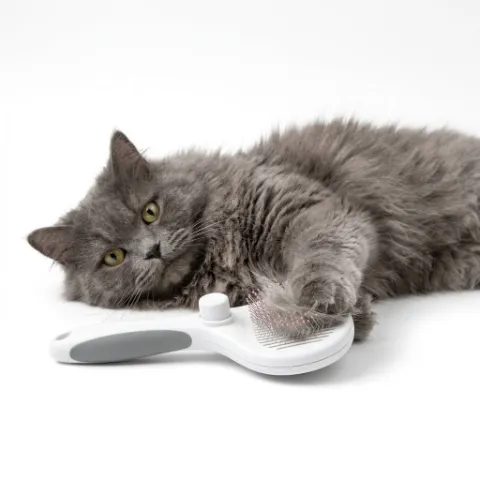
CATISM large cat cave bed: A bed sized for big cats that like to curl up. See cat beds for large cats.
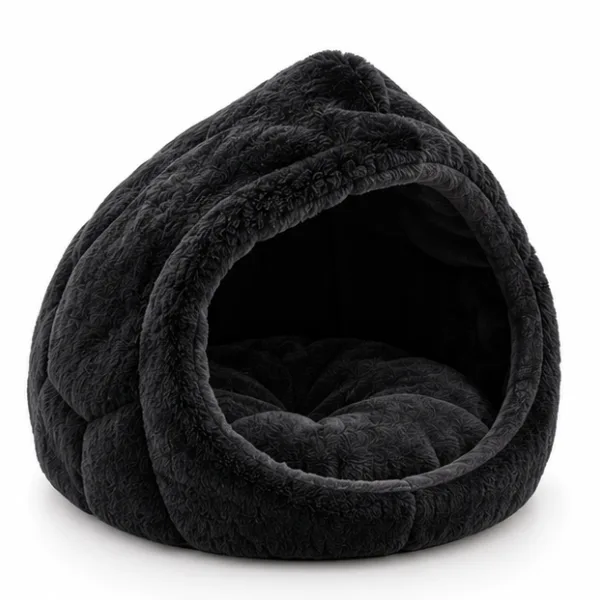
SmartCat Ultimate Scratching Post: A tall post a long cat can stretch out on. See tall cat scratching posts.
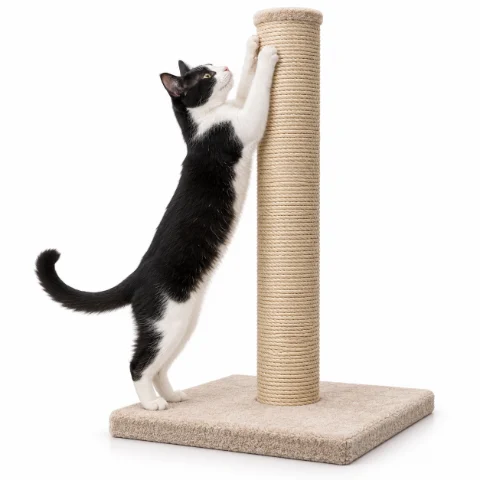
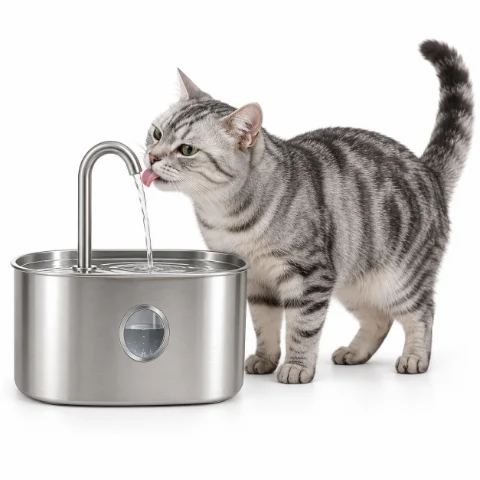
OMIPAWZ 3.2 L stainless steel fountain: A bigger water tank for a bigger drinker. See cat water fountains.
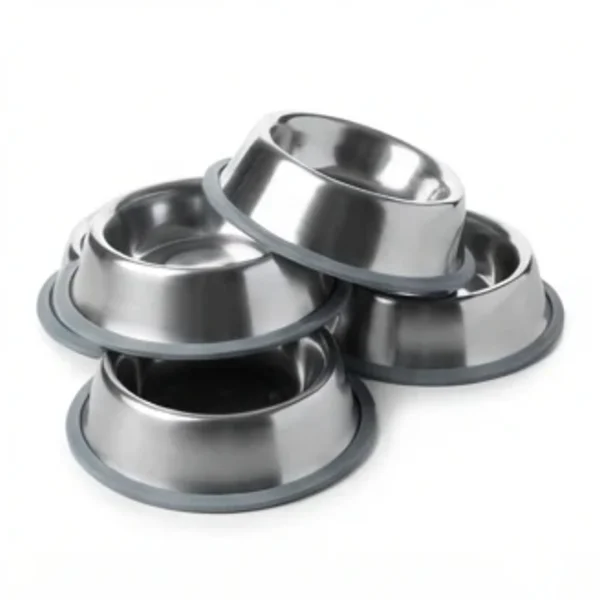
Petdream shallow stainless steel bowls, 4 pack: Wide, shallow bowls that suit a broad face. See whisker fatigue.
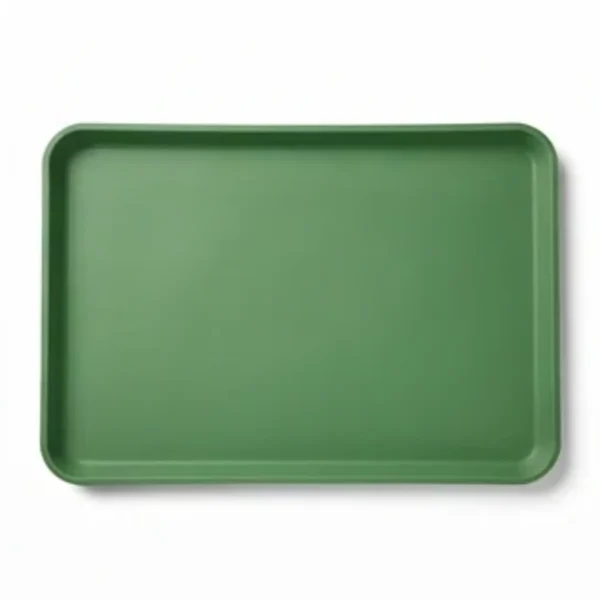
Bartuke extra large silicone mat, 86.4 by 56 cm: A large mat that catches spills from a messy eater. See cat feeding mats.
When to see a vet
Book a vet visit promptly if your Maine Coon:
- Breathes fast or with an open mouth, even when resting, faints, or seems unusually tired. This can be a sign of heart trouble, so go straight to a vet.
- Suddenly drags a back leg, cries out in pain, or has cold, weak hind legs. Cornell says clots linked to heart disease can cause this, and it is an emergency.
- Limps, bunny-hops, or is reluctant to jump or climb.
- Has mats you can't comb out, or sore, red skin under them.
- Gains or loses weight and you can't explain why.
- Is a kitten that is wobbly or weak in the back end.
Ask your breeder for heart and hip screening results before buying a kitten, and ask your vet about heart checks even if your cat seems well. See our guide on how to clean a cat's teeth too.
Frequently asked questions
Are Maine Coons good with children and other pets?
Often, yes. VCA describes the breed as mellow and affectionate with people, cats and dogs. Introductions should still be slow, and young children should be supervised so the cat is handled gently. See introducing a kitten to an older cat for a step-by-step approach, and give each pet its own space.
Can a Maine Coon be left alone?
Many adult Maine Coons cope with a normal working day if they have food, water, a clean litter box and things to do. Because the breed is sociable, long absences can lead to boredom. Interactive toys, window perches and a second pet can help, and a pet camera lets you check in.
Are Maine Coons hypoallergenic?
No. No cat breed is truly hypoallergenic, because every cat produces the main cat allergen, Fel d 1, and a long coat spreads it around. Some people react less to one individual cat than another, which can't be predicted by breed. Spend time with the cat first, and see living with a cat allergy.
Are Maine Coons noisy?
Not usually. The Cat Fanciers' Association says the breed isn't considered talkative, and VCA says Maine Coons chirp and trill rather than meow loudly. Individuals vary, and a cat that suddenly gets much noisier, especially at night, may be bored, hungry or unwell, so a vet check is worthwhile if the change is new.
Can you walk a Maine Coon on a harness?
Some do, with patience and supervision. Measure around the chest behind the front legs and choose by the size chart and weight range, because many cat harnesses are made for smaller cats. Never leave a cat tethered alone. Start indoors in short sessions, and see our cat harness guide.
Do Maine Coons need a bigger carrier?
Usually, yes. An adult is long and heavy, so choose a carrier with a stated weight limit that covers your cat, plus room to stand and turn around. Measure your cat from nose to base of tail first. Our cat carriers guide and getting a cat into a carrier can help.
What should I ask a Maine Coon breeder?
Ask for the parents' heart and hip screening results, and whether the kitten has been checked by a vet. The Cat Fanciers' Association says testing for hip dysplasia and HCM helps keep the breed's gene pool healthy. Meet the kitten's parents if you can, and be wary of any seller who can't answer.
Related guides
- Maine Coon cat food
- Best brush for a ragdoll (and other long coats)
- Ragdoll cat food
- British Shorthair cat food
- Ragdoll cat guide
- Cat trees for large cats
- Litter boxes for large cats
- How to groom a cat
- Cat curfew rules
- All cat guides
Sources
- Cat Fanciers' Association, Maine Coon breed profile: https://cfa.org/breed/maine-coon/ (page read 27 November 2026)
- VCA Animal Hospitals, Maine Coon: https://vcahospitals.com/know-your-pet/cat-breeds/maine-coon (page read 27 November 2026)
- Cornell Feline Health Center, Hypertrophic cardiomyopathy: https://www.vet.cornell.edu/departments-centers-and-institutes/cornell-feline-health-center/health-information/feline-health-topics/hypertrophic-cardiomyopathy (page read 27 November 2026)
- Cornell Feline Health Center, Hip dysplasia: https://www.vet.cornell.edu/departments-centers-and-institutes/cornell-feline-health-center/health-information/feline-health-topics/hip-dysplasia (page read 27 November 2026)
- VCA Animal Hospitals, Overweight, obesity and pain in cats: https://vcahospitals.com/know-your-pet/Overweight-Obesity-and-Pain-in-Cats-Overview (page read 27 November 2026)
This guide provides general information and isn't a substitute for veterinary advice. If you're concerned about your cat's health, speak with your vet.