The best brush for a ragdoll cat (and the comb that matters more)
By Anish PuriUpdated 27 Nov 202614 min readResearched, not tested by us
Research guide. WhiskerFinds may earn a commission from links, at no extra cost to you.
Quick answer: The best brush for a ragdoll is a slicker brush for the everyday once-over, followed by a steel comb that reaches the skin. Our top pick is the aumuca self-cleaning slicker, with the Andis steel comb as the tool that matters more. Mats close to the skin are a job for a groomer or vet.
A ragdoll's silky coat looks easy, and it is easier than many long coats. It still tangles in a few predictable spots, and a brush that only skims the top won't find them. This guide picks five tools, shows what each one is for, and covers how often to brush, where ragdolls mat and what to do when one forms. For the whole routine, see how to groom a cat, and for the breed itself, our ragdoll cat guide. If you want a general round-up for all coats, try our cat brushes guide. This page is about one breed's coat, and our ragdoll cat food guide covers feeding.
Quick picks
Our top pickBest overall
aumuca Self-Cleaning Slicker Brush
Rubber-tipped pins and a release button, for the regular once-over
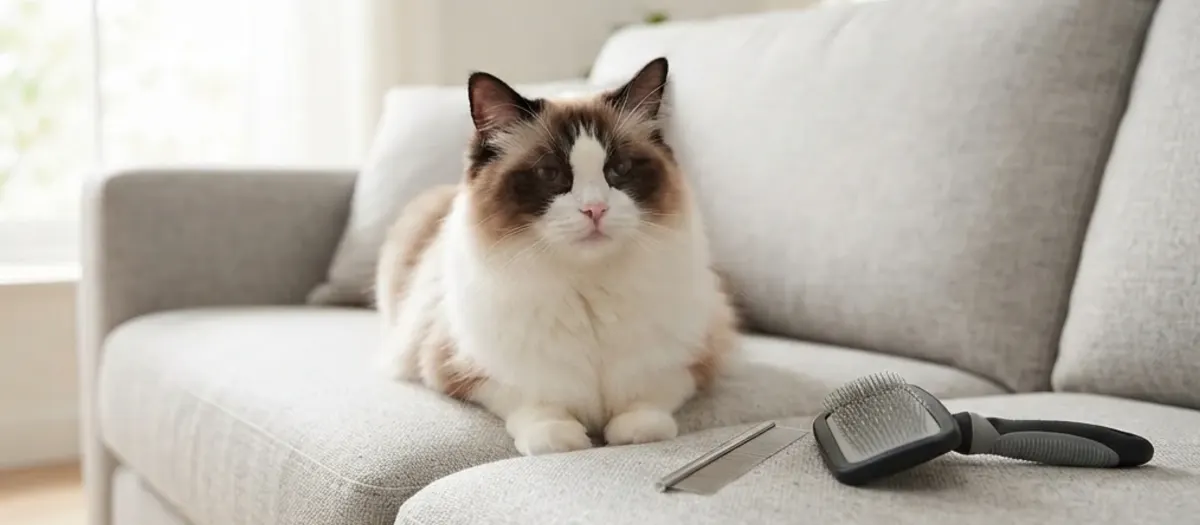
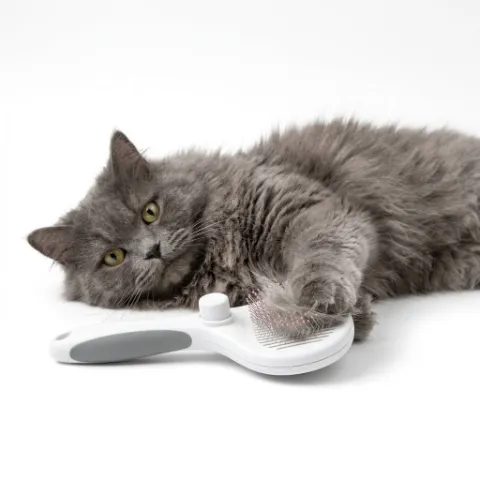
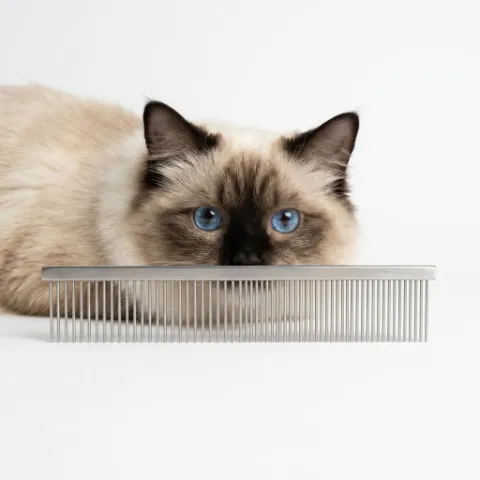
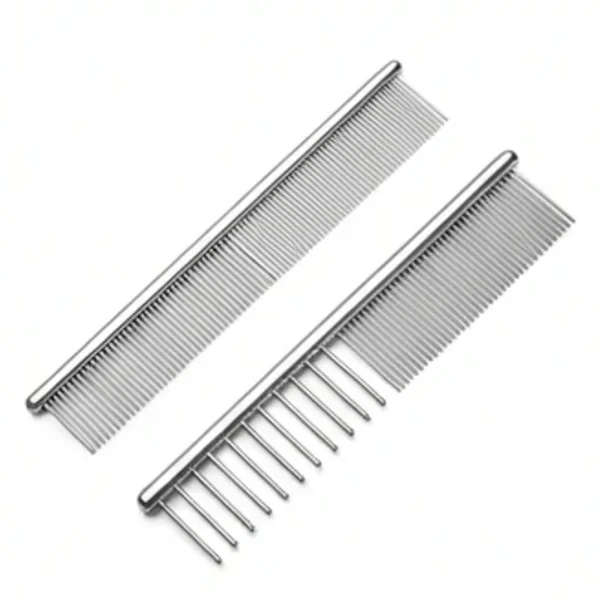
Pictures are illustrations, not the actual products.
Why does the comb matter more than the brush for a ragdoll?
A comb tells you the truth about the coat. A slicker glides over the top layer, so a coat can feel smooth while a tangle sits underneath. A steel comb pulled through in small sections goes down to the skin, and if it snags, you've found the problem while it is still small.
The Cat Fanciers' Association says the ragdoll coat is mostly guard hairs with little to no dense undercoat, so ragdolls mat less easily than many breeds, and it recommends a steel comb at least once or twice a week (Cat Fanciers' Association, page read 27 November 2026). That is why the slicker is the helper and the comb is the main tool here.
How do you brush a ragdoll, and how often?
Brush in short, calm sessions with a comb or brush, working in small sections, and stop when your cat has had enough. The Cat Fanciers' Association recommends combing a ragdoll at least once or twice a week, while International Cat Care says long-haired cats generally need grooming at least daily (International Cat Care, page read 27 November 2026). Our ragdoll guide lands in between: a few sessions a week, and daily when the coat is shedding heavily or you've found a tangle.
A simple order that works for most ragdolls:
Let your cat sniff the tool, then stroke with your hand first.
Slicker over the back and sides with light pressure, going with the lie of the coat.
Comb in small sections down to the skin, starting at the chest and sides, where most cats tolerate it.
Check the tangle spots (next section), then finish with a treat.
Sessions should last only as long as your cat is comfortable. International Cat Care lists the signs that a cat has had enough: twitching skin, a swishing or thumping tail, ears turning back, lip licking, sudden freezing, growling or hissing. RSPCA Australia describes similar signs and says to pause and try again later (RSPCA Australia knowledge base, page read 27 November 2026). Start kittens young, with very short sessions.
Our picks in detail
1. aumuca Self-Cleaning Slicker Brush: best overall
A slicker brush with stainless steel pins that have round rubber tips, and a button that pops the collected hair off the head. The listing says it suits short, medium and long coats and suggests using it 3 to 4 times a week. The listing also says the pins are bent to reach into the coat, so on a ragdoll use light strokes and don't press the pins into the skin.
On a ragdoll it is the quick, regular tool: it lifts loose hair and smooths the coat before you comb. It isn't the tool that finds tangles.
Pros: rubber-tipped pins; one-click hair release; hangs on a loop; easy to use in short sessions
Cons: can skim over tangles under the surface; pulls on a mat; needs a light hand on thin-skinned areas
Best for: the regular once-over, and first-time ragdoll owners
Skip it if: the coat is already matted, or your cat dislikes pins (try the glove)
A 190 mm stainless steel comb. The listing says it removes tangles, dirt and loose hair and works as a finishing comb for cats and all dogs. It is the tool Cat Fanciers' Association advice points to for ragdolls, and the one that shows whether your brushing has reached the skin. The listing gives no tooth spacing.
Pros: smooth steel teeth; long enough for the body and ruff; shows tangles early
Cons: teeth can catch on tight mats; the listing gives little detail beyond length and material
Best for: combing to the skin after the slicker, especially behind the ears and in the britches
Skip it if: you want one tool only, or the coat has tight mats
3. 2-pack round-ended steel combs: best budget comb
Two stainless steel combs with rounded tips and anti-slip handles: a larger one (7.4 inches, about 18.8 cm) and a smaller one (6.3 inches, about 16 cm). The listing says to use the larger comb for bigger tangles and the smaller for detailed areas. On a ragdoll the small comb suits the face-side ruff and the tight spots under the legs. The listing says the teeth are spaced differently on each comb.
Pros: two sizes; rounded tips; two combs in the pack, so you have a spare
Cons: the listing gives no tooth spacing; shorter than the Andis, so slower on the body
Best for: owners who want a comb for small areas as well as the body
Skip it if: you already own a comb you like, or you want one long comb for the whole coat
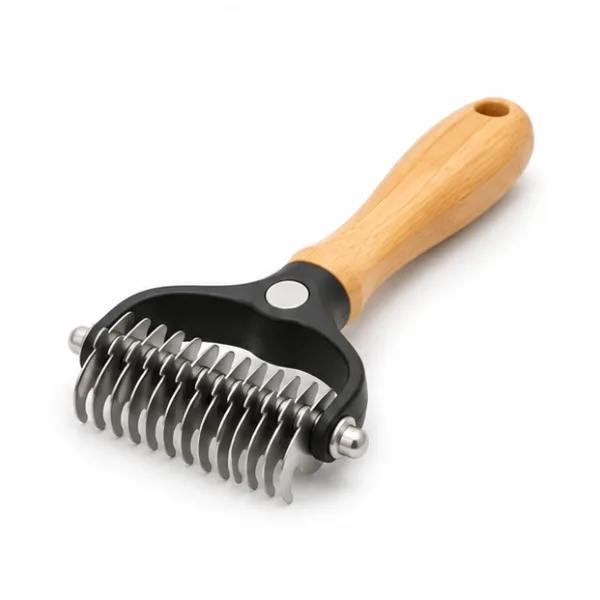
4. Poodle Pet Dematting Rake: for mats only, use with care
A rake with long steel blades (the listing says 2.5 inches, about 6.4 cm) and a rubber handle. The listing says it is for matted or knotted hair on longhaired cats, dogs, rabbits and horses, and its safety note says the blades can be sharp. Our general cat brushes guide leaves rakes out because they are easy to misuse near skin, so treat this one as a careful extra for a ragdoll, not a first tool.
Use it only on a mat that sits away from the skin, with gentle strokes, and stop if your cat objects. The coat on a ragdoll mats less than most, so many owners will never need one.
Pros: reaches into a tangled patch that a comb can't; rubber handle
Cons: sharp blades near thin skin; not for tight mats; easy to overdo; no use for everyday brushing
Best for: an experienced owner with a mat sitting away from the skin
Skip it if: the mat is tight to the skin, your cat won't stay still, or you're nervous about blades. A groomer or vet is the better call.
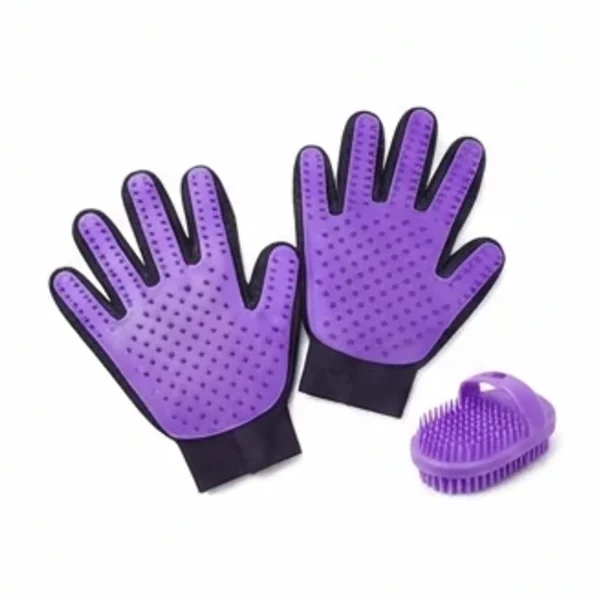
5. K&K Pet Grooming Glove: best for cats that dislike brushes
A silicone grooming glove with 260 soft tips, an adjustable wrist strap and a machine-washable design. The listing says it is for cats, dogs and horses and comes as a set with a bath brush. A glove feels like stroking, so it can be a gentler start for a cat that dislikes pins and metal. It collects loose hair from the surface but won't comb out a tangle, so it sits beside a comb, not in place of one.
Pros: feels like petting; soft silicone; washable; adjustable fit
Cons: lifts only surface hair; won't reach tangles; the listing makes big claims about shine and shedding, which we treat as the maker's words
Best for: cats that dislike brushes, and short, friendly sessions to build trust
Skip it if: your ragdoll already tolerates a slicker, or you need to find tangles
Where do ragdolls mat, and what do you do about a mat?
Check around the ears, under the front legs and along the back of the legs. VCA lists those spots for long coats, and International Cat Care adds the area between the back legs and between the toes (VCA Animal Hospitals, page read 27 November 2026). The skin there is thin and rubs easily, so look at every session.
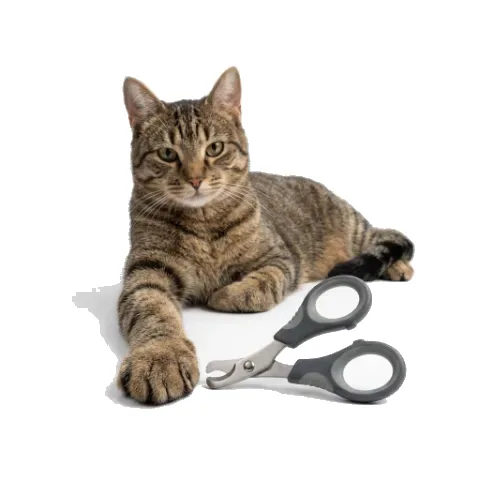
For a small tangle, hold the hair at the base so your cat isn't pulled, and tease it apart gently with your fingers, then a comb, working slowly from the base of the hair outward. Never cut a mat with scissors: in matted fur it is hard to tell where the skin ends, so a cat can be cut. A mat tight against the skin, a large one, or one you can't remove safely should go to a groomer or vet clinic. Many clinics offer grooming. Brush out tangles before a bath, because VCA says they can become impossible to remove afterwards.
A dematting rake is the one tool on this page that needs extra care, which is why it carries a caution below.
Ragdoll grooming tools compared
Sizes are from each Amazon Australia listing, checked on 27 Nov 2026, with inches converted. Where a listing gives no tooth spacing, we say so rather than guess.
Mat sitting away from the skin that fingers can't loosen
Dematting rake, with care
Comb afterwards
Heavy seasonal shedding
Daily slicker and comb
Glove for a quick finish
Does the same kit suit a Maine Coon?
Yes, in broad terms. A Maine Coon is also long-coated, and VCA suggests long-toothed metal combs for medium and long coats. The Cat Fanciers' Association suggests combing a Maine Coon two or three times a week. Our Maine Coon guide covers that breed's shaggier coat, and our Maine Coon cat food guide covers hairballs and feeding.
How we chose
We searched Amazon Australia for cat grooming tools that suit a semi-long coat, then shortlisted tools that met all of these checks:
Well rated: a strong average rating with plenty of buyer reviews.
No red flags: no pattern of poor reviews, safety complaints or listing problems.
Available on Amazon Australia when we checked.
Suits cats: the listing names cats, or cats and dogs.
Gentle on skin: rubber-tipped or rounded pins, round-ended teeth, or soft silicone. The rake is the exception, and we say so.
These are researched picks, not products we've personally tested. We compared the specifications and features on each Amazon Australia listing, checked on 27 Nov 2026. We didn't accept payment from any brand, and no brand saw this page before it was published. Slickers, steel combs and grooming gloves are also sold at pet shops, and many groomers and vet clinics stock them.
Left out this time: undercoat deshedding blades such as the FURminator. A ragdoll has a semi-long coat with little dense undercoat, so there is little for the blade to remove, and over-brushing is the risk (our FURminator guide covers which cats it does suit). Also left out: any scissors for mats, and sprays with essential oils.
When to see a vet
Book a vet or groomer visit if you find a mat tight against the skin, a mat you can't loosen safely, or skin that looks red, sore, scabby or bald under the coat. Sudden heavy shedding, bald patches, or a cat that stops grooming itself can have many causes, so it's worth asking a vet.
Stop and see a vet if your cat cries out when touched in one spot, or if brushing turns up lumps, fleas or sore areas. Our ragdoll guide lists the health checks to ask about, and VCA Animal Hospitals says severe mats or skin irritation call for a groomer or vet.
Frequently asked questions
Do ragdolls need a deshedding tool?
Usually not. A ragdoll has little dense undercoat, according to the Cat Fanciers' Association, so there is little for a deshedding blade to remove. A slicker and a comb handle seasonal shedding. If you're unsure, ask your vet or groomer before using a blade tool.
Is a slicker brush safe for a ragdoll?
It can be, with rounded or rubber-tipped pins and light pressure. Stroke with the lie of the coat, don't press into the skin, and stop if your cat flinches or the skin looks pink. A slicker also won't pull out tangles, so follow it with a comb.
How do I get a ragdoll kitten used to brushing?
Start with very short sessions, stroke with your hand first, let the kitten sniff the tool, and finish with a treat. International Cat Care says to keep sessions only as long as your cat is comfortable. A soft glove can be a gentle first step before a comb.
What if my ragdoll hates being brushed?
Don't force it or hold your cat down. Shorten the sessions, pick a calm time such as after a meal, and try a different tool. RSPCA Australia suggests building up slowly with treats. If your cat still struggles, a groomer or vet clinic can help.
Can I use a dog brush or comb on a ragdoll?
Some listings name both cats and dogs, including the ones on this page. Check the listing, choose rounded tips, and avoid anything made for thick double coats. Keep the pressure light, because a cat's skin is fine.
Can I bathe a ragdoll to help with a tangled coat?
Brush out tangles first, because VCA says they can become impossible to remove after a bath. When you do bathe, use a cat-formulated product from our cat shampoo guide and ask your breeder or vet for advice.
Do ragdolls shed a lot?
Moderately, with heavier shedding when the seasons change, per our ragdoll guide. Daily combing during those weeks means less hair on the furniture and less swallowed hair. For the rest, a pet hair remover helps.
Product details from each linked Amazon Australia listing, checked on 27 Nov 2026.
This guide provides general information and isn't a substitute for veterinary advice. If you're concerned about your cat's coat or skin, speak with your vet.