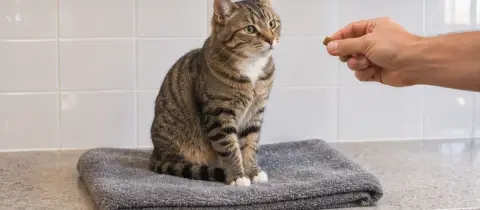
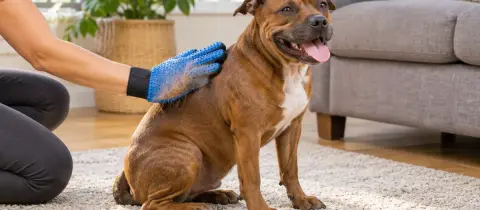
Pet handling gloves: bite- and scratch-resistant gloves for nervous cats and dogs, and their limits
By Anish PuriUpdated 23 Nov 202610 min readResearched, not tested by us
Research guide. WhiskerFinds may earn a commission from links, at no extra cost to you.
Quick answer: Pet handling gloves are thick leather or synthetic gloves that cut the risk of scratches and bites to your hands and forearms, and for most cat owners the WZQH 60 cm leather gloves are our top pick. No glove is bite proof, and none is a reason to hold a nervous pet harder.
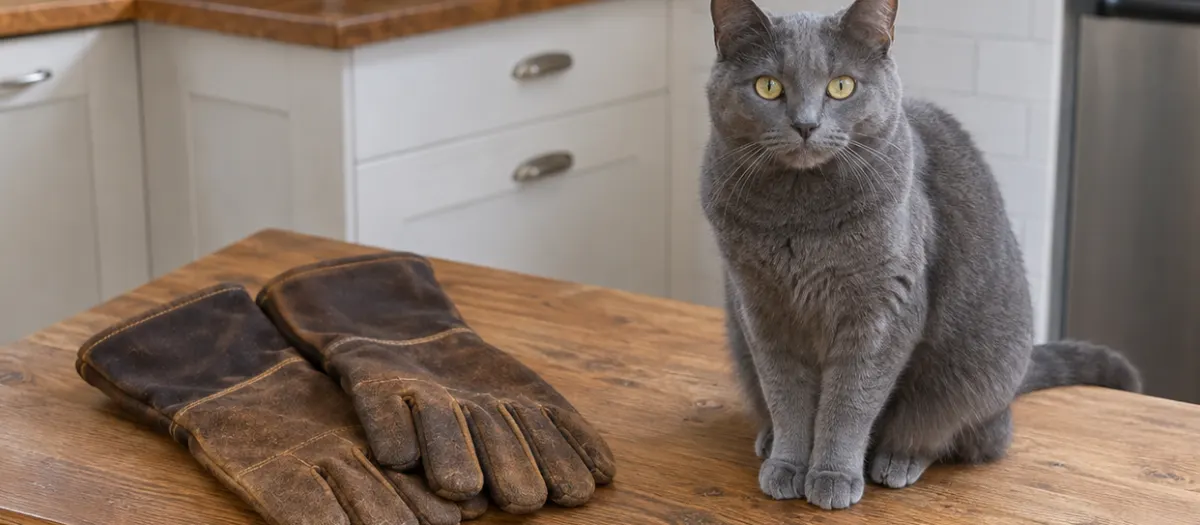
Illustration, not the actual product
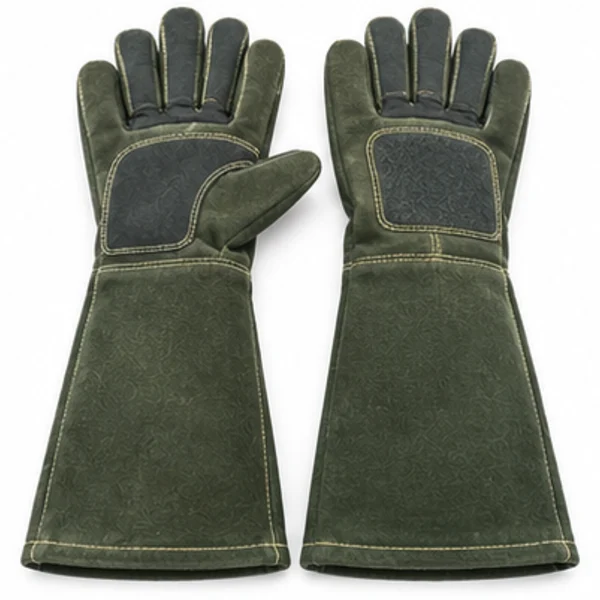
Our top pickWZQH 60 cm leather animal handling gloves
Gloves suit the owner who has to do a necessary job with a frightened pet: a nail trim, a trip to the carrier, a bath, a tablet the vet has prescribed. They protect you. They don't calm the animal, and the thicker the glove, the less you can feel how hard you're holding. This guide compares four gloves on Amazon Australia by material, cuff length in centimetres and how much feel you keep.
Kevlar-reinforced double leather on fingers, palms and backs
60
Lace up
One size, loose fit
Listed as water resistant; hand wash
Are animal handling gloves really bite proof?
No. Three of these four listings use "bite proof" in the title or description, and we repeat that only as the makers' wording. The RAPICCA listing itself says no glove is 100% bite proof, and the PetFusion listing says "(not proof)" next to puncture and scratch resistance. The WZQH listing says its gloves can't be expected to withstand the bite of large animals such as bears or crocodiles.
Our view: a glove spreads a bite's force and covers skin, so a nip or a scratch is less likely to break it. A determined cat or a big dog can still crush a finger through leather, and sharp teeth can still push through thinner material. Treat gloves as one layer of protection, never a guarantee.
Cats also matter for a health reason. The US Centers for Disease Control and Prevention (CDC) says cat scratch disease is caused by Bartonella henselae, usually spreads when a scratch is contaminated (fleas can carry the bacteria) and can also spread by a bite or lick on broken skin (CDC, "About Cat Scratch Disease", page last reviewed 11 September 2026, read 23 November 2026). Covering your forearms cuts the number of scratches you take, and the CDC suggests asking your vet about flea control for your cat.
Our picks in detail
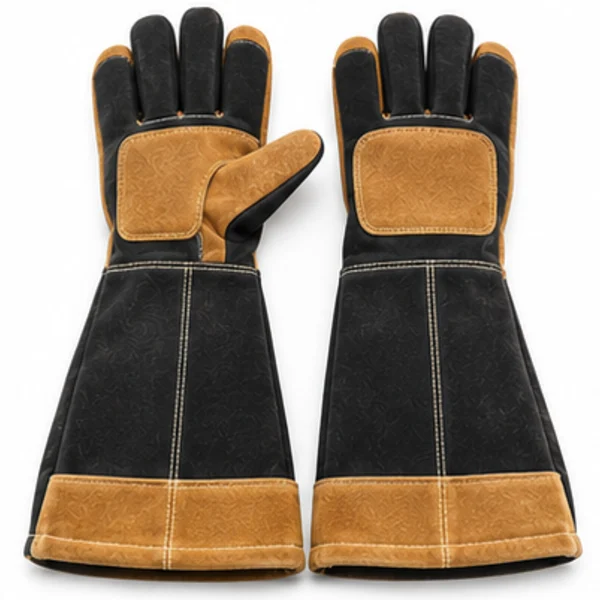
1. WZQH 60 cm leather animal handling gloves: best overall
A 60 cm cuff with a size range, so it covers your hand and most of your forearm. The listing says 1.2 mm cowhide leather, double leather on the fingers, palms and backs, Kevlar stitching and an adjustable cuff that tightens so the glove doesn't slip off. It's 60 cm (23.6 in) long and fits either hand. The listing gives a unit count of one and doesn't use the word pair, so check what's in the pack before you order. It's listed in Large here, with a Medium (54 cm) and an XL on their own listings; check the size chart on each.
The listing calls the gloves "bite proof" and "puncture proof". We read that as the maker's wording: leather this thick helps, but isn't a guarantee. It also lists heat and welding uses, which have nothing to do with handling a pet. The care note says to wipe clean with a damp cloth and not to machine wash.
Pros: 60 cm cuff; double leather and Kevlar stitching; adjustable cuff; three sizes
Cons: stiff, so poor grip for a small tablet; warm to wear; not water resistant
Best for: a cat that grabs and rakes, nail trims with a helper and carrying a frightened cat to the carrier
Skip it if: you need fingertip feel for a tablet or a bath (pick 2)
2. PetFusion multipurpose pet glove: best for grip and bath time
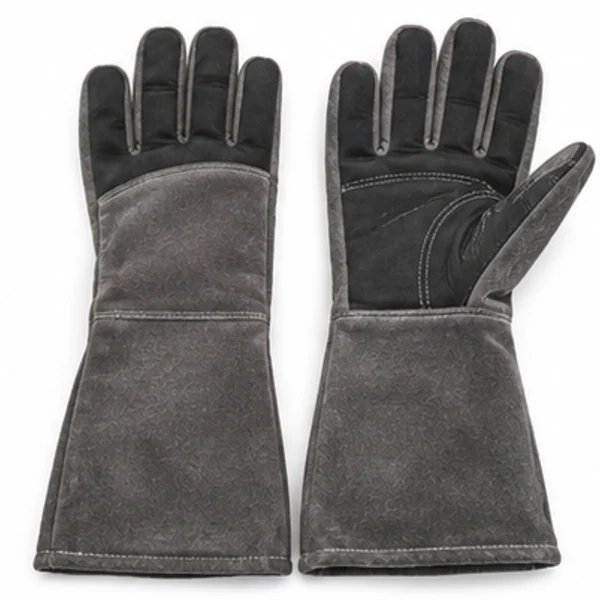
The most dexterity of the four, and the only one you can wash and wet. The listing says synthetic leather, spandex and silicone, water resistant and machine washable, with soft silicone knobs for grip and protection up to the elbow. It's about 45.2 cm long and the pack is a pair. The maker says it's puncture and scratch resistant "(not proof)".
That honest label is the point: it's thinner, so a determined bite can get through. It suits tasks where you need to feel what you're doing, and it's the easiest to wear for a short job such as a tablet or a bath.
Pros: the most feel; water resistant; machine washable; a pair
Cons: thinner, so a hard bite can get through, as the maker says; one size on this listing
Best for: bath time, grooming and tablets with a calm cat
Skip it if: your cat or dog has a history of hard bites (pick 1 or 4)
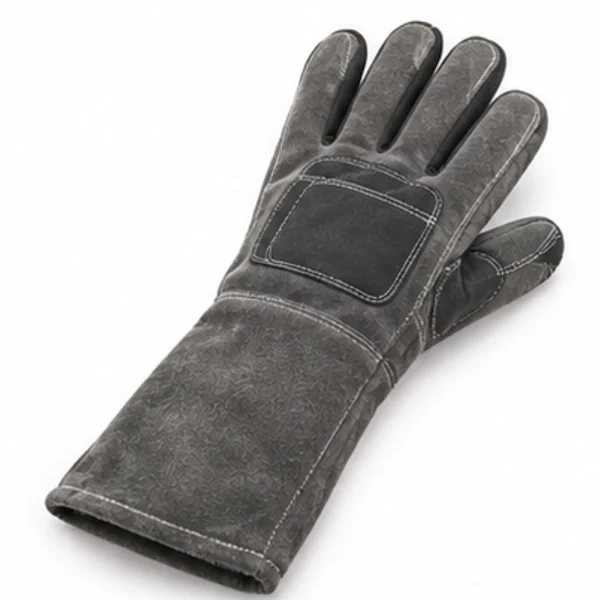
Leather protection in a shorter, less bulky cuff. The listing says cowhide split leather in a double layer with an insulated cotton lining and a hook and loop closure, 40.6 cm (16 in) long. It's listed as XL here, and the listing gives hand orientation as right, so check whether you're buying one glove or a pair before you order. The brand also offers a longer cuff on another listing.
Its description says plainly that no glove is 100% bite proof and that the gloves are meant to reduce the risk. Care is hand wash, and the description adds to wipe with a damp cloth and not to machine wash.
Pros: leather with a lining; hook and loop closure; short cuff keeps your elbow free
Cons: covers less forearm than the 60 cm gloves; XL only on this listing; not water resistant
Best for: nail trims and general handling when you want leather without the bulk
Skip it if: you have small hands, or you need forearm cover for a cat that rakes
4. Sporting Style 60 cm Kevlar-reinforced leather gloves: best heavy-duty
A lined, lace-up 60 cm glove. The listing says thick cowhide, Kevlar-reinforced double leather on the fingers, palms and backs, a cotton lining and a lace-up cuff, 60 x 20 cm. The listing titles it Sporting Style, though its brand field reads differently; we've gone by the title. It's one size with a loose fit, and care is hand wash.
The lace-up cuff can be pulled snug around your forearm, which helps keep it on. The trade-off is weight and stiffness: the listing gives 1.43 lb (about 650 g) for the pair, and we'd expect little fingertip feel. Listing wording about "bite proof" and "heat protection" is the maker's claim, and neither is a reason to buy it.
Pros: lining plus lace-up cuff; Kevlar-reinforced double leather; 60 cm cuff
Cons: one loose size; heavy, with little fingertip feel
Best for: a cat or dog that has scratched or snapped before and a job that can't wait
Skip it if: you have small hands or need fine control
Leather, Kevlar or synthetic: what's the difference?
Leather gives the most resistance and the least feel. Kevlar here is stitching or reinforcement, a strong thread that stops seams splitting, not a bite-proof layer by itself. Synthetic leather with silicone is thinner, more flexible and washable, and gives up some protection for dexterity.
Double leather (WZQH, Sporting Style, RAPICCA) means a second layer over the fingers, palms and backs of the hand, where bites and claws land.
Kevlar stitching or reinforcement (all three leather listings mention it) is about seam strength and durability, as the listings describe it.
Synthetic with silicone knobs (PetFusion) is for grip. The listing says the knobs are soft and the glove balances protection and dexterity.
Lining (RAPICCA and Sporting Style) makes a stiff glove more comfortable for longer jobs and adds warmth.
Leather is also heavy and warm, so it's a poor choice on a hot day and a stressful one for a pet if you struggle to get it on in front of them. Put gloves on before you bring your pet out.
How long should the cuff be?
For a cat, the forearm takes most of the damage, because a cat grabs with its front paws and kicks with its back legs. A 60 cm glove covers the hand and most of the forearm. A 40 to 45 cm glove covers the wrist and part of the forearm and leaves your elbow free, which makes it easier to use and less bulky.
Pick by job: longer for a cat that grabs and rakes, shorter when you need to keep feeling a small paw or a tablet. All four gloves are listed for adults. Where a listing shows its size only in a picture, check the size chart on the listing before you order.
Which glove suits which job?
This is our own assessment, not a lab result. It compares cuff length, how much protection we'd expect from the materials and how well you can feel a tablet, a paw or a claw with the glove on.
Swipe sideways to see every column
Glove
Cuff (cm)
Protection
Fingertip feel
Best job
WZQH
60
Higher
Low
Moving a frightened cat to a carrier, a nail trim with a helper
PetFusion
45.2
Medium
High
Bath time, a tablet, grooming
RAPICCA
40.6
Higher
Medium
Nail trims and general handling
Sporting Style
60
Higher
Low
Moving a cat or dog that has scratched before
When shouldn't you rely on gloves?
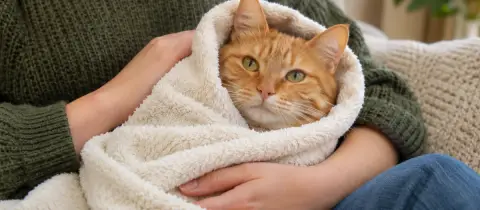
Don't use a glove to make rough handling feel acceptable. It's easy to hold harder when you can't feel the animal, and gripping the scruff is something International Cat Care opposes as restraint because it can cause stress and distress (International Cat Care, scruffing position statement, page read 23 November 2026). A glove never changes that. If you need more control, try a brief towel or wrap, a helper, or a rest and another go.
Three more cases where gloves aren't the answer:
A feral, injured or aggressive animal. A glove doesn't make it safe to handle one. Call a rescue group, a vet or your council animal service.
A cat that panics. Stop if your cat is open-mouth breathing, panting, growling louder or struggling harder, and ask your vet for help.
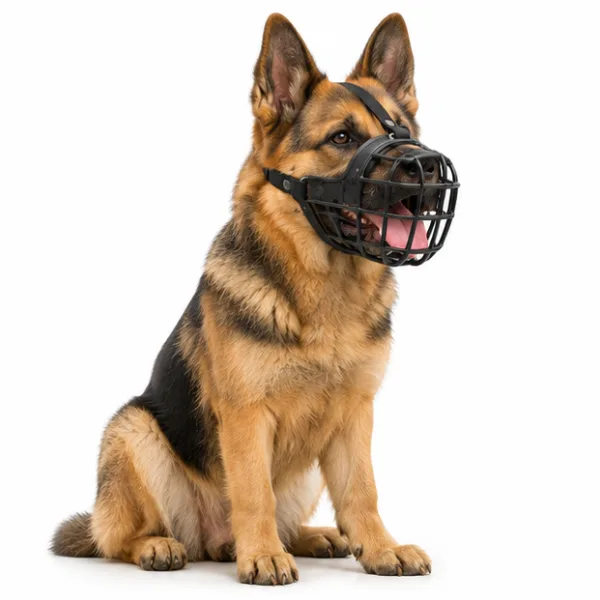
A dog that snaps or bites. Gloves are protection, not training. A vet and a qualified behaviour professional can work out why, and a basket muzzle, fitted as your vet advises, is a safer tool than relying on leather.
For regular jobs, such as a nail trim, build in short sessions, treats and a calm pace. A glove is a stopgap for a job you can't skip, not a way to avoid training your pet to accept handling.
Where else can you buy handling gloves?
Hardware and pet shops also sell leather handling gloves, usually as general work gloves. Many of those are made for gardening or heat and aren't made for animals, so check for a stated length and reinforcement before you trust one. Your vet clinic can tell you whether gloves suit your pet's job.
We searched Amazon Australia for animal handling gloves and shortlisted those that met all of these checks:
Well rated: a strong average rating with plenty of buyer reviews.
No red flags: no pattern of poor reviews, safety complaints or listing problems.
Available on Amazon Australia when we checked.
Made or labelled for animal handling, not gardening or heat work.
Glove length in cm stated on the listing.
Material and reinforcement stated.
Size options and care instructions given.
Where a listing is one size or makes a claim we can't check, we say so in the cons. These are researched picks, not products we've personally tested. We compared the specifications and features on each Amazon Australia listing, checked on 23 Nov 2026, and we didn't accept payment from any brand.
Left out this time: gardening gloves for thorns, heat and welding gloves with only a passing mention of animals, a listing with no specifications, and furniture and door scratch protectors, which are a different product (see our couch scratcher guide and door scratch protector guide).
When to see a vet
Book a vet visit if your pet is suddenly aggressive, flinches or snaps when you touch one spot, or starts biting when handling was fine before. Pain can be part of the picture, and a vet can work out what is going on. A glove only protects you while you find out.
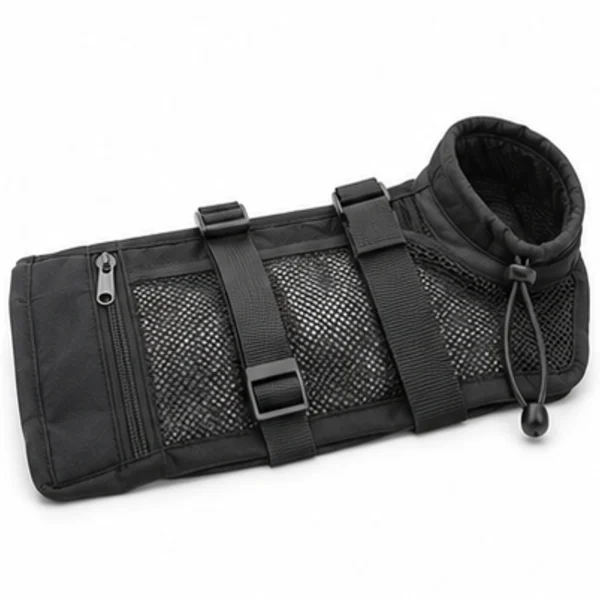
Call your vet straight away if your cat is open-mouth breathing or panting while handled, or if your pet is injured. If you are bitten, wash the wound and see a doctor. Our cat restraint bag guide covers a gentler way to hold a cat briefly.
Frequently asked questions
Can I wear handling gloves to give my cat a pill?
You can, but thick leather makes it hard to place a tablet well. A thinner glove such as the PetFusion keeps more feel. Use gloves for protection only, never to hold your cat tighter, and follow your vet's advice on the tablet. Our cat pill guide covers food, a brief wrap and a water chaser.
What size handling gloves do I need?
Measure the length of your hand and forearm and check the size chart on the listing, because sizes vary between brands. The WZQH comes in three sizes, the PetFusion and RAPICCA listings here are Large and XL, and the Sporting Style is one loose size. If you're between sizes, try the larger one.
What should I do if a cat bites me through a glove?
Wash it well with soap and water, then see a doctor about any cat bite. The CDC says to see a doctor for a fever, tender swollen lymph nodes one to three weeks after a scratch, or a pustule at the site, and that people with weakened immune systems face a higher risk of severe illness.
Can I wash leather animal handling gloves?
Not in the machine. The WZQH and RAPICCA listings say to wipe clean with a damp cloth and not to machine wash, and the Sporting Style listing says hand wash. Let leather dry naturally, away from direct heat. The PetFusion is the one listed as machine washable.
Are gardening or welding gloves good enough for handling a cat?
Usually not. Gardening gloves are made for thorns and have short cuffs, and welding gloves are made for heat. Neither is made for animal handling, and they may not cover your forearm. Choose gloves labelled for animal handling with the length and reinforcement stated.
Do handling gloves help with a stray or feral cat?
They protect your hands, but they don't make it safe to handle a feral, injured or aggressive cat. Contact a rescue group, a vet clinic or your council animal service instead. Never grab a frightened stray: scratches and bites carry real infection risk.
Are handling gloves useful for a dog that snaps at nail trims?
They protect you, but they don't fix the problem. A dog that snaps may be in pain or frightened, so see your vet, then ask a qualified behaviour professional about gentle training. Your vet can also tell you whether a basket muzzle suits your dog.
Do I need gloves to handle my pet's medicine?
Only if your vet or the medicine packet says so. PDSA advises wearing gloves for medicine only when told to and washing your hands afterwards (PDSA, "How To Give Your Cat A Pill", May 2023, page read 23 November 2026). That's a different kind of glove from these: a disposable one that protects you from the medicine.
Product details from each linked Amazon Australia listing, checked on 23 Nov 2026.
This guide provides general information and isn't a substitute for veterinary advice. If you're concerned about your cat's handling, behaviour or health, speak with your vet.