Kitten feeding bottles: the best bottles, teats and syringe kits
By Anish PuriUpdated 25 Nov 202614 min readResearched, not tested by us
Research guide. WhiskerFinds may earn a commission from links, at no extra cost to you.
Quick answer: The best kitten feeding bottle is a small one, around 50 to 60 ml, with a soft teat and 1 ml and 3 ml syringes for measuring. Our top pick is the OCTKITE nursing kit, which comes with pre-pierced teats. The teat hole matters more than the brand, and a kitten that won't suck needs a vet.
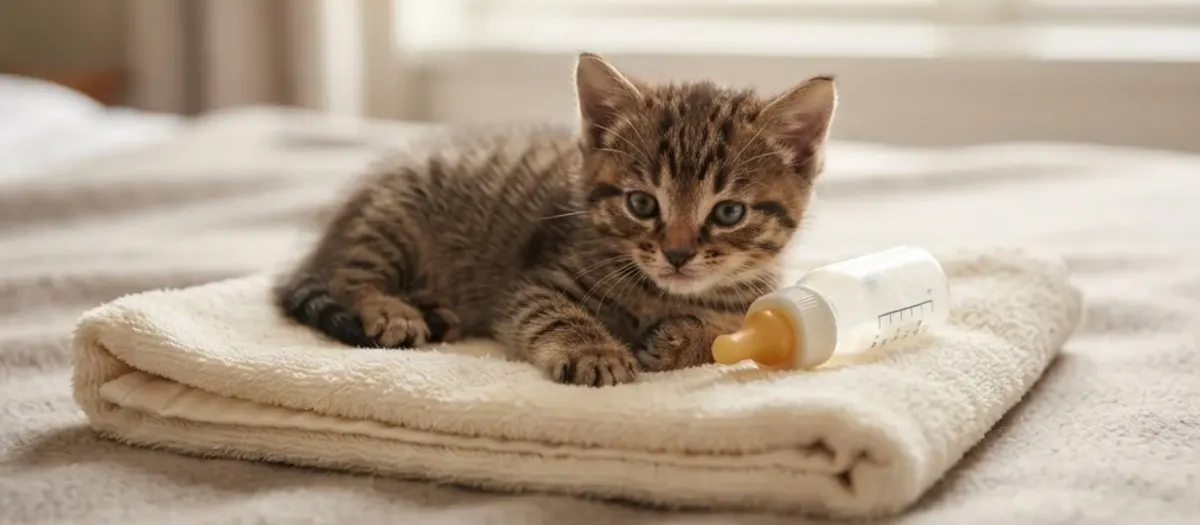
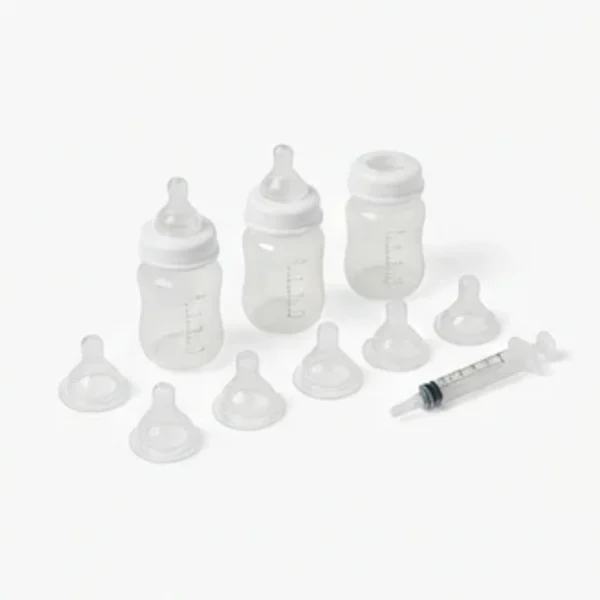
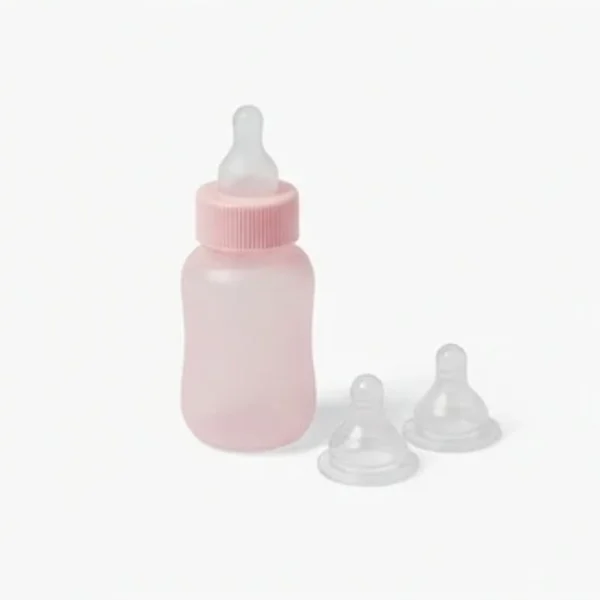
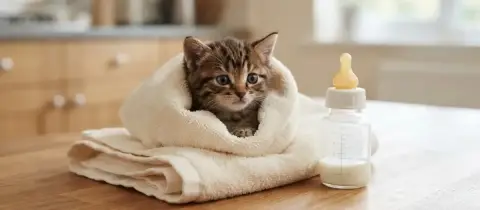
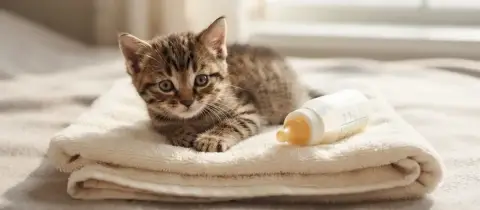
Illustration, not the actual product
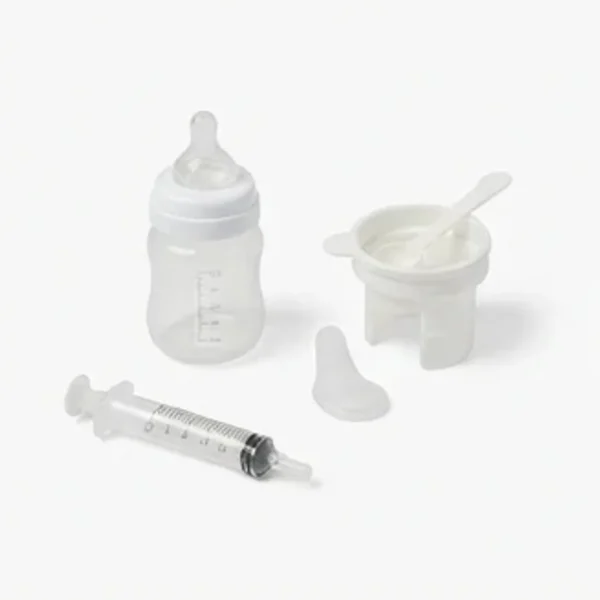
Our top pickOCTKITE nursing kit: 50 ml bottle, four syringes, teats, brushes
Hand-rearing a kitten means buying a bottle in a hurry, usually when you're already worried. This guide compares five kits on Amazon Australia by bottle size, teats, syringes and extras, then covers the part the listings get wrong: how big the teat hole should be and why you let the kitten suck rather than squeezing milk in. For the full routine, see our guide to bottle feeding a kitten, and for the formula itself, our kitten milk replacer guide.
All five kits are generic imports with similar parts. The useful differences are bottle size, how many teats you get, whether the teat is already pierced, and which syringes are in the box.
Quick picks
Our top pickBest overall
OCTKITE nursing kit: 50 ml bottle, four syringes, teats, brushes
One box with everything, and teats that are already pierced
A bottle of 50 to 60 ml is the practical middle: it holds a full feed for a growing kitten and is still easy to hold in one hand. A 20 ml bottle suits the first weeks, when a feed is only a few millilitres, but a kitten will outgrow it quickly.
Size matters less than the teat. VCA Animal Hospitals says most kittens will take a small pet nursing bottle, and that the teat should let milk out about one drop at a time, because faster flow can lead to milk in the lungs, pneumonia and death (VCA Animal Hospitals, "Feeding Orphaned Kittens", page read 25 November 2026). A full kitten will stop nursing and turn away from the bottle.
Syringes are for measuring and mixing, which is why we look for a 1 ml and a 3 ml in the box. They aren't a faster or safer way to feed than a bottle, as the section on squeezing below explains.
The kit that needs the least from you. The listing says one 50 ml bottle, four syringes (10, 5, 3 and 1 ml), four teats, cleaning brushes, a funnel, a measuring cup and a storage container. The listing says the teats are food-grade silicone and the bottle BPA-free PP, with holes pre-pierced so you don't have to make them. The scale runs from 1 ml to 50 ml and the whole kit weighs 80 g.
The listing text is patchy and doesn't state the teat sizes, and the "formula dispenser" it mentions isn't clearly described. Check the flow by hand before the first feed.
Pros: everything in one box; pre-pierced teats; 1 ml and 3 ml syringes for measuring; brushes and a storage container
Cons: unknown brand; listing doesn't give teat sizes; imported, so check the delivery details on Amazon before you order
Best for: a first-time carer who wants one box with everything
Skip it if: the kitten is a tiny newborn that needs a smaller bottle (pick 5)
2. FJNATINH squeeze bottle kit: best squeeze bottle
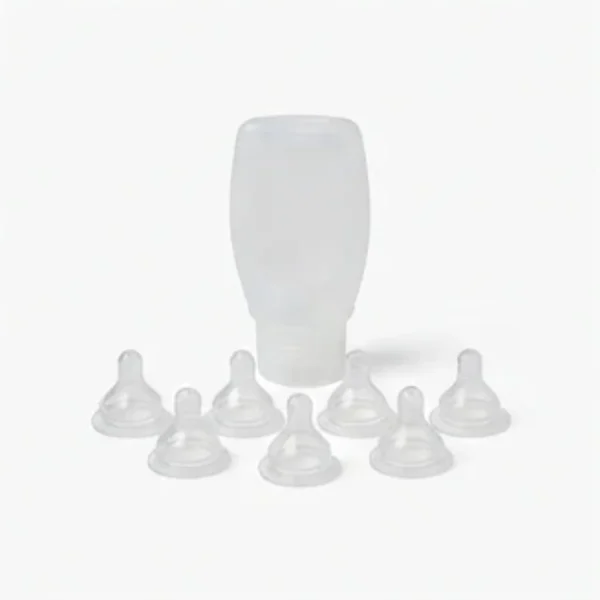
A bigger marked bottle with a spread of teats. The listing says a 60 ml soft bottle with a scale, five replaceable soft rubber teats in small, medium and large, and syringes of 1, 3, 5 and 10 ml, plus a bottle brush. The brown 5 ml syringe is sold as a separate one for medicine. The bottle measures 12.7 x 5.1 x 5.1 cm.
The listing tells you to open the teat hole with a needle or a cross cut. Do it carefully, and don't squeeze. A soft bottle that is easy to squeeze is the thing to watch, because a squeeze can push milk out faster than the kitten can swallow. The listing's own "target species" field says hamster; the description lists kittens.
Pros: 60 ml marked scale; three teat sizes; four syringe sizes; bottle brush
Cons: you pierce the teat yourself, and too big a hole makes milk flow too fast; the soft bottle invites squeezing; imported, so check the delivery details on Amazon before you order
Best for: carers who want a larger marked bottle and syringes with teats to match
Skip it if: you don't want to pierce the teat yourself
3. Aidiyapet 18 piece nursing kit: best for spare teats
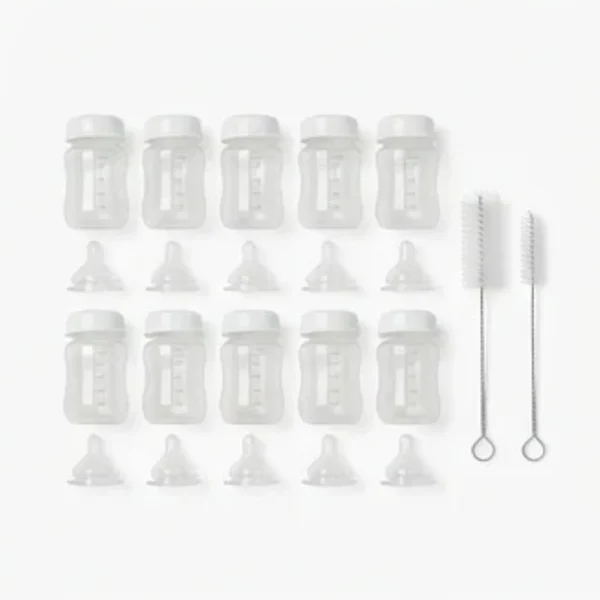
The kit for getting through teats. The listing says one 60 ml bottle, six syringes (two each of 1, 5 and 10 ml), ten teats and four caps. The teats are described as made for newborn squirrels, rabbits, kittens and short-snouted animals, and the hole size "can be tailored". The listing says a teat can replace the clear one on the bottle if you fit it from the top and tighten the cap to stop leaks.
It has no 3 ml syringe, and the listing is thin on materials and says nothing about cleaning, so keep the packaging. The listing also suggests squeezing the bottle for an animal that can't suck. Don't: a kitten that can't suck needs a vet.
Pros: ten teats; 1 ml syringes for small amounts; caps for carrying
Cons: you cut the teat hole yourself; the listing suggests squeezing, which we'd ignore; thin on materials; no 3 ml syringe; imported, so check the delivery details on Amazon before you order
Best for: a litter, or carers who go through teats quickly
Skip it if: you want teats made only for kittens
4. LQKS mini bottle kit: best kit with a storage box
A tidy kit for keeping everything clean and together. The listing says a 50 ml bottle, one curved teat plus four teats in different sizes (silicone), a 10 ml syringe, a 12 ml elbow syringe, a feeding spoon, a 30 ml measuring cup and a PP storage box. The listing says BPA free, and a data field says dishwasher safe.
Its syringes are 10 and 12 ml, so there's no fine control for a newborn's small feeds. The listing is newer, with a short record, and it makes claims we haven't repeated.
Pros: storage box; five teat shapes and sizes; 30 ml measuring cup; spoon
Cons: large syringes only, no 1 ml or 3 ml; newer listing with a short record; imported, so check the delivery details on Amazon before you order
Best for: keeping a small clean kit together between feeds
Skip it if: you want fine syringe control for a newborn
5. LSHPG 20 ml newborn bottle: best small bottle for newborns
A tiny bottle for the first weeks. The listing says 20 ml, for newborn kittens and puppies aged 0 to 45 days, with silicone teats (two spare), measurement markings and a 9 x 3.5 x 3.5 cm body that weighs 70 g. The listing says it can be sterilised with boiling water.
The listing tells you to press the teat to make milk flow if a kitten can't suck. Please don't. A kitten that can't suck needs a vet. There are no syringes in the kit, and the listing is newer, with a short record.
Pros: small enough for tiny feeds; two spare teats; can be sterilised with boiling water, per the listing
Cons: no syringes; outgrown quickly; newer listing with a short record; imported, so check the delivery details on Amazon before you order
Best for: the first weeks, when a 50 or 60 ml bottle is clumsy
Skip it if: the kitten is past the early weeks
How big should the teat hole be?
Small enough that milk comes out as slow single drops. VCA says the opening should limit flow to about one drop at a time. A simple way to check is to turn the bottle upside down: the milk should drip slowly, not run or stream. The FJNATINH listing gives a similar direction, a drip or trickle with a light squeeze, though we'd skip the squeeze.
If you make the hole yourself, start with less than you think you need. You can always make a hole bigger, never smaller. Test with warm water first, not formula. The FJNATINH listing says to open a small hole with a needle or draw a small cross cut with a blade. A cross cut can open wider with use, so check it again each time you feed. Replace any teat that has been chewed, torn or stretched.
A pre-pierced teat saves the guesswork, but it isn't a guarantee. The OCTKITE listing says its holes are pre-pierced and gives the flow as "newborn flow", but doesn't state a hole size. Hold it upside down and watch the drips before the first feed.
Should you squeeze the bottle or use a syringe?
Neither. Let the kitten suck at its own pace. Three of these listings tell you to squeeze the bottle or press the teat to push milk out. We'd ignore that. VCA says to hold a kitten horizontally with its head in a neutral position, and the flow of milk should be set by the teat, not your hand.
If milk comes out of the nose, or the kitten coughs or gasps, stop feeding and call a vet. A kitten that can't or won't suck is not a problem a different bottle will fix; it needs a vet.
Our guide to bottle feeding a kitten covers position, temperature, amounts and toileting in full.
How do you clean and sterilise a kitten bottle?
Wash everything after every feed, then sterilise between uses. VCA says to clean bottles and nipples and then boil them to sterilise them between uses, to make up no more formula than will be used in 24 hours, to keep it in the fridge, and to throw away formula left at room temperature for more than an hour. Cats Protection adds that hand-reared kittens are very prone to infection, so wash your hands and use sterilised bottles and utensils.
What the listings say about the kit itself:
OCTKITE: silicone teats and a PP bottle, described as heat-resistant and suitable for high-temperature sterilisation. It comes with cleaning brushes.
FJNATINH: wash the bottle, lid and teat with warm water before use. A bottle brush is included.
LSHPG: the listing says it can be sterilised with boiling water.
Aidiyapet: the listing gives no cleaning instructions, and "easy to clean" is the only line. Check the packaging.
LQKS: the data field says dishwasher safe. The listing says nothing on boiling, so check the packaging before you sterilise.
Take the syringe plunger out and wash the barrel too, because milk dries inside it. Spare teats help here, since one can be drying while another is in use.
Choose by situation
Swipe sideways to see every column
Your situation
What to look for
Our pick
First-time carer, one kitten, no equipment
One box with a bottle, measuring syringes and teats
OCTKITE (1)
Newborn in the first weeks
A small bottle for tiny feeds
LSHPG (5), with a vet's guidance
Kitten of 2 to 4 weeks
A 50 to 60 ml bottle with a slow-flow teat
OCTKITE (1), or FJNATINH (2)
A litter
Spare teats and a second bottle's worth of parts
Aidiyapet (3)
Want a clean, tidy kit
A storage box
LQKS (4)
Kitten that won't latch or suck
A vet today, not a different bottle
See the vet box below
The weeks are a rough guide. Kittens differ, and your vet and the formula label set the amounts.
Where else can you buy a kitten bottle?
Vet clinics and pet shops usually stock a pet nursing bottle with a teat, and a vet can show you which size suits the kitten in front of you. Ask whether they can pierce the teat or check your hole size. Pharmacies sometimes stock small oral syringes.
How we chose
We searched Amazon Australia for kitten bottles, nursing kits and syringe sets, then shortlisted those that met all of these checks:
Well rated: a strong average rating with plenty of buyer reviews.
No red flags: no pattern of poor reviews, safety complaints or listing problems.
Available on Amazon Australia when we checked.
Bottle size stated in millilitres on the listing.
Teat type and number described, including whether the hole is already made.
Syringes listed by size, so a reader can match them to the job.
Where a listing is new, imported or thin on detail, we say so in the cons. These are researched picks, not products we've personally tested. We compared the specifications and features on each Amazon Australia listing, checked on 25 Nov 2026, and we didn't accept payment from any brand.
Left out this time: feeding bowls and a bundle that included a wand toy, because they're not bottles, and any kit whose listing didn't state a bottle size. For weaning dishes, see our cat bowls guide.
What else do you need besides a bottle?
A kitten milk replacer, never cow's milk. Our kitten milk replacer guide compares formulas, and our cat milk guide explains why lactose-free drinks for adult cats aren't a substitute. A heat source matters too, because a cold kitten won't feed well; see our pet heat pad guide and leave room for the kitten to move off the heat. Once your kitten starts on solids, see our kitten food guide.
When to see a vet
Get a vet the same day for a kitten that feels cold or limp, won't suck or swallow, brings milk from its nose, coughs or breathes noisily after a feed, or isn't gaining weight. Also call about diarrhoea, vomiting, a swollen tummy, no wee or poo after stimulating, or constant crying. RSPCA Australia says to see a vet if kittens aren't eating or drinking enough.
Any kitten found without its mother needs a check, and a vet or rescue group can advise. Fleas on a very young kitten can be serious; see our kitten flea treatment guide.
Frequently asked questions
What is the best bottle for a newborn kitten?
A small bottle with a soft teat and a slow flow. For the first weeks a 20 ml bottle is easier for tiny feeds, and a 50 to 60 ml bottle suits a growing kitten. The teat should let milk out about one drop at a time, as VCA describes.
Can I use a baby bottle for a kitten?
A baby bottle teat is made for a much bigger mouth, and the flow is set for a baby, not a kitten. VCA says most kittens take a small pet nursing bottle, so use one of those. If you're stuck tonight, ring a vet or rescue group for advice instead of improvising.
How do I know if the teat hole is too big?
If milk runs or streams instead of dripping when you hold the bottle upside down, it's too big. A kitten that splutters, coughs or has milk at its nose is getting too much. Stop, keep its head level and call a vet if it doesn't settle.
Can I bottle feed a kitten that won't suck?
No. Don't squeeze milk in. VCA says a kitten too weak to suckle needs a vet, who can show other methods or tube feeding. A kitten that can't or won't suck is a same-day vet case.
How often should I change the teat?
Replace it when it is chewed, torn, stretched or when milk flows faster than before. Check it before every feed. Kits with spare teats make this easy, and washing and drying one teat while using another keeps the routine simple.
How do I warm a bottle of kitten formula?
Warm it as your formula's label says, and aim for about 35 to 38°C: Cats Protection says about 35°C and VCA about 38°C, without overheating. Cats Protection suggests letting a drop fall on the inside of your wrist to test it. It should feel warm, not hot or cold.
Can I reuse made-up formula?
Not what's left in the bottle after a feed: tip it out and wash the kit. Fresh made-up formula kept in the fridge is a different matter, and our kitten milk replacer guide covers how long it keeps.
Product details from each linked Amazon Australia listing, checked on 25 Nov 2026.
This guide provides general information and isn't a substitute for veterinary advice. If you're concerned about your kitten's feeding or health, speak with your vet.