Ear powder for dogs: what it does, whether you need it and which to buy
By Anish PuriUpdated 25 Nov 202615 min readResearched, not tested by us
Research guide. WhiskerFinds may earn a commission from links, at no extra cost to you.
Quick answer: Ear powder for dogs is a grooming aid that dries the ear and gives your fingers or tweezers grip on hair. It doesn't treat itching, yeast, mites or infection. Vets are divided on plucking, so ask first. If a groomer or vet has said to use one, Bio-Groom Ear-Fresh is our top pick.
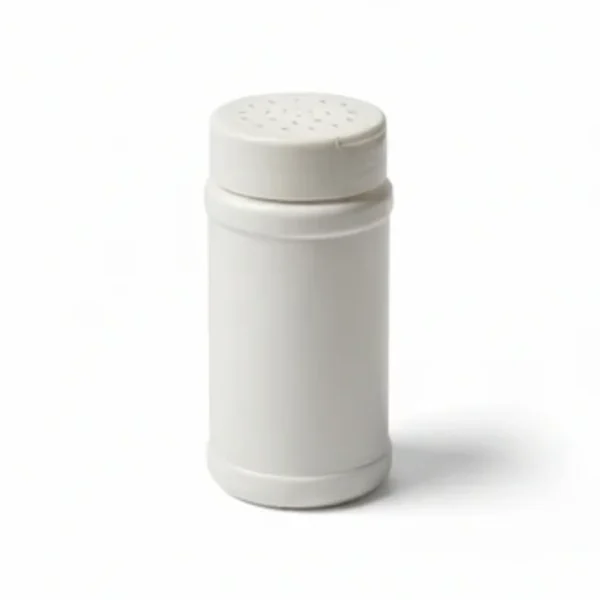
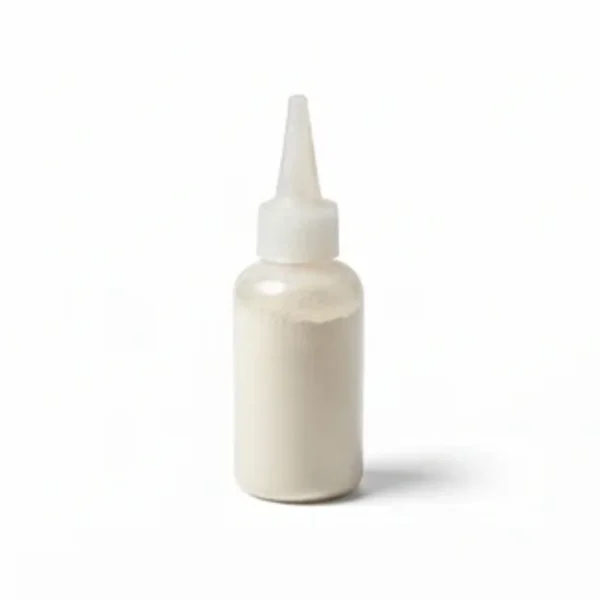
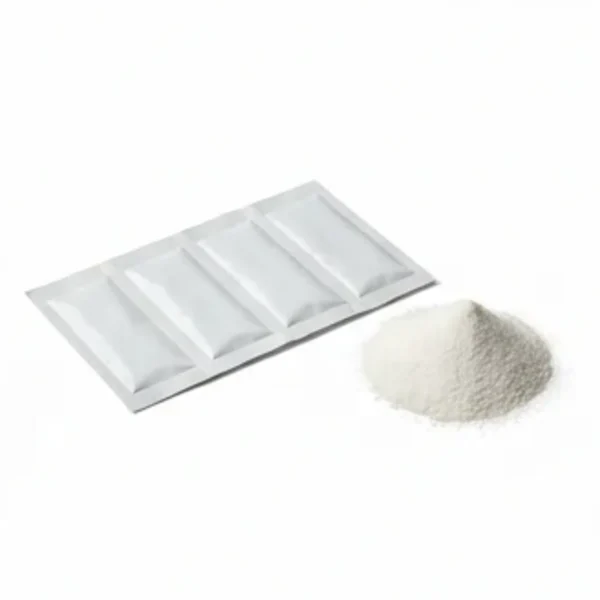
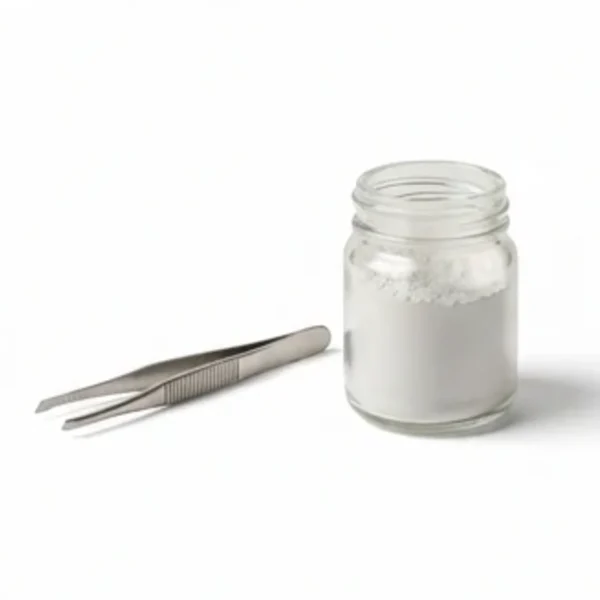
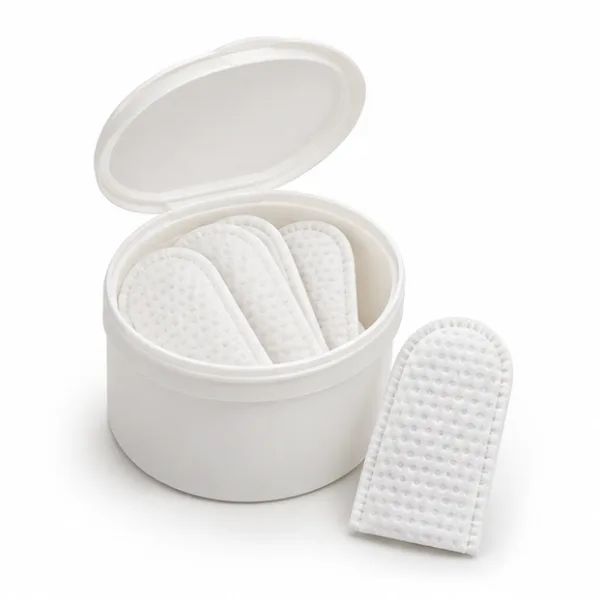
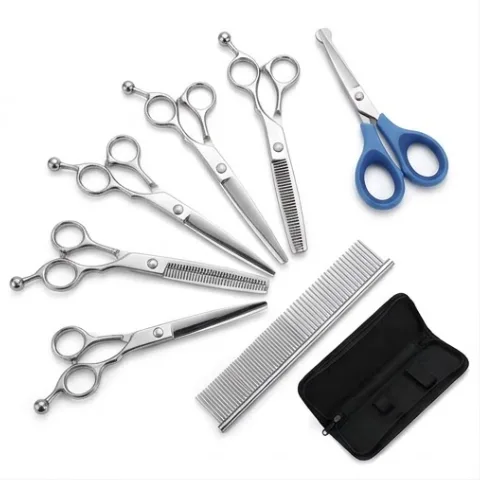
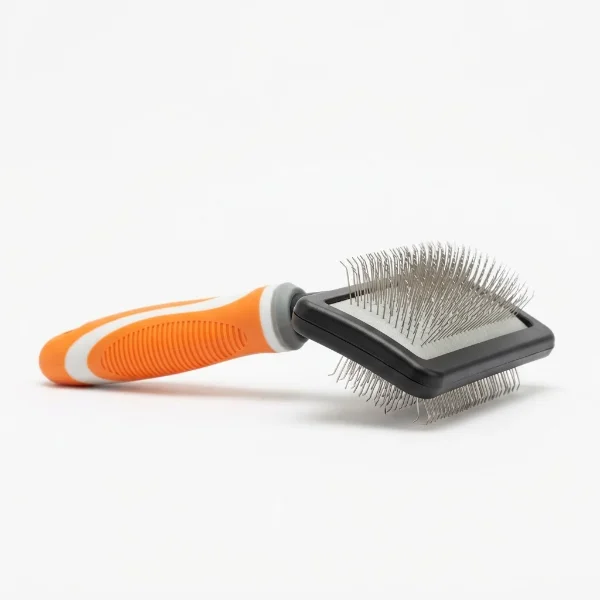
Illustration, not the actual product
Our top pickBio-Groom Ear-Fresh grooming ear powder, 85 g
Most listings in this category promise far more than a powder can do, and several call themselves infection treatments. They aren't. This guide sorts out what powder is for, whether your dog needs any ear hair removed at all, and how four powders compare on size and ingredients. If your dog's ear is already sore or smelly, start with our dog ear infection guide instead.
Quick picks
Our top pickBest overall
Bio-Groom Ear-Fresh grooming ear powder, 85 g
Funnel tip, boric acid, grip for hair, and a listing that tells you to see a vet for a painful ear
The kit also has an 18 mm wide electric trimmer and about 14 cm (5.5 inch) stainless steel tweezers, with a lithium ion battery included.
What does ear powder for dogs actually do?
Ear powder absorbs moisture and gives grip on hair. That's all the ingredient lists support. It isn't medicine: it doesn't kill yeast, bacteria or mites, and it doesn't stop itching. Several listings imply otherwise, so we describe each product below from its ingredients and directions only.
Moisture matters because damp, hairy ears are harder to keep healthy. The Merck Veterinary Manual's owner section says trimming or plucking hair near the canal may improve airflow and reduce humidity, and also says to consult your vet before removing hair (Merck Veterinary Manual, "Ear infections and otitis externa in dogs", page read 25 November 2026).
Powder is also not a cleaner. If your dog's ears are waxy, a vet-recommended cleaner does that job, and our dog ear cleaner guide and dog ear wipes guide cover those.
Our picks in detail
1. Bio-Groom Ear-Fresh grooming ear powder, 85 g: best overall
A grip powder with the clearest directions of the four. The listing says it contains boric acid, has "tight grip" properties for removing hair from the ear canal, and comes with a funnel tip dispenser. Its directions say to clean the ears first, puff the powder in, then remove hair with forceps or tweezers. The listing says it's made in the USA and suits dogs and cats of any age; we've written this page for dogs only.
The listing's own safety line is the reason it leads: if your dog has a painful ear condition or discharge, see your vet. Its bullet points call the product an "ear wash", but it is a powder. The directions also assume you'll use the brand's liquid ear lotion and cotton swabs. We'd skip the cotton swabs, as explained on this page.
Pros: 85 g with a funnel tip; grip for hair per the listing; the listing tells you to see a vet for a painful ear
Cons: contains boric acid, so keep it out of eyes and off broken skin; a big bottle if you only groom now and then; the directions lean on the brand's liquid cleaner
Best for: poodle crosses, schnauzers and other hairy-eared dogs whose groomer or vet has advised removing ear hair
Skip it if: the ear is sore, smelly or has discharge, or nobody has advised plucking and the ears are healthy
2. Miracle Care R-7 Ear Powder Step 1, 12 g: best small bottle
A small container, about 12.7 cm tall, that suits one small dog or a first try. The listing gives the ingredients as zinc oxide, silicon dioxide, methyl salicylate, rosin and bentonite. The directions say to apply the powder into the ear canal and use tweezers or fingers to pull hair blocking it, then use "steps 2 and 3". It's sold as the first product in a three-step range.
The listing's title says "ear infection treatment". It isn't one: nothing in the ingredients or directions treats an infection, so ignore that wording. The listing says to keep it out of reach of children and pets, for topical use only, avoid eyes and mucous membranes, and contact a vet if irritation continues. Although the listing says dogs and cats, we treat it as dog only. Ask your vet before using any ear product in a home with cats.
Pros: ingredients and safety line listed; 12 g is easy to try; grip directions
Cons: only 12 g; the title overclaims; it's step 1 of a range, so the directions point you to more products
Best for: one small dog, or testing powder before buying a bigger bottle
Skip it if: the ear is irritated, or cats groom your dog
3. Oticurant ear powder, 26 sachets: best no-pluck hygiene powder
A drying powder in single-use sachets rather than a grip powder. The listing says each sachet is a measured amount you pour into the ear, with no washing, rinsing or massaging. Its directions are one sachet per ear a day for five days, then one per ear weekly, and it says the pack lasts up to three months for a midsize dog. It says it's perfume free, made in Sweden to Good Manufacturing Practice and developed by veterinarians.
Be cautious with this one. The listing doesn't name its ingredients, only "natural ingredients", so you can't check what's in it. It cites a 2016 study by Conreso in Munich; that is the listing's claim, and we haven't seen the study. The listing also suggests starting it when you notice a smell, itching or redness. That is exactly when your dog needs a vet, not a powder.
Pros: pre-measured sachets, so no guessing how much to use and no bottle tip touching the ear; perfume free per the listing
Cons: ingredients not listed on Amazon; results are mixed, and it isn't for sore ears; costs more per use than a bottle; not a plucking powder; the listing suggests using it on smelly or red ears, which need a vet first
Best for: owners who can't get liquid cleaner into a wriggly dog, with healthy ears
Skip it if: you want a full ingredient list before putting anything in an ear, or you need a grip powder for plucking
4. Ear hair grooming kit with silica powder, trimmer and tweezers: best kit
An unbranded three-tool set for owners who would rather trim than pluck. The listing says silica powder that is free from alcohol and added fragrance, an electric trimmer with an 18 mm wide blade described as low noise, and about 14 cm (5.5 inch) serrated stainless steel tweezers. A lithium ion battery is included. It says suitable for dogs and cats of all ages and for breeds such as Poodles, Bichons and Yorkies.
The trimmer is for the hair around the ear opening only, never down the canal. This is a newer, unbranded listing and a thin one: it doesn't give the powder weight or directions beyond "safe for cats and dogs of all ages", and the trimmer's quality is the unknown. If you already own small clippers, a powder alone may do; our dog clippers guide and dog grooming scissors guide cover those tools.
Pros: silica powder with no alcohol or added fragrance per the listing; trimming is gentler than pulling; three tools in one pack
Cons: you pay for three tools; lithium ion battery to look after; powder weight and directions not stated; unbranded kit
Best for: home groomers who would trim the opening rather than pluck
Skip it if: you only want powder, or you already own small clippers
Do you need to pluck your dog's ear hair?
Not necessarily, and vets are divided. Some say plucking helps dogs with repeated ear trouble. Others say it can irritate the canal and isn't needed for most dogs. Ask your vet or groomer about your dog before you start, because the answer depends on the ear.
Here is what the sources we opened say:
Merck Veterinary Manual: trimming or plucking may help airflow, but consult your vet first. Hair deep in the canal can be removed under anaesthetic when needed. It also says powders shouldn't be used after plucking, because they can form irritating masses.
Preventive Vet (an article by a dog trainer that quotes one of the site's vets): the answer "depends". It says dogs without recurring infections have no medical reason to be plucked if the hair is trimmed or brushed out. The vet it quotes says plucking isn't necessary, isn't recommended for every dog and can irritate the canal, and she doesn't recommend ear powder (Preventive Vet, "Should you pluck your dog's ear hair?", updated 7 August 2024, page read 25 November 2026).
dvm360: a veterinary dermatologist, Laura Wilson, answers the plucking question with "it depends" (dvm360, "Otitis quandary: to pluck or not to pluck hair in the ear?", 21 September 2018, page read 25 November 2026).
So this page doesn't tell you to pluck. We've included the powders that suit a dog whose vet or groomer has said ear hair should come out, plus one that suits owners who only want a drying powder. Trimming the hair at the opening is a gentler option that Preventive Vet describes, which is why the kit is on the list.
Which dogs may need ear hair removed?
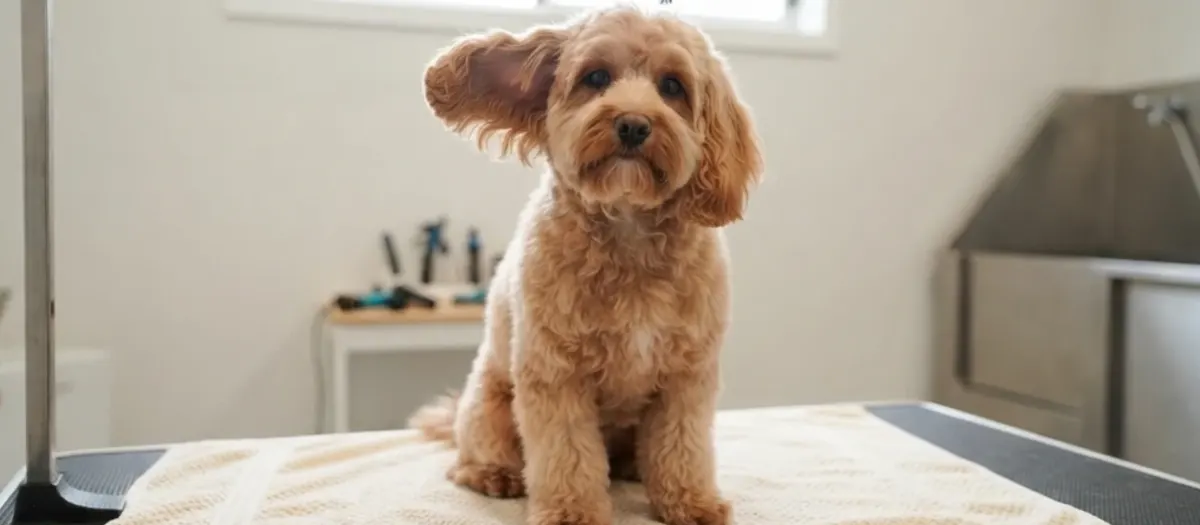
Breeds that grow hair inside the ear are the usual candidates, and only when a vet or groomer says the hair is causing trouble. Preventive Vet names Poodles, doodles and Shih Tzus, which takes in poodle crosses such as the cavoodle and groodle. Many of these dogs never need plucking.
Growing ear hair isn't a problem by itself. Plucking becomes a question when a dog gets repeated ear trouble, when the hair mats, or when it blocks the opening. A groomer who sees your dog regularly can tell you what the ears look like. Our dog grooming kit guide covers the other home grooming tools.
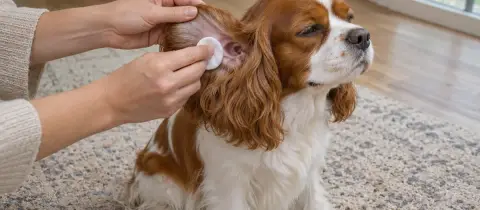
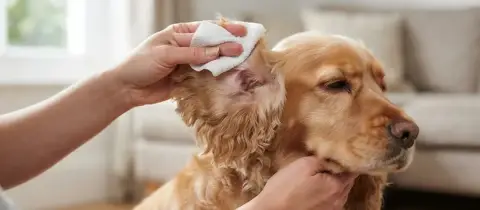
Use a small puff, keep it at the ear opening, and stop if your dog is in pain. Never push tweezers or any tool deep into the canal. Check the ear first: if it's red, smelly or has discharge, skip the powder and see your vet.
Look first. Lift the flap in good light. Clean-looking, odour-free skin is the starting point.
One small puff. Powder can irritate the eyes and lungs, as Preventive Vet notes, so hold your dog's head steady and keep your face back. Too much can clump.
Hair only at the opening. Take a few hairs at a time from the entrance of the canal. The Preventive Vet article says to pull gently, take only enough to open the canal and never push a tool deep inside.
Stop at any pain. Yelping, pulling away or shaking afterwards means stop and call your vet.
No powder afterwards, and watch. Merck says powder used after plucking can form irritating masses, so don't add more once the hair is out. Redness or scratching in the following days is a reason for a vet visit.
Don't put cotton buds down the canal, and don't pour in vinegar mixtures. The Merck Veterinary Manual advises against both. If your dog needs a drop-style product, see our ear drops guide for what the shops sell and what only a vet can prescribe.
Where else can you buy ear powder?
Ear powders and grooming supplies are sold in pet shops, and many groomers and vet clinics stock them or can recommend one. Staff there can also show you how to apply it to your dog. Wherever you buy, check the ingredient list and ignore any "infection treatment" wording.
How we chose
We searched Amazon Australia for ear powders and ear grooming kits for dogs, then shortlisted those that met all of these checks:
Well rated: a strong average rating with plenty of buyer reviews.
No red flags: no pattern of poor reviews, safety complaints or listing problems.
Available on Amazon Australia when we checked.
A powder, not a liquid: the product actually is an ear powder or grooming kit.
No infection claims we'd have to repeat: where a listing overclaims, we describe the product from its ingredients and directions instead.
Size or count stated on the listing.
Where a listing is thin, imported or missing a detail, we say so in the cons. These are researched picks, not products we've personally tested. We compared the specifications and features on each Amazon Australia listing, checked on 25 Nov 2026, and we didn't accept payment from any brand.
Left out this time: a powder whose listing says it only ships to UK customers, powders sold as infection or yeast treatments with no ingredient list, and a few with no listing data we could read. Liquids and wipes belong in our other ear guides.
When to see a vet
Book a vet visit before using powder if your dog's ear is red, swollen, smelly, painful to touch or has brown, yellow or bloody discharge, or if your dog keeps shaking their head or scratching at it. Merck lists these as signs of an ear infection and says prompt attention is needed when changes appear. Repeated ear trouble also needs a vet to look for causes such as allergies. See our dog ear infection guide and dog itchy skin guide.
Go to a vet the same day if your dog has a head tilt, loses balance, walks in circles, or seems unwell or in sudden severe pain. Don't put powder or drops into an ear that might have a damaged eardrum. A vet looks down the canal to check.
If your dog breathes in a lot of powder or swallows some, or you're unsure about an ingredient, call the Animal Poisons Helpline on 1300 869 738 (24/7) and your vet.
Frequently asked questions
Is ear powder safe for dogs?
Powders on this page are made for dog ears, but safe depends on the ear and how you use them. Use a small puff, keep it away from eyes and lungs, and avoid sore, red or smelly ears. The vet quoted by Preventive Vet doesn't recommend ear powder at all, so ask your vet first.
Is ear powder better than a liquid ear cleaner?
They do different jobs. A liquid cleaner loosens wax and debris, while powder dries the ear and gives grip on hair. Powder isn't a substitute for cleaning, and the Merck Veterinary Manual says to use a vet-recommended cleaner. Our dog ear cleaner guide compares them.
Can I use baby powder or cornflour in my dog's ears?
We didn't find a vet source recommending either, so we wouldn't. Baby powder and cornflour aren't made for ears, and fine powders can irritate the eyes and lungs, as Preventive Vet notes. A vet or groomer can tell you what suits your dog. Don't use any human product without asking.
How often should I use ear powder?
Only when a vet or groomer advises it. Plucking isn't routine for most dogs, and the sources we read say it can irritate the canal. Follow the product's directions and your vet's advice rather than a fixed schedule, and note that results vary from dog to dog.
Does plucking dog ear hair hurt?
It can be uncomfortable, and Preventive Vet says plucking can irritate and inflame the canal. A calm dog and a few hairs at a time help, and pain is a reason to stop. Trimming the opening is a gentler alternative some groomers use. Ask your vet if your dog flinches.
Do cavoodles and other poodle crosses need their ears plucked?
Not automatically. Poodle crosses often grow ear hair, but healthy ears with hair that is brushed or trimmed clear of the opening may not need plucking. Chat with your groomer or vet about your dog. See our cavoodle guide for the breed's care needs.
Can ear powder treat a yeast infection in dogs?
No. Powder dries the ear and gives grip on hair, and none of the ingredient lists here treat yeast or bacteria. A vet needs to look in the ear and choose treatment for the cause. Our ear drops guide explains what only a vet can prescribe.
Can I use dog ear powder on my cat?
Some listings say cats, but we wouldn't. We've written these picks for dogs, and Miracle Care's listing says to keep it out of reach of pets, so we treat it as dog only. A cat with ear trouble needs a vet, because ear mites and infection can look alike. See our ear mites in cats guide.
Product details from each linked Amazon Australia listing, checked on 25 Nov 2026.
This guide provides general information and isn't a substitute for veterinary advice. If you're concerned about your dog's ears or health, speak with your vet.