Best senior cat food: wet and dry picks for cats 7+ and 11+
By Anish PuriUpdated 25 Nov 202614 min readResearched, not tested by us
Research guide. WhiskerFinds may earn a commission from links, at no extra cost to you.
Quick answer: The best senior cat food for most healthy indoor cats from about 7 is Hill's Science Diet Adult 7+ Indoor dry, with Hill's 11+ Indoor for cats 11 and older and Purina Pro Plan 11+ pate for wet. Senior food suits a healthy older cat. It doesn't treat illness, so a changing cat needs a vet check first.
Illustration, not the actual product
Our top pickHill's Science Diet Adult 7+ Indoor dry food, chicken, 3.17 kg
Your cat hasn't read the label, but the bag says "7+" or "11+" and you're wondering whether it matters. This guide compares five senior foods on Amazon Australia by age band, bag size and texture, and says plainly when the better move is a vet visit, not a new food. Pairing the dry picks with our wet cat food guide is one easy way to add moisture. If your older cat is straining or weeing more often, read our cat UTI guide before you shop.
The honest picture of the range: three of the five picks are Hill's, because Hill's makes most of the senior formulas we found on Amazon Australia. The four dry foods all list chicken or poultry, and the wet pick is fish.
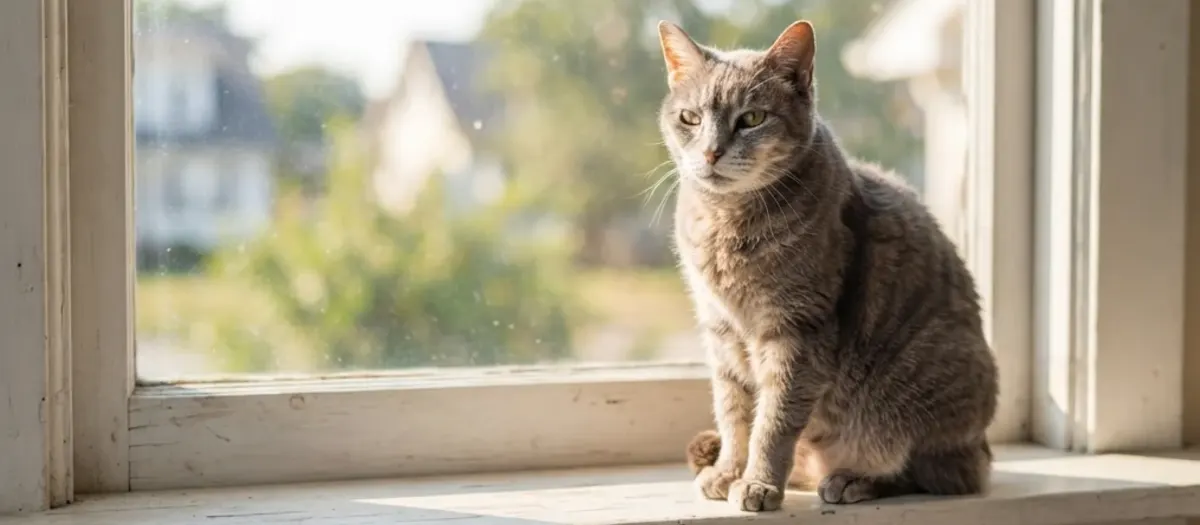
A senior formula is an option, not a deadline. Watch the cat in front of you: weight, appetite, coat and how easily they jump matter more than the birthday, and your vet can tell you when a change makes sense.
The clearest 7+ food for a healthy indoor cat. The listing says it is formulated for "senior cats with an indoor lifestyle", with natural fibres for digestion and easy litter cleanup, plus quality protein. Chicken is the only flavour, and the allergen field lists chicken meat. A 1.58 kg smaller bag of the 7+ Indoor food is also listed, which is a sensible way to see whether your cat will eat it before committing to the big bag.
The listing says Hill's suggests changing foods over about 7 days and keeping fresh water available. Dry food adds no moisture, so pair it with wet food or water stations.
Pros: clear indoor 7+ purpose; two bag sizes; fibre aimed at digestion and litter cleanup (per the listing)
Cons: chicken only; dry food adds no moisture
Best for: cats from about 7 that live mostly indoors and are healthy
Skip it if: your cat is 11 or older (pick 2 is made for that band), or has a diagnosed kidney, thyroid or dental problem
2. Hill's Science Diet Adult 11+ Indoor dry food, 3.17 kg: best for cats 11+
The step up from pick 1 for indoor cats 11 and older. The listing says it is for senior cats with an indoor lifestyle, with natural fibres for digestion, and that it provides "optimal levels of nutrients for eye, heart, kidney and joint health". That is the maker's wording, and it doesn't mean the food protects any organ. The listing also names an "ActivBiome+" blend for digestive, immune and organ health.
Pros: made for the 11+ band; indoor formula; natural fibres per the listing
Cons: one bag size at this listing; chicken only; dry food adds no moisture
Best for: cats 11 and older living indoors
Skip it if: your cat struggles to chew kibble (see pick 3) or is losing weight (vet first)
3. Purina Pro Plan Adult 11+ wet food, salmon and tuna pate, 24 x 85 g: best wet
The wet pick for older cats that eat less kibble or find a soft pate easier. The listing says it is made with real salmon and tuna and "formulated to meet the needs of cats age 11+", in 24 pull-top cans of 85 g. Wet food carries far more water than dry, per Cornell.
One note on the listing: its component field describes a dog food, which looks like an Amazon data error. The title and bullets are for the cat food, so check the can when it arrives.
Pros: soft pate; wet food, so more water than kibble; 24 cans per pack
Cons: one flavour in a big pack; US labelling (the listing describes "3 oz pull-top cans"), so check the delivery details on Amazon before you order
Best for: older cats that eat less kibble, need more moisture or find pate easier
Skip it if: your cat dislikes fish or pate, or you don't want 24 cans of one flavour
4. Royal Canin Indoor 7+ dry food, 1.5 kg: best small bag for 7 to 12
A small bag with a stated range: the listing says "for indoor cats from 7 to 12 years old". It says the food has an adapted phosphorus level "to help support renal health" and highly digestible protein to reduce the quantity and odour of stools, plus green tea polyphenols, vitamin C, EPA and DHA. The ingredient list includes poultry, wheat, maize and fish oil. Our Royal Canin cat food guide covers other formulas.
The listing's fields are muddled ("Grain-Free", "Raw", "Siamese"), and the ingredient list shows wheat and maize, so ignore those fields.
Pros: small trial size; stated 7 to 12 range; indoor focus
Cons: 1.5 kg only at this listing; muddled listing fields
Best for: indoor cats aged 7 to 12, and owners who want a small bag to trial
Skip it if: your cat is over 12, or has kidney disease (that needs a vet diet)
5. Hill's Science Diet Adult 11+ Age Defying dry food, 3.17 kg: best 11+ for cats that go outdoors too
The non-indoor 11+ Hill's recipe. The listing says taurine for heart health, "balanced minerals for bladder and kidney health" and natural fibres to support a mature cat's sensitive stomach, with vitamin E, omega 3 and omega 6. A smaller bag is listed; its title says 1.5 kg and its details say 1.58 kg.
How it differs from pick 2: Hill's own comparison table on the listing shows Adult 11+ and Indoor Adult 11+ as separate foods. Pick 5 is the general 11+ recipe and pick 2 is the Indoor one. They are close relatives, so you only need one.
Pros: 11 and older band; two bag sizes; suits cats not strictly indoor
Cons: older product naming and heavy overlap with pick 2; chicken only; dry food adds no moisture
Best for: cats 11 and older that are not strictly indoor
Skip it if: you already chose pick 2, or want a pate
Does an older cat need senior food?
Not always. Senior foods are labelled for older cats and often adjust fibre or nutrients, but an ordinary complete adult food fed in the right amount can still suit a healthy older cat. Check that the label says it is complete and balanced for your cat's life stage, which Cornell says the label should state (Cornell Feline Health Center, "Feeding Your Cat", page read 25 November 2026).
A senior formula earns its place in three cases: your vet suggests an age-targeted food, your cat is indoor and sedentary (the Hill's and Royal Canin indoor picks target that), or you want an easier-to-eat pate for an older mouth. The AAFP's 2021 senior care guidelines list nutrition and weight management as core topics for older cats, so ask your vet at the next check (American Association of Feline Practitioners, Senior Care Guidelines page, read 25 November 2026).
Is dry or wet food better for an older cat?
Wet adds water, and dry is easier to leave out. Cornell says dry food holds roughly 6 to 10 per cent water and canned food at least 75 per cent, so cans are a useful water source. Cornell also says dehydration is a common result of illness in older cats, which is one reason many owners feed a mix.
Wet only: more moisture and softer on sore teeth. A 24 pack is a lot of one flavour, so try a few cans first.
Both: the usual choice. Our dry cat food guide covers kibble choices in general.
Dental disease is very common in older cats and can make eating painful, according to Cornell, and it is a more likely reason for a reluctant eater than a duller sense of smell. If your cat drops food, chews on one side or has bad breath, a vet check comes before a food change. Our guides to cleaning your cat's teeth and cat toothbrush kits cover the day-to-day side.
Is there a senior food for kidney disease, weight loss or arthritis?
No retail senior food treats any of them. Kidney diets (often searched as "renal cat food") are vet diets. Your vet may prescribe one after exams and tests, and we don't recommend or link them. Weight loss in an older cat is a vet matter too, not something to manage with a new bag.
Cornell says weight loss in an older cat can point to problems such as kidney failure, and that some seniors gain weight instead and need a vet-guided diet change. Listings here use phrases like "kidney health" and "mature cat". Those are the makers' words about maintenance in a healthy cat, not claims we make. If your cat is drinking, weeing or losing weight, see the vet box before shopping. For urinary signs specifically, see our cat UTI guide and urinary cat food guide.
Choose by situation
Swipe sideways to see every column
Your situation
What to look for
Our pick
First senior food, healthy indoor cat from about 7
Indoor 7+ formula
Hill's 7+ Indoor (1)
Want a small trial bag, cat aged 7 to 12
1.5 kg or 1.58 kg
Royal Canin Indoor 7+ (4), or the Hill's 1.58 kg bag
Picks 1, 2, 4 and 5 are chicken or poultry; pick 3 is fish
How we chose
We searched Amazon Australia for senior and 11+ cat foods, then shortlisted those that met all of these checks:
Well rated: a strong average rating with plenty of buyer reviews.
No red flags: no pattern of poor reviews, safety complaints or listing problems.
Available on Amazon Australia when we checked.
An age band named on the listing (7+, 7 to 12 or 11+), not just "adult".
A retail food, not a vet diet: prescription and veterinary foods are never picks.
Pack size stated so the table can compare bags.
Where a listing is thin, mismatched or imported, we say so in the cons. These are researched picks, not products we've personally tested. We compared the specifications and features on each Amazon Australia listing, checked on 25 Nov 2026, and we didn't accept payment from any brand.
Left out this time: an adult cheese-sauce wet food that only matched the search, and all kidney and vet diets.
Where else can you buy senior cat food?
Pet shops and vet clinics sell senior formulas from the same brands, and a vet can say which age band and texture suit your cat. Wherever you buy, check the age band on the pack, because "adult" can mean several things.
When to see a vet
Book a vet visit if your older cat is losing weight or muscle, drinking or weeing more than usual, eating less or more than usual, vomiting, dropping food or has bad breath, or has a dull coat. These signs can have many causes, and a vet can work out which with an exam and tests. A new food won't fix them.
Go to a vet or emergency clinic straight away: a cat that keeps straining and passes little or no urine, especially a male cat, needs a vet straight away because a blocked urethra is life-threatening. Repeated vomiting, hiding or being very lethargic are urgent too. Our cat UTI guide has the full wording.
Go gradually, over about 7 to 10 days as our dry cat food guide explains. The Hill's listing suggests mixing increasing amounts of the new food with decreasing amounts of the old over 7 days. If your cat refuses it or has an upset stomach, pause and ask your vet, particularly if they are 11 or older and eating less.
How much should I feed my senior cat?
Follow the feeding guide on the pack and adjust with your vet. Older cats can gain or lose weight, and Cornell says a vet can help set a healthy body condition. Weigh your cat regularly and tell the vet if the number moves without a change in food.
My cat is over 12. Which pick still suits?
Picks 2 and 5 are labelled 11 and older, and pick 3 is 11+ wet. Pick 4 stops at 12 on its listing, so skip it for a cat past that. Whatever the age, a cat that is thin, frail or eating less needs the vet's advice on the food.
Does an outdoor cat need an indoor senior food?
Not necessarily. Indoor formulas target a less active cat, and an older cat that roams may suit pick 5 better. Cats that roam also face risks the food can't fix, so ask your vet about your cat's weight and condition.
What if my cat has a chicken sensitivity?
See your vet first. Picks 1, 2, 4 and 5 are chicken or poultry, and pick 3 is fish. A food trial for suspected sensitivity is something a vet guides, not a guess from a label. Our grain free cat food guide explains why "grain free" isn't the same thing.
My older cat has gone off dry food. What now?
Look for a cause first. Cornell lists dental discomfort as the more likely reason for reluctance to eat and says many diseases can reduce appetite. Book a vet check, then try a softer wet food such as pick 3 if your vet agrees.
How often should an older cat see the vet?
Cornell says vets may suggest exams more often for seniors than for younger cats, and more often again if a cat has a medical condition. It adds that yearly blood, faecal and urine tests may be suggested. Ask your vet what suits your cat.
Product details from each linked Amazon Australia listing, checked on 25 Nov 2026.
This guide provides general information and isn't a substitute for veterinary advice. If you're concerned about your cat's appetite, weight or health, speak with your vet.