By Anish PuriUpdated 20 Oct 202612 min readResearched, not tested by us
Research guide. WhiskerFinds may earn a commission from links, at no extra cost to you.
Quick answer: Cat dental treats can help a little, but they're a helper, not a fix. Treats with the VOHC seal, fed daily, may slow tartar build-up. They don't replace brushing or a vet clean. Our pick is Feline Greenies, which the VOHC lists for tartar.
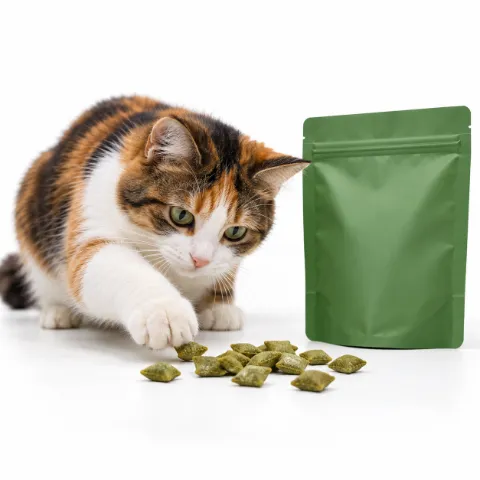
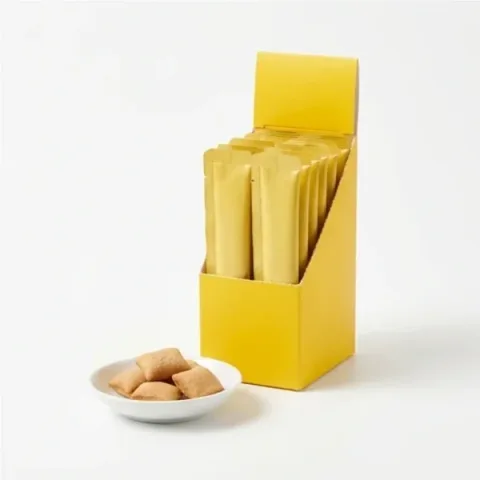
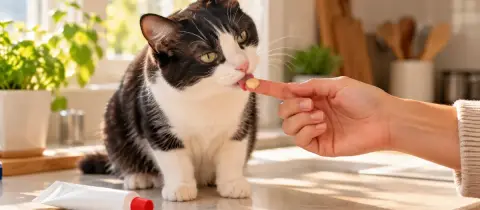
Illustration, not the actual product
Our top pickGreenies Feline Dental Treats, Catnip 277 g
Treats are the easiest dental product to try, because most cats will happily crunch one. This guide compares the cat dental treats and one dental food we could check on Amazon Australia, explains what the VOHC seal does and doesn't promise, and shows how many to give. It's part of our cat dental series, starting with how to clean your cat's teeth.
Quick picks
Our top pickBest overall
Greenies Feline Dental Treats, Catnip 277 g
On the VOHC list for tartar; under 2 calories per treat on the listing
Somewhat, for the right treat. A dental treat on the VOHC list has trial results behind it showing it can reduce tartar, but that's a modest help, not a clean. International Cat Care says tartar is too hard to brush off and usually needs a vet to scale it under general anaesthetic (International Cat Care, updated 26 September 2025).
PDSA, the UK vet charity, says dental treats are fine now and then but you shouldn't rely on them for your cat's dental health (PDSA, February 2023). That matches how we use them on this site: a daily extra that sits alongside brushing and vet checks, never in place of them.
A treat also can't help a mouth that's already sore. If your cat has red gums, drooling, bad breath or is dropping food, those are reasons to book a vet visit (see the box below), not to buy another treat.
What does the VOHC seal mean for cat treats?
The VOHC seal goes to products the Veterinary Oral Health Council accepts as safe and proven to reduce plaque, tartar or both (VCA Animal Hospitals, last updated 14 June 2023). For the cat treats you can buy in Australian shops, including Feline Greenies, the seal is for tartar only, so it says little about plaque or fresh breath on its own.
Purina DentaLife Daily Oral Care Cat Treats: tartar.
Whiskas DentaBites Cat Treats: tartar.
Purina Pro Plan Veterinary Diets Dental Bites: plaque and tartar.
Two more things from that list matter here. ProDen PlaqueOff Powder for cats is listed for plaque and tartar, and Hill's Science Diet Oral Care for Cats is listed as a dental diet for plaque and tartar. Australian packs can differ from the US products on the list, so look for the seal on the pack you're holding.
The only VOHC-accepted cat treat we found on Amazon Australia is Feline Greenies (Purina DentaLife and Whiskas Dentabites are on the VOHC list but weren't sold there on 20 October 2026).
Our picks in detail
1. Greenies Feline Dental Treats, Catnip 277 g: best overall
Small crunchy treats that the listing says help reduce tartar through their texture. Feline Greenies are on the VOHC accepted list for tartar. The listing says each treat has under 2 calories and that the recipe is complete and balanced for adult cats. The ingredients start with chicken meal, ground wheat, brewers rice and corn gluten meal, with dried catnip in this flavour.
Pros: on the VOHC list for tartar; the listing gives calories per treat; several flavours and sizes
Cons: the VOHC claim is for tartar only; contains wheat, corn gluten and chicken meal, so it's not for cats with those sensitivities; flavours won't suit every cat; an adult recipe
Best for: adult cats who like crunchy treats and have no food allergies
Skip it if: your cat is a kitten, has a food allergy, or is on a special diet from your vet
2. Greenies Feline Dental, Tempting Tuna 130 g: best smaller bag and fish flavour
The same treat family in a smaller bag with a tuna flavour. It suits a first try, because you aren't left with a big bag if your cat turns it down. We didn't get a calories-per-treat figure for this listing, so check the pack before you count it into your cat's day.
Pros: smaller bag to trial; fish flavour for cats who ignore catnip or chicken; Feline Greenies are on the VOHC list for tartar
Cons: we couldn't confirm the seal or calories per treat for this flavour from the listing, so check the pack
Best for: a first try, or a cat that prefers fish
Skip it if: you want the calories printed on the listing, or your cat has a fish or wheat sensitivity
3. Hill's Science Diet Oral Care Adult cat food 1.6 kg: best food option
A dry food rather than a treat. The listing says the kibble uses fibre technology that scrubs teeth as the cat chews, and VOHC lists Science Diet Oral Care for Cats for plaque and tartar. This is a US-made product, and the listing is marked non-returnable.
Pros: on the VOHC list for plaque and tartar; replaces part of the diet instead of adding calories; suits cats who won't take treats
Cons: US-made product; it's non-returnable, so a cat that refuses it can't be sent back; a diet change takes planning; not suitable for every cat's health needs
Best for: healthy adult cats whose owners are already planning a food change
Skip it if: your cat has kidney disease or another condition with a prescribed diet, or you're unsure, so ask your vet first
Cat dental treats compared
Details from each Amazon Australia listing, checked on 20 Oct 2026.
We searched Amazon Australia for cat dental treats and dental foods, then shortlisted products that met all of these checks:
Well rated: a strong average rating with plenty of buyer reviews.
No red flags: no pattern of poor reviews, safety complaints or listing problems.
Available on Amazon Australia when we checked.
On the VOHC accepted list for cats.
Calories per treat on the listing, so you can count them.
These are researched picks, not products we've personally tested. We compared the specifications and features shown on each Amazon Australia listing, and checked the VOHC accepted products list, on 20 Oct 2026. We didn't accept payment from any brand, and no brand saw this page before it was published.
Left out this time: other cat treats sold as dental treats without the VOHC seal, and two VOHC-listed treats, Purina DentaLife and Whiskas Dentabites, which weren't sold on Amazon Australia on 20 Oct 2026.
How many dental treats should I give my cat?
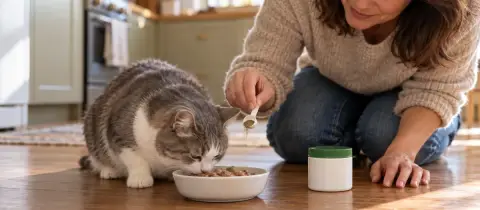
Follow the feeding guide on the pack, and count the calories. Vet hospital group VCA says treats should be limited to 10% of your cat's daily calories, with the rest from complete and balanced food (VCA Animal Hospitals, updated 26 September 2024). A 2025 paper says WSAVA and AAHA both recommend this limit (Veterinary Sciences, 2025).
The Greenies Catnip listing says under 2 calories per treat, so a few a day uses only a small slice of the allowance. Treats are still extra food, so a cat who's gaining weight should have other treats trimmed. Never use dental treats to replace a meal. For other kinds of treats, see our cat treats guide.
Dental food or dental treats?
Dental food is eaten every day as the meal, so it's more consistent than a treat, but it's a bigger change. VCA suggests a VOHC-accepted dental diet to slow plaque build-up (VCA Animal Hospitals). International Cat Care says some special diets are designed to remove plaque as they're chewed, but the link between diet and dental disease isn't clear.
Treats are easier to try and easier to stop. If your cat swallows kibble whole, a crunchy shape may do less for their teeth, and a dental diet is a conversation to have with your vet. VCA advises checking with your vet team before giving treats to a cat with a medical condition or special diet, so check first if your cat has kidney disease, diabetes or a food allergy, and switch foods gradually. If treats and dental food both get a no from your cat, try a PlaqueOff powder on their usual food.
Are dental treats safe for kittens and cats with health conditions?
Check the age and health guidance first. The Greenies Catnip listing describes the recipe as complete and balanced for adult cats, so don't give treats or powders to a kitten younger than the age on the pack. VCA advises checking with your vet team before giving treats to a cat with a medical condition (VCA Animal Hospitals).
Kittens and cats with sore mouths are best looked at by a vet first. Brushing early, while a cat is still young, is a better habit to build. Our cat toothbrush guide covers small-mouth options.
Do treats replace brushing?
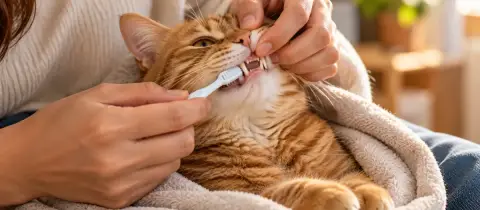
No. PDSA calls brushing by far the best way to keep a cat's mouth healthy, because it removes plaque before it hardens into tartar (PDSA, February 2023). International Cat Care also calls regular toothbrushing the best way to look after teeth and gums, and says early gingivitis can often be reversed with home care.
If brushing feels daunting, start with our guide to cleaning your cat's teeth, then choose a cat toothbrush and a cat-safe toothpaste. Never use human toothpaste on a cat. A treat can sit on top of that routine. Tartar already stuck on the teeth needs a vet to remove it under anaesthetic. VCA says there's no way to remove tartar below the gumline without anaesthesia, which is why we don't recommend "anaesthesia-free" dental cleaning (VCA Animal Hospitals, updated 23 April 2024).
Looking after the rest of your cat's routine? Our cat grooming at home guide covers coat care, and hairball remedies covers fur you'd rather not find on the couch.
When to see your vet
Book a check-up if your cat has bad breath, red or bleeding gums, drooling, visible brown tartar, pawing at the mouth, dropping food, chewing on one side, or is eating less. International Cat Care lists bad breath, red or bleeding gums, drooling, pawing at the mouth and loose teeth among the signs, and says cats often hide pain (International Cat Care, updated 26 September 2025). Dental treats don't treat any of them.
Tooth resorption (painful erosion of a tooth, often first seen as a pinkish spot at the gumline) is confirmed with probing and dental X-rays under anaesthetic, so a cat who seems to be in mouth pain needs a vet, not a product.
Call your vet if your cat vomits after a new treat or food, gains weight, stops eating, can't close their mouth, or has a broken tooth. Talk to your vet before giving treats if your cat is on a medical diet.
Frequently asked questions
Do dental treats for cats actually work?
A little, if they carry the VOHC seal and are fed as directed. That seal is for tartar, and it's a modest benefit. They don't remove tartar already there, and they don't replace brushing. The sources are in the section above on whether dental treats work.
What is the best dental treat for cats?
It depends on your cat. The only VOHC-accepted cat treat we found on Amazon Australia is Feline Greenies (Purina DentaLife and Whiskas Dentabites are on the VOHC list but weren't sold there on 20 October 2026). Choose a flavour your cat will eat and check the pack for the seal.
Should cats have dental treats?
They can, as an extra. Healthy adult cats with no food allergies can have a VOHC-listed treat alongside brushing and vet checks. Count the calories, and skip them for kittens below the pack's age or if your vet has your cat on a special diet.
How often should I give my cat dental treats?
Follow the pack. Feline Greenies are on the VOHC list for tartar, and the pack has a feeding guide to follow. VCA says all treats together should stay within 10% of your cat's daily calories. If your cat's weight creeps up, cut back other treats first.
What do vets recommend for dental chews?
Vet sources point to the VOHC list rather than a brand, and to brushing first. VCA suggests a VOHC-accepted dental diet, and PDSA says not to rely on treats. Ask your own vet which product suits your cat's teeth and health.
What dissolves tartar on cats' teeth?
Nothing you can buy dissolves it. International Cat Care says tartar is too hard to brush off, and a vet usually scales and polishes under general anaesthetic. Treats and powders may slow new build-up, but they don't clear what's there. Avoid DIY scraping or rinses.
Are Greenies good for cats?
For most healthy adult cats, they're a reasonable, VOHC-listed choice. The ingredients include chicken meal, wheat and corn gluten, so they won't suit cats with those allergies. Check the pack for flavour and size, and skip them for kittens or cats on a medical diet.
Product details, ingredients and sizes from each linked Amazon Australia listing, checked on 20 Oct 2026.
This guide provides general information and isn't a substitute for veterinary advice. If you're concerned about your cat's teeth, gums or diet, speak with your vet.