Research guide. WhiskerFinds may earn a commission from links, at no extra cost to you.
Quick answer: Does PlaqueOff work for cats? It may help slow plaque. The VOHC lists the powder for plaque and tartar, but it can't remove tartar already there, and it doesn't replace brushing or a vet dental clean. Its kelp is high in iodine, so ask your vet first if your cat has thyroid problems. Our pick is the ProDen PlaqueOff Powder 60 g.
If your cat won't tolerate a toothbrush, a powder on their dinner is an easy thing to try, but only for the right cat. This guide covers what PlaqueOff is, what the evidence does and doesn't show, who should skip it, and how it compares with brushing and treats. Brushing is still the baseline, so start with our guide on how to clean your cat's teeth.
Quick picks
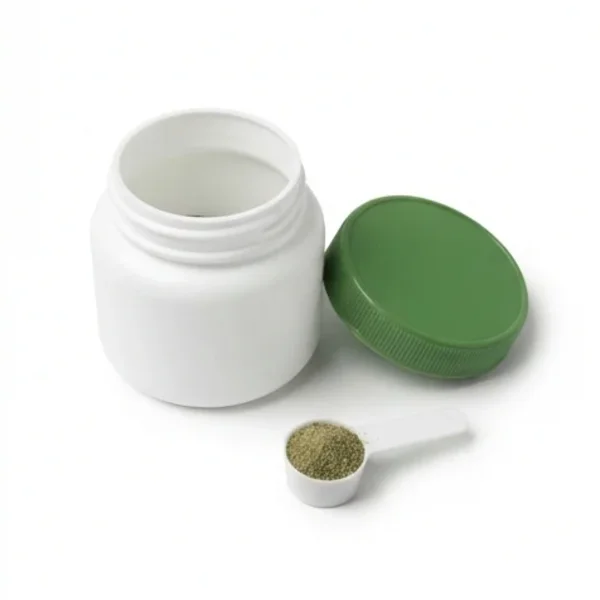
ProDen PlaqueOff Powder 60 g
Kelp powder on the VOHC list for cats
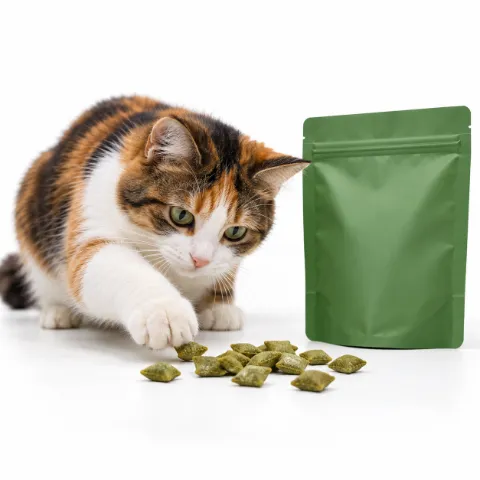
Greenies Feline Dental Treats, Catnip 277 g
VOHC accepted for tartar
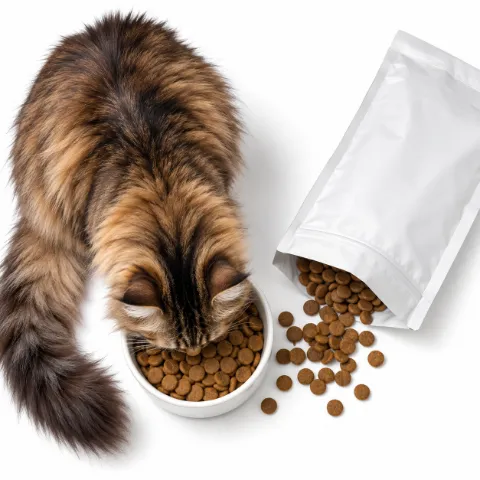
Hill's Science Diet Oral Care Adult Cat Food
VOHC accepted for plaque and tartar; US product
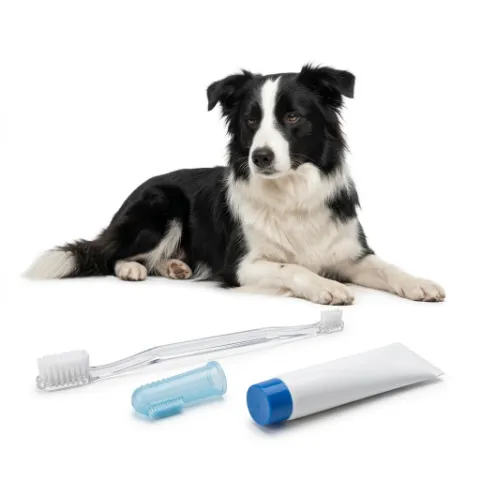
Virbac C.E.T. Oral Hygiene Kit for Cats and Dogs
Brush, finger brush and enzymatic toothpaste in one kit
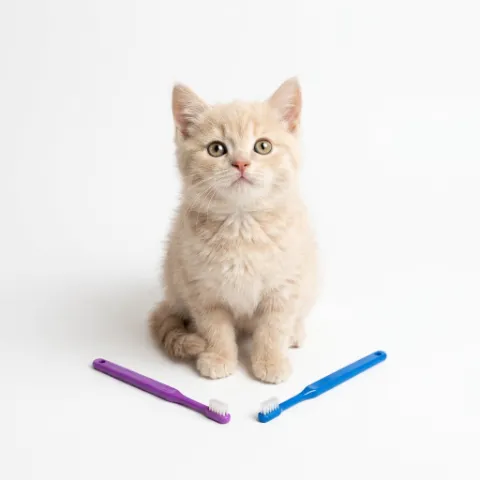
RYERCAT Micro Head Cat Toothbrushes (2-pack)
Small brush heads suit a cat's little mouth, which can make daily brushing easier to get started.
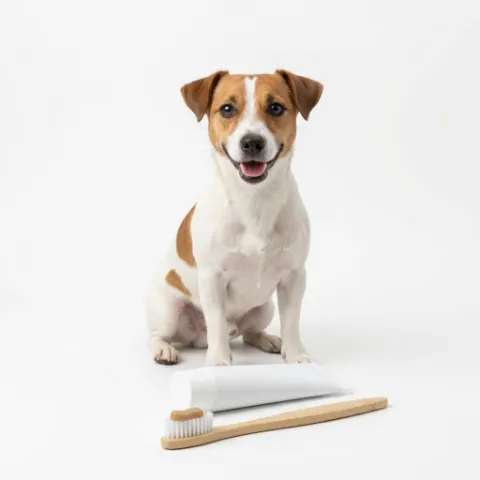
Virbac C.E.T. Enzymatic Toothpaste, Poultry
A toothpaste made for pets, because human toothpaste isn't safe for cats.
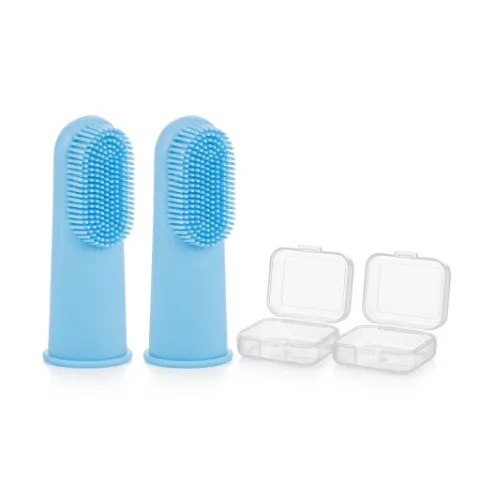
Jasper 360 Finger Toothbrush (2-pack)
A finger brush can feel gentler for cats who dislike a handle in their mouth.
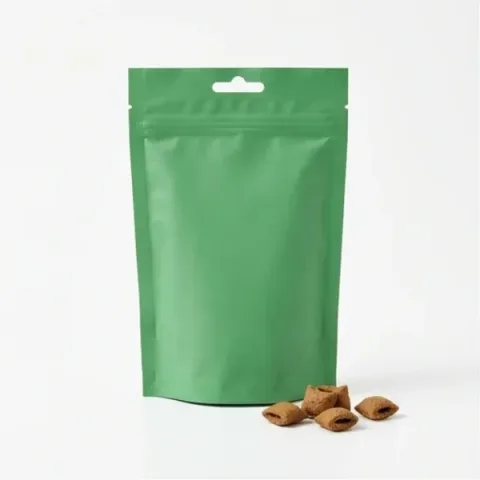
GREENIES Feline Dental Treats, Catnip, 60 g
A dental-style treat to give alongside brushing, not instead of it.
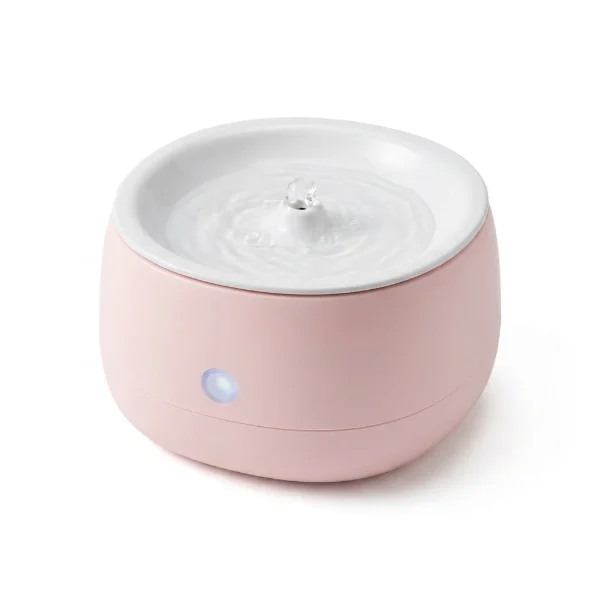
Catit Pixi fountain
A fountain that keeps water moving, which some cats drink from more readily.
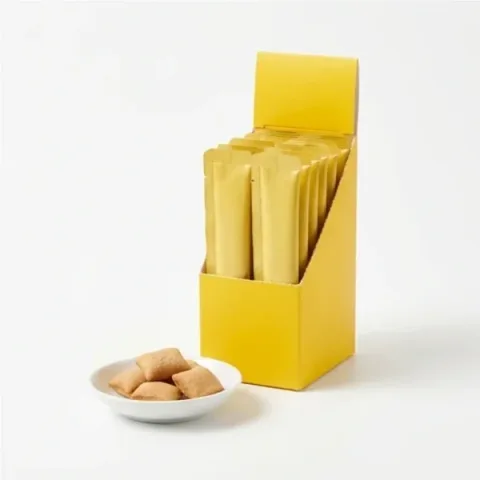
INABA Churu Bites, chicken, 18 tubes
A lickable treat to reward your cat after a brushing session.
Pictures are illustrations, not the actual products.
The Australian cat-size pack, Troy PlaqueOff Cat 40 g, wasn't available on Amazon Australia when we checked on 20 Oct 2026, so we haven't linked it.
What is PlaqueOff for cats?
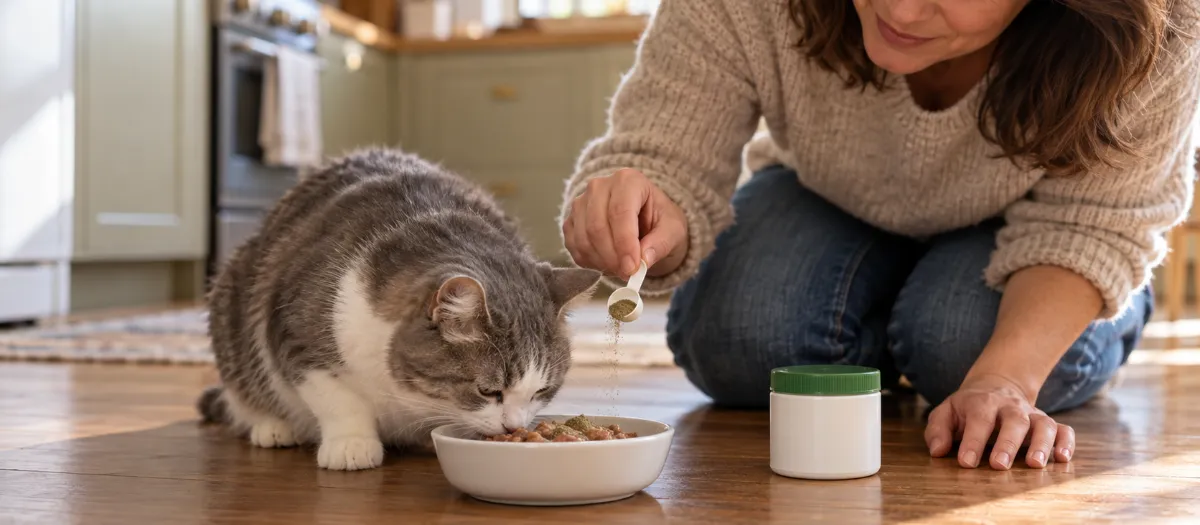
PlaqueOff is a powder made from a brown seaweed, Ascophyllum nodosum (a kelp). You sprinkle a measured amount on your cat's food every day. The maker, SwedenCare, says the powder is absorbed through the digestive system and then acts on the plaque film "from the inside out", rather than by scrubbing (SwedenCare).
You'll see it under several names: ProDen PlaqueOff, Plaque Off powder, and the Troy PlaqueOff Cat pack sold in Australia. The listing for the Amazon pack we picked gives the ingredient as kelp.
Does PlaqueOff work for cats?
It may help with plaque, but it is not a substitute for brushing. The Veterinary Oral Health Council (VOHC) lists ProDen PlaqueOff Powder and a CEVA version for cats, both for plaque and tartar. The maker says the powder reduces buildup from the inside and does not remove hardened tartar. Results vary, and a vet dental clean treats tartar already there.
Some detail behind that answer:
- What the VOHC listing means. The VOHC lists ProDen PlaqueOff Powder for cats and the CEVA Clenz-A-Dent PlaqueOff powder for cats, both for plaque and tartar (VOHC accepted products, read 25 November 2026). The VOHC doesn't test products itself. It looks at trial data the maker submits (VOHC). Australian packs can differ from the products on the US list, so check the pack in your hands.
- The maker's trials. SwedenCare's cat page says trials show a significant reduction in plaque and tartar, but it gives no study details, so we can't describe the results.
- Tartar. SwedenCare says the powder does not remove existing hardened tartar, which needs professional cleaning. Hardened tartar can't be brushed off either, according to International Cat Care, which says a scale and polish under anaesthetic is usually needed (International Cat Care).
- How long it takes. The listing for our pick says people generally begin to see results over 2 to 8 weeks. SwedenCare's cat page gives 3 to 8 weeks in one place and asks for 4 weeks of consistent daily use in another. Results vary and some cats won't eat it. Less plaque is not the same as clean teeth, so keep checking your cat's gums and breath.
Our picks in detail
1. ProDen PlaqueOff Powder 60 g: best PlaqueOff pack
The powder form of PlaqueOff, made from Ascophyllum nodosum kelp, with directions for adding it to your cat's food each day. The listing says it helps reduce plaque and tartar, and VOHC lists the ProDen PlaqueOff powder for cats for plaque and tartar. The listing gives the cat amount as half a scoop a day, with a serving spoon in the pack. It's a 60 g pack. The listing's warning says it isn't recommended for dogs with thyroid conditions because of the iodine in seaweed, and the maker's cat page says the same for cats.
- Pros: on the VOHC list for cats; easy to add to food; a small pack to try before committing; no brushing needed
- Cons: a 60 g pack won't last long if you also have a dog; doesn't remove existing tartar; the iodine rules out cats with thyroid problems; some cats dislike the smell or taste
- Best for: healthy adult cats that won't accept brushing and have had the thyroid question checked with a vet
- Skip it if: your cat has thyroid disease, kidney disease or is on a medical diet, or hasn't been checked by your vet and is middle-aged or older
2. Greenies Feline Dental Treats, Catnip 277 g: best for cats who take treats
A crunchy treat with a texture the listing says helps reduce tartar. The listing says it's accepted by the VOHC for the control of tartar, has under 2 calories per treat, and gives complete and balanced nutrition for adult cats. It lists chicken meat as an allergen and the flavour is catnip. The only VOHC-accepted cat treat we found on Amazon Australia is Feline Greenies (Purina DentaLife and Whiskas Dentabites are on the VOHC list but weren't sold there on 20 Oct 2026).
- Pros: VOHC accepted for tartar; low calories per treat; no preparation
- Cons: some cats refuse them; contains chicken, so it won't suit a cat with a chicken allergy; treats count towards daily food
- Best for: cats that love treats and don't mind a crunch
- Skip it if: your cat has a food allergy, is on a prescription diet, or is a kitten younger than the pack allows
3. Hill's Science Diet Oral Care Adult Cat Food: best food option
A 1.6 kg bag of dry food with a fibre texture the listing says scrubs the teeth as the cat chews, to reduce plaque and tartar. VOHC lists Science Diet Oral Care for Cats for plaque and tartar. The listing says it's made in the USA, so check the label against what Australian pet shops and vets sell.
- Pros: VOHC accepted for plaque and tartar; works through every meal; no extra step
- Cons: a US-made import, so check the delivery details on Amazon before you order; a diet change should be gradual; the listing says to ask your vet about portions and transition
- Best for: healthy adult cats whose owner is happy to change the daily food
- Skip it if: your cat has kidney, urinary or other medical needs, or your vet has set their diet
4. Virbac C.E.T. Oral Hygiene Kit for Cats and Dogs: best home care starter
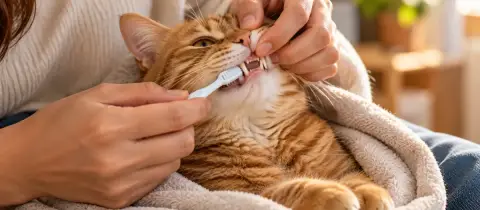
A starter kit with a dual-ended brush (large and small heads), a long reverse-angle handle, soft nylon bristles, a finger brush and a poultry-flavoured toothpaste of about 70 g (2.5 oz). The listing says daily brushing removes plaque and its safety note says to follow veterinary advice. Brushing is the standard home routine, so this is the one to choose if your cat will let you. Our cat toothpaste guide and cat toothbrush guide compare other options.
- Pros: everything needed to start; two brush sizes plus a finger brush; toothpaste made for pets
- Cons: needs daily effort and patience; the toothpaste is poultry flavoured, so it won't suit every cat; sold for cats and dogs, so use a cat-sized head
- Best for: cats that accept handling, and owners who want the most effective home routine
- Skip it if: your cat has painful gums or severe gingivitis, because brushing can hurt and your vet should look first
Is PlaqueOff safe for cats? Side effects
SwedenCare says most cats tolerate PlaqueOff well, with mild digestive upset such as loose stools the main side effect when they first start. The bigger caution is iodine: kelp is high in it, and SwedenCare doesn't recommend the powder for cats with thyroid problems. Ask your vet first if your cat has hyperthyroidism, is on thyroid treatment, or is older.
What the sources say:
- Digestive upset. SwedenCare says the main side effect in dogs and cats is mild digestive upset such as loose stools or gas when it's first introduced, which it puts down to the seaweed's fibre. It says starting low and building up helps (SwedenCare, PlaqueOff and side effects).
- Iodine and thyroid. SwedenCare's cat page says cats with thyroid problems shouldn't use the product, and elsewhere says to consult your vet first if your cat has hyperthyroidism or iodine sensitivity, or is on medication or has an ongoing health condition. Its side-effects page says to avoid the product in hyperthyroidism. The listing for the pack we picked carries a similar warning, worded for dogs with thyroid conditions.
- The maker's iodine figure. SwedenCare's side-effects page says one 330 mg scoop contains about 0.198 mg of iodine, and calls that well within safe levels. That is the maker's own figure and view, not independent research. It adds to the iodine already in your cat's food, so whether it suits your cat is a question for your vet.
- Allergy. The same page calls algae allergy very rare.
If your cat's appetite, thirst, weight or stools change after starting, stop the powder and call your vet.
Why older cats need a vet check first
Hyperthyroidism (an overactive thyroid) is common and mostly affects middle-aged and older cats, according to the Cornell Feline Health Center. Signs often start subtle and can include weight loss, a bigger appetite, more thirst and urination, vomiting and hyperactivity, so a cat could have it without you knowing. Ask your vet before starting PlaqueOff if your cat:
- is middle-aged or older
- has thyroid disease or has been checked for it
- has kidney disease or another long-term condition
- eats a prescription or medical diet
- takes regular medication
How do you use PlaqueOff for cats?
Add the amount on your pack to your cat's usual food once a day, and mix it in if you can. The listing for our pick says half a scoop a day for cats, while SwedenCare's US page says one 330 mg scoop, so follow your pack's directions. Start with less for the first few days and keep up other dental care.
Tips that help:
- Start small. SwedenCare says to start with a smaller amount for the first few days with a new cat, then build up (SwedenCare).
- Fussy cats. SwedenCare suggests mixing a very small amount into a favourite food and increasing slowly (SwedenCare, PlaqueOff and side effects).
- Be consistent. SwedenCare asks for consistent daily use, so skipped days may slow results.
- Keep water available. Fresh water should always be out for your cat.
- Kittens: only use it for kittens if the pack says it's suitable for their age. Ask your vet if the pack doesn't say.
PlaqueOff vs brushing vs dental treats
Brushing is the most effective home routine. VCA says daily brushing is best, with three times a week the minimum recommendation (VCA Animal Hospitals). Cornell says daily brushing can prevent most forms of dental disease, that most cats can eventually be trained to accept it, and that human toothpaste is not safe for cats (Cornell Feline Health Center). International Cat Care suggests asking your vet about other home options if your cat won't tolerate brushing. The options below can sit alongside brushing or stand in when brushing isn't possible.
Cat dental options compared
Details from each Amazon Australia listing, checked on 25 November 2026, and the VOHC list read on 25 November 2026.
| Option | How it works | Pack | VOHC accepted for | Best for | Main limit |
|---|---|---|---|---|---|
| ProDen PlaqueOff Powder | Powder on food | 60 g | Plaque and tartar | Cats who eat it mixed into food | Iodine |
| Greenies Feline Dental Treats | Crunchy treat | 277 g | Tartar | Cats who happily take treats | Some cats refuse them |
| Hill's Science Diet Oral Care | Whole diet | 1.6 kg | Plaque and tartar | Cats who can switch to a dry food | Diet change |
| Virbac C.E.T. Oral Hygiene Kit | Brushing | 3 pieces, about 70 g (2.5 oz) toothpaste | Not on the list | Cats who accept handling | Needs daily effort |
None of these remove tartar that's already there. See our guides to cat toothbrushes, cat toothpaste and cat dental treats.
Choose by situation
| Your cat | Start here |
|---|---|
| Healthy adult, won't accept brushing, eats wet or dry food | ProDen PlaqueOff Powder, after checking the thyroid points above with your vet |
| Middle-aged or older, or has never had a thyroid check | Ask your vet first, before any seaweed powder |
| Has thyroid disease or is on thyroid treatment | Skip PlaqueOff and ask your vet about other options |
| Loves treats, healthy, no food allergy | Greenies Feline Dental Treats |
| Owner happy to change the daily diet, no medical diet | Hill's Science Diet Oral Care |
| Calm with handling | Virbac C.E.T. kit and daily brushing |
| Red gums, bad breath, drooling or eating less | A vet dental check before any product |
Do cat dental water additives work?
Water additives are liquids you add to the bowl. The VOHC lists two HealthyMouth cat water additives for plaque (VOHC accepted products, read 25 November 2026). We didn't link one here. The only cat water additive we shortlisted on Amazon Australia gave dog directions on a cat listing, which we left out. Our dog water additive guide explains why most additives sold here are labelled for dogs.
If you try one, watch how your cat reacts. Cats can be fussy about a change in water, and drinking enough matters more than any additive. If your cat drinks less, stop using it. We couldn't find a vet source that covers this, so treat it as a sensible caution rather than a rule.
How we chose
We searched Amazon Australia for cat plaque powders, dental treats, dental food and brushing kits, then shortlisted products that met all of these checks:
- Well rated: a strong average rating with plenty of buyer reviews.
- No red flags: no pattern of poor reviews, safety complaints or listing problems.
- Available on Amazon Australia when we checked.
- On the VOHC accepted list for cats, or a brushing kit made for pets.
- Clear dosing or directions on the listing.
These are researched picks, not products we've personally tested. We compared the specifications and features shown on each Amazon Australia listing, checked on 25 November 2026, and read the VOHC list on 25 November 2026. We didn't accept payment from any brand, and no brand saw this page before it was published.
Left out this time: the 180 g ProDen pack, which wasn't available on Amazon Australia when we checked on 13 Nov 2026; a second 60 g PlaqueOff listing with a pattern of complaints; a seaweed powder that was unavailable; and a water additive for cats whose listing gave dog directions.
Other options
Dental products help keep teeth clean, but they don't treat disease. Removing plaque from a cat's teeth to treat gingivitis usually needs anaesthesia, and so do the X-rays used to check for periodontitis and tooth resorption (Cornell Feline Health Center). International Cat Care says cats should ideally have their teeth examined by a vet at least once every 12 months. Don't try to scrape tartar off at home, and avoid any "anaesthesia-free" cleaning.
Hairball and grooming habits are separate topics, but dental pain can change how a cat eats and grooms. See our cat grooming guide and hairball remedy guide. For ways to build a calm routine around handling and treats, see our cat enrichment ideas.
When to see a vet
Book a dental check if your cat has red or swollen gums, bad breath, drooling, drops food, paws at their mouth, chews on one side or eats less. International Cat Care lists these kinds of signs for dental disease (iCatCare), and cats often hide pain, so some have serious dental disease with few outward signs. These are reasons to see a vet, not something a powder or treat fixes.
Ask about the thyroid if your cat is losing weight despite a big appetite, drinking and urinating more, vomiting, or seems hyperactive. These can be signs of an overactive thyroid, which is more common in middle-aged and older cats (Cornell Feline Health Center). Stop PlaqueOff and call your vet if you notice any of these, or changes in appetite, thirst, weight or stools, after starting it.
Frequently asked questions
Can older cats have PlaqueOff?
Ask your vet first. Hyperthyroidism mostly affects middle-aged and older cats, and the iodine in the kelp is the maker's stated reason for caution with thyroid problems. A vet can check for thyroid disease and kidney problems before you start, so your cat's age and health history guide the decision.
Can PlaqueOff cause hyperthyroidism in cats?
We found no study showing PlaqueOff causes hyperthyroidism. The concern runs the other way: seaweed is high in iodine, and SwedenCare says cats that already have thyroid problems shouldn't take it. Hyperthyroidism is common in older cats and can be hard to spot early, so ask your vet for a check before starting.
Can I use dog PlaqueOff for my cat?
Check the pack. The 60 g ProDen pack we picked is sold for cats and dogs and gives a cat amount (half a scoop a day on the listing). Dog-only packs may give different amounts, so use the cat directions and ask your vet if you're unsure. The same iodine warning applies. If you also have a dog, our PlaqueOff for dogs guide covers the dog amounts.
Can kittens have PlaqueOff?
Only if the pack says it suits their age. SwedenCare suggests introducing the product early in life can help a pet accept the taste, but it gives no kitten age on the pages we read. Kittens are growing and teething, so ask your vet before adding any supplement to their food.
Is PlaqueOff safe for cats with kidney disease?
We couldn't find a vet source that covers PlaqueOff and kidney disease, so we can't say. SwedenCare says to check with your vet if your cat is on medication or has an ongoing health condition. Cats on a prescription kidney diet should not have extras added to the food without your vet's say-so.
Is ProDen PlaqueOff the same as Plaque Off?
They are usually the same kind of kelp powder under different spellings and pack names. ProDen PlaqueOff is SwedenCare's brand, and the VOHC also lists a CEVA version for cats. Check the ingredients, cat directions and pack size on the pack you buy.
Can PlaqueOff replace a vet dental clean or brushing?
No. It's a daily add-on that may help slow plaque. Brushing is the best home routine, and a vet dental clean under anaesthetic is how existing tartar and dental disease are treated. Use PlaqueOff alongside these, or as a second-best option for a cat who won't be brushed, and book regular dental checks.
Related guides
- How to clean your cat's teeth at home
- Best cat toothbrushes and finger brushes
- Best cat toothpaste
- Best cat dental treats
- How to groom a cat at home
- Cat hairball remedies
- Cat enrichment ideas
- PlaqueOff for dogs, if you also have a dog
Sources
- SwedenCare: ProDen PlaqueOff Powder for Cats, read 25 November 2026
- SwedenCare: PlaqueOff and side effects, read 25 November 2026
- Veterinary Oral Health Council: accepted products, read 25 November 2026
- Veterinary Oral Health Council: home page
- Cornell Feline Health Center: Hyperthyroidism in cats, read 25 November 2026
- Cornell Feline Health Center: Feline dental disease, read 25 November 2026
- VCA Animal Hospitals: Brushing your cat's teeth, read 25 November 2026
- International Cat Care: Dental disease in cats, read 25 November 2026
- Product details from each linked Amazon Australia listing, checked on 25 November 2026.
This guide provides general information and isn't a substitute for veterinary advice. If you're concerned about your cat's teeth or thyroid, speak with your vet.