By Anish PuriUpdated 20 Oct 202610 min readResearched, not tested by us
Research guide. WhiskerFinds may earn a commission from links, at no extra cost to you.
Quick answer: The best cat toothpaste is one made for pets, with no xylitol, no foaming agents and a flavour your cat accepts. Our top pick is Virbac C.E.T. Enzymatic Toothpaste in poultry flavour, which the listing says is safe to swallow. Never use human toothpaste on a cat.
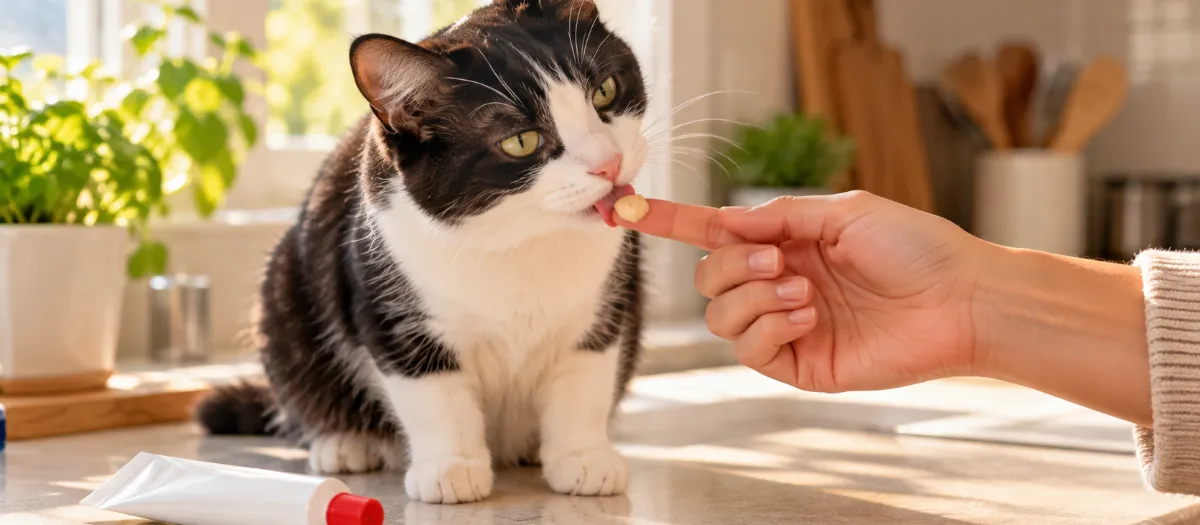
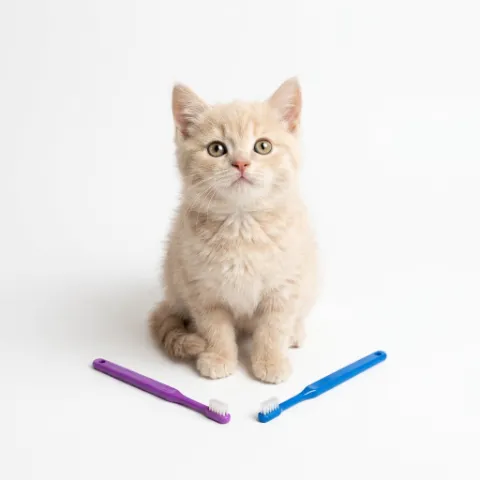
Illustration, not the actual product
Our top pickVirbac C.E.T. Enzymatic Toothpaste, Poultry
Cats can't rinse and spit, so what goes on the brush matters as much as the brushing. This guide compares three cat-friendly pastes on Amazon Australia and explains what "enzymatic" means. For the full routine, see our guide on how to clean your cat's teeth.
Quick picks
Our top pickBest overall
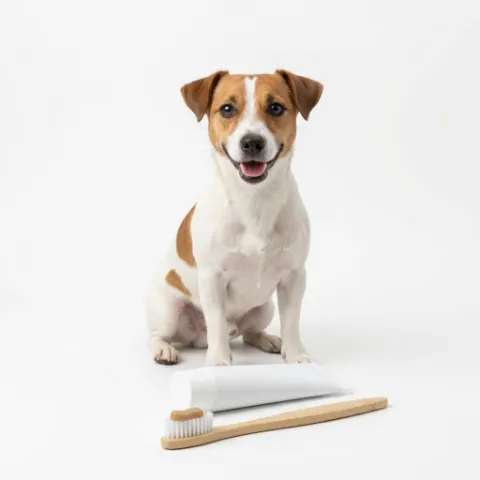
Virbac C.E.T. Enzymatic Toothpaste, Poultry
Enzymatic paste for dogs and cats, no foaming agents, labelled safe to swallow
A safe cat toothpaste is made for pets, has no xylitol and no foaming agents, and is safe to swallow, because a cat can't spit it out. Cornell's Feline Health Center says to use only feline-specific products (Cornell Feline Health Center, updated June 2017).
Check the label for:
Made for pets: cat pastes come in meat, fish or malt flavours. Veterinarian Emily Baldwin, of veterinary dental practice Animal Dental Care & Oral Surgery, writes that meat and fish flavours tend to go over best (Animal Dental Care, 23 June 2023).
No xylitol: it's a sweetener in some human products, and the Animal Dental Care article warns that cats and dogs can react badly to high doses.
No foaming agents: pet pastes such as Virbac's are labelled "no foaming agents" because a cat swallows the paste. Look for a paste described as non-foaming, and skim the ingredients for sodium lauryl sulfate.
Safe to swallow: the Animal Dental Care article says the paste must be safe to swallow for this reason.
A small amount: even pet pastes need only a pea-sized dab, or whatever the pack says.
Why is human toothpaste never safe for cats?
Human toothpaste isn't safe for cats because it contains fluoride and foaming agents, and some brands contain xylitol. Cornell says plainly that human toothpaste is not safe for cats. VCA puts it simply: human toothpastes contain ingredients that should not be swallowed (VCA Animal Hospitals, updated 21 June 2023). RSPCA Australia also says not to use it, as it can cause stomach issues (RSPCA Australia, 5 September 2022), and iCatCare says human toothpaste may cause irritation to the stomach (iCatCare, updated 26 September 2025).
The Animal Dental Care article adds that fluoride is safe for people but not for cats, and can cause drooling and vomiting. That is why even a small lick of the family tube isn't worth it. Baking soda, salt, hydrogen peroxide and essential oils don't belong in a cat's mouth either. If your cat swallows human toothpaste, call your vet.
Our picks in detail
1. Virbac C.E.T. Enzymatic Toothpaste, Poultry: best overall
A poultry-flavoured enzymatic paste labelled for dogs and cats. The listing says it has no foaming agents and is safe to swallow. The ingredients include sorbitol, hydrated silica, poultry digest, glucose oxidase and lactoperoxidase, with no xylitol.
Pros: safe to swallow per the listing; no foaming agents; enzymatic; full ingredient list shown
Cons: not made only for cats
Best for: most cats, and households with a dog who can share the tube (use separate brushes)
Skip it if: your cat has a poultry allergy, or refuses meaty flavours
2. Petrodex Dental Care Kit for Cats: best made for cats
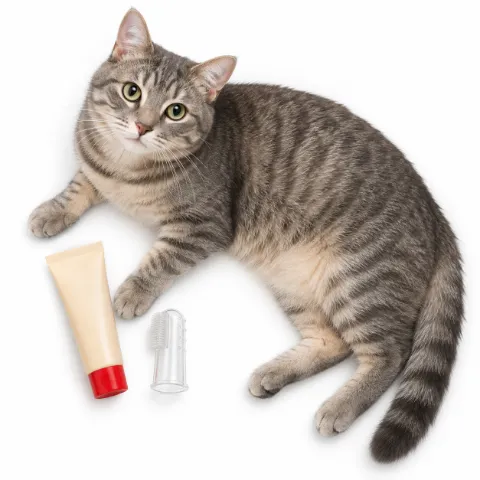
A kit with an enzymatic cat toothpaste in malt flavour and a dual-ended finger toothbrush. The listing says the paste is non-foaming and needs no rinsing. The ingredients include sorbitol, dicalcium phosphate, hydrated silica, barley malt extract and an Aspergillus niger fermentation extract, with no xylitol.
Pros: made for cats; brush included; non-foaming; ingredient list shown
Cons: it's a finger brush, so the usual bite caution applies (stop if your cat mouths or chomps) and a kitten may do better with a micro-head brush (see our toothbrush guide); malt isn't a meat flavour, so some cats may turn it down
Best for: first-time brushers who want a paste and brush in one box
Skip it if: your cat only accepts meat flavours, or you'd like a softer, smaller brush
3. VVHOMIFE Natural Coconut Oil Dog & Cat Toothpaste: best short ingredient list
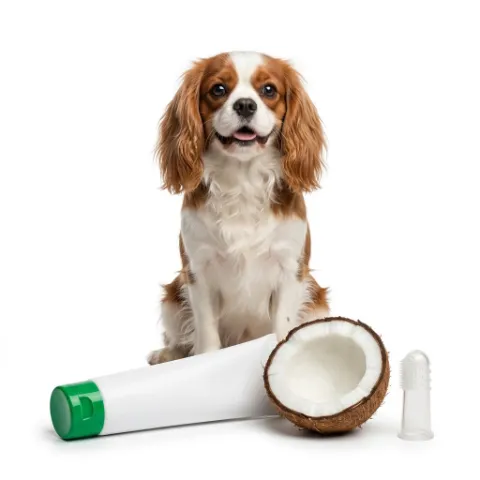
A coconut-based paste with five listed ingredients: coconut oil, hydrated silica, vitamin B, lysozyme and a probiotic (Lactobacillus paracasei). The listing describes it as non-foaming and safe to swallow.
Pros: short, readable ingredient list; non-foaming; labelled safe to swallow
Cons: a lesser-known brand; the listing makes health claims we couldn't verify, so judge it on its ingredients
Best for: owners who prefer a simple formula
Skip it if: you want a well-known brand, or your cat is sensitive to new ingredients
What does enzymatic toothpaste mean for cats?
Enzymatic toothpaste contains enzymes that keep working on mouth bacteria after brushing, which the Animal Dental Care article says helps slow plaque and tartar build-up. They're an extra, not a replacement for brushing. RSPCA Australia calls brushing the most effective home measure for dental health.
Virbac's listing, for example, names the enzymes glucose oxidase and lactoperoxidase. Petrodex's listing includes an Aspergillus niger fermentation extract. The coconut oil paste lists lysozyme, an enzyme found naturally in saliva, plus a probiotic. These are listing facts, so judge each paste on its ingredients rather than its claims.
Cat toothpastes compared
Details from each Amazon Australia listing, checked on 20 Oct 2026.
We searched Amazon Australia for cat toothpaste, then shortlisted pastes that met all of these checks:
Well rated: a strong average rating with plenty of buyer reviews.
No red flags: no pattern of poor reviews, safety complaints or listing problems.
Available on Amazon Australia when we checked.
Made for pets and labelled for cats.
No xylitol, no foaming agents, and safe to swallow per the listing.
These are researched picks, not products we've personally tested. We compared the specifications and features shown on each Amazon Australia listing, checked on 20 Oct 2026. We didn't accept payment from any brand, and no brand saw this page before it was published.
Left out this time: a cat dental gel whose listing didn't pass our red flags check; a pet toothpaste written for dogs whose directions say to rinse; a seafood-flavour paste that was hard to get when we checked; and all human toothpaste.
What flavours do cats accept?
Many cats prefer meat or fish flavours, so poultry is a sensible first try. Taste first, brush later: let your cat lick a little paste from your finger and see whether they come back for more. If they walk off, try another flavour before giving up on the idea. Some cats never take to a paste, and that's okay.
How to use cat toothpaste
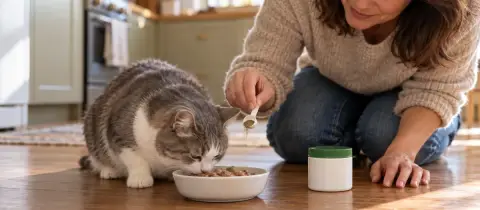
Offer a pea-sized dab on your finger and let your cat lick it, then praise them or give a favourite treat.
Repeat for several days, until the taste becomes a good thing.
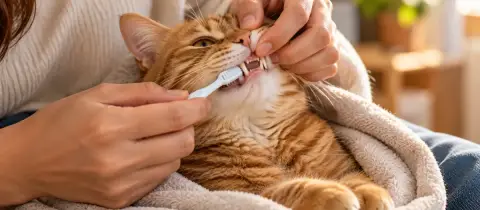
Rub a little along the outer surfaces of a few teeth with your finger or a finger brush.
Build up slowly to a soft brush, brushing the outside of the teeth where they meet the gums. Stop if your cat is stressed.
Cornell describes a four-week training programme that starts with the smell and taste of the paste, so go at your cat's pace. Our guide on how to clean your cat's teeth covers the whole routine.
Toothpaste or no toothpaste?
Brushing does most of the work, and paste is a bonus that helps your cat accept it. RSPCA Australia describes brushing as the most effective home step, and Cornell says daily brushing can prevent most forms of dental disease. If your cat won't take paste, talk to your vet about other options rather than giving up on dental care.
Toothpaste can't remove tartar that has already formed. Scaling and dental X-rays are done by a vet under general anaesthetic, so avoid anyone offering "anaesthesia-free" cleaning (Cornell notes scaling usually needs anaesthesia). If brushing isn't working, see our guides to dental treats for cats and PlaqueOff for cats.
Does any cat toothpaste have the VOHC seal?
None of our three picks is on the VOHC list. The Veterinary Oral Health Council's cat list (checked 20 Oct 2026) includes a HealthyMouth toothpaste and brush kit for cats, accepted for plaque, but we didn't find it on Amazon Australia (VOHC). Packs sold in Australia can differ from the US products on the list.
Products without the seal can still be useful, but the seal means the VOHC reviewed trial data the maker submitted and found it met its standard (VOHC).
When to see your vet
Book a vet check before you start brushing if your cat has red or bleeding gums, drools, drops food, paws at their mouth, has bad breath, or is eating less. These can be signs of dental disease, which toothpaste can't fix. Brushing can also hurt when gums are very sore.
Stop using a toothpaste and call your vet if your cat drools, vomits, has diarrhoea or seems unwell after a new product. A pinkish spot at the gumline can be tooth resorption, which needs a vet.
Frequently asked questions
What toothpaste can I use for my cat?
Use a toothpaste made for pets, with no xylitol and no foaming agents, that is safe to swallow. Virbac C.E.T. and Petrodex's cat paste are two options in this guide. Your vet can also suggest a product that suits your cat.
Should you use toothpaste for cats?
It's helpful but not essential. Brushing does most of the work, and a tasty pet paste can make a cat more willing. If your cat won't accept paste, ask your vet about other options rather than skipping dental care altogether.
Does cat toothpaste actually work?
Brushing with it can help remove plaque, and enzymes may add a little extra. It can't remove tartar already stuck to teeth, and the pastes in this guide aren't on the VOHC list. See toothpaste or no toothpaste. Brushing with a soft brush is what does the cleaning.
Can I use coconut oil for cat toothpaste?
We didn't find a vet source recommending plain coconut oil in place of a pet toothpaste. If you'd like a coconut-based option, the VVHOMIFE paste above is made for cats and dogs. Ask your vet before trying kitchen ingredients in your cat's mouth.
Can I use human toothpaste on my cat?
No. It contains fluoride and foaming agents, and some brands contain xylitol. Cornell says human toothpaste is not safe for cats, and cats can't spit it out. Human toothpaste can also upset a cat's stomach, which is why RSPCA Australia and iCatCare both say to keep it away from pets. Use a pet paste instead.
Is cat toothpaste safe to swallow?
Some are. Virbac C.E.T. and the coconut oil paste are labelled safe to swallow. Always check the label, and use only a small amount, since a cat will swallow what goes in their mouth. Petrodex's cat paste is labelled non-foaming and no rinse, which is the same idea in different words.
What do vets recommend for cats' teeth?
Vet sources point to daily brushing with a pet toothpaste, plus regular dental checks. RSPCA Australia suggests a general health check with a dental check at least once a year. Your vet can advise on diets, treats and professional cleaning.
Product details and ingredients from each linked Amazon Australia listing, checked on 20 Oct 2026.
This guide provides general information and isn't a substitute for veterinary advice. If you're concerned about your cat's teeth or gums, speak with your vet.