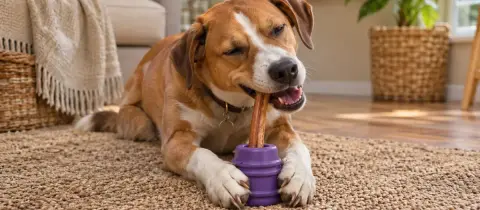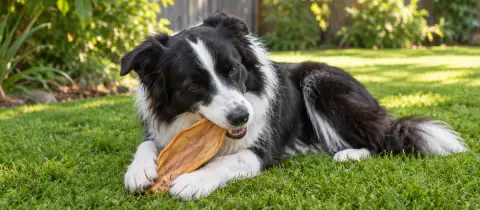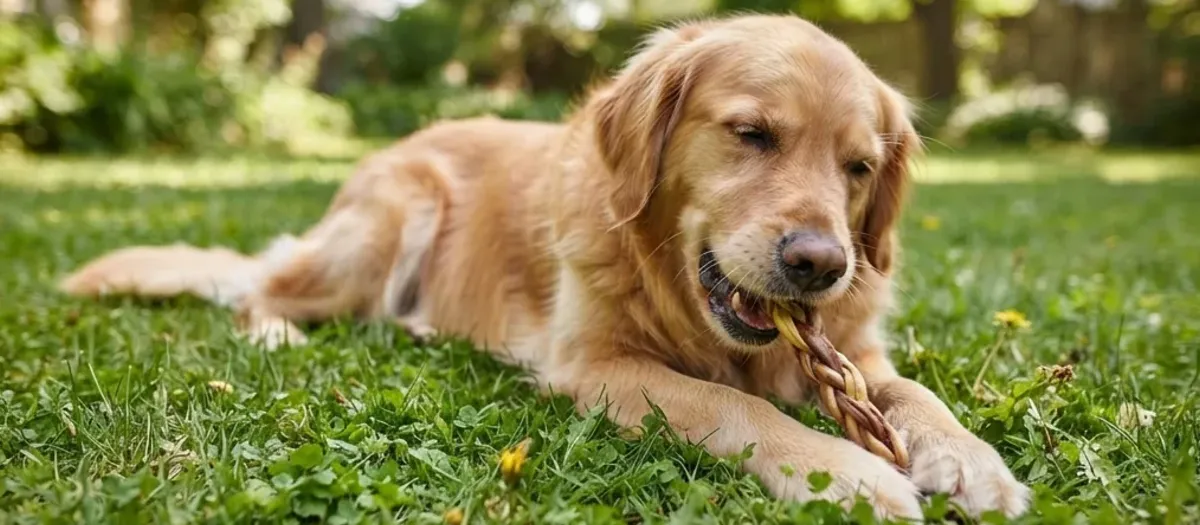
Quick answer: The safest natural dog chews are ones you can dent with a thumbnail and that bend instead of snapping, such as bully sticks, ears, kangaroo tendons and thin fish skins. Skip bones, antlers, hooves, nylon, rawhide, coffee wood and hard yak cheese. Supervise every chew, choose one too big to swallow whole, and take it away when it's small.
Dog chews cover everything from a soft puppy stick to a rock-hard antler, and the hard end causes real damage. This guide shows which natural chews pass a simple hardness check, how they differ, and which to leave on the shelf.
Quick picks
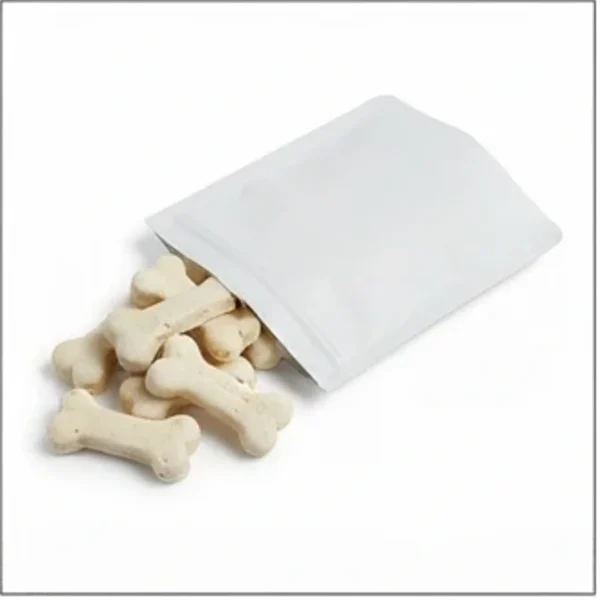
N-Bone Puppy Teething Treats, Chicken
Pliable and edible for puppies; skip it for a puppy that reacts to chicken or fish.
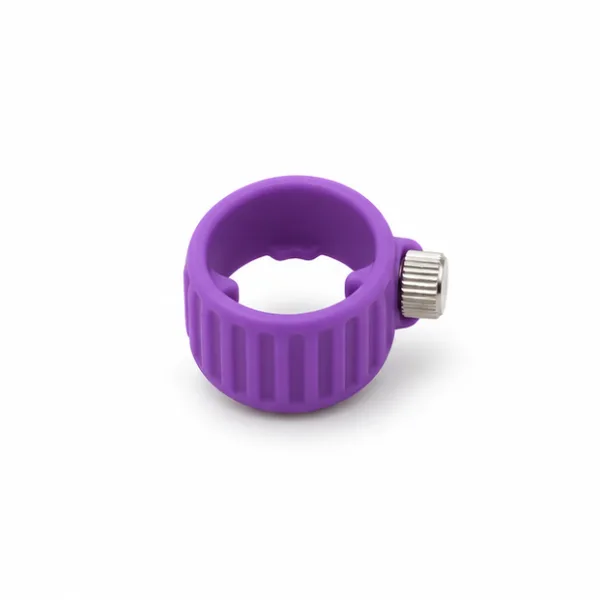
BoniVet bully stick holder, small
Helps with the small end of a bully stick, which can be swallowed whole.
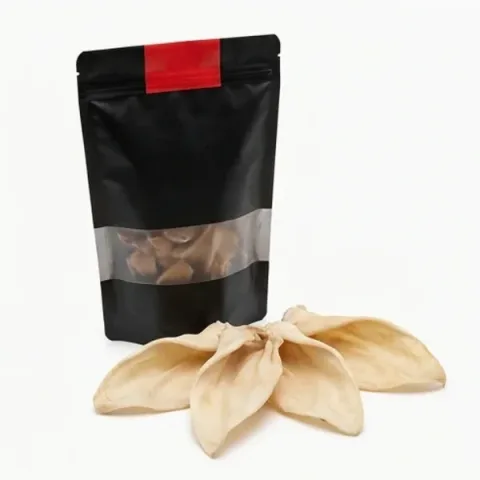
BLACKDOG Cow Ears, 10 pack
Cow ears pass the thumbnail test when soft and flexible, with medium richness.
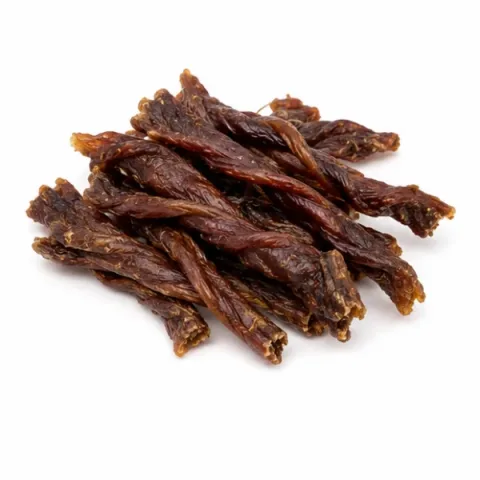
Kangaroo tendons, 500 g
Lean to medium; dent each one with your thumbnail first.
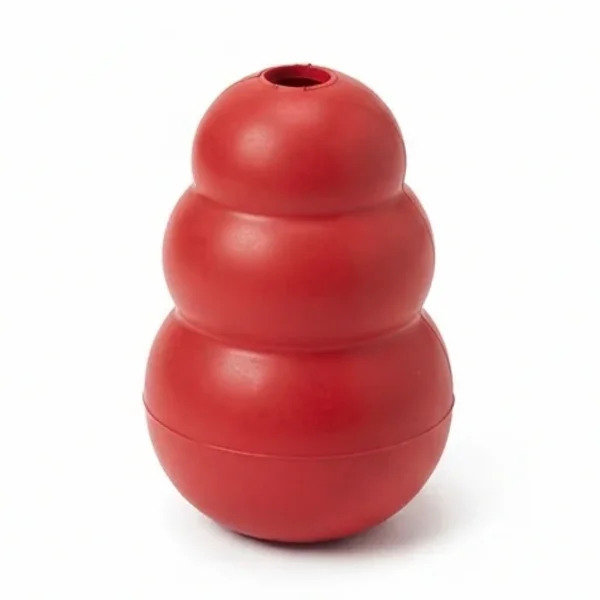
KONG Classic, Medium
A rubber toy sized for your dog is usually safer than a hard edible; supervise.
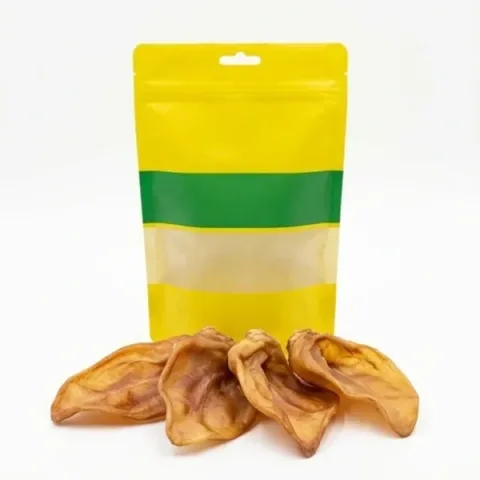
Bow Wow Pigs Ears, 10 pack
Pig ears pass the thumbnail test when soft and flexible, but they are rich and greasy.
BoniVet bully stick holder, small
A holder that helps with the small end of a bully stick, which can be swallowed whole.
BLACKDOG Cow Ears, 10 pack
A soft, flexible chew with medium richness, for supervised sessions.
Kangaroo tendons, 500 g
A leaner chew; dent each one with your thumbnail first.
KONG Classic, Medium
A rubber toy for a determined chewer, instead of a hard edible.
Bow Wow Pigs Ears, 10 pack
A soft, flexible chew when it passes the thumbnail test, but rich and greasy, so keep it occasional and supervise.
Pictures are illustrations, not the actual products.
More detail on the teething stick is in Useful gear for teething puppies below, and the rest are the "You may also like" cards at the end of the row. Supervise every chew, and take it away when it's small.
Which natural dog chews are safe?
No chew is risk free, but softer, bendy chews that you can dent are the safer group. Supervise, pick a size your dog can't swallow whole, and count the calories. Bully sticks, cow ears, pigs ears, kangaroo tendons and thin fish skins all fit that group when they are fresh and in good condition.
Each type has its own catch, so we have a guide for most of them: bully sticks, cow ears, pigs ears and kangaroo treats and tendons. The table below puts them side by side.
| Chew | Thumbnail test | Richness (our general guide) | Main risk | Our guide |
|---|---|---|---|---|
| Bully stick | Check each one: should dent, shouldn't be rock hard | Rich | Small end swallowed whole, upset tummy, handling germs | Bully sticks |
| Cow ear | Passes when soft and flexible | Medium | Gulping a large piece, upset tummy | Cow ears |
| Pig ear | Passes when soft and flexible | Rich | Greasy and fatty, handling germs | Pigs ears |
| Kangaroo tendon or roo chew | Check each one: dent it first | Lean to medium | Hard dry pieces, swallowing the end | Kangaroo treats |
| Dried fish skin | Passes when thin and bendy | Varies by product | Gulping, a rich fish smell and oils for sensitive tummies | Read the pack |
| Soft edible chew (potato or starch based) | Passes when pliable | Low to medium | Swallowing a piece whole | Whimzees, in our Dentastix guide |
| Yak cheese chew | Fails when fresh | Medium | Tooth fracture | Skip (see below) |
Richness here is our general guide and varies by brand, so read the pack. VCA Animal Hospitals says a fatty meal may trigger pancreatitis in some dogs, with signs including vomiting, belly pain, low energy and less appetite (VCA Animal Hospitals, page read 21 November 2026). If your dog has had pancreatitis, ask your vet before any rich chew.
How long do natural dog chews last?
It depends on the chew's thickness, how dry it is and how hard your dog chews, so we don't give minutes. As a rough order, thick bully sticks and tendons usually last longest, cow ears sit in the middle, and pig ears, thin fish skins and soft edible chews tend to go fastest. Softer chews go faster.
A chew that lasts "forever" is often one that's too hard, which is the trade-off the thumbnail test below is about. For a long-lasting option that isn't eaten, see our toys for heavy chewers guide.
What is the thumbnail test?
The thumbnail test is a rule of thumb: if you can't dent a chew with your thumbnail, or it can't bend or break against the teeth, don't give it. It comes from veterinary dentists, who report broken teeth after dogs chewed antlers and nylon bones. It is an expert guideline, not a guarantee.
Vet Times reported that the canine and carnassial teeth are the ones most often fractured (Vet Times, Lisa Milella, 21 May 2019). Cornell's canine health centre uses the same fingernail check and advises against antlers, hooves and bones, which can break a tooth or splinter and upset the stomach (Cornell Riney Canine Health Center, page read 21 November 2026).
Do the check on each chew, not once per brand. A dried bully stick or tendon can be hard in one batch and softer in the next. If your thumbnail leaves no mark, put it back.
Which chews should you skip, and why?
Skip anything that fails the thumbnail test or that can splinter, which means bones (raw or cooked), antlers, hooves, nylon and hard plastic chews, rawhide, coffee wood and wood-blend sticks, and hard yak cheese. We don't recommend any of them on this site, and each has a softer swap.
| Skip | Why we skip it | A softer swap |
|---|---|---|
| Bones, raw or cooked | Can break a tooth, or splinter and upset the stomach (Cornell, which doesn't separate raw from cooked) | A cow ear or kangaroo tendon that dents |
| Antlers | Linked by veterinary dentists to fractured teeth (Vet Times) | A rubber toy from our heavy chewer guide |
| Hooves | Hard enough to break a tooth (Cornell) | A bully stick that dents, in a holder |
| Nylon and hard plastic chews | Linked by veterinary dentists to fractured teeth (Vet Times) | A pliable edible chew or a rubber toy |
| Rawhide | Hard pressed rawhide can fail the thumbnail test, and large pieces can be swallowed. This is our application of the test: Cornell says some rawhides are safe but always need supervision. It also turns up as the wrap on some roo rolls and jerky | A cow ear |
| Coffee wood and wood-blend sticks | Hard, and some listings warn of sharp edges and small parts breaking off | A rubber chew toy |
| Hard yak cheese | Fails the thumbnail test when fresh. This is our application of the test, not a vet ruling | A soft pliable chew |
The US FDA's jerky illness page also notes that some complaints involved chicken or duck jerky wrapped around rawhide, sweet potato or fruit, in content current as of 21 August 2018 (US FDA, page read 21 November 2026). The data is old and US-based, but it is one reason we check wrapped treats carefully. Our dog jerky treats guide covers it in full.
How big should a chew be for your dog?
Choose a chew too big to swallow whole, supervise the whole session, and take it away when it is small enough to swallow. A chew that suits a Labrador can be a lot of calories for a Chihuahua, so size by your dog, not by the pack.
A quick checklist:
- Supervise every chew. Stay in the room.
- Size up, not down. If your dog could gulp it whole, it is too small.
- Take the stub away once it is short and slippery, and bin it.
- Set a time. Offer the chew for a set time, then put it away.
- Count it. Treats and chews should be about 10% of daily calories, with complete and balanced food making up the rest (VCA Animal Hospitals, page read 21 November 2026).
- Wash your hands with soap and water before and after handling treats (CDC, 30 January 2025).
In an Australian summer, don't leave chews out in the heat or in reach of flies. Pack them away after each session.
Can puppies have natural chews?
Puppies can have soft, pliable chews in short supervised sessions, but check the age notes on the pack and ask your vet. Puppies gulp, their teeth are still developing and a chew is a bigger share of a small body's calories, so start with something soft.
Our puppy teething toys guide covers options by age, and how to stop puppy biting helps when nipping is the real problem. If your dog chews the furniture instead of the chew, try how to stop a dog chewing furniture. For soft single-ingredient treats rather than chews, see freeze-dried dog treats, or make your own with our dehydrated dog treats guide.
Do natural chews clean teeth?
We found no veterinary source showing that natural chews reduce plaque, and no chew replaces brushing. Our bully sticks guide covers the dental claims made for those. Dental claims on packs are the maker's. If teeth are your goal, see our Dentastix guide and the dental chews guide.
For the basics of keeping teeth clean, read how to clean your dog's teeth at home. Our Greenies guide covers that brand's sizes.
Useful gear for teething puppies
We only list one product here, because the single-type guides above carry the rest. For a teething puppy, a soft edible stick is an option.
- N-Bone Puppy Teething Treats, Chicken: a pliable, edible teething stick. The listing says it is "all natural", suits puppies of all sizes and is soft enough for new teeth, which are the maker's claims. The ingredients are rice flour, vegetable glycerin, gelatin, water, natural chicken flavour, oat fibre, chicken, fish oil, brewers dried yeast and citric acid, so skip it for a puppy that reacts to chicken or fish. Supervise, and take it away when it is small. See our puppy teething toys guide for other soft options.
Other places to look include pet shops and vet clinics, which can help match a chew to your dog.
When to see a vet
Call your vet straight away if your dog swallows a large piece of a chew, is choking, or seems unwell after eating one. PDSA says to contact a vet immediately and not to try to make your dog vomit at home. Signs of a blockage can include vomiting, diarrhoea, a painful tummy, constipation, low energy, less interest in food and weight loss (PDSA, page read 21 November 2026).
See a vet too if your dog has a broken tooth, pain when chewing, or ongoing vomiting or diarrhoea after a new chew. If you think your dog has eaten something toxic, call the Animal Poisons Helpline on 1300 869 738 (24/7). Our foods you must never use list shows what to keep away from dogs.
Frequently asked questions
Are yak chews safe for dogs?
We skip hard yak cheese chews because they fail the thumbnail test when fresh, and veterinary dentists link hard chews with broken teeth. That is our application of the test, not a vet ruling. If you want a cheese chew, ask your vet and always supervise.
Are pizzles the same as bully sticks?
Yes, bully sticks are dried bull or steer pizzle, sold in different lengths and thicknesses. They are single ingredient, but rich, and the small end can be swallowed. Our bully sticks guide explains the risks and the holders that help.
Are fish skins good for dogs?
Thin dried fish skins are bendy and can suit many dogs as an occasional chew. Check the ingredient list and country of origin, count the calories, and skip them for a fish allergy or a dog with a sensitive tummy. Ask your vet if your dog has had pancreatitis.
What's the safest chew for a dog that destroys everything?
For a determined chewer, a rubber toy sized for your dog is usually a safer choice than a hard edible, because edibles vanish quickly and hard ones risk teeth. See our toys for heavy chewers guide. Supervise, and replace damaged toys.
How often can my dog have a natural chew?
It depends on your dog's size and calories. Keep treats and chews to about 10% of daily calories (VCA), so rich chews suit an occasional treat rather than a daily habit. Ask your vet if your dog is overweight or has a medical condition.
Are rawhide chews really that bad?
Cornell says some rawhides are safe for dogs, but they always need supervision. Rawhide can also be the wrap on some treats. We don't recommend it, because softer chews pass the thumbnail test without the same worry about swallowing large pieces.
What should I do if my dog swallows a large piece of chew?
Ring your vet straight away, even if your dog seems fine, and don't try to make them vomit at home. PDSA advises not waiting to see if problems develop. If it is after hours, call your nearest emergency vet and keep the packaging.
Which natural chews suit a dog with food allergies?
It depends on what your dog reacts to, so ask your vet first. Check each ingredient list against your vet's advice, since a chew's base can be beef, pork, fish or starch. Our Dentastix guide includes a potato-based chew for dogs avoiding chicken, pork or cereal.
Related guides
- Bully sticks for dogs
- Cow ears for dogs
- Pigs ears for dogs
- Best kangaroo treats for dogs
- Dentastix for dogs
- Dog jerky treats
- Freeze-dried dog treats
- Dehydrated dog treats at home
- Best dog dental chews
- Best toys for heavy chewers
- Best puppy teething toys
- Best dog treats
Sources
- Vet Times: Exploring tooth fracture risks in canine patients (Lisa Milella), 21 May 2019, read 21 November 2026
- Cornell Riney Canine Health Center: Risks from a fractured tooth, read 21 November 2026
- US FDA: FDA investigates animal illnesses linked to jerky pet treats, content current as of 21 August 2018, read 21 November 2026
- CDC: About pet food safety, 30 January 2025, read 21 November 2026
- PDSA: Gut blockages in dogs, read 21 November 2026
- VCA Animal Hospitals: Treats for dogs, read 21 November 2026
- VCA Animal Hospitals: Pancreatitis in dogs, read 21 November 2026
- Product details from the linked Amazon Australia listing, checked on 20 November 2026.
This guide provides general information and isn't a substitute for veterinary advice. If you're concerned about your dog's chewing, teeth or tummy, speak with your vet.