Best kangaroo treats for dogs: jerky, tendons and chews
By Anish PuriUpdated 8 Nov 202613 min readResearched, not tested by us
Research guide. WhiskerFinds may earn a commission from links, at no extra cost to you.
Quick answer: The best kangaroo treats for dogs are simple jerky, tendons or small bites, sized bigger than your dog's mouth and counted inside the 10% treat allowance. Our top pick is the oven-dried kangaroo jerky, a single-ingredient treat per the listing. Never give kangaroo bones or tails, and supervise every chew.
Kangaroo is a lean red meat that suits many dogs, and the treats come in very different shapes, from thin jerky to tough tendons. This guide compares five kangaroo treats on Amazon Australia by ingredients, texture and pack size, then covers chew safety by dog size and how many to give. For other meat-based rewards, see our dog treats guide.
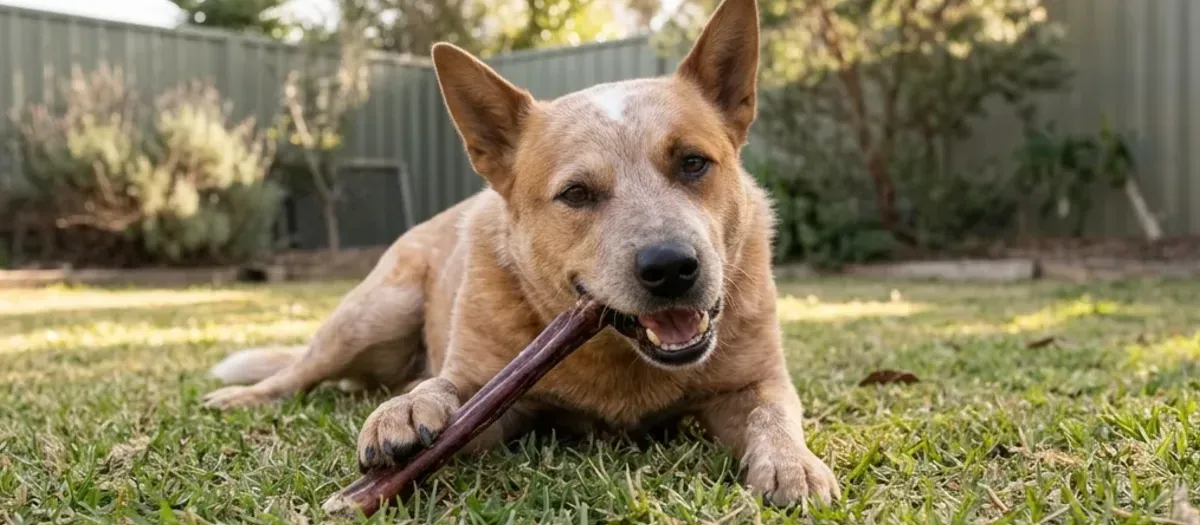
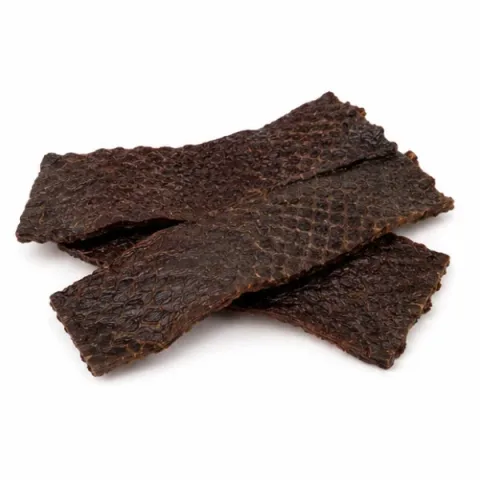
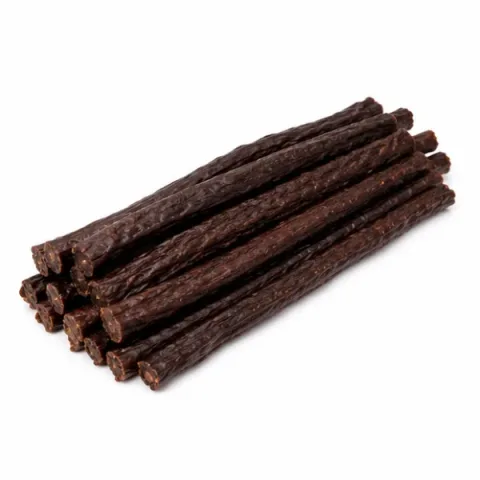
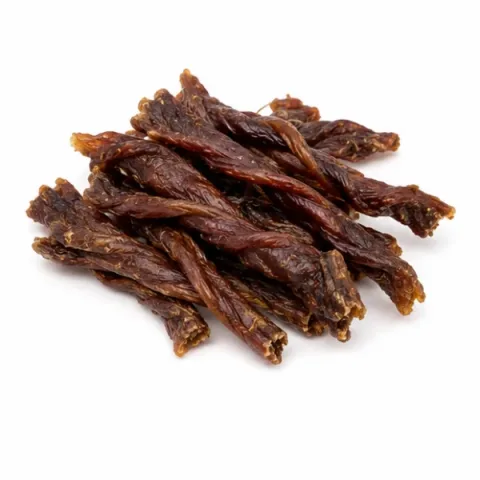
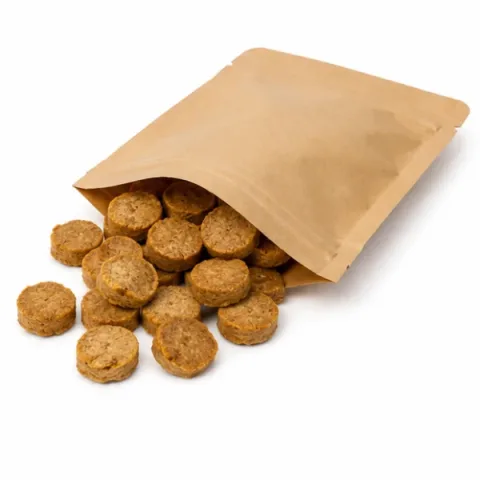
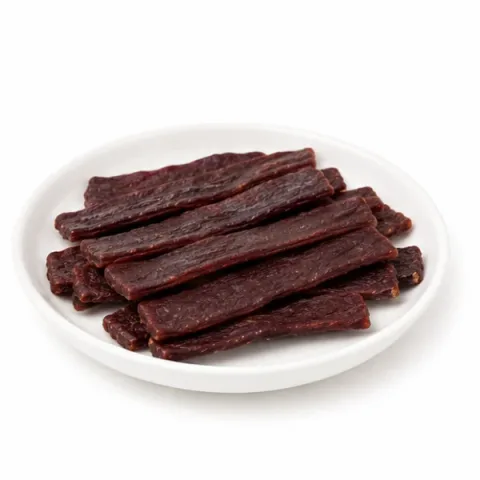
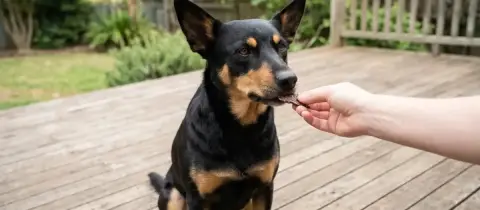
Pictures are illustrations, not the actual products.
Amazon Australia's kangaroo range is small, so this isn't a wide market check. Pet shops and butchers also sell kangaroo treats, and it's worth a look if you want to see a pack before buying.
Which kangaroo treat suits your dog?
Match the treat to the job. Small jerky pieces and small biscuit bites suit rewards, while tendons suit a keen chewer who is watched the whole time. The table is built from the listings and our chew safety rules.
Swipe sideways to see every column
Your dog
What to look for
Pick
Small dog
Small biscuit bites, or jerky broken into tiny pieces
Tidbits bites, or the jerky sticks snapped small
Large, keen chewer
A longer chew, supervised
Kangaroo tendons
Puppy
Small pieces of a small biscuit bite; ask the vet first
Tidbits bites, broken up
Needs a novel protein, or has allergies
Vet first; a single-ingredient kangaroo treat may be an option
Oven-dried jerky
Training
Small jerky pieces
Jerky sticks or oven-dried jerky
Gulper
Skip tendons; choose pieces you can break up
Jerky, snapped small
Is kangaroo meat good for dogs?
Kangaroo is a lean red meat, and the listings describe it as high in protein and low in fat. It is also a single meat that many dogs haven't eaten before, which is why vets sometimes use it for dogs on an elimination diet. A treat is still a treat, so count it like any other.
A 1 kg bag of kangaroo jerky chunks. The listing says it is 100% kangaroo meat with no fillers or binders, dehydrated, and lists the ingredient as kangaroo meat. It describes the chew as long-lasting and says the pack suits all life stages, with supervision recommended for all treats. The dental claims (cleaning teeth and massaging gums) are the maker's, so treat jerky as a treat, not as tooth care.
Pros: one ingredient per the listing; chunks you can break up; useful for rewards and as a novel-protein option once your vet agrees
Cons: the listing's details field names a raw diet type even though the copy says dehydrated, so wash your hands and bowls after handling as a precaution; the details field lists a medium breed size while another line says all sizes; a 1 kg bag is a lot to store
Best for: most dogs, and households that want one simple kangaroo treat
Skip it if: your dog is on a vet's elimination diet, has reacted to kangaroo, or you want just a few treats a week
2. Grain-free kangaroo jerky sticks, 1 kg: best stick shape
A 1 kg bag of individual jerky sticks. The listing says they are made from Australian kangaroo meat, chewy and shelf-stable, and lists the ingredient as kangaroo meat. The stick shape is easy to snap into training-sized pieces, and the listing names dog training as a use.
Pros: one ingredient listed; sticks are easy to portion; listed for dog training
Cons: the listing text reads like a human snack, with hiking and post-workout wording, and gives no feeding amounts for dogs; the details field names a raw diet type, so wash up after handling; the brand isn't named on the listing
Best for: dogs who need many small rewards in training
Skip it if: you want clear dog-specific feeding guidance on the listing, or your dog is a gulper who won't wait for you to break the sticks up
A 500 g pack of naturally dried kangaroo tendons. The listing says they are 100% kangaroo tendon with no artificial additives, tough and chewy, and long-lasting. It also says to store them in a cool, dry place, supervise chews and use them for adult dogs. The dental and jaw-strength claims are the maker's.
Pros: a long-lasting chew per the listing; single ingredient per the listing; storage advice is on the listing
Cons: tough, so not for gulpers or puppies; the listing's ingredients line contradicts the title and says chicken breast, so check the pack's label; irregular shapes mean size varies
Best for: large, careful chewers who are watched the whole time
Skip it if: your dog gulps chews, is a puppy, has dental problems, or you can't supervise
4. Tidbits Small Bites kangaroo puppy treats, 2 x 180 g: best small bites for puppies
A pack of two 180 g bags of small oven-baked biscuit bites. The listing title says real Australian kangaroo, but the bullet points say lamb flavour and the details field names wild Australian lamb. There is no description or ingredient list, so we can't say how much kangaroo is in them.
Pros: small bites suit puppies and small mouths; the listing names training as a use; oven-baked and crunchy per the listing
Cons: the listing contradicts itself on kangaroo versus lamb and gives no ingredient list; the details field says stick while the title says bites; the claims about immune health are the maker's
Best for: puppies and small dogs, once you've read the pack
Skip it if: you need a confirmed kangaroo-only treat, for example for an allergy or elimination diet
5. Kangaroo roo strap treats, 1 kg: best chewy strap
A 1 kg bag of long, ridged kangaroo straps made in Australia. The listing says the ingredients are roo meat, roo MDM, potato starch, sugar and salt, so it isn't a single-ingredient treat. The listing also says the straps suit dogs with food sensitivities, which is the maker's claim, so check with your vet.
Pros: satisfying chewy strap; made in Australia per the listing; the ingredient list is short
Cons: added starch, sugar and salt; the listing's ingredients line says chicken breast, which contradicts the copy; a 1 kg bag is a lot to store
Best for: dogs that like a strap and have no ingredient restrictions
Skip it if: your dog has an allergy, is overweight or is on a vet's elimination diet
Is kangaroo good for dogs with allergies?
Kangaroo may suit some dogs with food allergies, but treats can spoil a food trial, so ask your vet before buying any. Food allergy is worked out with a strict elimination diet, and during it treats are usually left out entirely.
VCA says an elimination trial runs 8 to 12 weeks and that no other foods, treats or supplements are fed during it (VCA Animal Hospitals, page read 8 November 2026). So don't add kangaroo treats to a trial unless your vet says so. For itchy skin, see our dog itchy skin guide.
Are kangaroo tendons safe for dogs?
Tendons can be a reasonable chew for many dogs when supervised, but they are tough. Choose a piece bigger than your dog's mouth, watch for gulping, and take away the last small piece. Skip them for puppies and for dogs that swallow things whole.
The thumbnail test is a good habit with any hard chew: Cornell's canine health centre says veterinary dentists use it, and that a chew you can't dent with a fingernail is likely too hard (Cornell Riney Canine Health Center, page read 8 November 2026). Dried tendon is chewy rather than rock hard, but the test is yours to run on the pack in your hand. The tendon listing itself says to supervise chews and describes the pieces as suitable for adult dogs.
Can dogs eat kangaroo bones or tails?
No. We never recommend kangaroo bones, tails or any real bones. Cornell's canine health centre says bones, antlers and hooves can break a tooth or splinter and upset the stomach. Stick to jerky, tendons and small biscuit bites, and read our bully sticks guide for how we judge other chews.
Chew safety: which kangaroo treat suits your dog's size?
Every chew needs supervision, and the size of the dog changes which shape is sensible. A piece that is long for a Great Dane can be a swallowing risk for a Chihuahua, and a gulper of any size does better with pieces it can't swallow whole than with a tendon. Match the row to your dog.
Swipe sideways to see every column
Dog size
Jerky or sticks
Small biscuit bites
Tendons
Small
Snap into tiny pieces
Suits well
A piece bigger than the mouth, closely watched, or skip
Choose jerky if you want a reward you can break up and count, and tendons if your dog likes a longer chew and you can watch them. Jerky is easier to portion for training. Tendons last longer but are tougher, so they suit confident, careful chewers rather than gulpers.
If you're not sure, start with jerky and add tendons later if your dog chews calmly. For toys built for strong jaws, see our toys for heavy chewers guide.
How many kangaroo treats can a dog have?
Treats should make up about 10% of your dog's daily calories, with complete and balanced food supplying the rest. Kangaroo is lean, but it still counts. A few small pieces a day suits most dogs, and a tendon or strap replaces several of them.
VCA gives the 10% guide and suggests building a treat budget from your dog's calorie needs (VCA Animal Hospitals, page read 8 November 2026). Check the pack for its feeding directions, then trim the main meal a little on days with lots of rewards. Dogs with weight trouble, pancreatitis or other health conditions need an even smaller budget, so ask your vet.
Can puppies have kangaroo treats?
Puppies can have small treats once your vet agrees, but chews are a bigger question. Choose small biscuit bites or soft training treats, break them into tiny pieces and supervise. The tendon listing says suitable for adult dogs, so we wouldn't give those to a young puppy.
Ask your vet before offering any treat to a very young puppy, and add one new thing at a time. For small rewards used in training, see our dog training treats guide.
Kangaroo treats compared
Details from each Amazon Australia listing, checked on 7 Nov 2026.
We searched Amazon Australia for kangaroo treats for dogs, then shortlisted treats that met all of these checks:
Well rated: a strong average rating with plenty of buyer reviews.
No red flags: no pattern of poor reviews, safety complaints or listing problems.
Available on Amazon Australia when we checked.
Kangaroo content and other ingredients as shown on the listing.
Texture and chew level that suits a defined kind of dog.
Pack size and storage that make sense for a household.
No bones or tails, for tooth safety.
These are researched picks, not products we've personally tried. We compared the specifications and features shown on each Amazon Australia listing, checked on 7 Nov 2026. We didn't accept payment from any brand, and no brand saw this page before it was published.
Left out this time: kangaroo bones and tails (tooth safety, never), kangaroo treats with long ingredient lists, a meatball treat with too little listing information, and kangaroo liver (see our liver treats guide).
How do I store bulk kangaroo treats?
Follow the directions on the pack. The tendon and strap listings say to store treats in a cool, dry place, and the strap listing says to reseal the bag after each use. A sealed container keeps treats fresh and out of reach.
Decant a week's worth into a small tub, keep the rest sealed and out of your dog's reach, and throw out anything with mould or an off smell. For tubs and jars made for treats, see our dog treat jar guide.
When to see a vet
See your vet straight away if your dog swallows a large piece of a chew, gags, vomits repeatedly, has a sore or swollen tummy or bloody diarrhoea, or seems very unwell after a treat.
Speak with your vet before using kangaroo treats for suspected allergies, itchy skin or repeated tummy upsets, or if your dog has pancreatitis, kidney disease, diabetes or weight trouble. Food allergy is usually worked out with a vet-led elimination diet (VCA Animal Hospitals, page read 8 November 2026). Check our foods your dog must never eat list before sharing anything else.
Frequently asked questions
Can dogs eat kangaroo jerky every day?
A few small pieces most days is fine for a healthy dog if they fit the 10% treat allowance. Count them against the day's calories and trim the main meal if needed. Ask your vet if your dog is overweight, has pancreatitis or is on a special diet.
Is kangaroo raw or cooked in these treats?
The copy on the jerky listings says dehydrated or dried, but two details fields name a raw diet type. Dehydrated raw treats can carry bacteria, which VCA warns can spread to other pets and people. Wash your hands and bowls after handling, and take extra care if someone at home has a weak immune system.
Are kangaroo treats good for dogs with sensitive tummies?
They can be an easy option for some dogs, because a single meat keeps the ingredient list short. Add one new treat at a time in a small piece, and stop if your dog has vomiting or diarrhoea. Repeated tummy upsets are a reason to see your vet.
Which ingredients should I avoid in kangaroo treats?
Onion and garlic, which damage red blood cells and can hide in gravies, stock and flavoured treats, plus added sugar and salt if your dog is overweight or on a special diet. Choose plain kangaroo treats and read the ingredient list. Our KONG recipes guide has the full list of foods to avoid.
Are kangaroo treats the same as liver treats?
No. Liver is rich in vitamin A, and too much over time can be harmful, so liver treats are small, occasional extras. Plain kangaroo meat jerky isn't the same. We cover liver separately in our liver treats guide.
Can I use kangaroo treats for training?
Yes. Snap jerky or sticks into tiny pieces, so one treat gives many rewards. Small biscuit bites also work. Save tendons for supervised chewing, not training. See our dog training treats guide for soft rewards made for the job.
Can I give my dog peanut butter as well as kangaroo treats?
Plain xylitol-free peanut butter can be an occasional extra, but it is high in fat and calories, so count it in the same 10% allowance. Check the label for xylitol every time. Our peanut butter guide explains how.
Product details from each linked Amazon Australia listing, checked on 7 Nov 2026.
This guide provides general information and isn't a substitute for veterinary advice. If you're concerned about your dog's diet or allergies, speak with your vet.