Quick answer: Can dogs eat peanut butter? Yes, plain peanut butter is fine for most dogs in small amounts, as long as it has no xylitol, a sweetener that is toxic to dogs. Check the label on every jar, every time. It's high in fat and calories, so count it as a treat.
Peanut butter is the classic dog favourite, and the jar in your pantry may or may not be safe. This guide covers how to read a label, how much to give by dog size, who should skip it and easy ways to serve it. For the bigger picture on treats, see our dog treats guide, and for foods to keep away from your dog, our toxic foods list.
Quick picks
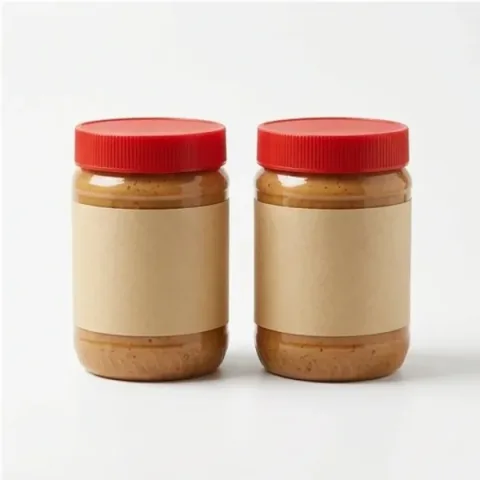
Mayver's Super Natural Crunchy Peanut Butter 375 g (pack of 2)
Roasted peanuts and salt, no added sugar; it does contain salt, so check the jar.
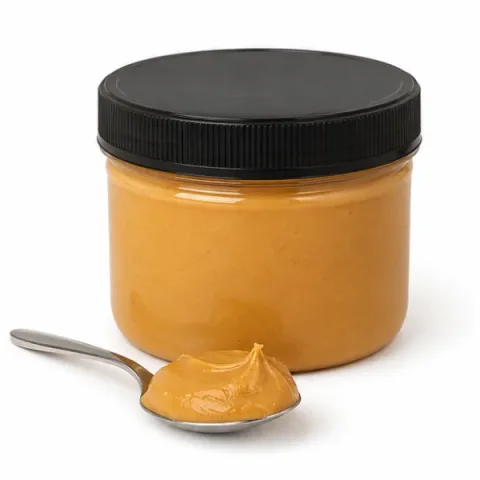
Doggylicious peanut butter for dogs 250 g
Listing says 100% roasted peanuts with no xylitol; use PetMD's amounts, not its feeding guide.
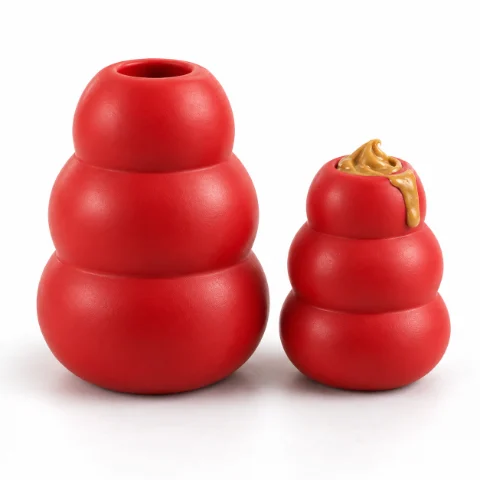
KONG Classic
A classic way to serve a little peanut butter; the brand advises supervision.
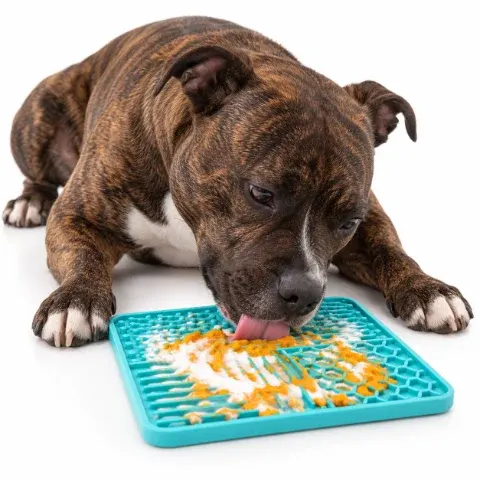
LickiMat Classic Buddy
A thin layer on a lick mat; lick mats are for supervised use.
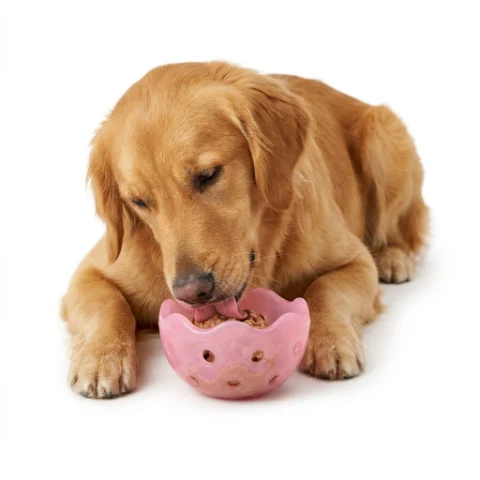
West Paw Toppl (Small)
A treat-dispensing toy from our guide; use it under supervision.
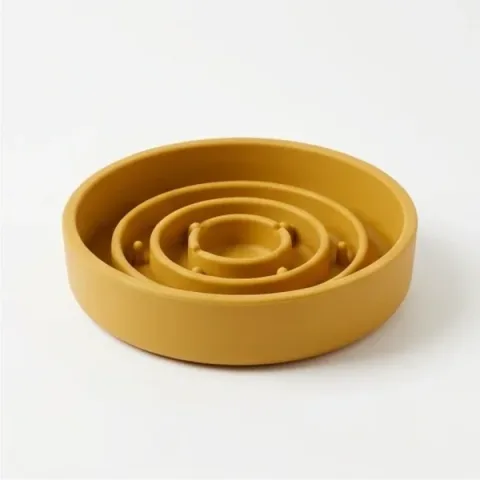
The Slowdown Bowl silicone slow feeder and lick bowl
A silicone lick bowl from our lick bowl guide; supervised use.
West Paw Toppl (Small)
A treat-dispensing toy to make a small treat last.
The Slowdown Bowl silicone slow feeder and lick bowl
A silicone lick bowl for spreading a small amount.
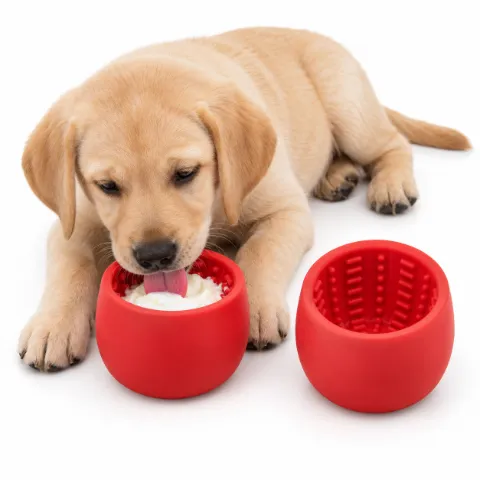
LickiMat Yoggie Pot
A small lick pot for a thin spread, so a little peanut butter goes a long way.
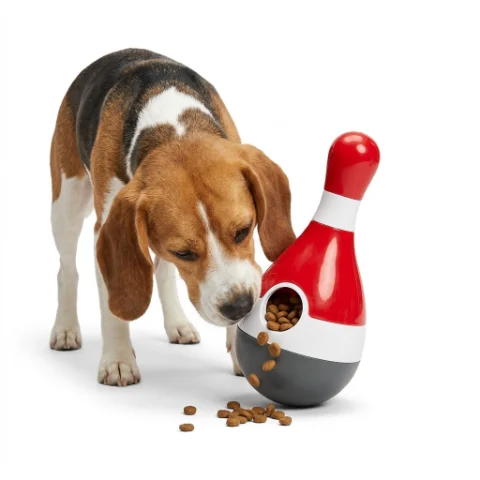
StarMark Bob-A-Lot
A wobbling treat dispenser to make a small, measured amount of food last longer.
Pictures are illustrations, not the actual products.
More detail on the first two is in Useful gear for peanut butter treats below. Peanut butter is a treat, not a meal, and these don't replace your vet's advice.
Can dogs eat peanut butter?
Yes, in small amounts. Plain peanut butter made from peanuts, with no xylitol, is safe for most dogs. It's a rich treat, though, not a meal. Look for a short ingredient list, ideally no added salt or sugar, and give just a little.
The AKC says most peanut butter is safe for dogs, and recommends unsalted, dog-specific or homemade versions (AKC, updated 25 March 2026, page read 8 November 2026). PetMD agrees that it's fine in moderation if it contains no xylitol, and says natural peanut butter with minimal ingredients is the safest choice (PetMD, updated 27 August 2025, page read 8 November 2026). Not sure about another food? Try our Can my pet eat this? checker.
Is peanut butter good for dogs?
In small amounts it's a tasty extra, not a health food. The AKC says it can offer protein, healthy fats, vitamins B and E and niacin, but it's rich in fat, so too much can contribute to weight gain and, in some dogs, pancreatitis. Think of it as a reward.
PetMD makes the same point: it's high in fat and calories, so it's a treat and not a staple, and regular large amounts may add to weight gain (PetMD). Your dog's complete and balanced food does the real nutrition work. Treats, including peanut butter, should stay at about 10% of daily calories, with complete and balanced food making up the rest (VCA Animal Hospitals, treats for dogs, updated 26 September 2024, page read 8 November 2026). That is the same limit on our dog treats page.
How to read a peanut butter label
Read the ingredient list, not the front of the jar. You want peanuts, and perhaps a little salt. Anything with xylitol or chocolate is out, and "sugar-free", "lite" or "reduced fat" versions need a close look. If you can't tell what an ingredient is, skip that jar.
PetMD warns that "no sugar added" and "sugar-free" products may contain xylitol or other artificial sweeteners, and that recipes change, so check every label even for a brand you've used before (PetMD). The AKC also says to check peanut butter and other products for xylitol, and notes that high sodium can be a problem for dogs (AKC).
| Ingredient on the label | OK for dogs? | Why |
|---|---|---|
| Peanuts only | Yes, small amounts | The simplest and safest choice |
| Salt | A little is OK, none is better | The AKC says high sodium can be a problem for dogs |
| Palm or vegetable oil | Better to avoid | Extra fat on top of an already rich food |
| Sugar or honey | Better to avoid | Extra calories with no benefit to your dog |
| Xylitol | Never | Can drop blood sugar fast and damage the liver |
| Chocolate or "choc" spreads | Never | Chocolate is on our toxic foods list |
| "Sugar-free", "lite" or "reduced fat" | Check very closely | PetMD says sugar-free versions may contain xylitol or other sweeteners |
Are supermarket peanut butters safe for dogs?
Many are, but you can't assume. Plain supermarket peanut butters are often just peanuts and maybe salt or oil, which is fine in small amounts. Others have sweeteners or flavours added. Read the label on the jar in your hand, every time, because recipes and new "sugar-free" versions can change.
The simple rule: if the ingredient list is peanuts, or peanuts and a little salt, it's a reasonable choice. If there's any sweetener you don't recognise, extra flavouring or a "sugar-free" claim, put it back or ask your vet. Local jars and imports can differ, so don't rely on what was in your last jar.
What is xylitol and why is it dangerous?
Xylitol is a sweetener used in some peanut butters, sugar-free foods and gum. It's harmless to people but toxic to dogs. It can drop a dog's blood sugar fast and damage the liver, so even a small amount of a xylitol product is a reason to call a vet.
The AKC says xylitol can cause a rapid release of insulin and dangerously low blood sugar, with signs that can appear within 10 to 60 minutes (AKC). PetMD says it can also cause liver damage, and lists some brands that have sold xylitol peanut butters, while warning that formulations change (PetMD). That's why we don't treat any brand as safe by name alone.
What if my dog ate peanut butter with xylitol?
Call your vet, an emergency vet or the Animal Poisons Helpline (1300 869 738, 24/7) straight away, even if your dog seems fine. Tell them the product, how much was eaten, when and your dog's weight. Don't make your dog vomit at home unless a vet tells you to.
Keep the jar so you can read out the ingredients. The AKC lists weakness, collapse, staggering, poor coordination and seizures as signs of xylitol poisoning (AKC), but waiting for signs wastes time. Our vet box below has the full list of when to get help.
How much peanut butter can a dog have?
Very little. Treats should be about 10% of daily calories, and peanut butter is calorie-dense, so a small lick or a thin smear is plenty. PetMD gives starting amounts by weight, shown below, and says to follow your vet's advice where you have it.
PetMD's amounts are in pounds, so we've converted them to kilograms and rounded sensibly. They're starting amounts, a ceiling and not a target, and PetMD advises against feeding it daily (PetMD).
| Dog size | Weight | PetMD's starting amount (a ceiling for the days you give it) |
|---|---|---|
| Extra small | 1 to 4.5 kg | Half a teaspoon, once a day |
| Small | 5 to 9 kg | Half a teaspoon, twice a day |
| Medium | 10 to 23 kg | 1 teaspoon, once a day |
| Large | 24 to 41 kg | 1 teaspoon, twice a day |
| Extra large | Over 41 kg | 1 tablespoon, once a day |
If your dog has had other treats that day, trim the rest. Dogs who are overweight, diabetic, prone to pancreatitis or on a special diet should only have peanut butter with their vet's say-so. The AKC suggests asking your vet first, especially for dogs with diabetes or food sensitivities.
Can puppies eat peanut butter?
Yes, in tiny amounts. PetMD says puppies can have small amounts, introduced slowly, with a watch for allergic signs or tummy upset. A smear the size of a pea on a lick mat is plenty. Ask your vet first if your puppy is very young or on a special diet.
Offer it on its own, not alongside other new foods, so you can tell what caused any upset. Stop and call your vet if you see vomiting, diarrhoea or itching. Supervise lick mats and toys with puppies, and see our new puppy checklist for the basics.
Easy ways to give peanut butter
Spread it thin. A thick spoonful can stick in the mouth and throat, while a thin smear lasts longer and counts for less. These ideas all keep amounts small:
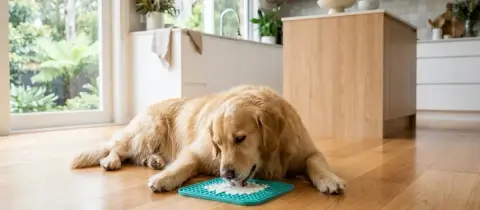
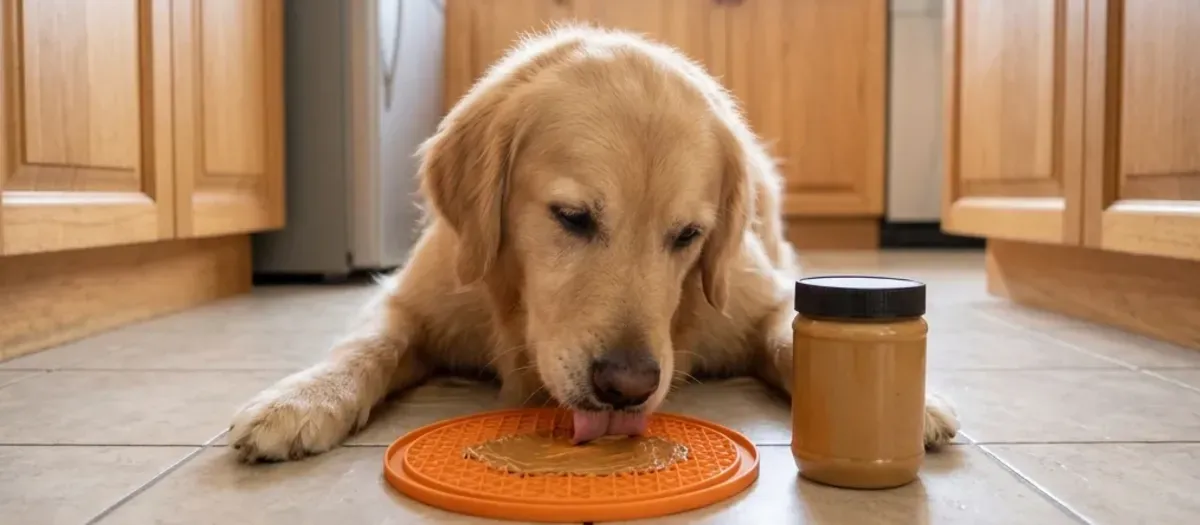
- Lick mat: a thin layer on a silicone mat, with supervision, as brands label these for supervised use. See our lick mats guide.
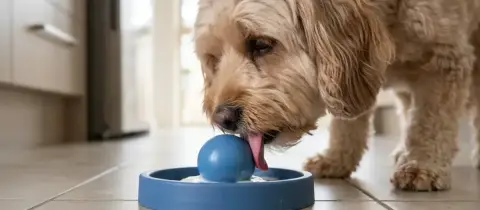
- Lick bowl: the same idea with a bowl shape, again supervised. See our dog lick bowls guide.
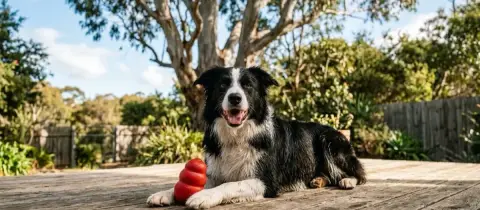
- KONG or treat toy: a dab to plug the hole, then add your dog's usual food. KONG advises supervision. See our treat-dispensing toys guide and KONG recipes.
- Homemade biscuits: a little in the mix, with the rest of the recipe kept dog-safe. See homemade dog biscuits.
- Special occasions: the dog birthday cake recipe uses it as an occasional treat, and our dog birthday ideas cover the rest of the party.
Choose by situation
| Your situation | What to do | Our guide |
|---|---|---|
| Healthy adult dog | A small lick or thin smear now and then, xylitol-free | This page |
| Puppy | Pea-sized smear, introduced slowly, ask your vet first if very young | New puppy checklist |
| Overweight dog | Skip it, or a lick only, and ask your vet | Dog treats |
| History of pancreatitis | Ask your vet before offering any | Dog treats |
| Ate peanut butter with xylitol | Call your vet or the Animal Poisons Helpline now | Vet box below |
| Stuffing a KONG or lick mat | Thin layer, xylitol-free, supervised | Treat-dispensing toys |
| Baking dog biscuits | A little, with other safe ingredients | Homemade dog biscuits |
| Hiding a tablet | Ask your vet how to give it. Peanut butter may not suit every medicine | Dog treats |
Useful gear for peanut butter treats
Peanut butter is also sold at supermarkets and pet shops, so you don't have to buy it online. These are two options from the Amazon Australia listings we checked on 8 November 2026, plus the gear to serve it.
- Mayver's Super Natural Crunchy Peanut Butter 375 g (pack of 2): the listing says it's made from 100% natural Australian peanuts and sea salt with no added sugar, and the ingredients are roasted peanuts and salt. That's a short list, but it does contain salt. The listing says crunchy, while another line calls the texture smooth, so check the jar. A smooth one may suit small dogs and lick mats better, and the pack is 2 x 375 g.
- Doggylicious peanut butter for dogs 250 g: the listing says 100% roasted peanuts with no xylitol, salt, sugar or palm oil, and that it's Australian made. It also makes calming claims, which are the brand's and not ours, and a peanut butter doesn't treat anxiety. Its feeding guide of two to four tablespoons a day is far above PetMD's amounts, so use PetMD's table above. The listing is also inconsistent on form and age range.
- Our guides to lick mats and treat-dispensing toys cover the gear for serving it.
When to see a vet
Call your vet or the Animal Poisons Helpline (1300 869 738, 24/7) now if your dog has eaten peanut butter that may contain xylitol, even if they seem fine.
- Weakness, wobbling or staggering
- Vomiting or collapse
- Seizures or tremors
- Itching, hives, facial swelling or trouble breathing after peanut butter (stop feeding it)
- Repeated vomiting, a sore belly or no appetite after a fatty treat, which can be more consistent with pancreatitis
If your dog may have eaten chocolate, grapes, raisins or anything else from the list, call straight away too. See our toxic foods list and can dogs eat grapes.
Frequently asked questions
Can dogs eat crunchy peanut butter?
Yes. PetMD says both crunchy and smooth are generally safe in moderation as long as they contain no xylitol. Crunchy pieces can be awkward for very small dogs and tricky to spread on a lick mat, so a smooth one may suit them better. Check the label either way.
Can dogs have peanut butter every day?
It's better not to. PetMD advises against daily feeding because of the fat and calories, and the AKC says to keep treats within about 10% of daily food. A small lick now and then is plenty for most dogs. Ask your vet if you'd like it as a regular part of the routine.
Can dogs be allergic to peanut butter?
Possibly. PetMD lists red, itchy skin, scratching or licking, hives, vomiting, diarrhoea and facial or throat swelling as signs to watch for. Stop feeding it and contact your vet if you see them. Swelling or trouble breathing needs urgent help.
Which peanut butter brand is safe for dogs?
There's no single safe brand, because recipes change. Choose a jar with peanuts, or peanuts and a little salt, and no xylitol or other sweeteners. PetMD says to check every label, even for brands you know. Dog-specific peanut butters are an option too.
Can dogs eat peanut butter toast or sandwiches?
A lick of the peanut butter is fine, but the bread adds calories without much benefit. Check the spread and any other fillings. Jam, honey or raisin toast aren't good choices, and raisin bread is a real danger, because raisins are toxic to dogs (see can dogs eat grapes?). Offer a small lick of plain peanut butter instead.
Can dogs eat peanut butter cookies?
Best avoided. Cookies can contain sugar, chocolate, raisins, macadamia nuts or xylitol, and recipes vary. If your dog ate one, check the ingredients and call your vet or the Animal Poisons Helpline (1300 869 738) if anything on our toxic foods list was in it.
Can dogs eat peanut butter and jelly, or peanut butter with honey?
It's better to skip them. PetMD says jelly is typically high in sugar and may upset the stomach or add weight. Honey is also sugar, so it adds calories with no benefit. Our honey guide gives amounts by dog size. Some jams and spreads can contain xylitol, too. Plain peanut butter with no xylitol is the simpler choice if you want to give a little.
Is peanut butter OK for dogs with pancreatitis?
Ask your vet first. PetMD says dogs with pancreatitis, or those needing low-fat diets, may need to avoid peanut butter unless their vet approves it. It's a high-fat food, and your vet knows your dog's history. Don't try it as an experiment.
Related guides
- Best dog treats
- Best lick mats for dogs
- Best treat-dispensing toys
- Frozen KONG and lick mat recipes (toxic foods list)
- Homemade dog biscuits
- Dog birthday cake recipe
- Best dog lick bowls
- Can dogs eat grapes?
- Can dogs eat macadamia nuts?
- All our dog guides
Sources
- American Kennel Club, Can dogs eat peanut butter? updated 25 March 2026, page read 8 November 2026 (https://www.akc.org/expert-advice/nutrition/can-dogs-eat-peanut-butter/)
- PetMD, Can dogs eat peanut butter? updated 27 August 2025, reviewed by Teresa Manucy, DVM, page read 8 November 2026 (https://www.petmd.com/dog/nutrition/can-dogs-eat-peanut-butter)
- VCA Animal Hospitals, Treats for dogs, updated 26 September 2024, page read 8 November 2026 (https://vcahospitals.com/know-your-pet/dog-treats)
This guide provides general information and isn't a substitute for veterinary advice. If you're concerned about what your dog has eaten, speak with your vet.