Quick answer: For easy homemade dog biscuits, mix 250 g wholemeal flour, 50 g rolled oats, one egg, a tablespoon of olive oil and about 100 ml water into a dough, roll it out, cut small shapes and bake at 170°C for 20 to 25 minutes. Keep them plain: no salt, sugar, butter, xylitol or chocolate. Count them inside your dog's daily treat budget.
Dog biscuits are one of the easiest things to bake, and you control exactly what goes in. This guide gives you one base recipe, three variations, the ingredients to keep out, and how to store and portion a batch. If you'd rather buy than bake, our best dog treats guide covers ready-made options.
Easy homemade dog biscuit recipe
Makes roughly 30 small biscuits, depending on your cutter. Wash your hands and the bench first, as you would for any food.
Ingredients
- 250 g wholemeal plain flour, plus extra for rolling
- 50 g rolled oats
- 1 egg
- 100 ml water, plus a splash more if the dough is dry
- 1 tablespoon olive oil
Method
- Heat the oven to 170°C (150°C fan) and line a tray with baking paper.
- Mix the flour and oats in a bowl. Add the egg, oil and water and stir, then knead briefly until it forms a firm dough. Add a splash of water if it's crumbly, or a little flour if it's sticky.
- Roll the dough out on a floured bench to about 5 mm thick.
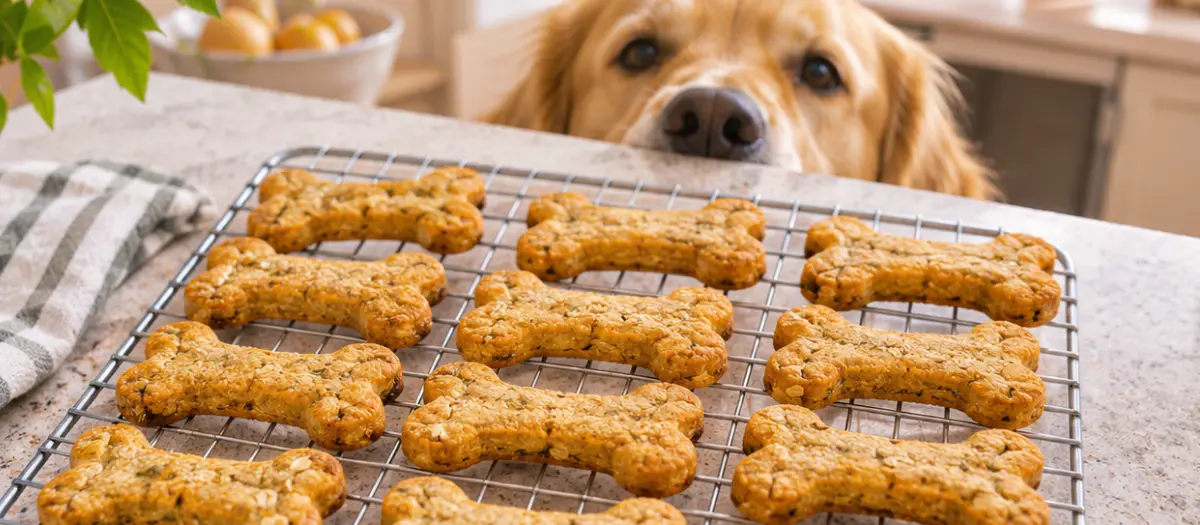
- Cut into small shapes with a cutter or knife. Aim for about the size of a 20 cent piece for small dogs, or a little bigger for large dogs.
- Place on the tray and bake for 20 to 25 minutes, until dry and lightly golden on the edges.
- Turn the oven off and leave the biscuits inside with the door ajar until cool. They'll dry out and firm up as they cool.
- Cool completely on a wire rack before storing, so steam doesn't make them go soft or mouldy.
Baked biscuits can go quite hard. Break one open when it's cool: if it feels like a rock, bake the next batch for a little less time or roll it thinner. Cornell's canine health centre says veterinary dentists use a thumbnail test: if you can't dent it with a fingernail, it's likely too hard, so see our toys for heavy chewers guide for the detail (Cornell Riney Canine Health Center, page read 2 November 2026). Always supervise treat time. For bone, paw and mini shapes, see our dog treat cookie cutters guide.
Which ingredients are safe in dog biscuits?
Plain flour, rolled oats, eggs, plain cooked pumpkin, sweet potato, apple (core and seeds removed), carrot and xylitol-free peanut butter are common, dog-safe choices. Keep everything plain, with no seasoning, salt or sugar. Our KONG recipe guide has a longer list of dog-safe ingredients you can borrow from.
Wholemeal flour is fine for most dogs. If your dog has a diagnosed or suspected wheat or grain allergy, talk to your vet before baking with any flour, as they can tell you what suits your dog.
Variations
Make the base dough, then swap as follows. Each still makes about 30 small biscuits.
Peanut butter biscuits. Replace the olive oil with 60 g of peanut butter and stir it into the water first so it blends smoothly. Read the label: it must be xylitol-free, with no added salt or sugar. The ASPCA says xylitol can drop a dog's blood sugar and may damage the liver (ASPCA, page read 2 November 2026). If the label doesn't clearly rule it out, leave it out.
Pumpkin biscuits. Use 80 g of plain cooked, mashed and cooled pumpkin in place of the water and oil. Add a little flour if the dough turns sticky. Use plain pumpkin, never pumpkin pie filling, which can contain sugar, nutmeg and sometimes xylitol.
Apple and oat biscuits. Swap the oil for 80 g of finely grated apple (core and seeds removed), use 100 g of rolled oats instead of 50 g, and cut the flour to 200 g. Squeeze the apple lightly if it's very juicy, and bake a few minutes longer if the biscuits feel soft in the middle.
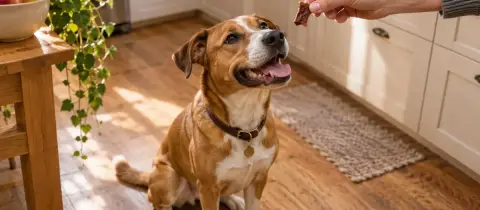
Introduce any new flavour slowly and stop if your dog has vomiting or diarrhoea. VCA Animal Hospitals advises adding new treats slowly, one at a time (VCA Animal Hospitals, page read 2 November 2026).
Which ingredients should I never put in dog biscuits?
Never use xylitol, chocolate (including chocolate chips), grapes, raisins, sultanas, onion, garlic or macadamia nuts. Leave out salt, sugar and butter too, and skip carob chips, which aren't toxic but usually come with added sugar. The ASPCA lists xylitol, chocolate, grapes and raisins, onion and garlic, and macadamia nuts as harmful to dogs, and notes that excess salt can cause problems as well (ASPCA). Sultanas are dried grapes, so they belong on the same list.
Watch for hidden extras, such as garlic powder in stock, raisins in fruit mixes and sweeteners in nut butters. Our full list, with reasons, is in foods you must never use.
When to see a vet
- Your dog has eaten anything on the never-use list, or a biscuit made with it: call your vet, an emergency vet or the Animal Poisons Helpline (1300 869 738, 24/7) straight away, even if they seem fine
- Vomiting, diarrhoea, itching or a sore tummy after trying a new biscuit
- Your dog has allergies, pancreatitis, diabetes, kidney disease or a special diet: ask your vet before baking treats
- Your dog chokes on or swallows a large piece of biscuit
How long do homemade dog biscuits last?
Homemade biscuits have no preservatives, so they don't keep like shop-bought ones. There's no official shelf life, so our conservative guide is: fully cooled, dry biscuits in an airtight container in a cool, dry spot for about five days, in the fridge for up to two weeks, or frozen in portions for a few months. Bin any that smell off or show mould.
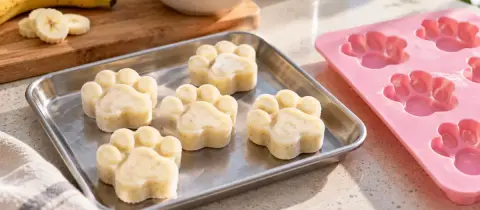
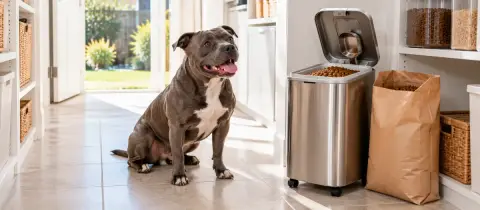
Pumpkin and apple versions hold more moisture, so keep those in the fridge. In warm, humid weather biscuits can go off faster on the bench, so lean towards the fridge or freezer. A sealed dog food container is handy for keeping a batch fresh and away from pests. For a cool summer option instead, try our frozen dog treats guide.
How many biscuits can my dog have?
Treats should make up about 10% of your dog's daily calories, with the rest coming from complete and balanced food, according to VCA Animal Hospitals (VCA Animal Hospitals). Homemade biscuits don't come with a calorie label, so start with one or two small biscuits a day for a small dog and a few for a large dog, then watch your dog's weight.
If you also use treats for training, count those too. Our dog training treats guide shows how small the pieces can be. Chews such as bully sticks are calorie-dense and use up the budget quickly, and for teeth, see dental chews.
Frequently asked questions
How do you make homemade dog biscuits?
Mix wholemeal flour, rolled oats, an egg, water and a little olive oil into a firm dough. Roll it to about 5 mm, cut small shapes and bake at 170°C for 20 to 25 minutes, then let them cool and dry out. Keep the ingredients plain, with no salt, sugar, butter or xylitol.
What ingredients are safe in dog biscuits?
Plain flour, rolled oats, eggs, plain cooked pumpkin or sweet potato, grated apple without core or seeds, carrot and xylitol-free peanut butter are common choices. Avoid xylitol, chocolate, grapes, raisins, sultanas, onion, garlic and macadamia nuts. If your dog has allergies or a special diet, ask your vet first.
Is peanut butter safe in dog treats?
Plain peanut butter can be fine in small amounts, as long as the label shows no xylitol, and ideally no added salt or sugar. Xylitol can cause a dangerous drop in blood sugar in dogs. Check every jar, even if you've bought the brand before, as recipes can change.
Can puppies have homemade biscuits?
Yes, in small amounts, as long as the biscuits are plain, small enough for a puppy's mouth and counted inside the daily treat budget. Break them into pea-sized bits and introduce them slowly. Puppies can have sensitive tummies, so ask your vet if you're unsure what suits your puppy.
What makes a dog biscuit healthy?
A healthy biscuit is plain and small. Wholemeal flour, oats, egg and a vegetable or fruit give fibre and flavour without salt, sugar or butter, and baking them hard means your dog chews rather than gulps. Healthy still means counted: even plain biscuits add calories, so keep them inside the daily treat budget.
Can I use wholemeal flour for dog biscuits?
Yes, wholemeal wheat flour is fine for most dogs. If your dog has a known or suspected wheat or grain allergy, ask your vet which flour to use before baking. Introduce the biscuits slowly and stop if you notice itching, vomiting or diarrhoea.
Can I make dog biscuits without eggs?
Yes. Swap the egg for about 60 g of plain mashed pumpkin or sweet potato, or an extra splash of water, and add a little flour if the dough turns sticky. The biscuits will be a touch more crumbly. Egg-free is handy for a dog whose vet has ruled out egg.
Can I add salt, butter or sugar to make them tastier?
No. Your dog doesn't need them, and excess salt can cause thirst and, in larger amounts, serious problems. Butter and sugar add calories without benefit. Peanut butter, pumpkin or grated apple add flavour more safely.
Related guides
- Dehydrated dog treats at home
- Dog treat cookie cutters
- Can dogs eat pumpkin?
- Can dogs eat peanut butter?
- Dog birthday cake recipe
- Best dog treats
- Best bully sticks
- Best dog training treats
- Best dog dental chews
- Frozen KONG and lick mat recipes
- Best frozen dog treats
Sources
- ASPCA: People foods to avoid feeding your pets (page read 2 November 2026)
- Cornell Riney Canine Health Center: Risks of a fractured tooth (page read 2 November 2026)
- VCA Animal Hospitals: Dog treats (page read 2 November 2026)
This guide provides general information and isn't a substitute for veterinary advice. If you're concerned about your dog's diet or allergies, speak with your vet.