Quick answer: Dehydrated dog treats are easy to make at home, but dried isn't the same as cooked. For meat jerky, the inside needs to reach 71°C for red meat or 74°C for chicken, either before or after drying. Keep it plain, with no onion, garlic or salt, and store it in the fridge.
Homemade jerky, sweet potato chews and liver bites are simple to make, and you know exactly what's in them. The catch is food safety, which is where most online recipes go quiet. This guide covers temperatures, drying, ingredients to avoid and storage. If you'd rather buy, see our dog jerky treats guide.
What are dehydrated dog treats?
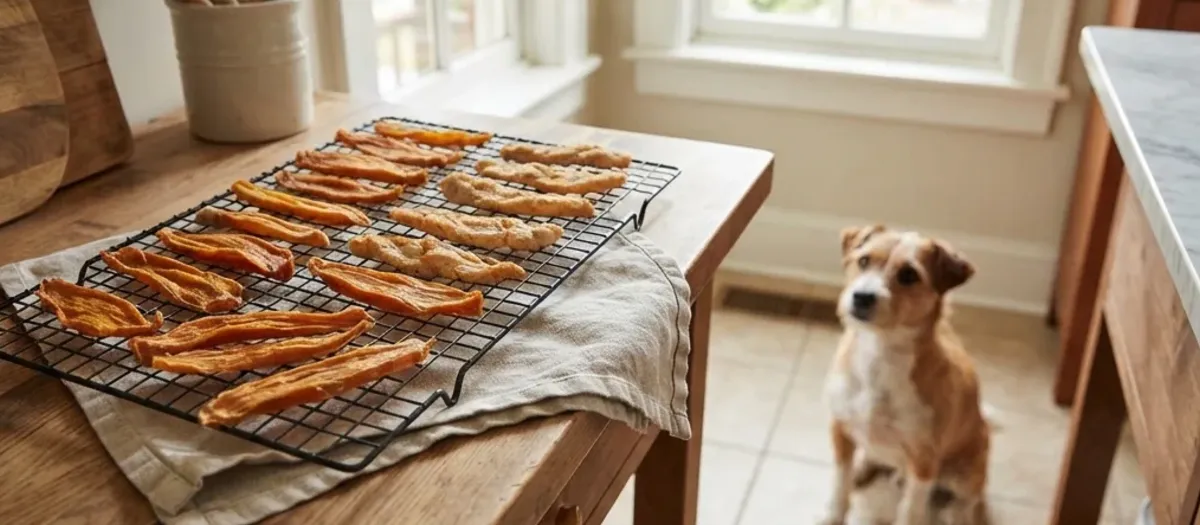
Dehydrated dog treats are thin slices or strips of meat, liver or vegetables dried slowly with gentle heat and moving air until most of the water is gone. They end up chewy, leathery or crisp, and they're lighter than the fresh food. A dehydrator does this, and so does a low oven.
Dehydrating is a different process from freeze-drying, which removes water from frozen food. Our freeze-dried dog treats guide covers that one. Either way, drying doesn't make a treat a cooked one, which matters for the next section.
How do you make dehydrated dog treats safely?
Heat red meat to 71°C inside and chicken to 74°C inside, using a thermometer. You can do this before drying or after. Drying alone isn't a safe step. Ohio State University Extension gives these figures for jerky made for people, and the same logic suits meat for dogs (Ohio State University Extension, Making Jerky, HYG-5362, 8 February 2017, page read 20 November 2026).
The Centers for Disease Control and Prevention says dehydrating raw animal protein only reduces germs and doesn't kill all of them. It also says to wash your hands with soap and water before and after handling pet food or treats (CDC, About Pet Food Safety, 30 January 2025, page read 20 November 2026).
| Meat | Inside temperature | When | Dehydrator minimum | Doneness test |
|---|---|---|---|---|
| Chicken breast | 74°C | Before drying (pre-cook) or after drying | Holds at least 63°C the whole time | Cooled piece bends and cracks a little, doesn't snap apart |
| Beef or lamb strips | 71°C | Before or after drying | Same | Same |
| Kangaroo strips | 71°C, treated as red meat | Before or after drying | Same | Same |
Kangaroo isn't named in the Ohio State factsheet, so treating it as red meat is our cautious approach. If you'd rather buy roo jerky, our kangaroo treats guide covers it.
Two practical points from the same factsheet:
- Check your dehydrator. Dials can be wrong, so run the empty machine with an oven or food thermometer inside and check it holds at least 63°C throughout drying.
- The oven step after drying. Lay the dried strips in a single layer, not touching, in an oven preheated to 135°C. Start checking the inside temperature with a thermometer from 10 minutes. Thicker strips may need longer.
Cut strips about the same thickness so they dry together. Trim visible fat first, because fatty treats can upset a dog's tummy.
How long do you dehydrate chicken, beef, sweet potato and liver?
Expect several hours for any of them, and judge by texture rather than the clock. We can't give reliable hours because thickness, machine and humidity vary. Cool a piece to room temperature, then bend it. Jerky should crack slightly without breaking in two. Sweet potato should be firm and bendy.
| Ingredient | Prep | Heat step needed? | Texture when done | Note |
|---|---|---|---|---|
| Chicken breast | Slice thin, trim fat, nothing added | Yes, 74°C inside | Bends and cracks slightly | Cooked-through chicken only, never pink |
| Beef or lamb | Lean cuts, thin strips | Yes, 71°C inside | Bends and cracks slightly | Trim fat |
| Kangaroo | Lean strips | Yes, 71°C (our approach) | Bends and cracks slightly | Trim any fat |
| Sweet potato | Wash, slice evenly | Not a meat step | Firm but bendy chews | Check the pieces for hard spots |
| Liver | Plain, thin slices | Treat as red meat (our approach) | Dry and firm | Small amounts only, see the liver limits below |
Sweet potato chews. Uniform slices dry evenly. If a chew ends up rock hard, it's not a good chew: the vet dental advice is to avoid anything that can't be dented with a thumbnail or won't bend (Vet Times, tooth fracture risks, 21 May 2019, page read 20 November 2026). That article calls this a rule of thumb from experts. For preparation details, see our can dogs eat sweet potato guide.
Liver. Liver is rich in vitamin A, and VCA Animal Hospitals says too much over weeks or months can cause poisoning (VCA Animal Hospitals, vitamin A poisoning in dogs, updated 11 September 2026, page read 8 November 2026). VCA doesn't give a safe amount in grams, so we don't either. Keep pieces tiny and occasional, and see our liver treats guide.
Whatever you make, treats should stay at about 10% of daily calories, with complete and balanced food making up the rest (VCA Animal Hospitals, dog treats, updated 26 September 2024, page read 2 November 2026). Homemade jerky counts too.
Which ingredients should never go in homemade dog treats?
Never add onion, garlic or salt, and skip marinades and seasoning blends. Other foods dogs must never have are on our list below. Many jerky recipes written for people use garlic or onion powder, soy sauce and plenty of salt, so don't borrow them. The plainest meat is the safest treat.
Our full list of foods to avoid lives in the KONG recipes guide. Check it before you try a new ingredient. Never give bones, raw or cooked, as part of a "dried chew" either.
The US Food and Drug Administration says jerky treats aren't needed as part of a complete and balanced diet (FDA, jerky pet treats, content current as of 21 August 2018, page read 20 November 2026). It also received reports of illness in dogs associated with some bought jerky treats, and didn't find a cause. Our jerky treats guide goes through that in full.
What should you look for in a food dehydrator for dog treats?
Look for a machine that can hold at least 63°C, has a fan for even airflow, and has trays that lift out to wash. That's the short checklist. We don't name models here.
- Reaches and holds the temperature. Check it with a thermometer when empty, as above.
- A fan. Moving air dries pieces evenly, so you don't get damp middles.
- Removable trays. Meat and liver leave residue, and trays you can wash properly make hygiene easier.
- A timer or auto shut-off. Handy for overnight drying.
No dehydrator? A low oven can dry strips too. Ohio State says a drying oven should stay between 63°C and 77°C (145 to 170°F), and oven dials vary as much as dehydrator dials, so check yours with an oven thermometer. Whichever you use, check the inside temperature of the meat with a thermometer as well.
How should you store homemade dog treats?
Keep them in an airtight container in the fridge. Homemade treats have no preservatives. The Ohio State factsheet says jerky made for people keeps up to two weeks at room temperature or three to six months in the fridge, but that's a guide for human jerky, so we suggest the fridge for dog treats and using them within a short time. Wash your hands before and after handling them, as the CDC advises.
A good treat jar keeps bench-stored shop treats fresh, but homemade ones belong in the fridge. Throw out anything that smells off, feels damp or shows mould.
Useful guides
Buying instead of making, or want something to pair with your batch? These guides cover it.
- Dog jerky treats compared: bought strips by meat, ingredients and where they're made.
- Freeze-dried dog treats: single-ingredient picks and the raw-meat hygiene that goes with them.
- Natural dog chews: which chews pass the thumbnail test and which to skip.
- Dentastix: sizes, calories per stick and what the dental list shows.
- Dog treat jars: airtight storage for bought treats.
- Kangaroo treats for dogs: bought roo jerky and tendons.
- Liver treats for dogs: the vitamin A limits and bought options.
When to see a vet
Ring your vet if your dog has repeated vomiting or diarrhoea, seems unusually tired, stops eating, or drinks and urinates much more than normal after eating a new treat. Keep the leftover treats and any packaging, as the US FDA advises for jerky, so your vet can see what was eaten (US FDA, page read 20 November 2026).
If your dog eats anything with onion, garlic, chocolate, grapes, raisins or xylitol, call your vet, an emergency vet or the Animal Poisons Helpline (1300 869 738, 24/7) straight away, even if they seem fine. If a piece of treat gets stuck, or your dog gags or struggles to breathe, go to a vet at once. Don't try to make your dog vomit at home.
Frequently asked questions
Is a dehydrator better than an oven for dog treats?
A dehydrator is easier, because it holds a steady low heat with airflow, but an oven works. The safety step is the same either way: the meat's inside needs to reach 71°C for red meat or 74°C for chicken, checked with a thermometer. Check a dehydrator's real temperature when it's empty.
Can I dehydrate raw chicken for my dog without cooking it first?
No. Dehydrating only reduces germs and doesn't kill them all, according to the CDC, and Ohio State's jerky guidance includes a heat step to 74°C for poultry, before or after drying. Heat the chicken to that temperature and wash your hands before and after handling it.
How long do homemade dehydrated dog treats last?
There's no tested shelf life for homemade dog treats, so we don't give one. Without preservatives, they're best kept airtight in the fridge and used within a short time. Ohio State's times are for jerky made for people. Bin anything that smells off or looks damp or mouldy.
Can puppies have homemade dehydrated treats?
Ask your vet first. Puppies have tiny treat budgets and sensitive tummies, so keep pieces very small and plain, and avoid anything hard that won't bend. Soft, plain pieces torn small suit best. Treats still need to stay within about 10% of daily calories for puppies too.
What vegetables can I dehydrate for my dog?
Sweet potato, pumpkin and carrot are common choices, kept plain and unsalted. See our guides to sweet potato and pumpkin for how to prepare them. Never add onion or garlic, and check the toxic foods list before trying anything new.
What fruit can I dehydrate for my dog?
Some fruits suit dogs in small amounts, but never dry grapes or raisins, which are an emergency for dogs. Check each fruit first, as stones and seeds can be a problem. Our what fruits can dogs eat guide has the safe and unsafe list.
Can I use seasoned or leftover marinated meat?
No. Seasonings and marinades often contain onion, garlic and salt, all of which are a problem for dogs. Use plain meat only, with nothing added. If you're drying meat for yourself as well, set aside the dog's portion before you season.
Why did my homemade treats go mouldy?
Mould usually means moisture was left in the treats or they were stored somewhere damp or warm. Throw the whole batch out rather than cutting the mould off. Next time, dry until a cooled piece bends and cracks without snapping, then store in an airtight container in the fridge.
Related guides
- Dog jerky treats compared
- Freeze-dried dog treats
- Natural dog chews
- Dentastix
- Best dog treats
- Homemade dog biscuits
- Frozen KONG recipes and foods your dog must never eat
- Dogs
Sources
- Ohio State University Extension: Food Preservation, Making Jerky (HYG-5362), dated 8 February 2017, read 20 November 2026
- CDC: About Pet Food Safety, dated 30 January 2025, read 20 November 2026
- US FDA: FDA Investigates Animal Illnesses Linked to Jerky Pet Treats, content current as of 21 August 2018, read 20 November 2026
- Vet Times: Exploring tooth fracture risks in canine patients, 21 May 2019, read 20 November 2026
- VCA Animal Hospitals: Vitamin A poisoning in dogs, updated 11 September 2026, read 8 November 2026
- VCA Animal Hospitals: Treats for dogs, updated 26 September 2024, read 2 November 2026
This guide provides general information and isn't a substitute for veterinary advice. If you're concerned about your dog's diet or treats, speak with your vet.