Dentastix: which size, how many a day, and do they clean teeth?
By Anish PuriUpdated 21 Nov 202613 min readResearched, not tested by us
Research guide. WhiskerFinds may earn a commission from links, at no extra cost to you.
Quick answer: Dentastix come in Small, Medium and Large, the label says one stick a day, and our top pick is Pedigree Dentastix Medium in the 56-stick pack. Each stick carries calories that count towards your dog's treat budget, and the Australian packs aren't named on the VOHC accepted list. Chews help alongside brushing, not instead of it.
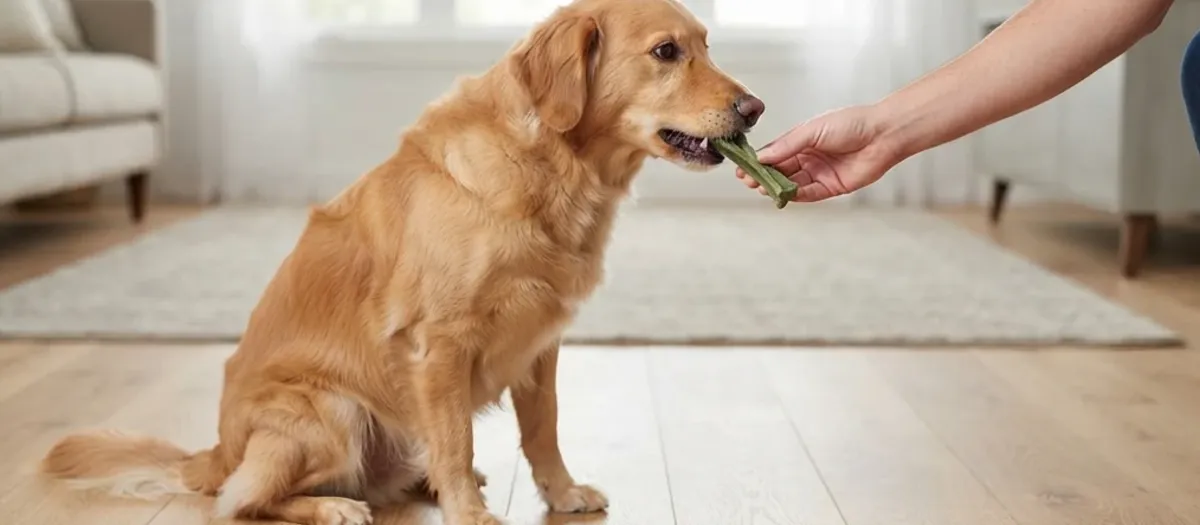
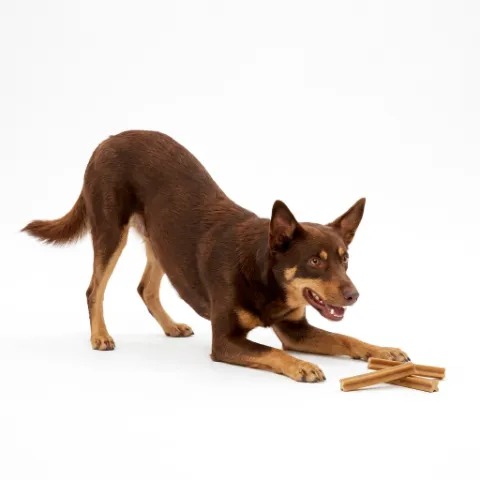
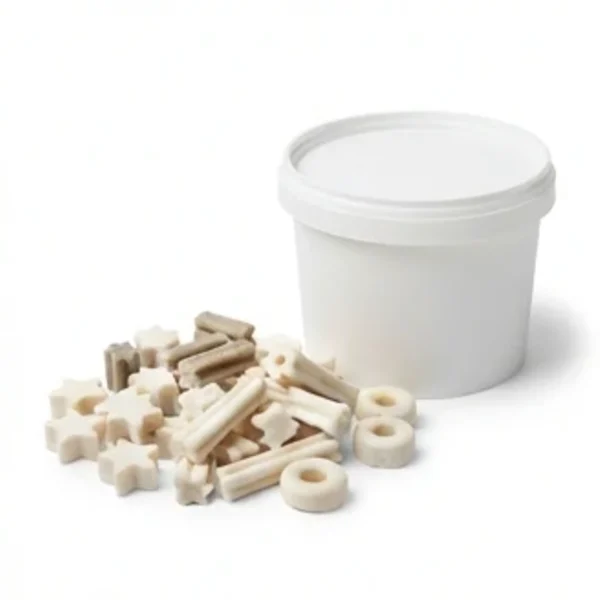
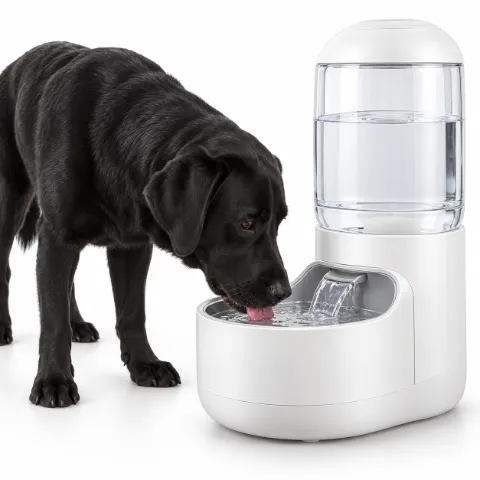
Illustration, not the actual product
Our top pickPedigree Dentastix Medium, 56-stick value pack
Most owners don't struggle to find Dentastix. The hard part is the size, the calories and what the claims on the pack actually mean. This guide covers all three sizes, sets each against the treat budget, and explains what the VOHC list does and doesn't show. For the wider category across brands, see our dental chews guide, and for treats you can make yourself, our dehydrated dog treats guide.
Quick picks
Our top pickBest overall
Pedigree Dentastix Medium, 56-stick value pack
The middle size, with calories, feeding and age limits all stated on the listing
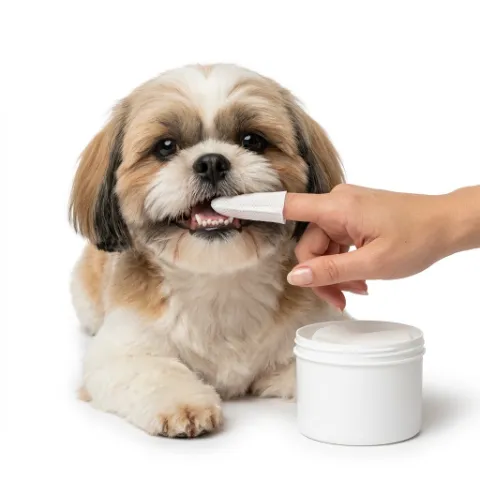
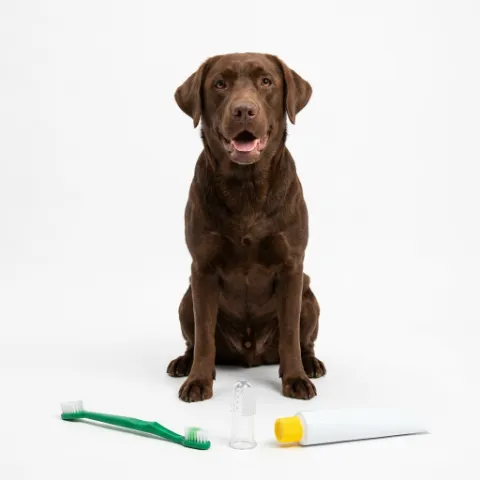
Pictures are illustrations, not the actual products.
Are Dentastix good for dogs?
They can be a reasonable daily chew for an adult dog that chews them properly, but they are a treat, not a toothbrush. RSPCA Australia says dental chews can help control plaque and tartar, and calls brushing the most effective thing you can do at home (RSPCA Australia, "Importance of dental health", page read 20 November 2026). A chew can't remove tartar that has already hardened, so a vet clean is the only fix for that.
The pack's headline claim, reducing tartar build-up by up to 80% when fed daily, is Pedigree's own claim, and we don't repeat it as a fact. Pedigree says the stick's two active ingredients, sodium tripolyphosphate and zinc sulphate, work with the calcium in saliva to slow tartar. Our guide to cleaning your dog's teeth at home covers brushing, and our toothbrush guide has picks.
Which Dentastix size does my dog need?
Small for small dogs, Medium for mid-sized dogs and Large for large and giant breeds. One Large listing on Amazon Australia (not the pack we link) gives over 25 kg, but the listings we link and Pedigree Australia's pages give no weight bands in their text, so check the feeding table on the pack in your hand and ask your vet if your dog sits between sizes. Choosing too small a stick for a big dog makes it easier to swallow whole.
Pack and calorie details from each Amazon Australia listing and Pedigree Australia's product pages, checked on 20 Nov 2026:
The Large figure comes from Pedigree Australia's page, because the Large listing's calorie line has a typo. All three figures are Pedigree's, "based on typical composition". The 7-stick packs are a low-commitment way to find out whether your dog likes them before you buy a big pack. The ingredient lists on the 7, 28 and 56-stick listings aren't word for word the same (some name pork only, others poultry and pork), so read the pack you buy if your dog has an allergy.
Our picks in detail
1. Pedigree Dentastix Medium, 56-stick value pack: best overall
The size most mid-sized dogs fall into, in the biggest pack. The listing gives an X shape with an abrasive texture, 82 calories a stick, one stick a day, and says it's not suitable for puppies under 4 months and is for occasional or supplemental feeding. Use within 14 days of opening, so reseal the pack and store it as the label says.
Pros: calories, feeding amount and age limit stated; a value pack for a once-a-day chew; a 28-stick pack and a 7-stick trial pack if you want to start smaller
Cons: cereal, chicken and pork based; the Australian pack isn't named on the VOHC list; the "up to 80%" claim is the maker's; the pack's weight guidance is only on the pack
Best for: a mid-sized adult dog that chews a stick properly
Skip it if: your dog gulps treats, is under 4 months, or has a cereal, chicken or pork allergy
2. Pedigree Dentastix Small, 28 sticks: best for small dogs
The lowest-calorie stick in the range, at 51 calories per the listing, with one stick a day. The listing's ingredients include cereal, starch, poultry and pork meat by-products, maize flour and vitamin E. Reclose the pack after each use. A 7-stick pack is also on Amazon Australia.
Pros: the fewest calories per stick of the three sizes; a 7-stick trial pack
Cons: still a meaningful share of a small dog's treat budget, so trim other treats; the listing's age field says all life stages, which conflicts with the 4-month limit on the other sizes; no weight band is given; cereal, poultry and pork base
Best for: a small adult dog that chews a stick properly
Skip it if: your dog is a gulper, a toy breed below the pack's weight guidance, or allergic to poultry or pork
3. Pedigree Dentastix Large, 56 sticks: best for large dogs
Sized for big jaws. The listing says it's for large breeds, the feeding guide is one stick a day, and it's not suitable for puppies under 4 months. One other Large listing gives over 25 kg, so check the weight table on your pack. At about 124 calories a stick, it's the highest of the three, so trim the day's other treats. Pedigree's page lists 7, 28, 56 and 70-stick packs.
Pros: the biggest stick, for large breeds; one stick a day; also in 28-stick and 7-stick packs
Cons: the highest calories per stick; the Amazon calorie line has a typo, so we used Pedigree's page; cereal, chicken and pork base
Best for: a large adult dog whose weight fits the table on the pack
Skip it if: your dog is below the pack's weight guide (a smaller size suits them better), or you're feeding it as a half stick, which we don't suggest
4. Whimzees Variety Value Box, Medium (12 to 18 kg), 28 chews: best grain-free alternative
A different base for dogs that react to cereal, chicken or pork. The listing's ingredients are potato starch, glycerin, powdered cellulose, lecithin, yeast, malt extract, sweet lupine meal, annatto extract colour and alfalfa extract, and it says grain free, gluten free and vegetarian. This listing says one chew a day and that it's for medium adult dogs of 12 to 18 kg. Other Whimzees listings say not for dogs under 9 months, as our dental chews guide notes, so treat that as the rule here too and check the box. The Small (7 to 12 kg, 56 chews) and Large (18 to 27 kg, 14 chews) boxes are separate listings.
The listing's "hypoallergenic" and "cleans 2X better" lines are the maker's wording, and we don't repeat them as fact.
Pros: grain free and gluten free per the listing; sized by weight in kg; three weight bands
Cons: the variety box isn't on the VOHC list, only the Whimzees Toothbrush and Brushzees shapes are; not for dogs under 9 months
Best for: an adult dog that needs a non-cereal chew, with your vet's agreement
Skip it if: you want a VOHC-listed chew in the box you buy (the Whimzees Toothbrush on our dental chews guide is listed), or your dog is under 9 months
How many Dentastix can a dog have a day?
One. The feeding guide on the Medium and Large listings says to feed 1 stick a day, and the Small listing says to give 1 stick a day. We found no maker guidance for more than one, so don't give two to a big dog. Keep fresh drinking water available, as the listings direct.
The more useful question is how a stick fits the treat budget. VCA Animal Hospitals says treats should be limited to about 10% of daily calories, with complete and balanced food making up the rest (VCA Animal Hospitals, "Dog treats", page read 20 November 2026). The same applies to every chew, training reward and bit of cheese.
Swipe sideways to see every column
Size
Calories per stick
What it means for the treat budget
Small
51
For a small dog, one stick is a meaningful share of the treat budget, so trim other treats
Medium
82
A bigger share again for a mid-sized dog on a diet
Large
About 124
The highest of the three, so cut back the day's other treats
We haven't worked out a daily calorie need, because VCA doesn't give one: your vet can tell you your dog's number. If your dog needs to lose weight, ask your vet whether a daily chew fits the plan. Our dog treats guide explains the budget in more detail.
What does the VOHC list say about Dentastix?
The Veterinary Oral Health Council (VOHC) list names several Dentastix products, but none are the Australian Daily Oral Care packs we link. VOHC accepts a product when the maker's trial results meet its standard, and it lists each one for plaque, tartar or both. The seal is not a promise about every dog.
Dentastix Original Large Dog Treats, Beef and Fresh Variety Pack
Tartar
2024
Dentastix Daily, Pedigree UK
Plaque and tartar
2024
Dentastix Fresh, Pedigree UK
Plaque and tartar
2024
Dentastix Chewy Chunx, Pedigree UK
Tartar
2024
Pedigree DentaStix Light
Plaque and tartar
2024
Several are UK products, and none is the Australian Daily Oral Care pack, so a summary that says "Dentastix are VOHC accepted" is mixing ranges. We don't claim the seal for the Australian packs. Check your pack for the VOHC seal.
Dentastix or Greenies: how do they compare?
Greenies have a VOHC listing for the canine range, Dentastix don't for the Australian pack, and the two have different recipes. Our Greenies guide covers that range in full. Here are the three chews side by side, with Whimzees as the grain-free option.
Swipe sideways to see every column
Dentastix (AU packs)
Greenies
Whimzees
Base ingredients
Cereals, plus chicken and/or pork derivatives
Wheat flour, wheat gluten, gelatin
Potato starch, glycerin, powdered cellulose
VOHC status
Australian Daily Oral Care packs not named; other Dentastix products are
Canine Greenies listed for plaque and tartar
Only Toothbrush and Brushzees listed, not the variety box
Minimum age
Not under 4 months (56-stick Medium and Large listings)
Not under 6 months, per the directions on a listing
Not for dogs under 9 months, per the listings
Sizes
Small, Medium, Large
Teenie, Petite, Regular, Large
Small (7 to 12 kg), Medium (12 to 18 kg), Large (18 to 27 kg)
If your dog tends to gulp, none of them is a safe bet without supervision. For jerky strips and other meat treats, see our dog jerky guide.
Who should skip Dentastix?
Skip them if your dog has an allergy to cereals, chicken or pork, is under 4 months, or swallows treats without chewing. The Medium and Large listings give the ingredients as cereals, humectants, vegetable derivatives, animal derivatives (chicken and/or pork), minerals, vegetable protein extracts, flavours and preservatives. They aren't grain free, and a dog with a known food allergy needs your vet's advice first.
One more point:
Gulpers: a stick that is swallowed whole does little for teeth, and a large piece can lodge. Supervise every chew, choose a size too big to swallow whole, and take it away when it's small enough to swallow.
For rawhide, bones and other chews that fail our thumbnail test, see our natural dog chews guide. If you want a meat treat as a change from a chew, our freeze-dried dog treats guide compares single-ingredient picks.
Choose by situation
Swipe sideways to see every column
Your situation
What to look for
Our pick
Mid-sized adult dog, daily chew
The middle size in a big pack
Medium 56 sticks (1)
Small dog
The lowest calories per stick
Small (2)
Large or giant breed
The biggest stick; confirm the weight table on the pack
Large (3)
Not sure your dog will like them
A small pack first
The 7-stick Medium, Small or Large packs
Allergy to cereal, chicken or pork
A different base, checked with your vet
Whimzees Medium (4)
Dog on a diet
The right size for your dog, with fewer other treats
The size that suits your dog's weight, and ask your vet
Dentastix are also sold in supermarkets and pet shops, where you can read the feeding table on the pack before you buy.
How we chose
We searched Amazon Australia for Pedigree Dentastix in each size and for a few grain-free dental chews, then shortlisted those that met all of these checks:
Well rated: a strong average rating with plenty of buyer reviews.
No red flags: no pattern of poor reviews, safety complaints or listing problems.
Available on Amazon Australia when we checked.
Calories, feeding and age taken from the listing or Pedigree Australia's page.
VOHC check: every seal claim we print was matched to the VOHC accepted products list.
These are researched picks, not products we've personally tested. We compared the specifications on each Amazon Australia listing, checked on 20 Nov 2026, read the VOHC list on 21 November 2026, and didn't accept payment from any brand.
Left out this time: a reseller bundle of many packs, a Large listing with a muddled description (it is the only place we saw an over-25 kg figure, so we treat that figure as a guide only) and duplicate packs of the same sticks.
When to see a vet
Call your vet straight away if your dog swallows a stick whole or in a large piece and then gags, vomits, seems in pain, stops eating or becomes sluggish. Cornell's vet school lists vomiting, not wanting to eat, belly pain, diarrhoea and low energy as signs of a gut blockage, and calls it an emergency (Cornell University College of Veterinary Medicine, page read 20 November 2026). Don't try to make your dog vomit at home.
Book a check-up if your dog has bad breath that doesn't settle, brown tartar, red or bleeding gums, a broken tooth, or chews on one side. A chew can't treat a sore mouth. See our dog bad breath guide.
Frequently asked questions
Can puppies have Dentastix?
Not under 4 months: the 56-stick Medium and Large listings say they aren't suitable for puppies below that age. The Small listing's age field says all life stages, so it conflicts with them. Follow the pack, and ask your vet about a younger puppy. Our puppy teething toys guide covers softer options.
What happens if my dog eats too many Dentastix?
A few extra sticks mostly means extra calories and a possible upset tummy, so keep to one a day. If your dog ate a whole pack, or is vomiting, off their food or in pain, ring your vet, who can advise on what to watch for. Don't try to make your dog vomit at home.
Why does my dog swallow Dentastix without chewing?
Some dogs gulp whatever is offered, and a stick swallowed whole gives teeth little benefit. Supervise every chew and make sure the size is right. If your dog always bolts, a chew that needs working at may suit better, and your vet can suggest one. A gulper shouldn't be left alone with any chew.
Are Dentastix grain free?
No. The Medium and Large listings give cereals as the first ingredient, and the Small listing includes cereal, starch and maize flour. For a grain-free chew, the Whimzees in pick 4 lists potato starch as its first ingredient and says grain free. Check the pack and ask your vet if your dog has an allergy.
Can I cut a Large Dentastix in half for a smaller dog?
We don't suggest it. Choose the size sold for your dog's weight so your dog chews it as designed, and the calories match the size. A Large stick is about 124 calories, a big share of a small dog's treat budget. Ask your vet if you're between sizes.
Do Dentastix help bad breath?
They can help when plaque is part of the cause, and the listings say they clean hard-to-reach teeth. Bad breath can also come from gum disease or another health problem, so a chew isn't a fix. If it doesn't settle, see our dog bad breath guide and book a vet check.
Do vets recommend Dentastix?
We found no vet body endorsing Dentastix by name. RSPCA Australia says dental chews can help control plaque and tartar and that brushing is the most effective step at home, so a chew works best alongside brushing. Your own vet can say whether a daily chew suits your dog, especially on a diet.
How long does an open pack of Dentastix last?
The 56-stick Medium and Large listings say to use within 14 days of opening, so reseal the pack and store it as the label says. The Small and Medium 28-stick listings say to reclose the pack after each use and store it in a cool, dry place, with no day count, and the Large 28-stick listing gives no storage line, so check your pack. A 28-stick or 7-stick pack suits a dog that gets one a day.
Product details from each linked Amazon Australia listing, checked on 20 Nov 2026.
This guide provides general information and isn't a substitute for veterinary advice. If you're concerned about your dog's teeth, gums or breath, speak with your vet.