Bully sticks for dogs: are they safe, plus holders
By Anish PuriUpdated 2 Nov 202614 min readResearched, not tested by us
Research guide. WhiskerFinds may earn a commission from links, at no extra cost to you.
Quick answer: Bully sticks for dogs are dried beef pizzle, a single-ingredient chew that most healthy adult dogs can have now and then. They are high in calories, can be swallowed whole at the end, and can carry bacteria. Supervise, count them as treats, and try the BoniVet holder, our top pick.
Bully sticks are one of the most talked-about chews, and the safety questions are fair ones. This guide explains what they are, where the risks sit, and how a holder helps, then compares four holders on Amazon Australia. For other treat ideas, see our dog treats guide.
One honest note first: when we checked Amazon Australia, genuine single-ingredient bully sticks were hard to find, so the picks below are holders, which also fit other chews. Wherever you buy sticks, read the ingredient list and the country of origin on the pack.
What are bully sticks?
Bully sticks, also called pizzle sticks, are dried bull or steer penis, sold as a long single-ingredient chew in different lengths and thicknesses. NBC News, reporting the Tufts University study of these treats, described them as an uncooked, dried product (NBC News, page read 2 November 2026). Treat them with the same care as raw meat.
Many owners don't know what they are made of. The same coverage reported that 44% of surveyed owners correctly named the source, which is why it helps to say it plainly.
Are bully sticks safe for dogs?
Bully sticks can be an occasional chew for many healthy adult dogs if you supervise, count the calories and take away the last small piece. The main risks are calories, the end being swallowed whole, and bacteria. No chew is risk free, and dogs with health conditions need vet advice first.
Sellers often claim bully sticks scrape plaque, suit dogs with allergies and are easier to digest than rawhide or bone. Those are marketing claims: we found no veterinary source showing a dental benefit, digestibility varies with the dog and how much is swallowed, and a beef chew is not suitable for a dog that reacts to beef. For proven dental options, see our dog dental chews guide. A chew also isn't a treatment for anxiety.
Quick picks
Our top pickBest overall holder
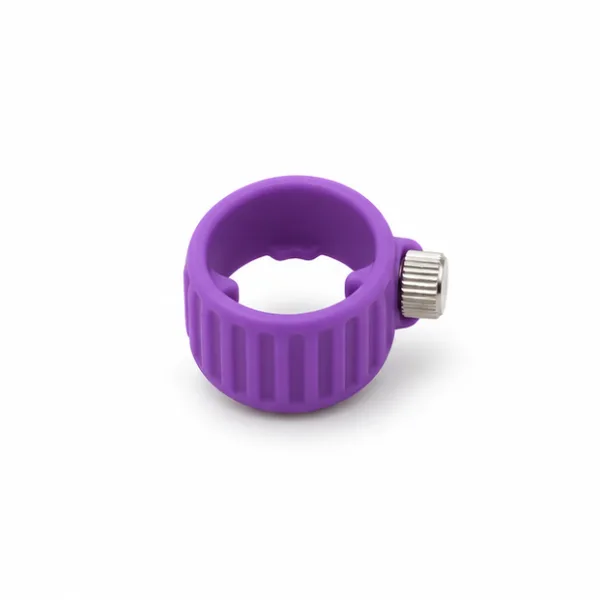
BoniVet bully stick holder, small
Adjustable opening you twist to grip thin to standard sticks, for small and medium dogs
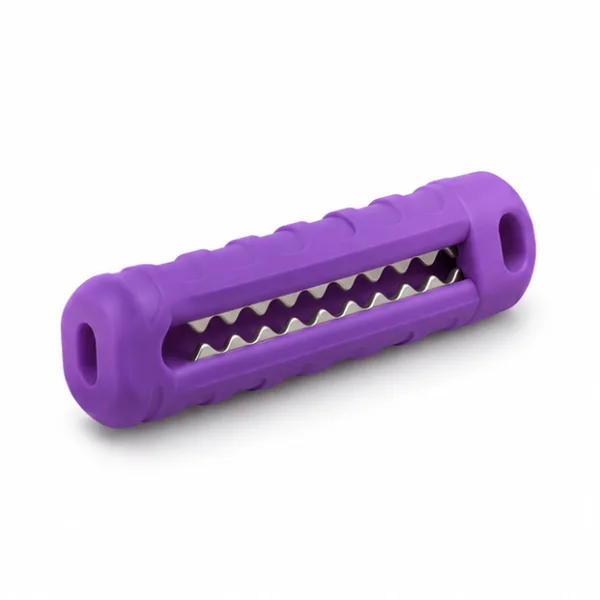
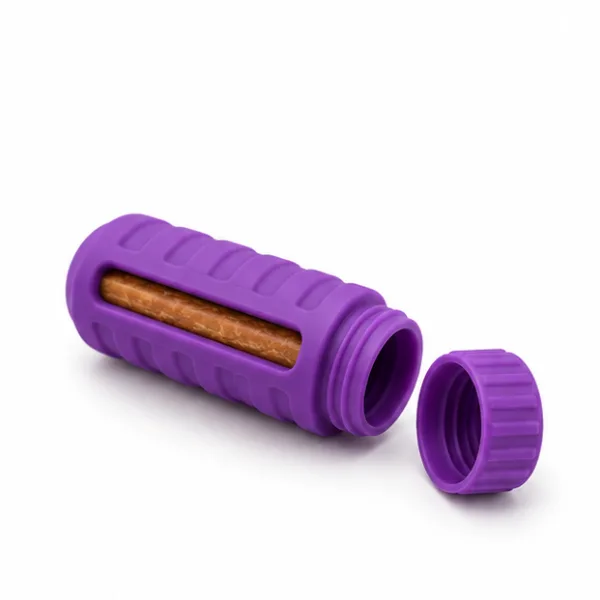
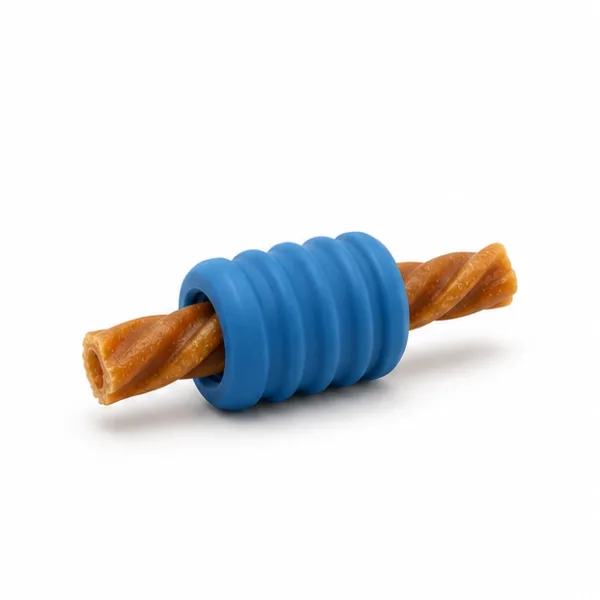
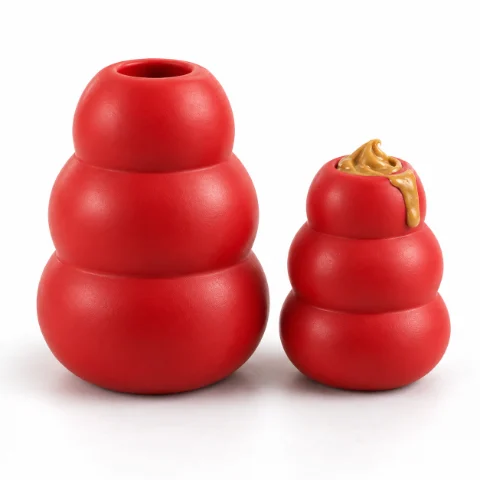
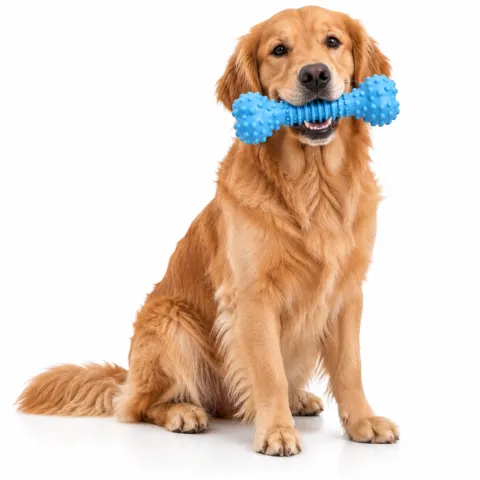
Pictures are illustrations, not the actual products.
A holder is a safety tool, not a licence to leave your dog alone with a chew. Details on each are further down.
Why don't some vets like bully sticks?
Concerns come down to three things: calories that add up fast, a small end piece that can be swallowed, and bacteria. A vet clinic's blog post advised against bully sticks for the calorie and bacteria findings in a small 2013 study. Vets differ, so ask yours about your dog.
Calories. The researchers bought 26 sticks in the US and Canada, tested a sample of them for calories and found 9 to 22 calories per inch. A typical 6-inch stick holds about 88 calories, roughly 9% of a 50 pound (23 kg) dog's daily needs and about 30% of a 10 pound (4.5 kg) dog's (ScienceDaily, page read 2 November 2026).
Bacteria. Of those sticks, one carried C. difficile, one carried MRSA and seven carried E. coli. The authors called the sample small and said a larger study was needed (NBC News). That study can't speak for every brand, but it's why the advice is to wash your hands after handling them, as you would after raw meat. They also advise that very young, elderly, pregnant and immunocompromised people avoid handling raw animal-product treats (ScienceDaily). The vet clinic blog post repeated these findings and advised against them (Suburban Animal Clinic blog, page read 2 November 2026).
The end piece. Once a stick is chewed short, it becomes a slippery piece small enough to gulp, and a swallowed chunk can lodge in the throat or gut. The BoniVet listing describes its holder as a way to stop a dog swallowing the last part of a stick, which is the problem every holder here is built around. Take the stub away whether or not you use a holder.
How many bully sticks can a dog have a day?
Keep all treats, bully sticks included, to about 10% of your dog's daily calories, with complete and balanced food making up the rest. Because one 6-inch stick can blow past that budget for a small dog, many dogs suit a stick now and then rather than every day.
VCA Animal Hospitals gives the 10% rule and warns that treat calories add up fast (VCA Animal Hospitals, page read 2 November 2026). Work out your dog's treats for the day first. Our training treats guide shows how to keep small rewards inside the same budget. If the stick has been given, trim the next meal slightly. That is our reading of the numbers, not a rule from the studies, so ask your vet if your dog is overweight.
VCA also says to add new treats one at a time and slowly. Stop and call your vet if your dog has vomiting or diarrhoea. Dogs with pancreatitis, kidney disease, allergies or a special diet need a vet's go-ahead first.
Our picks in detail
1. BoniVet bully stick holder, small: best overall holder
A holder with an adjustable opening: you twist the two balls to change the length of the gap, slip the stick in and it grips. The listing says the opening goes up to 0.78 x 0.78 inch (about 2 cm) so it takes extra thin to standard sticks, and it suits small and medium dogs. The listing doesn't say what it's made of, so check the pack when it arrives. It says it's not water resistant.
Pros: adjustable for different stick thicknesses; simple twist-to-grip use; small and light at about 0.11 kg
Cons: material isn't stated; not water resistant per the listing; too small for large dogs
Best for: a small or medium dog and a mix of thin and standard sticks
Skip it if: your dog is large, or you want a listing that names its material
2. PetClan Chewise holder for large dogs: best for large dogs
The extra large Chewise, listed as food-grade nylon with stainless steel gripping teeth, for dogs over 70 lbs (about 32 kg). You insert the stick and screw it down, and the listing says it centres the stick. It comes with a travel bag and the description says it's dishwasher safe. The listing also names yak chews and collagen sticks as fits.
The listing's wording is a brand claim, so it's best to check the stick is firmly held before each use. The metal teeth bite into the stick, so supervise and stop if the stick loosens or your dog starts chewing the nylon.
Pros: sized for large and giant dogs; dishwasher safe per the description; steel teeth to grip the stick
Cons: the listing is not clear on age, saying adult dogs while the description mentions teething puppies; metal teeth need checking each time
Best for: large dogs that gulp the last part of a stick
Skip it if: your dog is small, or tries to chew the holder itself
3. Chewise bully stick holder, small: best secure grip
The smaller version of the same design, with stainless steel teeth and a nylon body, listed for dogs under 20 lbs (about 9 kg). The listing says its insert-and-screw mechanism centres the stick, and the description says it's dishwasher safe and comes with a travel bag. It also names yak chews and collagen sticks as fits.
The listing is mixed on size: one line says under 20 lbs, while the details list extra small, small and medium dogs. For a medium dog, measure your sticks and compare with the BoniVet.
Pros: the teeth hold the stick firmly; compact; travel bag included
Cons: conflicting size notes on the listing; metal teeth mean you should check the grip each time
Best for: small dogs and owners who want a firm grip on the stick
Skip it if: your dog is large, or you'd prefer a holder with no metal parts
A soft natural rubber holder that twists onto a thin stick. The listing says it fits sticks about 1/2 inch to just under 3/4 inch wide (roughly 1.3 to 1.9 cm), and is for dogs up to 50 lbs (about 23 kg). You twist the stick fully into the grip, ideally at the thickest part. It says to supervise use.
There are two limits to know about before you buy. The fit range is narrow, so a very thin or very thick stick may not seat well. And natural rubber can be chewed through by a strong chewer, so watch the holder as well as the stick. The listing's name says medium while the size says small, which is another reason to measure.
Pros: soft rubber; twists on without parts to assemble; suits small to medium dogs per the listing
Cons: fits sticks of a narrow width; a strong chewer could damage the rubber; the listing names both small and medium
Best for: small dogs with thin sticks
Skip it if: your dog is a strong chewer who could chew the holder itself, or your sticks are thick
Are bully sticks OK for puppies?
Check the age guidance on the product and ask your vet before giving a puppy a bully stick, because there is no agreed age and puppies vary. Puppies are small, so a stick takes a bigger share of their calories, and young dogs tend to gulp, which makes supervision and a holder even more important. Start with a short, thin stick.
Listings differ. The small Chewise listing says "all life stages", while the large PetClan listing says adult dogs only, so those are the holder's own age notes and they don't tell you whether the stick is right. If your puppy is teething, our puppy teething toys guide covers other options.
Can my dog eat a whole bully stick in one sitting?
A dog can, but it's best not to let them. A whole stick can use a large share of the day's treat calories, and a hungry gulper is more likely to swallow the end. Offer the stick for a set time with you watching, then take it away.
If your dog finishes one fast, switch to a thicker stick or a longer-lasting holder, or give a stick less often. A fast eater can also be given the stick in a holder, which slows access to the last piece. Whatever you choose, take away the last small piece, because choking is the risk with every chew.
Do I need a bully stick holder?
You don't need one, but a holder makes sense for dogs that gulp the end of a stick. It grips the stick so the last part isn't a bite-sized piece. The holder is a safety aid, not a chew itself, and dogs still need watching.
The listings say their holders prevent swallowing the last part of a stick. We read that as a helpful tool rather than a guarantee. Holders also keep a stick off the rug and let you use up a stick you would otherwise throw away, though that is a convenience, not a safety reason. If your dog is a power chewer who tries to chew the holder itself, skip it.
Bully stick holders compared
Details from each Amazon Australia listing, checked on 2 Nov 2026.
We searched Amazon Australia for bully stick holders and shortlisted those that met all of these checks:
Well rated: a strong average rating with plenty of buyer reviews.
No red flags: no pattern of poor reviews, safety complaints or listing problems.
Available on Amazon Australia when we checked.
A stated size range and stick diameter on the listing, so you can match it to your dog and stick.
A named material wherever the listing gives one.
A clear way of gripping the stick.
Cleaning: whether the listing says it can be washed.
These are researched picks, not products we've personally tested. We compared the specifications and features shown on each Amazon Australia listing, checked on 2 Nov 2026. We didn't accept payment from any brand, and no brand saw this page before it was published.
Left out this time: hooves, horns, antlers and nylon chews sold alongside bully sticks, because they fail the thumbnail test, and rawhide.
How to use a bully stick holder safely
Match the holder to your stick, then check the grip before every session. Give the chew somewhere calm, stay in the room, and stop if the holder cracks, the stick loosens or your dog starts to chew the holder.
Match sizes. Measure the stick's thickness and compare it with the listing's range.
Seat the stick firmly. Pull on it gently. If it moves, reseat it.
Supervise. Don't leave your dog alone with a chew, even in a holder.
End on time. Take the chew away after a set time, and bin the last small piece.
Wash up. Wash the holder and your hands. Raw-style treats can carry bacteria, so wash bowls and surfaces too.
Tooth safety and what to skip
A chew should pass the thumbnail test: Cornell's canine health centre says veterinary dentists use it, and if you can't dent the chew with a fingernail it's likely too hard. It also says to avoid antlers, hooves and bones (Cornell Riney Canine Health Center, page read 2 November 2026).
That is why we left out hooves, horns, antlers and nylon bones. Rawhide is a different case: Cornell says some rawhides are safe but always need supervision, and we don't cover it on this page. Our natural dog chews guide compares bully sticks with ears, tendons and fish skins, and lists the hard chews to skip. For tougher toys that suit strong chewers, see our toys for heavy chewers guide. If you'd rather bake your own reward, try our homemade dog biscuits, and check the foods you must never use.
When to see a vet
Call your vet straight away if your dog swallows a large piece of a bully stick or a holder, or is choking, even if they seem fine. PDSA says to contact a vet right away and not to try to make your dog vomit at home. Signs of a blockage can include vomiting, a painful tummy, low energy or less interest in food (PDSA, page read 2 November 2026).
Talk to your vet before giving bully sticks if your dog is overweight, a puppy, or has pancreatitis, kidney disease or allergies. Stop and call if there is vomiting or diarrhoea after a new treat. Wash your hands after handling sticks.
Frequently asked questions
Do bully sticks clean dogs' teeth?
Chewing may help a little, but we found no veterinary source showing bully sticks reduce plaque, and a bully stick isn't a replacement for brushing. For ways to look after teeth, see our dog dental chews guide and how to clean your dog's teeth.
Are bully sticks good for dogs with allergies?
Not always. A bully stick is beef, so it's a poor choice for a dog that reacts to beef, and a single ingredient doesn't make it suitable for every allergy. Ask your vet about your dog's diet before trying a new chew, and introduce it slowly.
Can bully sticks make my dog sick?
They can. The treat is rich and calorie-dense, so a big chew may upset a dog's tummy, and bacteria were found in some of the sticks in a small 2013 study. Stop if there is vomiting or diarrhoea, and call your vet if it continues or your dog seems unwell.
What should I do when the bully stick gets small?
Take it away before your dog can swallow it, and bin it. The last small piece is the one dogs tend to gulp. A holder helps by gripping the stick, but you should still remove what's left once it gets short.
Are bully sticks suitable for small dogs?
Often, in a short, thin stick, because the calories matter more for a small body. A 6-inch stick was about 30% of a 10 pound dog's daily needs in the Tufts figures, so give a small dog a short stick and count it in the treat budget.
Do bully stick holders really work?
A holder grips the stick so the end is harder to swallow, which is the job the listings describe. It isn't a guarantee. Check the stick is held firmly, match the holder to the stick's width, and supervise, because dogs can still chew the holder.
Where can I buy bully sticks in Australia?
Pet shops, supermarkets and Australian treat brands' own websites stock them. When we checked Amazon Australia, genuine single-ingredient sticks were hard to find. Wherever you buy, read the ingredient list and the country of origin on the pack.
Product details from each linked Amazon Australia listing, checked on 2 Nov 2026.
This guide provides general information and isn't a substitute for veterinary advice. If you're concerned about your dog's chewing, teeth or tummy, speak with your vet.