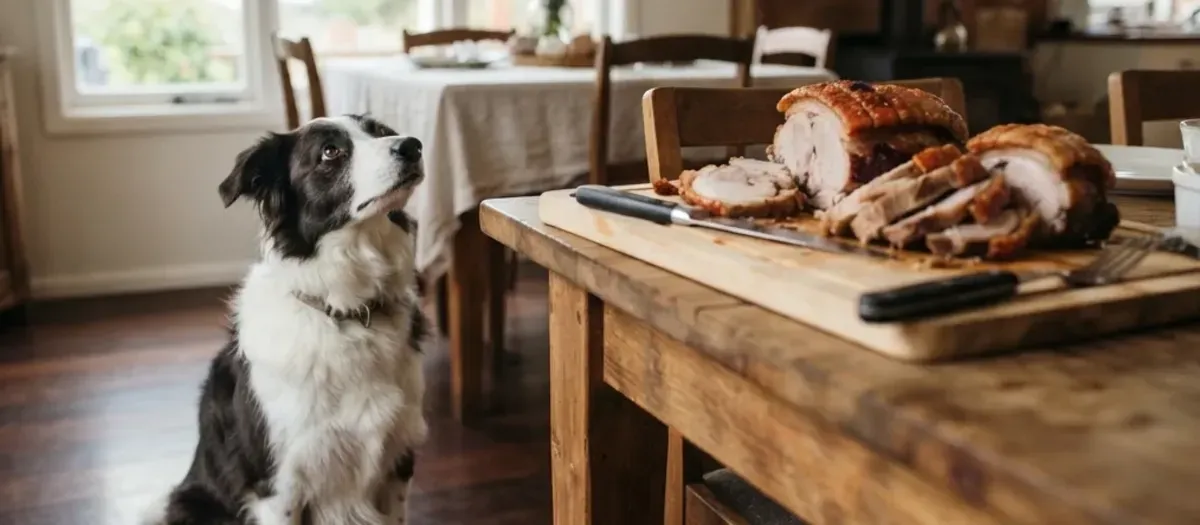
Quick answer: Can dogs eat pork? Yes, in small amounts, if it's plain, lean, boneless and fully cooked. Skip raw pork, bones, crackling, bacon, sausages and anything with rubs, sauces, onion or garlic. Fat and salt are the main problems, and pork should stay inside the 10% treat allowance.
Pork turns up at every barbecue, roast and Christmas lunch, and dogs make sure you know they've noticed. This guide covers which cuts are fine, which aren't (including bacon and crackling), how much is sensible and what to do if your dog raids the platter. If it's cured ham you're wondering about, our ham and Christmas foods guide covers it.
Quick picks
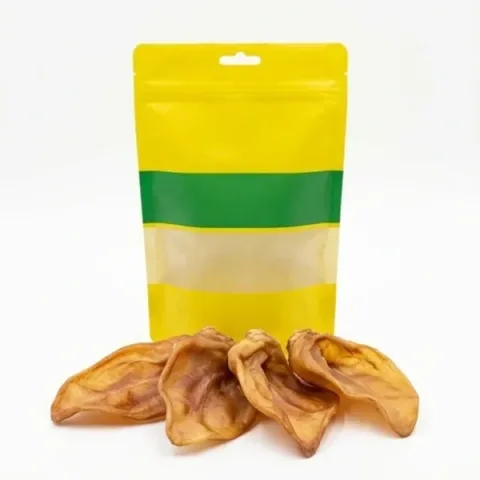
Bow Wow Pigs Ears, 10 pack
Made with only natural pork per the listing; count it inside the 10% allowance
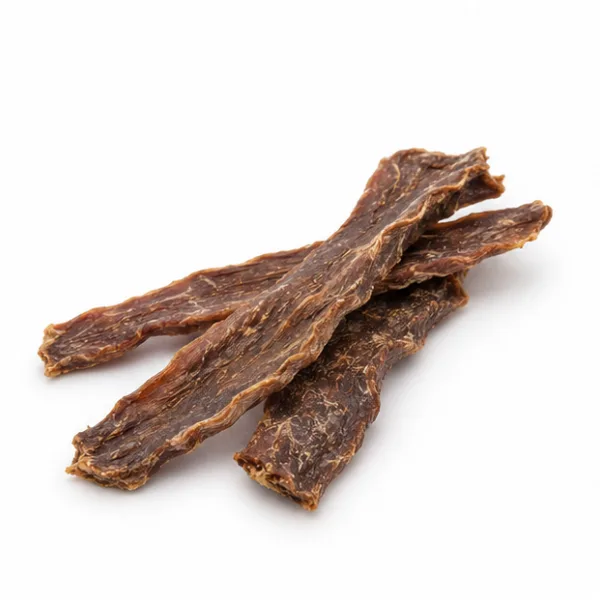
SavourLife Australian lamb strips, 165 g
A made-for-dogs meat treat to share instead of fatty table scraps
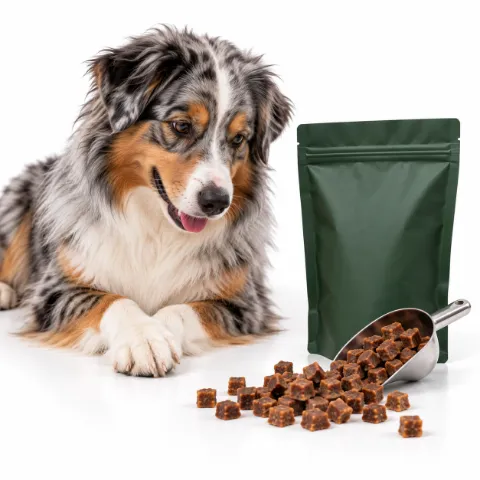
love'em Training Treats, Kangaroo, 400 g x 2
Small rewards that count inside the 10% treat allowance
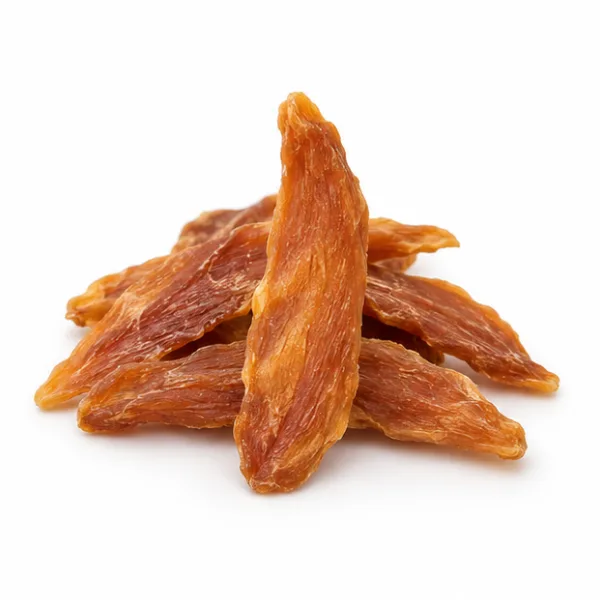
Vita Pet duck tenders
Another made-for-dogs meat treat that keeps scraps off the menu
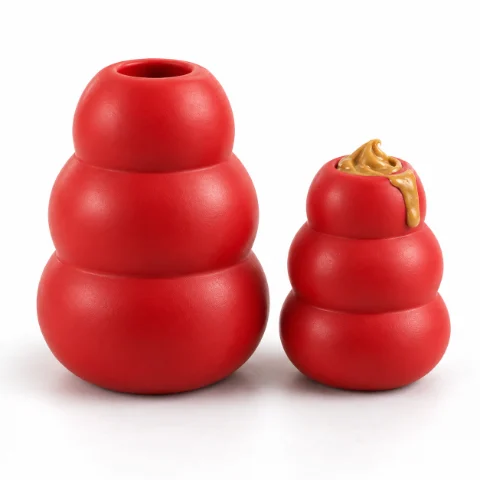
KONG Classic (pick the size for your dog)
Fill with dog-safe food for a slower treat; supervise your dog
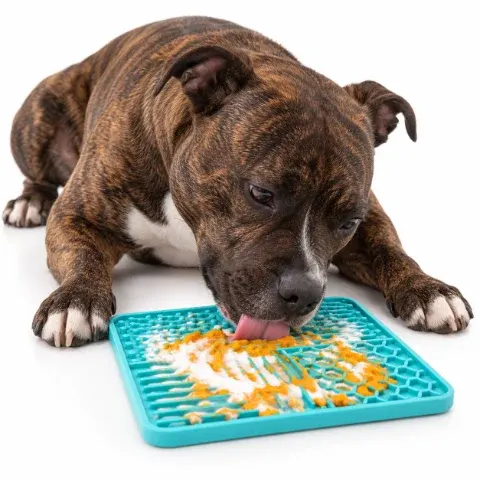
LickiMat Classic Buddy
Spread dog-safe food on it so a treat lasts longer; supervise
SavourLife Australian lamb strips, 165 g
A made-for-dogs meat treat to hand over instead of fatty table scraps.
love'em Training Treats, Kangaroo, 400 g x 2
Small treats suit rewards and sharing at the barbecue without the fat and salt.
Vita Pet duck tenders
Another made-for-dogs meat treat that can stand in for pork scraps.
KONG Classic (pick the size for your dog)
A stuffable rubber toy for dog-safe food, which keeps a dog busy while you eat.
LickiMat Classic Buddy
Spread dog-safe food on the mat for a slow lick instead of begging at the table.
Pictures are illustrations, not the actual products.
More detail is in Useful gear below. Treats of every kind stay inside the 10% allowance, and they don't replace your vet's advice.
Can dogs eat pork?
Yes, plain cooked pork is fine for most healthy dogs in small amounts. Keep it boneless, lean, unseasoned and fully cooked, and offer a little at first to see how your dog copes. Fat, salt and seasonings cause most of the trouble, not the meat itself.
The American Kennel Club says plain cooked pork is generally safe, that pork is rich in a fat dogs find hard to digest, and that any new food should be tried in a small amount first to check for a reaction (AKC, updated 27 April 2026). PetMD, reviewed by a veterinarian, says to feed only plain, unseasoned, boneless, lean, fully cooked pork, and to choose tenderloin or loin and trim the fat (PetMD, updated 11 March 2025).
Treats of every kind should stay under about 10% of your dog's daily calories (VCA Animal Hospitals). Pork on top of a full dinner counts, so shrink the meal a little on the days you share.
Which pork cuts can dogs eat?
Lean loin or tenderloin, cooked plain, is the safest cut. Mince cooked plain is also fine. Shoulder, belly, bacon, sausages, crackling and ribs are fattier, saltier or come with bones. Anything seasoned with onion or garlic is out. The table sorts the usual cuts.
| Pork type | Fat | Salt and seasoning | Bone risk | Verdict |
|---|---|---|---|---|
| Loin or tenderloin, cooked plain | Lower | None if plain | None if boneless | Fine in small pieces |
| Mince, cooked plain, drained | Varies by mince | None if plain | None | Fine in small amounts |
| Shoulder, belly, chops with fat | High | Often rubbed or glazed | Chops may have bone | Trim fat, or skip |
| Bacon | High | Very salty | None | Skip. See can dogs eat bacon? |
| Ham | High | Very salty | Bones | Skip. See our ham guide |
| Sausages | High | Salty, often onion or garlic | None | Skip |
| Crackling and pork rinds | Very high | Salted | None, but hard | Skip. See pork crackling |
| Ribs and pork bones | High | Often sauced | Splinters, cracks teeth | Never |
| Pulled pork, rubs, barbecue sauce | High | Often onion or garlic | Sometimes | Skip |
The AKC says onion powder, garlic powder and nutmeg are highly toxic to dogs, and barbecue sauces are often high in salt and sugar. That is why pulled pork is on the skip list: it usually comes with a rub or sauce, and the onion and garlic hide in both. PetMD says bacon and sausage typically contain lots of salt, and that too much salt can cause salt poisoning and dehydration. Onion, garlic, leek and chives are toxic to dogs and can damage red blood cells. Our toxic foods list has the full detail.
Can dogs eat raw pork in Australia?
No. Raw pork can carry bacteria such as Salmonella and Yersinia, and parasites can be a risk too. Cook it all the way through, with no pink, and let it cool before sharing. Cooked plain is the only way we'd offer pork to a dog.
PetMD says raw pork can carry Salmonella and Yersinia, which cause diarrhoea, nausea and belly pain in dogs and can affect people as well. It also lists the Trichinella roundworm as a risk with raw or undercooked pork. The Merck Veterinary Manual says infection comes from eating larvae in the muscle of infected animals, that naturally infected animals rarely show signs, and that pork should reach 63°C for roasts or 71°C for mince (Merck Veterinary Manual).
Most US pages warn about Trichinella spiralis as if it were everywhere. Animal Health Australia's 2017 disease status page (last modified 14 May 2018) says T. spiralis is not present in Australia, while T. pseudospiralis is present in wildlife (Animal Health Australia). The Merck manual adds that another species, T. papuae, circulates in wild pigs in Australasia. That is an old status page, and it doesn't make raw pork safe: the bacteria are still there, and wild or imported pork is a different story. So we still say cook it.
How much pork can a dog have?
A few small pieces, not a plate. PetMD's guide uses a piece about 1.3 cm across: one piece for the smallest dogs, up to four or five for the biggest. Count it inside the 10% treat allowance, and offer it as a treat, not a meal.
| Dog's weight | Pieces of plain cooked pork (about 1.3 cm each) |
|---|---|
| 0.9 to 4.5 kg | 1 |
| 5 to 9 kg | 1 to 2 |
| 9.5 to 23 kg | 2 to 3 |
| 23 to 41 kg | 3 to 4 |
| 41 kg and over | 4 to 5 |
Table adapted from PetMD (updated 11 March 2025). It's a ceiling for an occasional treat. Start smaller, and stop if your dog gets diarrhoea, as PetMD advises. Dogs with pancreatitis, a sensitive stomach or a vet-prescribed diet should skip pork unless your vet says otherwise.
Can dogs eat pork bones, ribs and chops?
No. Never give cooked bones of any kind: they splinter, choke and can block or pierce the gut. Raw pork bones aren't recommended either, because they can splinter and crack teeth. Cut meat off the bone, and bin the bones where your dog can't reach them.
The AKC says cooked bones dry out, become brittle and splinter, with a choking and injury risk, and that raw bones splinter less often but still can. PetMD says pork bones are brittle, especially when cooked, and that raw bones can crack teeth (PetMD, updated 11 March 2025). That fits our tooth rule, which also rules out antlers, hooves and nylon bones.
After a barbecue, rib bones in the bin or on the lawn are the usual culprit, so lid the bin and check the yard. Call your vet if your dog has swallowed bone, and watch for repeated vomiting, not eating, a sore or swollen belly, straining or no poo, low energy (VCA Animal Hospitals, updated 14 August 2024). Time matters, so call now rather than wait.
Can dogs eat bacon?
Better not. Bacon is very fatty and very salty, so we'd skip it. A dropped rasher is rarely a crisis for a healthy dog, but call your vet if your dog eats a lot of bacon, or any amount if they have had pancreatitis before. There's no set safe amount, so treat bacon as a food to skip, not one to ration.
The AKC says bacon is very fatty and salty and that a large amount can trigger pancreatitis. PetMD says processed pork like bacon is high in salt, which can cause dehydration and salt poisoning, so it advises unprocessed pork only. Fatty food can trigger pancreatitis in some dogs (VCA Animal Hospitals, edited 6 February 2026). Signs can include vomiting, low energy, belly pain, diarrhoea and not eating. See a vet, and our pancreatitis in dogs guide explains the signs and what your vet may do.
Raw bacon. Same answer as raw pork: it can carry bacteria, and it's still very salty. See raw pork above.
Bacon fat and pan grease. Skip it. Tipping the pan juices over dinner adds concentrated fat, and fatty food can trigger pancreatitis in some dogs.
Bacon bits and bacon-flavoured snacks. These bring salt, and some contain onion or garlic powder, which are toxic to dogs. Check the packet before you share.
Can dogs have pork crackling?
No. Crackling is pork skin cooked in its own fat and salted, which makes it very fatty, very salty and hard. The salt rub is part of the problem, not just the fat. Skip it, and keep the carving board out of reach.
PetMD says pork rinds are fried and salted, and higher in fat and sodium than plain pork, and can cause stomach upset or pancreatitis. Because crackling is hard as well, there's no good reason to share it.
At Christmas lunch the glazed ham, turkey skin and cooked bones all land at nose height at once. Cooked bones, including ham, chicken and turkey bones, can splinter, and skin and glaze are fatty and salty, so tell guests that scraps are off the menu. Our Christmas ham guide has a plan for lunch day.
Useful gear
If your dog loves pork, a dried pig's ear is the made-for-dogs version of a pork treat, as long as you count it inside the 10% allowance and skip it for dogs prone to pancreatitis.
- Bow Wow Pigs Ears, 10 pack: the listing says the ears are made with only 100 percent natural pork and no artificial additives. Treat one as an occasional extra, with the amount set by the 10% rule and your dog's size. Our pigs ears guide covers calories and the thumbnail test, and our dog treats guide has other options.
What should I do if my dog ate pork?
For a few plain bites, do nothing but watch. For bones, a lot of fatty meat, or anything with onion or garlic, call your vet or the Animal Poisons Helpline (1300 869 738, 24/7) straight away, don't wait for signs, and don't make your dog vomit at home unless a vet tells you to. Our dog poisoning guide covers what to do in the first hour.
Have your dog's weight, what was eaten, how much and when ready, plus any packaging, and watch for the pancreatitis signs above. Only a vet can say what's behind them.
When to see a vet
Call your vet or the Animal Poisons Helpline (1300 869 738, 24/7) straight away if your dog has swallowed pork bones, eaten a lot of fatty pork, bacon or crackling, or anything seasoned with onion or garlic. Don't wait for signs, and don't make your dog vomit at home unless a vet tells you to.
- Repeated vomiting or diarrhoea
- Not eating, or low energy
- A sore, swollen or hunched belly
- Straining, or no poo
- Choking, gagging or drooling after a bone
The VCA pancreatitis page lists vomiting, diarrhoea, fever, lethargy, belly pain, less appetite and a "praying" posture, and our pancreatitis in dogs guide has more. See our toxic foods list as well.
Frequently asked questions
Can dogs eat raw pork?
No. PetMD says raw pork can carry Salmonella, Yersinia and Trichinella. Australia has no T. spiralis according to a 2017 Animal Health Australia status page, but the bacteria are still a risk, so cook pork all the way through before sharing any with your dog.
Can dogs eat pork bones?
No. Cooked bones splinter, choke and can block or pierce the gut. Raw pork bones aren't recommended either, because PetMD says they can splinter and crack teeth. Pick the meat off, and keep rib and chop bones in a lidded bin.
Can dogs eat bacon fat or grease?
No. Bacon fat is the fattiest part of the rasher, and the AKC says pork fat is hard for dogs to digest and can lead to pancreatitis. Don't pour pan drippings over dinner. Read more in our pancreatitis in dogs guide.
Can dogs eat pork fat trimmings?
Better not. PetMD says to serve lean cuts such as tenderloin or loin and cut off the excess fat, because high-fat pork can contribute to pancreatitis and weight gain. Bin the trimmings from the roast rather than sharing them as a treat.
Can dogs eat pork mince?
Yes, if it's cooked through, plain and drained, with no onion, garlic or sauce. PetMD and the Merck manual say mince should reach 71°C. Give a small spoonful as a treat, and count it towards the 10% allowance.
Can dogs eat pork sausages?
We'd skip them. PetMD says sausage typically contains lots of salt and other seasonings, and snags often include onion or garlic, which are toxic to dogs. Check the packet if your dog steals one, and call your vet if you're unsure.
Can dogs eat pork chops or roast pork?
Only plain lean meat, cut off the bone, with the fat and crackling trimmed. PetMD says shoulder and rib chops are high in fat. Skip glazes, gravy and rubs, and never give the chop bone.
Is pork OK for dogs with a chicken allergy?
Possibly, but ask your vet first. The AKC says pork can trigger allergies in some dogs too, so it isn't automatically safe. Your vet can suggest a proper diet and how to introduce it, instead of trying table scraps.
Related guides
- Can dogs eat ham? Christmas foods and what to avoid
- Pancreatitis in dogs: signs, causes and the recovery diet
- Dog poisoning symptoms: what to do in the first hour
- Pigs ears for dogs: are they safe?
- Best dog treats
- Can dogs eat prawns?
- Can dogs eat cheese?
- Can dogs eat corn?
- Dog diarrhoea and bland diet
- Frozen KONG and lick mat recipes (full toxic foods list)
- All our dog guides
Sources
- American Kennel Club, Can dogs eat pork? updated 27 April 2026, page read 25 November 2026 (https://www.akc.org/expert-advice/nutrition/can-dogs-eat-pork/)
- PetMD, Can dogs eat pork? updated 11 March 2025, reviewed by Molly Price, DVM, page read 25 November 2026 (https://www.petmd.com/dog/nutrition/can-dogs-eat-pork)
- Merck Veterinary Manual, Trichinella spp infections in animals, page read 11 November 2026 (https://www.merckvetmanual.com/generalized-conditions/trichinellosis/trichinellosis-in-animals)
- Animal Health Australia, Australia's status for OIE-listed diseases, 2017, last modified 14 May 2018, page read 11 November 2026 (https://nahis.animalhealthaustralia.com.au/pmwiki/pmwiki.php?n=Factsheet.222-10)
- VCA Animal Hospitals, Pancreatitis in dogs, edited 6 February 2026, page read 11 November 2026 (https://vcahospitals.com/know-your-pet/pancreatitis-in-dogs)
- VCA Animal Hospitals, Dog treats, updated 26 September 2024, page read 11 November 2026 (https://vcahospitals.com/know-your-pet/dog-treats)
- VCA Animal Hospitals, Ingestion of foreign bodies in dogs, updated 14 August 2024, page read 11 November 2026 (https://vcahospitals.com/know-your-pet/ingestion-of-foreign-bodies-in-dogs)
This guide provides general information and isn't a substitute for veterinary advice. If you're concerned about your dog's diet or what they've eaten, speak with your vet.