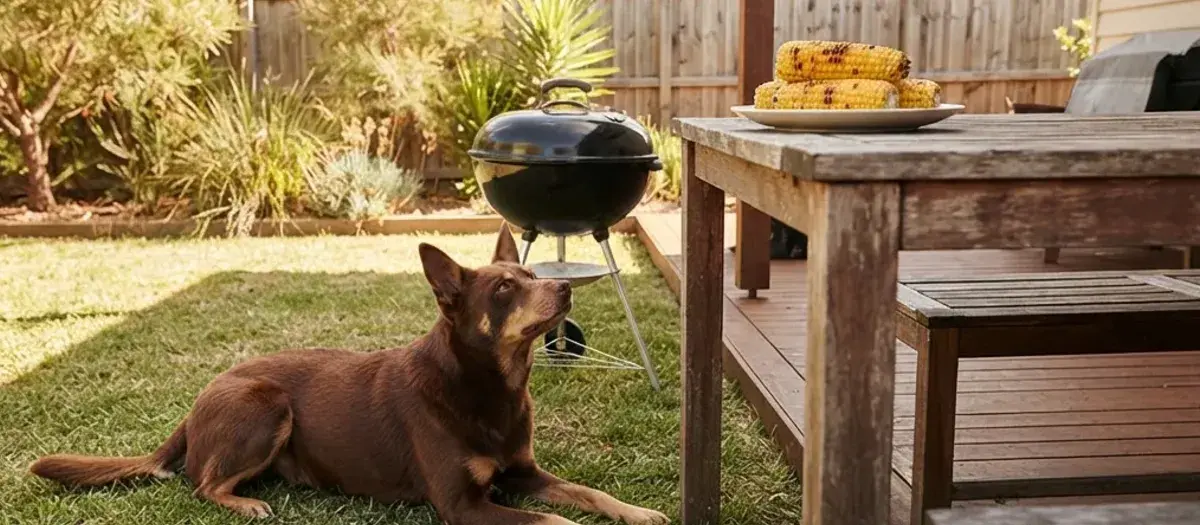
Quick answer: Can dogs eat corn? Plain kernels cut off the cob are fine as an occasional treat in small amounts. The cob is the problem: dogs can swallow big pieces, and a cob can choke or block the gut. If your dog swallowed one, call your vet straight away, even if they seem well.
Corn is a barbecue and backyard staple, so dogs meet it often, and most of the risk comes from the cob and the extras added to it. This guide covers what to do first, why cobs cause trouble, which corn foods are fine and how to stop bin raids. Plain kernels also sit nicely alongside the other veggies in our cucumber guide.
Can dogs eat corn?
Yes, plain kernels off the cob are fine for most healthy dogs as an occasional treat in small amounts. Keep the cob, butter, salt and seasoning away from them. Treats of every kind should stay under about 10% of your dog's daily calories (VCA Animal Hospitals).
The AKC says plain kernels cut off the cob are safe in small amounts as an occasional treat, and that corn can add protein, carbohydrate, linoleic acid, fibre and antioxidants (AKC, updated 16 October 2026). It also advises avoiding buttered corn, because butter and salt add fat and sodium that can upset a dog's stomach, and suggests checking your dog isn't allergic to corn before offering it.
Why is a corn cob dangerous for dogs?
A cob is big, hard and doesn't break down in the gut, so a swallowed piece can lodge in the throat, stomach or intestine. Many dogs gulp large chunks without chewing. A cob that has been through the bin or barbecue smells tempting, which makes it worse.
The AKC says corn on the cob may cause choking or an intestinal blockage, and that many dogs can chew and swallow large sections quickly (AKC). An Australian emergency hospital network describes a Staffordshire Bull Terrier who ate a cob and was well in himself afterwards, yet the piece was too large to pass and could have caused an obstruction later (Animal Referral & Emergency Network, page read 11 November 2026). So a dog who looks fine can still have a cob inside. Cooked cobs, grilled cobs and the bare cob left after the kernels are gone all carry the same risk.
What to do if your dog ate a corn cob
Call your vet or the Animal Poisons Helpline (1300 869 738, 24/7) straight away, don't wait for signs, and don't make your dog vomit at home unless a vet tells you to. Even a dog who seems fine needs advice, because a cob can sit in the stomach before it causes trouble.
Use this checklist while you call:
| Step | What to do |
|---|---|
| What happened | Work out how much cob is missing, whether the kernels came off, when it happened and what was on it (butter, salt, relish). Keep any leftover pieces to show the vet. |
| What to look for | Repeated vomiting, not eating, a sore or swollen belly, straining or no poo, low energy (VCA Animal Hospitals, updated 14 August 2024). Tiredness and dehydration are on the AKC's list too. Time matters, so call now rather than wait. |
| What to tell the vet | Your dog's weight and size, what and when they ate, any vomiting so far, and the butter, onion or other extras. |
| What not to do | Don't wait to see if it passes, don't give human medicines, and don't try to make your dog vomit. The clinic in the case above tried to induce vomiting and it didn't work. |
The AKC's key advice is to contact your vet immediately if your dog swallows a cob (AKC).
What will the vet do about a swallowed corn cob?
A vet will usually ask what happened, examine your dog and take X-rays, sometimes with contrast dye. Depending on where the cob is and how your dog is, options can include endoscopy to retrieve it, or surgery. Your vet decides, and the sooner they see your dog, the more choices there are.
VCA says abdominal X-rays are the usual tool, sometimes several views or a contrast series, and that exploratory surgery is generally advised when an obstruction is diagnosed or suspected, because time is critical when blood supply to the gut is cut off (VCA). In the Australian case above, the cob was removed through endoscopy. That needs a general anaesthetic but is less invasive than surgery, and if it fails the case goes to surgery (Animal Referral & Emergency Network). Whether endoscopy is possible depends on the dog and the object.
Corn foods compared: what's fine and what to skip
Plain kernels off the cob are the simplest form of corn to share. Everything else depends on what's added or how big the pieces are. Salt, butter, sugar and seasoning are the usual problems, so check labels, and keep any treat small and plain.
| Corn food | Verdict | Why |
|---|---|---|
| Plain kernels off the cob | Fine, small amounts | The AKC says plain kernels are safe as an occasional treat |
| Whole corn cob | Never | Can choke or block the gut (AKC) |
| Tinned corn | Only if plain and rinsed | Check the label for salt and added extras |
| Frozen peas and corn | Small amounts if plain | Fine as a topper if there's no seasoning or sauce |
| Creamed corn | Skip | Usually made with added fat, salt and sugar |
| Corn chips | Skip | Salty, oily and often flavoured, so not a sensible treat |
| Corn flakes and corn thins | Skip, or a tiny plain piece | Little benefit, and cereal can be sweetened or salted |
| Buttered or seasoned corn | Skip | The AKC says butter and salt add fat and sodium |
| Corn relish or salsa | Never | Often contains onion or garlic, which can damage red blood cells |
Onion, garlic, leek and chives are toxic to dogs and can damage red blood cells, so corn relish and anything with them is out. See our toxic foods list for the rest.
Can dogs have butter or fatty corn?
Butter on corn adds fat, and rich food can be a problem for some dogs. Fatty food can trigger pancreatitis in some dogs (VCA). Signs can include vomiting, low energy, belly pain, diarrhoea and not eating, so see a vet. A buttered cob tossed to the dog combines both risks.
VCA says pancreatitis may be triggered in some cases by a fatty meal, with signs that include nausea, vomiting, fever, lethargy, abdominal pain, diarrhoea and reduced appetite, and some dogs adopt a "praying position" with front legs down and the back end up (VCA Animal Hospitals, edited 6 February 2026). Plain kernels avoid this.
How do I keep my dog away from corn cobs in summer?
Summer barbecues are when cobs go missing. Keep cobs on a high table, clear plates straight away and put scraps in a bin with a lid that your dog can't open.
Take the bin out after the barbecue, as our ham and Christmas food guide advises for festive scraps. Tell guests and kids not to toss scraps, and give your dog something to do in another room, such as a lick mat or a KONG. If your dog is a gulper, serve kernels a few at a time; a slow feeder bowl slows mealtimes, though it won't stop a cob raid.
Useful guides
We don't recommend a product for this one, because the best protection is a lidded bin, a high table and a close eye on the barbecue. These guides help:
- Can dogs eat ham? Christmas foods dogs can and can't eat: bins, bones and party scraps.
- Our toxic foods list: the full list, including onion and garlic found in corn relish.
- Best slow feeder dog bowls: for dogs who gulp their meals.
When to see a vet
Call your vet or the Animal Poisons Helpline (1300 869 738, 24/7) now if your dog has swallowed any piece of corn cob, even if they seem fine.
- Repeated vomiting or retching
- Not eating, or a dog who is flat and tired
- A sore, swollen or tense belly, or growling when you touch it
- Straining, passing little or no poo, or diarrhoea
- Choking, gagging or drooling after eating corn
Time matters with a blockage, so call now rather than wait. If your dog may have eaten onion, garlic or other foods from the list, say so. See our toxic foods list and ham and Christmas food guide.
Frequently asked questions
Can dogs eat tinned or canned corn?
Only if it's plain, and even then just a few kernels. Tinned corn is often packed with added salt, and the AKC says salt and butter add sodium and fat that can upset a dog's stomach. Check the label, rinse it, and skip any flavoured or creamed tins.
How much sweet corn can a dog have?
There's no set amount we can source, so keep it to a few plain kernels as an occasional treat. Treats of every kind should stay under about 10% of your dog's daily calories (VCA Animal Hospitals). Smaller dogs get less, and your vet can advise on what suits yours.
Can dogs eat corn chips?
It's best to skip them. Corn chips are usually salty, oily and flavoured, so they're not a sensible treat, and one dropped chip is rarely a drama, but a bag is another story. If a dog eats a lot and seems unwell, call your vet. Popcorn is a different food with its own rules, covered in our popcorn guide.
Can dogs eat corn flakes or corn thins?
A tiny plain piece is unlikely to harm a healthy dog, but there's little benefit and cereals are often sweetened or salted. Check the label for added sugar or flavourings. Plain kernels are a better occasional treat than flakes or thins.
Can dogs eat frozen peas and corn?
Yes, in small amounts, as long as they're plain with no butter, sauce or seasoning. Many dogs enjoy a few frozen kernels as a cool summer topper. Pick out anything buttered or flavoured, and keep the portion small.
Can dogs eat creamed corn?
It's better to skip it. Creamed corn is usually made with added fat, salt and sometimes sugar, and rich food can upset the stomach or trigger pancreatitis in some dogs (VCA). Plain kernels are the safer choice for an occasional treat.
Can dogs be allergic to corn?
It's possible, and the AKC suggests checking that your dog isn't allergic before offering corn. If your dog gets itchy skin, ear trouble or an upset stomach after eating it, stop and ask your vet. Our dog itchy skin guide covers common causes.
My dog ate a corn cob but seems fine, do I still need the vet?
Yes, call now. The Australian case above describes a dog who was well in himself after eating a cob, yet the piece was too large to pass and risked a later blockage. Signs can take time to appear, so ask your vet or the Animal Poisons Helpline (1300 869 738, 24/7).
Related guides
- Can dogs eat popcorn?
- Can dogs eat potatoes?
- Can dogs eat ham? Christmas foods dogs can and can't eat
- Foods you must never use: the toxic foods list
- Can dogs eat cucumber?
- Can dogs eat broccoli?
- Can dogs eat sweet potato?
- Can dogs eat tomatoes?
- Can dogs eat pork?
- Best dog treats
- All our dog guides
Sources
- American Kennel Club, Can dogs eat corn? updated 16 October 2026, page read 11 November 2026 (https://www.akc.org/expert-advice/nutrition/can-dogs-eat-corn/)
- VCA Animal Hospitals, Ingestion of foreign bodies in dogs, updated 14 August 2024, page read 11 November 2026 (https://vcahospitals.com/know-your-pet/ingestion-of-foreign-bodies-in-dogs)
- VCA Animal Hospitals, Pancreatitis in dogs, edited 6 February 2026, page read 11 November 2026 (https://vcahospitals.com/know-your-pet/pancreatitis-in-dogs)
- Animal Referral & Emergency Network, Endoscopy for dogs: Chevy's case study, page read 11 November 2026 (https://www.emergencyvet.com.au/resource-centre/specialist-referrals/dog-endoscopy-case-study.html)
- VCA Animal Hospitals, Dog treats, updated 26 September 2024, page read 11 November 2026 (https://vcahospitals.com/know-your-pet/dog-treats)
This guide provides general information and isn't a substitute for veterinary advice. If you're concerned about your dog's diet or what they've eaten, speak with your vet.