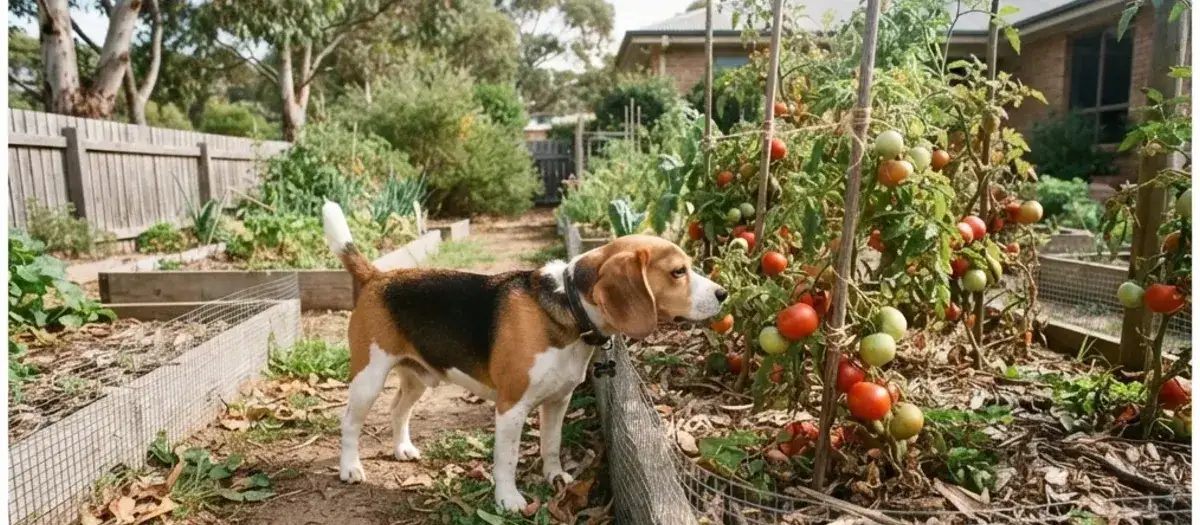
Quick answer: Can dogs eat tomatoes? Yes, when they're ripe, red and given in small amounts. The green parts are the problem: unripe fruit, leaves and stems carry tomatine and solanine. Sauces, ketchup and relish often hide onion, garlic, salt or sugar, so keep those off the menu.
A ripe tomato is an easy occasional snack, but the plant it grows on is a different story, and summer veggie patches put both within reach. This guide covers the plant parts, sauces, how much is fine and what to do if your dog helps themselves in the garden. For the rest of the fruit bowl, see what fruits dogs can eat.
Can dogs eat tomatoes?
Yes, ripe red tomato flesh is non-toxic for dogs and fine as an occasional treat. Remove any green stem or calyx first, cut the fruit small and start with a little. Dogs that are on a special diet should have new foods on their vet's say-so.
The AKC says ripe tomatoes are considered non-toxic to dogs and can be given in moderation, with all green parts removed, the flesh diced and your dog supervised (AKC, updated 4 June 2026). Treats of every kind should stay under about 10% of your dog's daily calories (VCA Animal Hospitals). No source we read gives a gram amount for tomato, so start with a bite-sized piece and watch how your dog reacts.
Which parts of the tomato plant are toxic to dogs?
Only the ripe red fruit is fine to share. Green tomatoes, leaves, vines and stems carry the toxins tomatine and solanine, so keep them away from your dog. Sauces, sun-dried tomatoes and relish are processed foods with their own risks, covered in the table.
The AKC says solanine and tomatine are found mostly in the green parts of the plant, and that unripe fruit, leaves and stems can cause tomatine poisoning. The ASPCA lists the tomato plant as toxic to dogs, cats and horses, names solanine as the toxic principle and says ripe fruit is non-toxic (ASPCA Animal Poison Control, Tomato Plant, page read 11 November 2026).
| Part | OK to share? | Why (named source) | What to do |
|---|---|---|---|
| Ripe red flesh | Yes, small amounts | Non-toxic when ripe (AKC, ASPCA) | Dice small, count as a treat |
| Green, unripe fruit | No | Tomatine and solanine sit mostly in green parts (AKC) | Pick up fallen fruit, don't offer it |
| Leaves and vine | No | Green parts of the plant (AKC); solanine (ASPCA) | Keep dogs off the plants |
| Stems and calyx (the green cap) | No | Green parts (AKC) | Pull off before serving |
| Seeds and skin of ripe fruit | Fine for most dogs | Part of the ripe fruit, which is non-toxic (AKC, ASPCA) | Dice small, offer little |
| Pasta sauce, ketchup, soup | No | Often contain garlic, onions, salt or sugar (AKC) | Skip it |
| Sun-dried tomatoes | Best skipped | Often packed in oil, salty, sometimes with garlic | Skip it; check the label if eaten |
| Relish and chutney | No | Typically sweet, salty and may include onion | Skip it |
The sun-dried and relish rows come from what those products usually contain, not from a named source, so check the label on anything your dog has eaten. Onion, garlic, leek and chives are toxic to dogs and can damage red blood cells; they're on our toxic foods list, and our Christmas foods guide covers the sauces, gravies and relish that come out at barbecue season.
Can dogs eat cooked, cherry or sun-dried tomatoes?
Plain cooked tomato with no onion, garlic, salt or oil is fine in small amounts, and ripe cherry tomatoes are fine cut small. Sun-dried tomatoes are best skipped because they're usually salty, oily and sometimes seasoned with garlic.
The AKC says ripe cherry tomatoes are fine in moderation if cut into small pieces to reduce choking. Whole cherry tomatoes can be a choking risk for small dogs, so halve or quarter them. Home-cooked tomato is only as safe as what's cooked with it, so keep the pan free of onion, garlic and heavy salt.
Is the backyard veggie patch safe for dogs?
Not unless you fence it off. Fallen green fruit, leaves and vines are all within reach of a curious dog in summer. Pick up fallen fruit, keep pots up high and fence the patch so your dog can't snack on the plants.
The AKC advises fencing off gardens so dogs can't reach tomato plants, and keeping indoor or potted plants out of reach where they can't be knocked over. A quick summer checklist:
- Fence or net the veggie patch, or grow tomatoes in raised pots out of reach.
- Pick up fallen fruit every day, ripe or green, so nothing gets scavenged.
- Keep potted plants up high or on a bench, not on the ground.
- Close the compost bin lid, because green tomato scraps and mouldy food are both bad news.
- Pull off stems and leaves in the kitchen and bin them out of reach.
What if my dog ate a tomato plant, and what are the signs?
Call your vet or the Animal Poisons Helpline (1300 869 738, 24/7) straight away, don't wait for signs, and don't make your dog vomit at home unless a vet tells you to. Take a photo of the plant and note how much seems to be missing.
The AKC lists loss of coordination, appetite loss, muscle weakness, drooling, dilated pupils, tremors or seizures, lethargy, abdominal pain, irregular heartbeat, vomiting and diarrhoea. It says tomatine poisoning is rare in dogs and usually isn't fatal, though small dogs and puppies are more at risk because of their size. The ASPCA lists hypersalivation, loss of appetite, severe gastrointestinal upset, depression, weakness, dilated pupils and a slow heart rate.
No source we read gives a safe or dangerous amount of leaf or green fruit, so we can't say how much is too much. If your dog has eaten the plant, call a vet and let them work it out.
Choose by situation
| Your situation | What to do | Our guide |
|---|---|---|
| Dog wants a bite of ripe tomato | A few small, diced pieces, stem off | This page |
| Cherry tomatoes | Ripe only, halved or quartered | This page |
| Dog ate fallen green tomatoes or leaves | Call your vet or the Animal Poisons Helpline | Vet box below |
| Dog licked pasta sauce or ketchup | Check for onion and garlic, call your vet | Toxic foods list |
| Looking for other fruit to share | See safe and unsafe fruits | What fruits can dogs eat? |
| Hot day, want a cool snack | Plain frozen fruit, small pieces | Can dogs eat watermelon? |
Useful guides
No products needed here. If you're looking for more fruit and veg ideas, these guides cover what to share and what to skip.
- What fruits can dogs eat?: the full safe and unsafe list.
- Can dogs eat cucumber?: a low-calorie crunchy snack.
- Frozen KONG and lick mat recipes: dog-safe fillings and the full toxic foods list.
When to see a vet
Call your vet or the Animal Poisons Helpline (1300 869 738, 24/7) if your dog has eaten green tomatoes, leaves, stems or vines, or a sauce that may contain onion or garlic. Don't wait for signs.
- Drooling, vomiting or diarrhoea
- Weakness, wobbliness or loss of coordination
- Tremors or seizures
- Lethargy, loss of appetite or a sore belly
- A slow or irregular heartbeat
Don't make your dog vomit at home unless a vet tells you to, and never give human medicines unless your vet says so. See our toxic foods list.
Frequently asked questions
Can dogs eat cherry tomatoes?
Yes, if they're fully ripe and cut small. The AKC says ripe cherry tomatoes are fine in moderation, and cutting them reduces the choking risk. Halve or quarter them for small dogs, pull off the green stem and keep the portion to a few pieces.
Can dogs eat cooked tomatoes?
Plain cooked tomato is fine in small amounts if it's cooked without onion, garlic, salt or much oil. Most cooked tomato dishes include at least one of those, so it's safest to cook a plain piece separately and keep sauces off your dog's plate.
Can dogs eat tomato sauce, ketchup or pasta sauce?
No. The AKC says tomato sauces, ketchup and pizza sauce often contain garlic, onions, salt or sugar. Onion and garlic can damage red blood cells in dogs. If your dog has eaten some, check the label and call your vet or the Animal Poisons Helpline.
Can dogs eat sun-dried tomatoes?
Best skipped. They're usually salty and often packed in oil, and some are seasoned with garlic. Check the label if your dog has eaten some, and call your vet if garlic or onion is listed. Plain ripe tomato is the simpler choice.
Can dogs eat tomato seeds and skin?
For most dogs, yes. Seeds and skin are part of the ripe fruit, which the AKC and ASPCA describe as non-toxic. Dice the flesh small, remove the green stem and start with a little. The problem is the green parts of the plant, not the seeds.
Are tomato plants in the garden toxic to dogs?
Yes. The ASPCA lists the tomato plant as toxic to dogs, with solanine as the toxic principle, and the AKC says tomatine and solanine are found mostly in the green parts. Fence off the patch, pick up fallen fruit and call a vet if your dog eats the plant.
What are the signs of tomatine poisoning in dogs?
Signs can include drooling, vomiting, diarrhoea, weakness, loss of coordination, tremors and a slow or irregular heartbeat, according to the AKC and ASPCA. The AKC says poisoning is rare and usually isn't fatal. Call your vet if your dog has eaten green parts and seems unwell.
How much tomato can a dog have?
A few small pieces now and then. Treats of every kind should stay under about 10% of your dog's daily calories (VCA). No source we read gives a gram amount for tomato, so start small, watch for tummy upset and ask your vet if your dog is on a special diet.
Related guides
- What fruits can dogs eat?
- Can dogs eat cucumber?
- Can dogs eat watermelon?
- Can dogs eat grapes?
- Can dogs eat ham? Christmas foods dogs can and can't eat
- Can dogs eat peaches?
- Frozen KONG and lick mat recipes
- All our dog guides
Sources
- American Kennel Club, Can Dogs Eat Tomatoes? updated 4 June 2026, page read 11 November 2026 (https://www.akc.org/expert-advice/nutrition/can-dogs-eat-tomatoes/)
- ASPCA Animal Poison Control, Tomato Plant, page read 11 November 2026 (https://www.aspca.org/pet-care/animal-poison-control/toxic-and-non-toxic-plants/tomato-plant)
- VCA Animal Hospitals, Dog treats, updated 26 September 2024, page read 11 November 2026 (https://vcahospitals.com/know-your-pet/dog-treats)
This guide provides general information and isn't a substitute for veterinary advice. If you're concerned about your dog's diet or what they've eaten, speak with your vet.