Best hands-free dog leads: waist leads for running
By Anish PuriUpdated 2 Nov 202613 min readResearched, not tested by us
Research guide. WhiskerFinds may earn a commission from links, at no extra cost to you.
Quick answer: The best hands-free dog lead for most walkers is the TSPRO dual-handle lead, which switches between waist, cross-body and hand-held. Hands-free leads suit calm dogs who walk nicely, and a bungee section softens sudden jerks. Strong pullers and reactive dogs are safer on a well-fitted harness and a hand-held lead.
A hands-free lead lets you walk, jog or push a pram without gripping a strap the whole time. This guide compares four on Amazon Australia and explains who they suit and who they don't. If you're still choosing a standard lead, start with our best dog leads guide.
Quick picks
Our top pickBest overall
TSPRO heavy-duty hands-free lead
Switches between waist, cross-body and hand-held, with two padded handles and a metal clasp
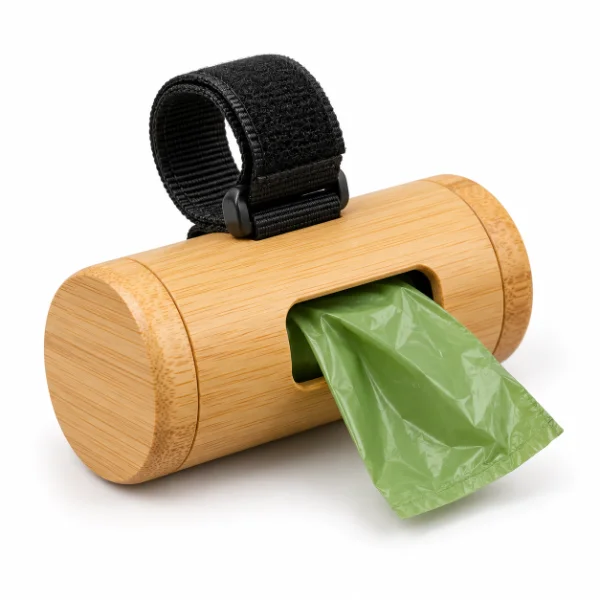
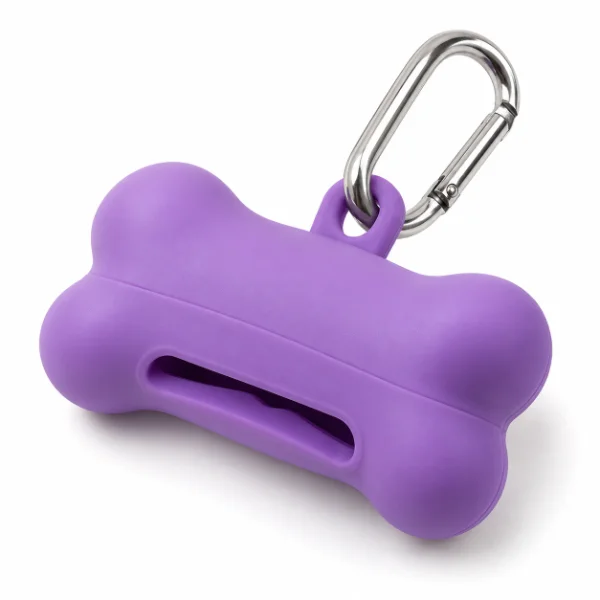
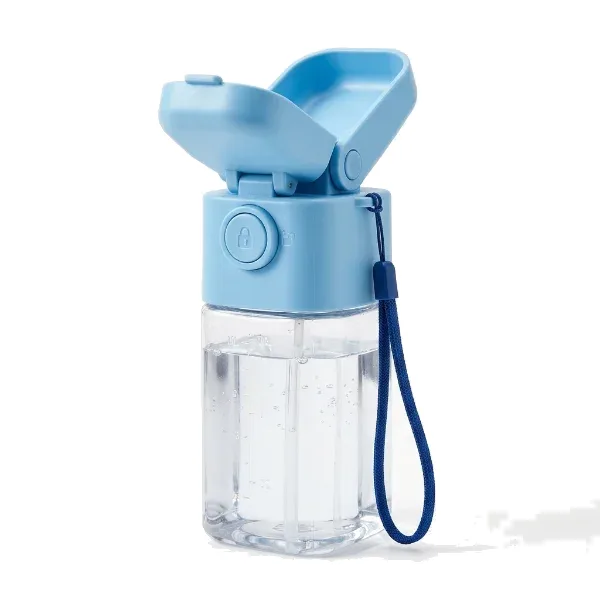
Pictures are illustrations, not the actual products.
All four are tools for a calm walk or jog, not a fix for pulling. For a dog who hauls on the lead, fit a harness first (see our no-pull harness guide).
Are hands-free dog leads safe?
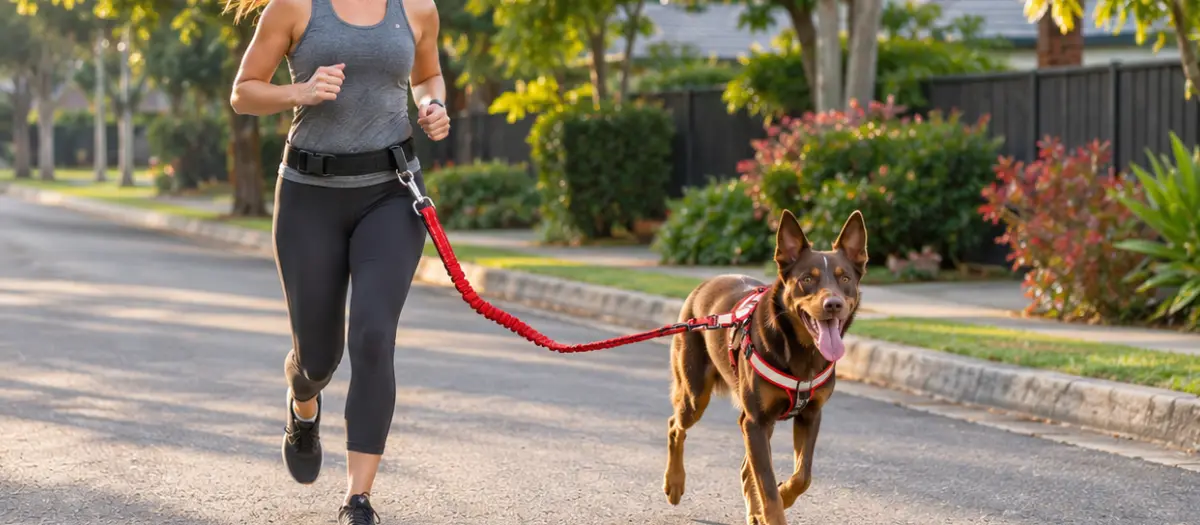
They can be, for the right dog. A hands-free lead is as safe as the dog's manners, the clip and the harness it's attached to. Your dog's pull goes to your hips, so a sudden lunge can pull you off balance. Choose a calm dog, a harness and a lead with a handle for quick control.
Three things matter most. First, clip to a harness for running, not a collar, so a jerk doesn't land on the neck. Second, keep a handle within reach, because you may need to shorten the lead fast near roads or other dogs. Third, never loop a lead around your hand or wrist. Check the clip and stitching before every run, and stop using anything frayed.
Who should not use a hands-free lead?
Skip a hands-free lead if your dog pulls hard, lunges, bolts or reacts to other dogs, bikes or people. A sudden pull on a waist belt can unbalance you, and you can't let go quickly. Use a hand-held lead and a well-fitted harness while you train instead.
That also covers a young puppy still learning to walk beside you. Other dogs to think about carefully are dogs much heavier than you, and dogs who dart after wildlife. If you're unsure, try the lead while holding the handle in your hand, with the belt off, on a quiet street. If your dog stays calm for a few weeks, you can step up to wearing it. Our no-pull harness guide covers the harness side.
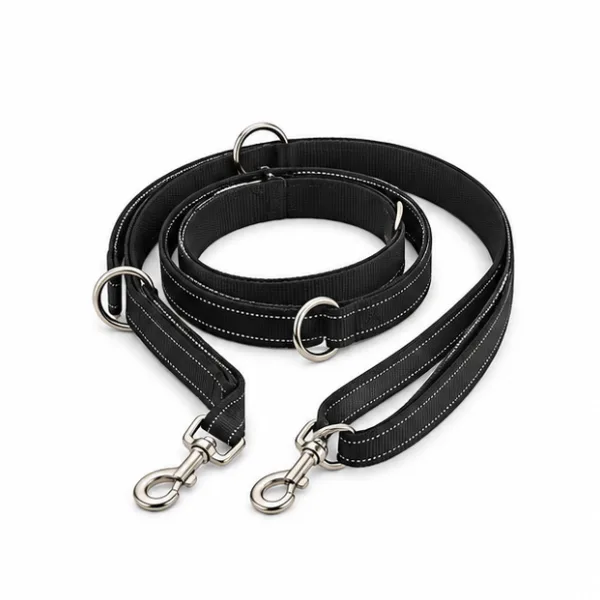
A 180 cm, 2 cm wide lead in nylon and polyester with two padded handles, one near the clip. The listing says it can be worn at the waist, across the body or held in the hand, and it has a rotating springback metal clasp. It's listed for medium to large dogs, and the listing makes a strength claim of 250 kg tensile force, which is the brand's statement.
The listing's own count of modes differs: one place says three, another says five, including tethering to a tree or bench. If you ever tether, stay right beside your dog, clip to a harness, and never use it to leave a dog alone. The listing also says the strap can act as a temporary neck restraint. We'd skip that, and clip to a harness instead.
Pros: three ways to wear it; two padded handles; metal clasp; many colours
Cons: no bungee mentioned, so no stretch to absorb a lunge; no waist size range given; the listing is inconsistent on how many modes it has
Best for: a medium to large dog who walks well and a walker who wants one lead for waist, shoulder and hand
Skip it if: your dog is small, or you want built-in cushioning for jogging
A 2 m double-ended nylon lead with two trigger clips and two handles. The listing says it works in six ways, including hands-free wear and tethering, and weighs 193 g. Treat tethering as a pause with you standing there, on a harness, not a way to leave a dog. Because it has a clip at each end, it can run across your body, or be attached to a harness at two points. It also suits training, and our double dog lead guide covers the two-point idea in more depth.
The listing doesn't give a waist or body size range, and it doesn't mention a bungee section. Read it as a good cross-body or short-handle lead, not a running belt.
Pros: two clips and two handles; light at 193 g; useful for close control near roads
Cons: no bungee mentioned; no size range for wearing it; lead only, with no belt or pockets
Best for: a dog who walks fairly well, plus a walker who wants close control and a cross-body carry
Skip it if: you want a padded running belt, or your dog lunges hard
3. Edipets hands-free jogging lead: best for jogging
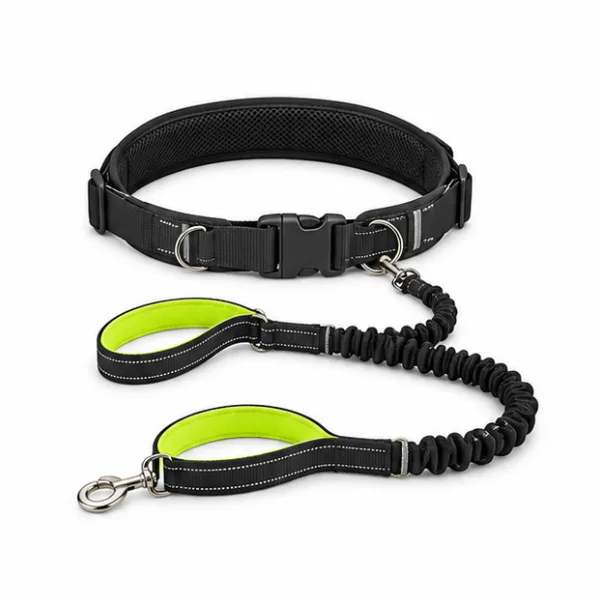
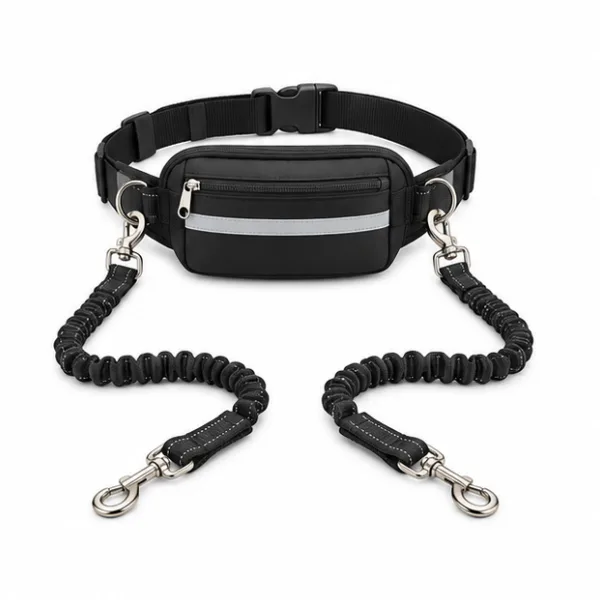
A jogging lead with a belt, a built-in cushioning section the listing calls an anti-thrust system, two handles and two D rings in zinc alloy for clipping the lead to the belt. The listing mentions reflective details, a belt pocket for keys and a phone, and a lead length of 160 to 220 cm.
The limitation is the fit and the stretch. The listing doesn't give a waist range or a dog weight limit, the size field says small although the lead is long, and it says little about how much the cushioning stretches. Most of the listing text is in German.
Pros: cushioning section; two handles; reflective details; pocket on the belt
Cons: no waist size range or dog weight limit given; the size field says small, which looks inconsistent; little detail on how much it stretches; listing text mostly in German
Best for: a calm dog who jogs beside you
Skip it if: your dog pulls hard or lunges, or you need a stated waist size before you buy
4. Shine HAI hands-free lead for two dogs: best for two dogs
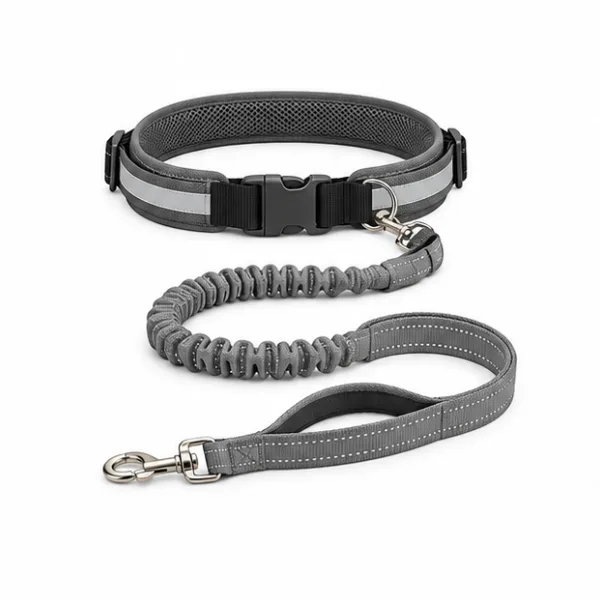
A waist belt with two bungee leads. The listing says the belt fits waists from 33 to 48 inches (about 84 to 122 cm), recommends each dog be under 75 lb (about 34 kg), and says the leads stretch up to 72 inches (about 183 cm). It also describes reflective stitching and a waist bag with a water bottle pocket, two phone pockets and a hole for poo bags. A free collar is listed as a bonus.
Handling two dogs on a waist belt is a lot. It suits two calm dogs who walk well together, and not much else. The title says retractable, while the description talks about bungees, so check the listing before you buy.
Pros: dual bungees; stated waist range; bag with bottle and phone pockets; reflective stitching
Cons: two dogs pulling in different directions can unbalance you; the listing wording is unclear on "retractable"; a waist range that may not suit everyone
Best for: two calm dogs of similar size who walk well together
Skip it if: either dog pulls, lunges or reacts to other dogs
Do I need a bungee section?
For jogging, usually yes. A bungee, or elastic section, softens sudden stops when your pace and your dog's don't match, which spares your back and your dog's shoulders. It also stretches, so it gives you less control. The RSPCA doesn't recommend bungee leads for teaching loose-lead walking, so keep the stretch short and a handle within reach.
Of our four picks, the Edipets and the Shine HAI describe a cushioning section. The TSPRO and Halti listings don't mention one, so there's no stretch in them. The RSPCA knowledgebase says bungee and extendable leads give less control and encourage pulling, so it doesn't recommend them for walking training (RSPCA Knowledgebase, page read 2 November 2026). Our take: a short bungee is a comfort feature for a dog who already jogs calmly beside you, not a tool for a dog who pulls.
Can puppies run with me?
Not for a while. Running puts repeated load on growing bones, so most vets wait until a dog is fully grown. Preventive Vet says most breeds should wait until about 18 months, when the growth plates have closed, and your own vet can say when that is for your dog (Preventive Vet, page read 2 November 2026).
Until then, stick to short, relaxed walks and play, and keep the hands-free lead for steady strolling. Growth timing varies by breed and size, so ask your vet when your dog is ready. Preventive Vet also suggests a vet check before you start running, especially if your dog has arthritis, hip or elbow problems or is overweight. When you do begin, it suggests run-walk intervals, such as one minute running and two minutes walking, and building up slowly.
How hot is too hot to run with my dog?
There's no single safe temperature, because humidity, breed, age, fitness and coat all matter. Running makes a dog work harder than walking, so on warm or humid days skip it. Go early or late, check the footpath with the back of your hand for five seconds, and carry water.
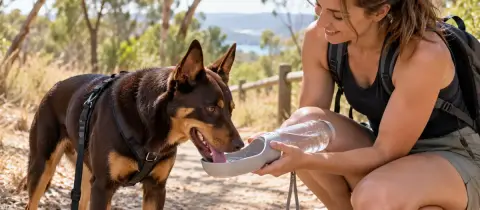
Our summer cooling guide explains why this matters: in a large UK study of vet records, most heatstroke with a known cause followed exercise, not hot cars. Flat-faced breeds, overweight dogs, older dogs, puppies and thick-coated dogs need extra care. Preventive Vet advises against running with flat-faced breeds such as Pugs and bulldogs, especially in warm weather. A dog water bottle makes it easy to offer a drink on the way. If your dog slows, lags, pants hard or won't go on, stop, move to shade and let them cool.
Hands-free dog leads compared
Details from each Amazon Australia listing, checked on 2 Nov 2026.
We searched Amazon Australia for hands-free dog leads, waist leads and running leads, then shortlisted ones that met all of these checks:
Well rated: a strong average rating with plenty of buyer reviews.
No red flags: no pattern of poor reviews, safety complaints or listing problems.
Available on Amazon Australia when we checked.
Belt fit: a belt or strap that adjusts, with a stated size where the listing gives one.
Bungee or not: we note whether the listing describes a cushioning section.
Handles: a handle for quick control near roads and crowds.
Clip: a clip or clasp that suits a harness, per the listing.
These are researched picks, not products we've personally tested. We compared the specifications and features shown on each Amazon Australia listing, checked on 2 Nov 2026. We didn't accept payment from any brand, and no brand saw this page before it was published.
Left out this time: hands-free leads for strong pullers.
How to fit and set up a hands-free lead
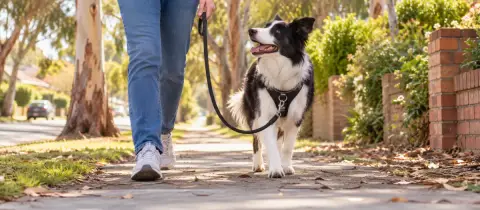
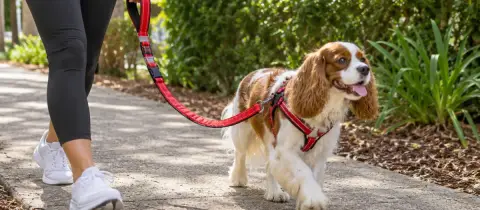
Put the belt on first, snug on your hips, and not tight. Clip the lead to your dog's harness, never a collar, then adjust the length so your dog walks beside you without the lead dragging. A shorter setting suits roads and crowds, a longer one suits quiet paths.
Check the waist range in the listing before you buy, since not every listing gives one. Start on a quiet street with the handle in your hand, then wear it for short walks first. Do a quick check of the clip, stitching and stretch section before each outing. Dogs must be on a lead in public places unless the area is signed off-lead, and rules vary by council, so check yours. Keep it short near roads. Clip a harness for running, never a collar.
Care is simple: rinse off mud, let it dry, and replace anything frayed or stretched out. If your dog chews the lead, stop using it.
When to get help
See your vet before you start running with your dog, especially if your dog is a puppy, is overweight, is older, or has arthritis or hip or elbow problems. Preventive Vet advises a check-up first, and says your vet can confirm when growing bones are ready for running (Preventive Vet, page read 2 November 2026).
Stop and see a vet if your dog limps, struggles to breathe, pants hard and won't stop, staggers or collapses. If a dog pulls, lunges or reacts to other dogs, a qualified, reward-based trainer can help.
Frequently asked questions
What is the best hands-free dog lead?
For most walkers, the TSPRO dual-handle lead is our top pick, because you can wear it at the waist, across the body or in your hand. For jogging with a calm dog, the Edipets adds a cushioning section. For two dogs, the Shine HAI has dual bungees.
Can I run with a hands-free dog lead?
Yes, with a calm dog who runs beside you. Clip to a harness, choose a lead with a cushioning section, and keep a handle within reach. Skip it for dogs that lunge. Go in the cool hours, and see our heat guide.
Is a hands-free lead good for a dog that pulls?
Usually not. A strong pull lands on your hips, and with the lead on your waist you can't drop it if your dog lunges. Use a well-fitted harness and a hand-held lead while you train loose-lead walking. See our no-pull harness guide and dog lead guide.
Where should the lead clip on my dog?
For running, clip to a harness, not a collar. A sudden stop or lunge then spreads across the chest and back rather than the neck. A flat collar with ID is still worth wearing. Our dog collar guide covers tags and registration.
Are retractable leads better for running?
No. A retractable lead gives less control near roads and the cord can wrap around legs or hands. For running, a fixed-length lead with a bungee section is a steadier choice. See our retractable dog lead guide if you still want one for quiet walks.
Can I use one hands-free lead for two dogs?
Yes, with a belt designed for two, like the Shine HAI, if both dogs are calm, similar in size and walk well together on harnesses. Two dogs heading different ways can unbalance you, so start on a quiet path. Our double dog lead guide covers couplers and other options.
How long should a hands-free dog lead be?
Around 1.5 to 2 metres suits most walking, since your dog has room to move without tangling. The picks here run from 160 cm to 220 cm. If you want more room for recall practice, our long dog lead guide covers longer lines.
Product details from each linked Amazon Australia listing, checked on 2 Nov 2026.
This guide provides general information and isn't a substitute for veterinary advice. If you're concerned about your dog's exercise or joints, speak with your vet.