Best dog clothes: which type suits your dog and the weather
By Anish PuriUpdated 19 Nov 202615 min readResearched, not tested by us
Research guide. WhiskerFinds may earn a commission from links, at no extra cost to you.
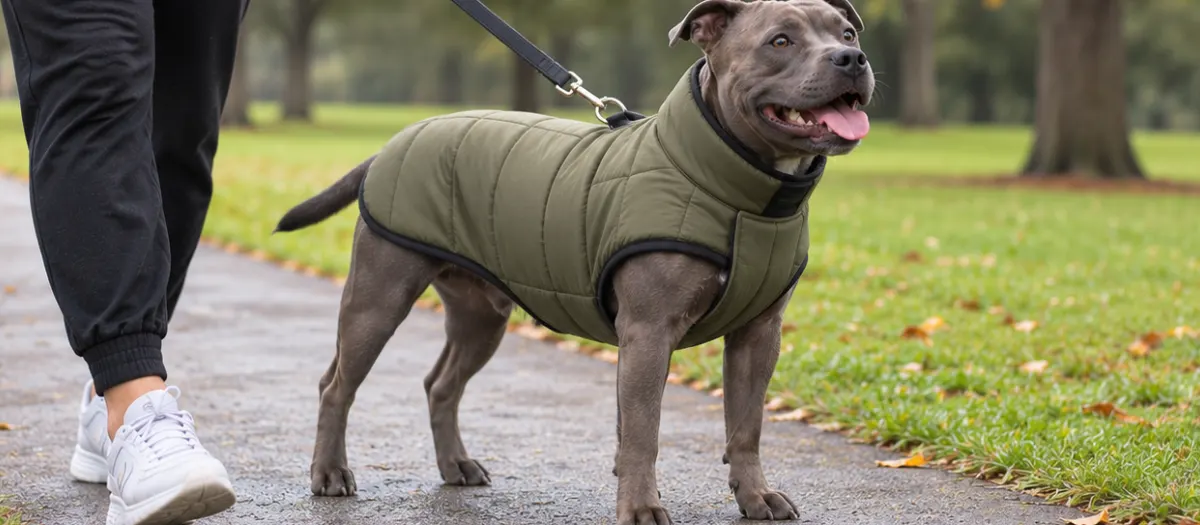
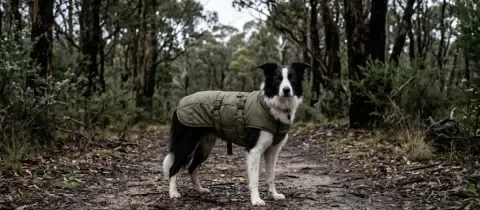
Quick answer: The right dog clothes depend on the type and the weather: a padded coat for cold, wet mornings, a jumper or fleece vest for dry cold, a hoodie for cool evenings and a light tee for mild days. For one warm item, our top pick is the IECOii Extra Warm coat, which has a stated chest range for every size.
Plenty of dogs need no clothes at all, and in a warm Australian summer most need nothing. This guide is for the cooler months, cold mornings in the south and the alpine and tableland areas, and it's published early so it's ready before autumn. It sorts the types by weather and coat, says which dogs may benefit and which overheat, and gives one checked pick per type with sizes in centimetres. Not sure how to measure? Start with how to measure a dog for clothes.
Quick picks
Our top pickBest overall
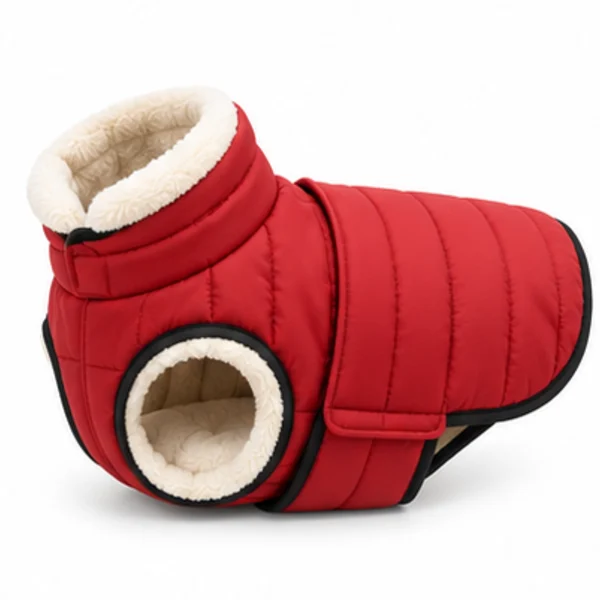
IECOii Extra Warm dog coat, XXL
Padded coat with a chest range stated for every size, S to 4XL
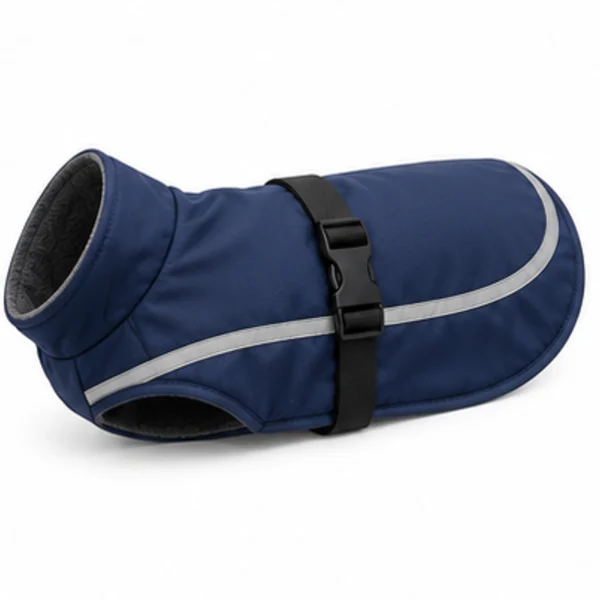
The fullest size run on the page and the only pick with a stated chest range for each size: S 32 to 42 cm, M 42 to 53, L 53 to 62, XL 62 to 76, XXL 76 to 90, XXXL 89 to 105 and 4XL 95 to 135 cm. It has a coral fleece lining, a high collar with a drawstring, a quick-release buckle and adjustable straps at the belly and neck, hidden elastic leg straps and a reflective strip. The listing calls the outer water-resistant, and its lead hole suits most harnesses, says the listing. It's machine washable.
The listing's details field gives a different chest figure for the XXL, so size from the chart, chest first, as the listing advises. This is a colour variant of the padded pick on our dog coats guide, which has the full comparison.
Pros: chest range stated for every size, S to 4XL; belly straps and leg straps; reflective strip; lead hole; machine washable
Cons: the listing is inconsistent between "water-resistant" and "waterproof", so don't expect it to cope with heavy rain; too warm for a dog that overheats easily
Best for: a lean, short-coated or larger dog in a southern winter
Skip it if: your dog overheats easily or you walk in mild weather (a vest or fleece is enough)
2. Mihachi turtleneck cable knit jumper, Medium: best knit jumper
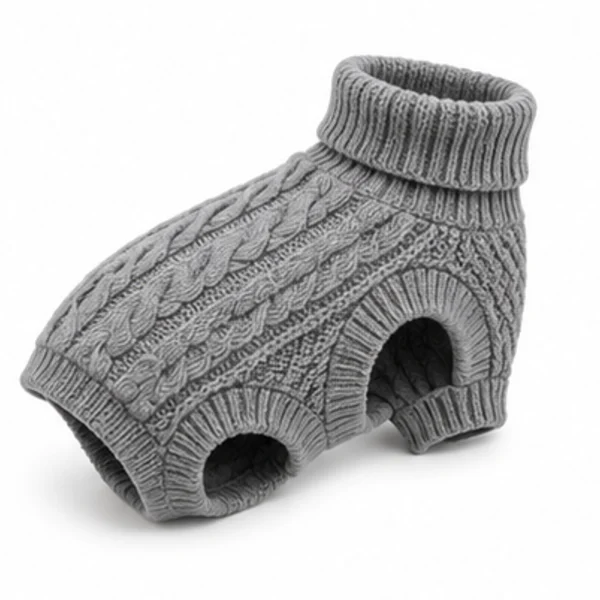
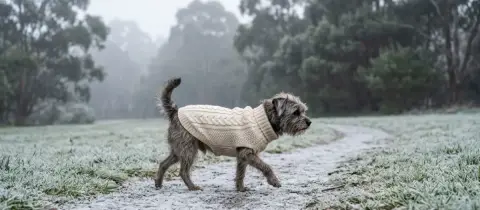
A proper knit rather than fleece. The listing says 100% acrylic, an elastic high collar and a lead hole at the neck, in five sizes and seven colours. The Medium has a back of 40.6 cm (16 in), neck 33 cm (13 in) and chest 56 cm (22 in), and the listing gives a minimum weight of 7.5 kg (16.5 lb). It's the same line as the "best classic knit" on our dog jumpers guide, which has the full comparison.
Pros: lead hole for dogs who walk on a collar; elastic turtleneck; five sizes
Cons: a knit soaks through in rain and has no wind layer, so it suits dry cold only; knitwear can be chewed
Best for: a dog who needs warmth on dry mornings
Skip it if: it rains on your walks or your dog chews knitwear
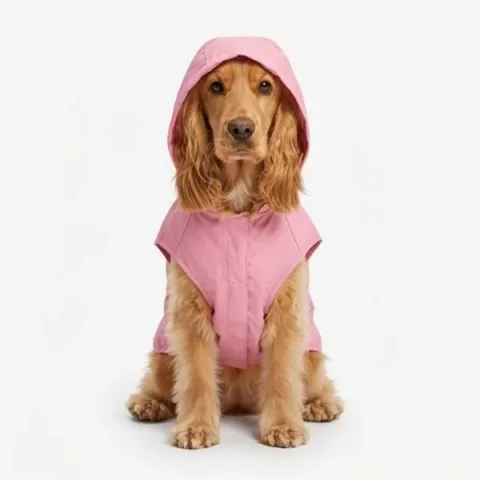
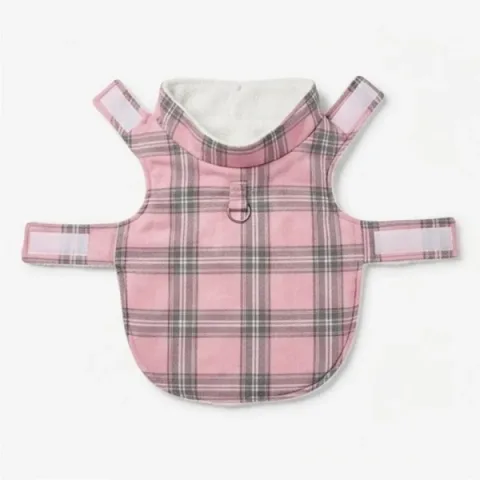
3. EXPAWLORER plaid dog hoodie, Large: best hoodie
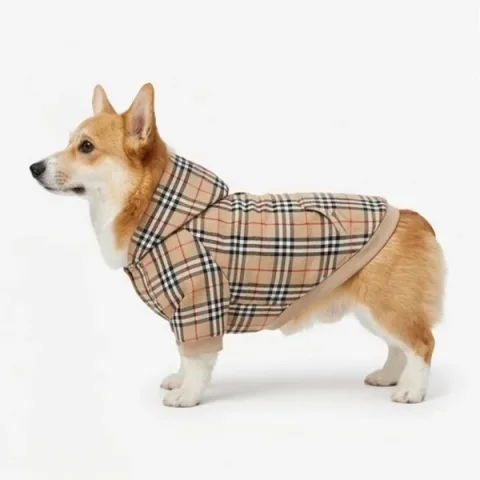
The description calls it a cotton blend, and the listing says machine washable and dryer safe, which makes it the easiest to keep clean here. It has a lead hole and a small back pocket. The Large has a neck of 43 cm (17 in) and chest of 71 cm (28 in), with a minimum weight of 6.8 kg (15 lb). The listing says the sizes fit most dogs and small cats; for a cat, read our cat Christmas outfit guide first, because cats need breakaway and supervised wear. It's also "best with a leash hole" on our dog hoodies guide.
Pros: dryer safe; lead hole; pocket; cool-evening weight
Cons: not warm enough for frost, and a hood can slip over the eyes
Best for: cool evenings and mild days
Skip it if: your dog wears a hood badly (see "Is a hood safe for dogs?" on the hoodies guide)
4. Gooby Padded Vest, Small: best step-in vest for small dogs
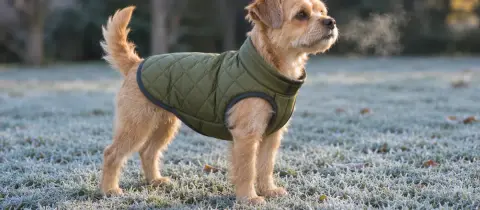
The only step-in here, for small dogs who hate clothes over the head. The listing says a fleece lining, a back zip with a zipper guard, a D-ring on the back, an outer the description calls water resistant, and a cut that lets your dog toilet without soiling it. The Small has a neck of 29 cm (11.5 in) and chest of 40.6 cm (16 in), with a minimum weight of 2.3 kg (5 lb). It's machine washable. More vests, and when a coat is the better buy, are in our dog winter vest guide.
Pros: step-in; zip guard; fleece lining; toilet-friendly cut
Cons: imported, so check the delivery details on Amazon before you order; vests cover less belly than a coat
Best for: a small dog who dislikes pullovers
Skip it if: your dog pulls on the lead (clip the lead to a harness, not the vest ring)
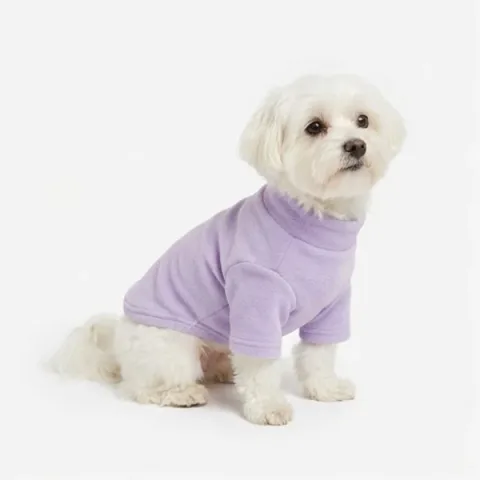
5. Gooby Stretch Fleece Vest, Medium: best light fleece pullover
The simplest, lightest layer here. The listing says a stretch fleece pullover sized by back length, with a neck opening bigger than the head: over the head first, then each front paw. The Medium has a back of 29 cm (11.5 in), neck of 30.5 cm (12 in) and chest of 40.6 cm (16 in). Sizes run up to the 4XL, which the listing says suits dogs over about 45 kg (100 lb), and we use that one on the winter vest guide. This is the top pick on our jumpers guide.
Pros: light and stretchy; wide size run, small dogs to 4XL
Cons: no rain or wind protection; imported, so check the delivery details on Amazon before you order
Best for: indoor warmth and dry walks
Skip it if: you need rain or wind protection
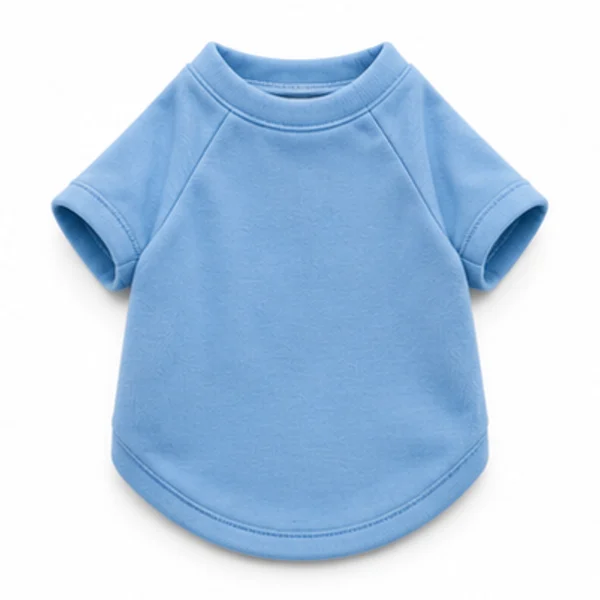
6. HipGirl small dog tee, S: best light tee for mild days
A light layer rather than warmth. The listing says 100% polyester, lightweight and stretchy, a pullover cut for 1.8 to 3.6 kg (4 to 8 lb), a chest of about 35.6 cm (14 in) and a neck of 23.5 cm (9.25 in), with machine wash cold and lay flat to dry. Its main guide is our small dog clothes guide, where it is the light tee pick.
Pros: light; stretchy; easy to put on for toy breeds
Cons: the listing itself says it runs small, so measure and size up; small and toy breeds only; no warmth
Best for: a toy breed on a mild day or indoors
Skip it if: your dog is bigger than a toy or small breed (check the live chart for the larger sizes) or you want warmth
Signs to watch for in clothes are excessive panting, drooling, red gums and wobbliness (PetMD; RSPCA Knowledgebase). If you see them, take the clothing off, move your dog to shade, cool them with room-temperature water and call a vet straight away. VCA says not to cover a hot dog with wet cloths because that can block cooling. In summer, skip clothes and look at our cooling vest guide and keep your dog cool in summer.
How should dog clothes fit, and how long can a dog wear them?
A coat should cover from the neck to the base of the tail and protect the belly, without restricting movement (RSPCA Victoria and RSPCA Queensland). Your dog must still be able to walk, see and toilet normally, and should never be pushed into wearing something that upsets them (RSPCA South Australia). Our five checks:
Neck to tail base covered, belly protected for a coat.
Two fingers fit under the neck opening and the armholes (AKC's method), with no rubbing at the armpits.
Nothing dangling, and not so loose it can tangle (AKC).
No buttons, buckles or small decorations your dog could chew off and swallow (PetMD).
Your dog can still walk, see and toilet.
Measure chest first, then back, then neck, with your dog standing. If you're between sizes, go up, except for a pullover where the neck then sags. The full method is in our measuring guide.
Clothes don't need to stay on all day. RSPCA Queensland says there's no need to keep a coat on indoors because pets can overheat near heaters, and the greyhound page says to take the coat off indoors in a warm house and when your dog runs. Never leave a dog unattended in clothes (PetMD), and wash coats, especially if they've been put away damp (AKC). A ring on a garment is for short walks only. Never use one for a dog that pulls, and never treat it as a restraint. Clip the lead to a harness, and see our no pull harness guide.
Dog clothes compared
Details from each Amazon Australia listing, checked on 18 Nov 2026. Sizes are the one we picked, as the listing states them.
Swipe sideways to see every column
Pick
Type
Fabric
Fastening
Size we read (cm)
Washing
IECOii (XXL)
Padded coat
Coral fleece lining; water-resistant outer
Buckle, adjustable straps at belly and neck, elastic leg straps
Chest 76 to 90, neck 60, back 60; S to 4XL
Machine washable
Mihachi (M)
Knit jumper
100% acrylic
Pullover, elastic collar
Chest 56, neck 33, back 40.6; five sizes
Check the listing
EXPAWLORER (L)
Hoodie
Cotton blend per the description
Pullover, lead hole
Chest 71, neck 43; minimum 6.8 kg
Machine washable, dryer safe
Gooby Padded Vest (S)
Step-in vest
Fleece lining; water-resistant per the description
Step-in, back zip
Chest 40.6, neck 29; minimum 2.3 kg
Machine washable
Gooby Stretch Fleece (M)
Pullover
Stretch fleece
Over the head, then each front paw
Chest 40.6, neck 30.5, back 29; to 4XL
Check the listing
HipGirl tee (S)
Tee
100% polyester
Pullover
Chest about 35.6, neck 23.5; 1.8 to 3.6 kg
Cold wash, lay flat
Mihachi's listing gives a minimum weight of 7.5 kg for the Medium. A "Medium" isn't a standard: our two Medium picks above are a 40.6 cm chest and a 56 cm chest.
Where else can you buy dog clothes?
Pet shops and some vet clinics stock basic coats and jumpers, and clothing boutiques sell fashion pieces. Whatever you buy, measure your dog and compare the chest against the chart rather than trusting the label.
We searched Amazon Australia for dog coats, jumpers, vests, hoodies and tees, then shortlisted those that met all of these checks:
Well rated: a strong average rating with plenty of buyer reviews.
No red flags: no pattern of poor reviews, safety complaints or listing problems.
Available on Amazon Australia when we checked.
One pick per type, so the page compares types rather than near-identical products.
Sizes stated in cm where the listing gives them, with the weight or chest range if it states one.
Fastening and fabric described on the listing.
Where a listing is imported or has a limitation, we say so in the cons. These are researched picks, not products we've personally tested. We compared the specifications and features on each Amazon Australia listing, checked on 18 Nov 2026, and we didn't accept payment from any brand.
Left out this time: colour variants of coats already on our coats guide, a grooming ear wrap sold as a hoodie with health claims, a thin fleece hoodie listing with sizing advice that contradicted itself, and anxiety wraps (see our Thundershirt guide). Raincoats and pyjamas link out instead of a pick.
When to see a vet
Book a vet visit if your dog keeps shivering once warm and dry, or shivers indoors, if an older dog is stiff or reluctant to walk in the cold (RSPCA Victoria and RSPCA Queensland say cold can make arthritis signs worse), if you see rubbed skin, bald patches or sores under straps or armholes, or if your dog's tolerance of the cold suddenly changes. A vet can work out why.
Go to a vet or emergency clinic straight away if your dog is panting heavily, drooling, wobbly or has red gums while dressed. Take the clothing off, move them to shade, cool them with room-temperature water, and don't cover them with wet cloths. See our heatstroke signs and the fit checks in our measuring guide.
Frequently asked questions
Is it cruel to put clothes on a dog?
Not if the clothes fit, your dog is comfortable and there's a reason for them, such as a thin coat on a cold morning. RSPCA South Australia says never to push an animal into wearing something that upsets it, and PetMD says to watch body language. If your dog freezes or lifts paws, take the clothing off.
At what temperature does a dog need a coat in Australia?
There's no single number. The AKC says it varies by dog. RSPCA says below 15°C a coat is essential for a greyhound, and RSPCA NSW gives a dog comfort zone of about 20 to 30°C, varying with age, health and acclimatisation. Wind and rain lower comfort, so watch your dog.
Should dogs wear clothes indoors?
Usually not for long, because a dressed dog can overheat near a heater (RSPCA Queensland, above). A thin fleece or jumper can suit a toy dog in a cool house, but take it off once your dog is warm, and give them a warm bed instead; RSPCA Victoria says indoor pets still need a warm place to sleep.
Can a dog wear clothes to bed?
Our suggestion is no for coats and padded vests, since overheating is the risk. For lighter sleepwear, see "Should dogs wear pyjamas to bed?" on our dog Christmas pyjamas guide, and for a warm bed our dog beds guide.
What dog clothes suit a wet Melbourne or Hobart winter?
A water-resistant coat or a raincoat over a dry layer. VCA says waterproof jackets give the best winter protection. Knits soak through, so keep them for dry days, and dry any coat fully before putting it away (AKC). Our raincoat guide covers hooded and full-cover options.
Do double-coated dogs like huskies, border collies or golden retrievers need clothes?
Huskies and other thick-coated large breeds generally don't, according to the AKC and PetMD. For other double-coated dogs, our view is to watch them: if they're happy and moving, they probably don't need a coat. A senior, clipped or unwell dog may. Ask your vet if you're unsure.
How do I get my dog used to wearing clothes?
Our suggestion is to go slowly: let your dog sniff the garment, put it on indoors for a minute with a treat, then build up. Don't force it, and stop if your dog freezes or looks stressed. Try the lead only once the clothing is no longer a big deal.
How often should dog clothes be washed?
Wash them when they're dirty, and always before storing them away damp. The AKC says coats should be laundered, especially if put away damp. Follow each label: the EXPAWLORER listing says machine washable and dryer safe, the HipGirl tee says cold wash and lay flat, and the IECOii coat says machine washable.
RSPCA South Australia, "Our hot tips for keeping the cold at bay for your pets this winter", 19 June 2019, page read 19 November 2026 (https://www.rspcasa.org.au/?p=43456)
Product details from each linked Amazon Australia listing, checked on 18 Nov 2026.
This guide provides general information and isn't a substitute for veterinary advice. If you're concerned about your dog's comfort, skin or health in the cold, speak with your vet.