Chew Proof Dog Beds: What Lasts, and Why None Is Indestructible
By Anish PuriUpdated 25 Nov 202616 min readResearched, not tested by us
Research guide. WhiskerFinds may earn a commission from links, at no extra cost to you.
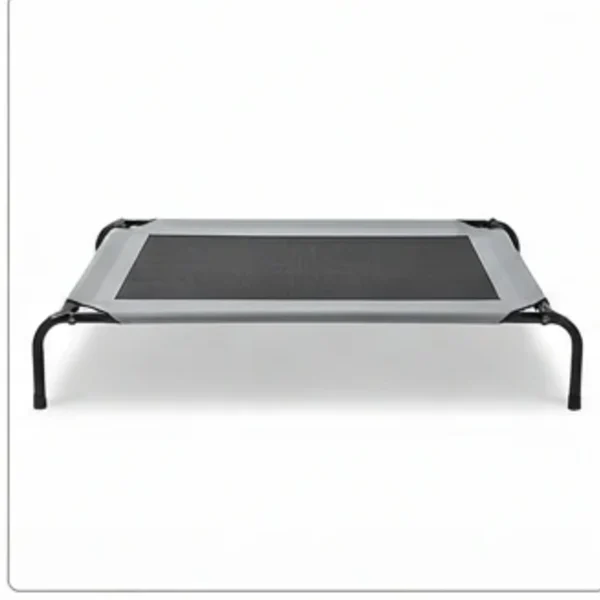
Quick answer: No chew proof dog bed is truly indestructible, and a determined dog can damage any of them. The designs that last longest have no stuffing, zips or loose edges for your dog to grab, which means a metal-framed raised cot or a thin flat crate pad. Our top pick is the Veehoo raised bed.
Illustration, not the actual product
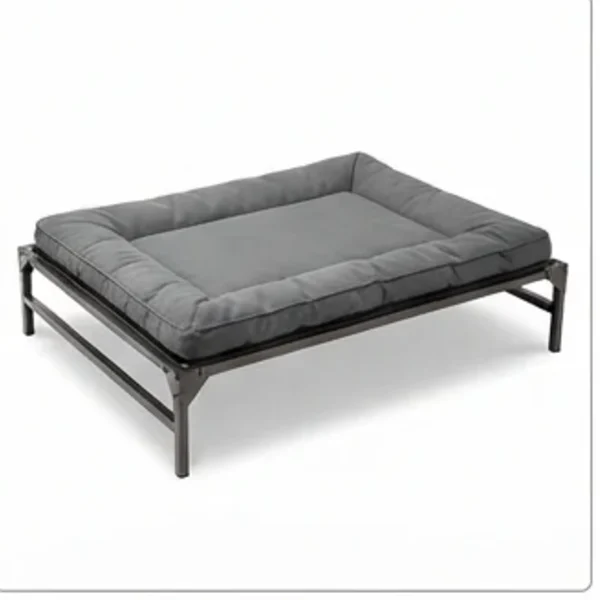
Our top pickVeehoo chew resistant raised bed with padded mat, Large
If your dog has already shredded a few beds, you've probably noticed that "chew proof" and "indestructible" are words on listings, not promises. This guide compares five beds on Amazon Australia by size in centimetres, weight limit, frame and surface, and shows which dog each one suits. It also covers why dogs chew beds in the first place, because a tougher bed manages the damage but doesn't fix the cause. For that side, see why dogs chew their bed.
Quick picks
Our top pickBest overall
Veehoo chew resistant raised bed with padded mat, Large
Metal frame encases every edge, padded mat, listing says it holds up to 68 kg
Pictures are illustrations, not the actual products.
Is any dog bed really chew proof?
No. Every bed on this page is made of fabric, mesh or filling, and a dog that works at one spot with enough time can get through any of them. Brands use "chew proof" and "indestructible" as listing words, so we only repeat them as the listing's claim, never as ours.
What you can do is pick a design that removes what dogs grab. Plush beds give a dog stuffing, seams, zips and soft edges to tug. A raised cot hides its edges inside a metal frame and leaves only a taut surface. A thin crate pad has no loose filling to pull out. That's the whole idea, and it's why the picks below are cots and flat pads rather than cushioned beds.
It also advises against punishing chewing, because that can create more problems. Instead it suggests exercise and mental stimulation, safe chews under supervision, rewarding your dog for chewing approved items, and restricting access to things you don't want chewed.
A bored or under-exercised dog usually needs more walks, sniffing time and food puzzles. Check the signs in is my dog bored.
A dog that chews when left alone, with distress, may be dealing with separation-related stress. A tougher bed won't treat that. See our separation anxiety guide and talk to your vet.
A new puppy that chews at night may settle better with a comfort aid, and our heartbeat puppy toy guide explains what those can and can't do.
The most useful mix of toughness and comfort here. The listing says the metal frame encases every edge, with reinforced corners, so there's no soft edge to grab, and the 900D fabric surface is waterproof. It's 104 x 69 x 18 cm and 3.6 kg, and the listing says it holds up to 68 kg. The feet come off, so it fits a wire crate, and the care notes say machine wash, spot clean, or hose down and wipe dry. The maker gives a 1 year warranty.
A Medium (89 x 56 x 18 cm, 3.1 kg, same 68 kg limit) is on its own listing: Veehoo Medium. It's the same bed in a smaller size, so check both against your dog.
The mat is still fabric and PP cotton, so this bed is tougher than a plush bed, not chew proof. The listing also makes joint-health claims we haven't repeated; if your dog has sore joints, our older dog bed guide is the place to start.
Pros: metal frame covers the edges; padded mat; stated 68 kg limit; removable feet for a crate; washable mat
Cons: needs screws and the supplied hex tool to assemble; the mat is fabric and filling that a dog can still tear; newer listing with a short record
Best for: medium and large dogs that shred soft beds but still want some padding; one bed for crate, pen and yard
Skip it if: your dog swallows fabric or stuffing, or you want tool-free assembly
2. FXW TitanNest raised mesh cot: best tool-free setup
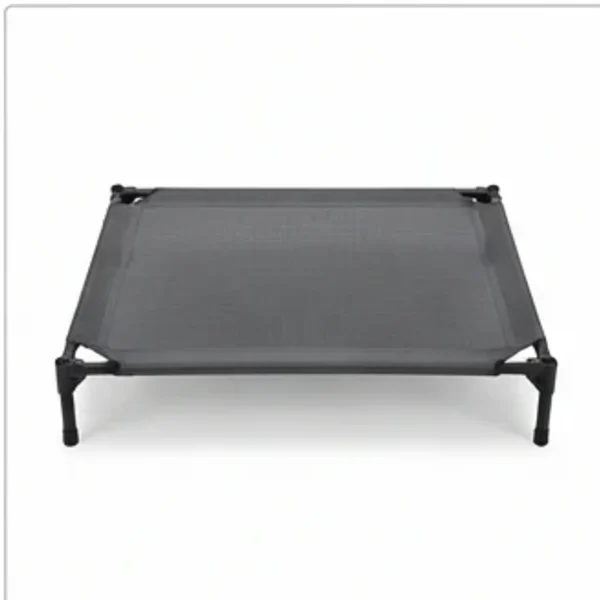
A taut mesh sling on a metal frame with nothing to pull out. The size field gives 104 x 68.4 x 12.7 cm, 2.6 kg, and the listing says it supports up to 75 kg, the highest limit here. It has non-slip feet, and the listing says it sets up in about 90 seconds with no tools. The maker gives a 1 year warranty.
The title says "for medium dogs", yet the bed is over a metre long, so go by the centimetre size. The frame material is described three ways in the listing (steel, reinforced aluminium and aluminium polyester), so we only say metal frame. The listing's own Q and A says it suits aggressive chewers; that's the brand's claim, not ours.
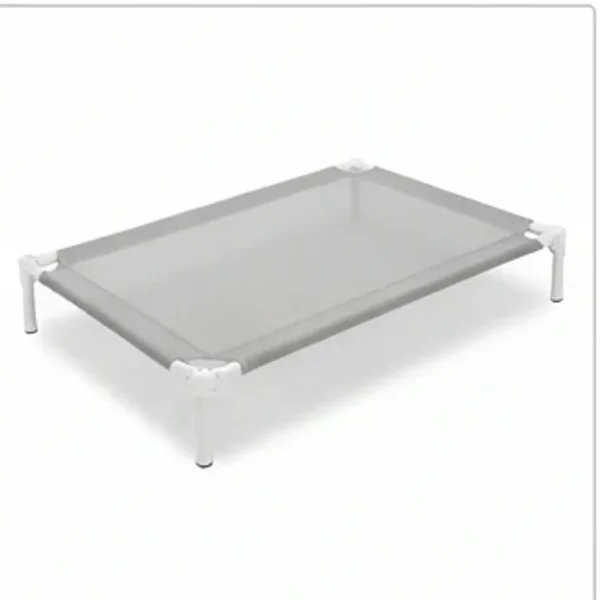
A plain cot with a metal frame and Textilene mesh. The listing gives 90 x 65 x 20 cm, U-shaped steel legs, a maximum load of 60 kg and no screws, and says to rinse it with tap water. It's for indoor and outdoor use.
The listing only says "chew resistant" in the title, and a mesh surface can still be torn by a dog that picks at one spot. It's the simplest and most budget-friendly cot here, with the smallest sleeping area of the three large cots.
Pros: no screws; rinses clean; metal frame with steel legs; stated 60 kg limit
Cons: the listing only says "chew resistant"; mesh can be torn if a dog works at one spot; care is spot clean or rinse, not machine wash
Best for: owners who want a plain, no-screw raised bed that rinses clean
Skip it if: you need the largest sleeping area, or your dog chews metal legs and mesh rather than stuffing
4. Wedeuo chew resistant crate pad, 35 x 22 in: best crate pad
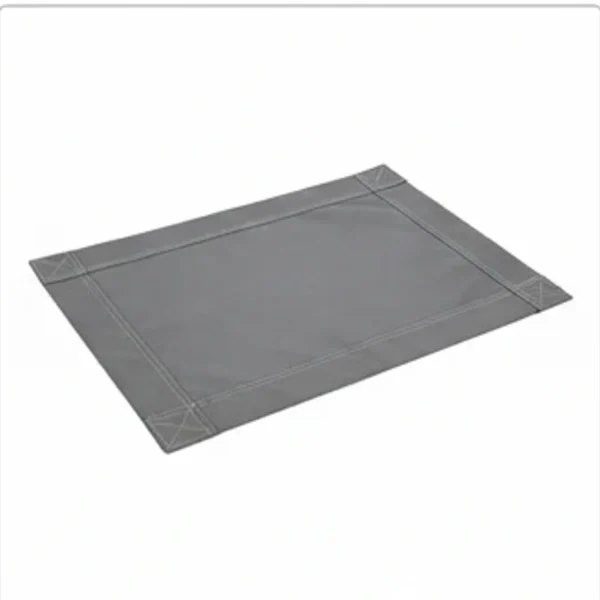
The thinnest option, which is the point. The listing says two outer layers around a felt core, no foam filling, waterproof layers on both sides, machine washable and foldable. The Medium is 88.9 x 55.9 x 1.4 cm. Measure your crate tray before you order.
It's still fabric, so check it for holes and frayed edges, and take it away if your dog starts pulling threads. At 1.4 cm thick it gives little cushioning, so it isn't for an older or arthritic dog.
Pros: no foam filling; two waterproof layers; machine washable; folds flat
Cons: thin felt core means little comfort alone; still fabric; newer listing with a short record; the listing lists no weight limit
Best for: crate-trained dogs and teething puppies that pull stuffing from plush crate beds
Skip it if: your dog is older, bony or arthritic and needs real cushioning
5. RRPETHOME raised cot with sloped headrest: best for outdoor lounging
The least tough pick here. The listing says Teslin mesh on a metal frame, raised off the ground, with a sloped headrest, and that you can wash the mesh with tap water, a hose or a damp towel. It's best used on a verandah or by the pool.
The stated limit is 65 lb, about 29 kg, far lower than the other cots. The listing also gives its size three different ways, so we haven't printed one: check the size on the live listing before you order. Treat it as a lounger for a lighter dog, not a bed for a determined chewer.
Pros: sloped headrest; mesh drains and dries; metal frame; hose clean
Cons: weight limit of about 29 kg is far lower than the other cots; the listing's size figures disagree; the care field says hand wash only, so no machine washing
Best for: lighter dogs that like a head rest, used on a verandah or by the pool
Skip it if: your dog is over about 29 kg or is a determined chewer
Which bed designs last longest?
Raised cots last longest because the surface is taut mesh or fabric over a metal frame, with nothing to pull out and the edges tucked inside the frame. Thin crate pads come second because there is no stuffing. Soft foam and plush beds are the first to go, so we left them out. If chewing isn't the problem and you just want a raised bed, see our elevated dog bed guide.
Even the better designs have weak points. A dog that chews metal legs, picks at mesh or digs at one corner can still do damage.
Chew resistant beds compared
Details from each Amazon Australia listing, checked on 25 Nov 2026. "Not stated" means the listing doesn't say. Listings sometimes give the outer frame size, not the sleeping surface, so allow for that.
Swipe sideways to see every column
Bed
Type
Size (cm)
Stated weight limit
Frame
Surface
How it cleans
Veehoo Large
Raised cot, padded mat
104 x 69 x 18
68 kg
Metal, edges encased
900D fabric, PP cotton fill
Machine wash or spot clean mat; hose and wipe
Veehoo Medium
Raised cot, padded mat
89 x 56 x 18
68 kg
Metal, edges encased
900D fabric, PP cotton fill
Same as Large
FXW TitanNest
Raised cot, mesh
104 x 68.4 x 12.7
75 kg
Metal (the listing is inconsistent on steel or aluminium)
Breathable mesh
Not stated beyond "a breeze to clean"
FAYDUDU XL
Raised cot, mesh
90 x 65 x 20
60 kg
Metal, U-shaped steel legs
Textilene mesh
Rinse or spot clean
Wedeuo Medium
Flat crate pad
88.9 x 55.9 x 1.4
Not stated
None
Polyester, felt core
Machine wash
RRPETHOME
Raised cot, sloped headrest
Check the listing, the figures disagree
About 29 kg (65 lb)
Metal
Teslin mesh
Hand wash, hose or damp cloth
What size and weight limit do you need?
Pick the bed by your dog's lying-down length and weight, not the breed word on the listing. Measure your dog stretched out or curled, from nose to base of tail, then add a little. For a raised cot, leave some margin under the stated weight limit, because a limit is a ceiling, not a target.
Swipe sideways to see every column
Dog weight
Cots that state a suitable limit
Notes
Under 29 kg
All raised picks
RRPETHOME's limit is about 29 kg, so it suits only the lightest end
29 to 60 kg
Veehoo, FXW, FAYDUDU
Check the sleeping area against your dog's length
60 to 68 kg
Veehoo, FXW
Veehoo's listing says up to 68 kg
68 to 75 kg
FXW only
The listing says it supports up to 75 kg
Over 75 kg
None here
None of these beds states a limit that high
For a crate pad, measure the crate's floor tray first. The Wedeuo is 88.9 x 55.9 cm, so it fits a crate floor of about that size or a little larger. Our dog crate bed guide goes deeper on pad sizes.
Choose by situation
Swipe sideways to see every column
Your situation
What to look for
Our pick
Teething puppy in a crate
A thin pad with no stuffing, supervised, plus approved chews
For a dog that eats what it chews, no bed on this page is the answer. Use a bare surface such as the crate tray or a bare floor, supervise, and talk to your vet about why it's happening.
How do you introduce a new bed safely?
Supervise the first sessions, because a bed that's new to your dog is the one most likely to get chewed. RSPCA Australia's advice is to restrict access to items you don't want chewed and to give approved chews while you supervise.
Put the bed down for short supervised periods at first, with a chew nearby.
Redirect to the chew rather than scolding, as RSPCA Australia advises against punishment.
Check the bed every day for the first week, then weekly, for holes, frayed edges and loose threads.
Retire the bed if the surface is broken, and take the filling away from your dog if any comes out.
Don't leave a new bed with a dog that is known to eat fabric.
Where else can you buy a chew resistant bed?
Pet shops and some hardware and department stores sell raised cots, usually in a few sizes, and vet clinics can advise on a type for your dog. Wherever you buy, check the stated weight limit and the sleeping size in centimetres, because they vary a lot between cots.
How we chose
We searched Amazon Australia for chew resistant, indestructible and tough dog beds, then shortlisted those that met all of these checks:
Well rated: a strong average rating with plenty of buyer reviews.
No red flags: no pattern of poor reviews, safety complaints or listing problems.
Available on Amazon Australia when we checked.
No loose stuffing as the main surface, so plush and foam beds were out.
Size in centimetres and a weight limit stated on the listing where it's a cot.
How it cleans described on the listing.
Where a listing is newer, imported or contradicts itself, we say so in the cons. These are researched picks, not products we've personally tested. We compared the specifications and features on each Amazon Australia listing, checked on 25 Nov 2026, and we didn't accept payment from any brand.
Left out this time: foam-filled crate pads (foam is what chewers pull out and swallow), a mat with rigid plastic plates sewn into the corners, a blanket sold as a bed, soft foam sofa beds, and plush donut beds.
When to see a vet
Go to a vet or emergency clinic straight away if your dog has swallowed stuffing, foam, fabric or mesh and is vomiting repeatedly, off their food, has a sore or swollen belly, is straining, or isn't passing droppings. A swallowed piece can cause a blockage.
Book a vet visit if chewing starts suddenly in an adult dog, or if your dog chews with distress when left alone. A vet can check for a health cause and point you to a behaviour consult. Our separation anxiety guide and chewing bed guide cover the patterns.
Frequently asked questions
Is there such a thing as an indestructible dog bed?
No. Listings use the word, but a determined dog can get through any fabric, mesh or filling. The beds that last longest remove what dogs grab, with no stuffing, zips or loose edges, which is why raised cots and thin crate pads suit chewers better than plush beds.
What is the toughest type of dog bed for a chewer?
A metal-framed raised cot with a taut surface is the toughest type we found, because the frame hides the edges and there's no filling to pull out. A thin flat crate pad comes next. A dog that chews metal or mesh can still damage either, so supervise at first.
Are raised dog beds safe for dogs that chew?
They can be, with supervision. A raised cot has no stuffing, but mesh or fabric can still be picked apart and swallowed. Check it often for holes and frayed edges, retire it if damaged, and see a vet at once if your dog has swallowed any material.
Can I use a chew resistant bed in a crate?
Yes, if it fits. A thin pad like the Wedeuo suits a crate floor, and the Veehoo's feet can be removed to fit a wire crate. Measure the crate tray first, and make sure your dog can still stand up and turn around, as our crate guide explains.
Does a chew proof bed help with separation anxiety?
No. A tougher bed protects the bed, not your dog's stress. Separation-related chewing needs training, routine and sometimes a vet or behaviour professional. Enrichment gear is a tool within that plan, not a treatment. See our separation anxiety guide.
How often should I check a chew resistant bed?
Check it daily for the first week, then weekly: look for holes, loose threads, frayed edges and exposed filling. Retire it as soon as the surface is broken, since pieces your dog can swallow are the main risk. Wash it as the care notes say.
Which dogs should not use these beds?
Dogs that swallow fabric or stuffing shouldn't have fabric beds unsupervised, and the thin crate pad isn't suited to older or arthritic dogs that need cushioning. A dog over the stated weight limit shouldn't use a cot. For sore joints, see our older dog bed guide.
Product details from each linked Amazon Australia listing, checked on 25 Nov 2026.
This guide provides general information and isn't a substitute for veterinary advice. If you're concerned about your dog's chewing or health, speak with your vet.