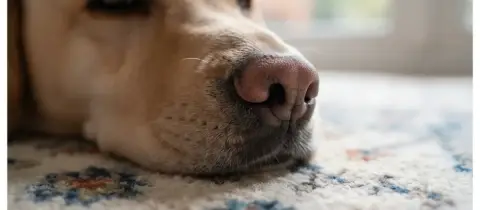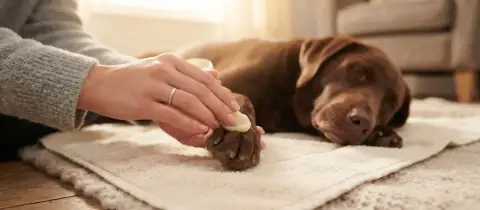
Quick answer: A dog's dry nose on its own is usually normal. Noses can dry out after a sleep, in dry air or in the sun, and a dry or warm nose isn't a reliable sign of illness. See your vet if the nose is cracked, crusty, bleeding, losing colour or sore, or if your dog also seems unwell.
Most dry noses are nothing to worry about, but a few are the first sign of a skin problem. This guide helps you tell which is which, covers what's safe to put on a dry nose, and lists the signs that mean a vet visit. If the dryness is on the paws too, our dog paw balm guide covers pads.
Quick picks
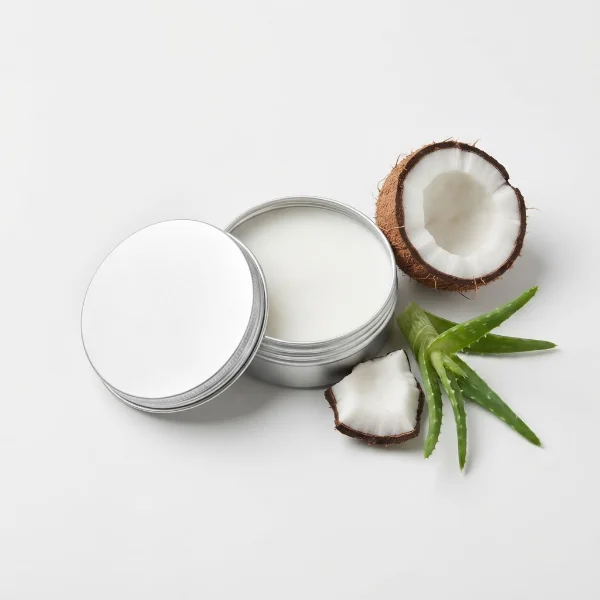
PawSono lick-safe paw and nose balm with coconut oil
Made for dogs, so a thin layer is less of a worry if licked. Softens dry skin only.
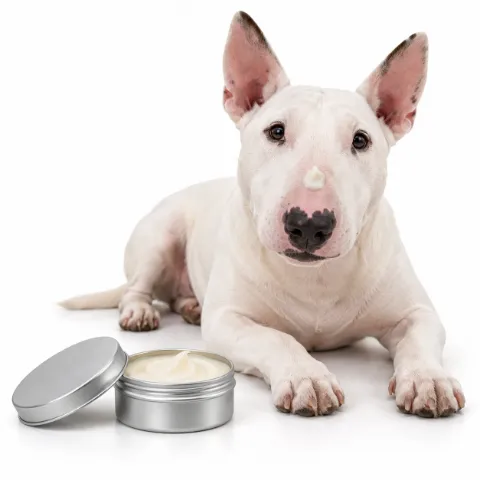
Noseprint Pet Sun Protection Balm (30 ml)
Made for pets rather than people, handy for pale or pink noses on sunny days.
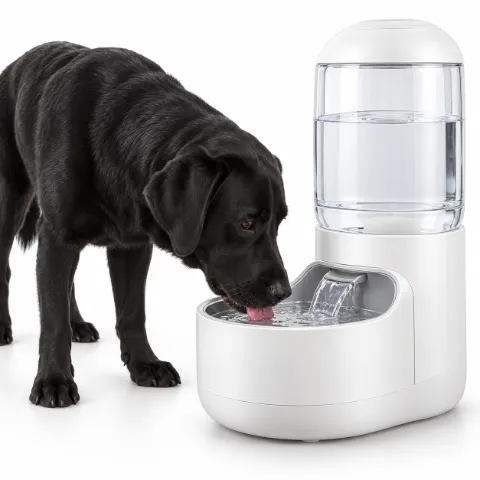
PETLIBRO Capsule Dog Water Fountain, 8 L
Moving water can tempt dogs that ignore a still bowl to drink more.
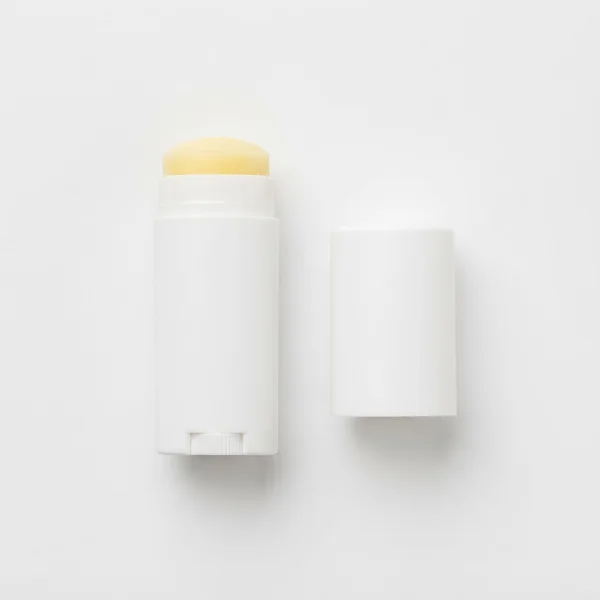
Amoyan dog paw balm stick, 68 g
A twist-up stick for rough paw pads. It softens dry skin only.
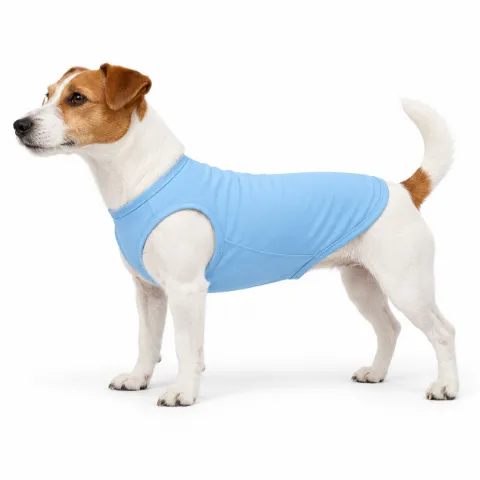
Goldpaw Dog Sun Shirt (UPF 50+)
Covers the back and chest with no licking risk, sized by back length.
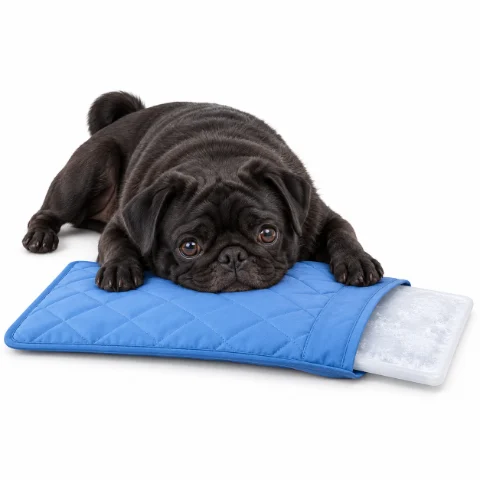
CoolerDog Hydro Cooling Mat (Mini)
A freezable ice sheet plus water cushion; our summer guide covers hot days.
A lick-safe paw and nose balm
Made for dogs, so a thin layer on a dry nose or rough paw pads is less of a worry if it gets licked.
A pet sun protection balm
Handy for pale or pink noses on sunny days, and made for pets rather than people.
A large dog water fountain
Moving water can tempt dogs that ignore a still bowl to drink more.
A mess-free paw balm stick
A twist-up stick with no tub to dip into, for rough paw pads.
A UPF sun shirt
Covers the back and chest with no licking risk, for dogs that spend time in the sun.
A freezable cooling mat
An ice sheet plus water cushion for a cool place to lie on hot days.
Pictures are illustrations, not the actual products.
The "You may also like" cards at the end of the row cover the rest. These soften or protect; they don't treat a skin condition, so see your vet for anything cracked, crusty or changing colour.
Is a dry nose a sign my dog is sick?
Usually not. A dry nose can be perfectly normal, and a warm, dry nose isn't a reliable sign of illness or fever on its own. What matters more is the pattern: how long the dryness has lasted, how the nose looks, and whether your dog is acting like themselves.
PetMD's vet authors say a dry nose may be perfectly normal and that sleeping dogs often have warm, dry noses. They also note that nose moisture shifts with humidity and the time of day (PetMD, Dr Sandra C. Mitchell, 31 August 2021). A wet nose doesn't rule illness out either: a dog with the flu can have a warm, dry nose or a wet, runny one (PetMD, Dr Sarah Wooten, 19 February 2018).
If the nose looks normal apart from being dry and your dog is eating, playing and drinking as usual, offer fresh water and keep watching. A dry nose together with low energy, poor appetite or other changes is worth a call to your vet.
Why is my dog's nose dry when they wake up?
Dogs keep their noses damp partly by licking them, and a sleeping dog isn't licking. A dry nose after a nap is common, and it often looks moister again once your dog is up and about.
Glands inside the nose make a thin, watery fluid that reaches the surface, and licking tops it up. PetMD's vet author says nose pads and footpads are the only places dogs sweat, so the damp nose also helps with cooling (PetMD, Mitchell, 2021). Some dogs simply lick their noses less, which can leave them drier all day (PetMD, Wooten, 2018).
Dry air from a heater or air conditioner can leave a nose drier too, as nose moisture changes with humidity. Moving the bed away from the vent is a cheap thing to try.
Why is my dog's nose dry and cracked or crusty?
A nose that is cracked or crusty is more than ordinary dryness. It can be consistent with sun damage, a skin condition, or an immune-related problem, and only a vet can work out which. The change from "a bit dry" to "cracked, crusty or changing colour" is the point to book a visit.
Here's what the sources describe:
- Sun. Sunburn can peel and crack the nose, especially on dogs with pink skin (PetMD, Wooten, 2018). The Merck Veterinary Manual says nasal solar dermatitis starts on the unpigmented skin around the nostrils, is probably rare, can be mistaken for lupus, and gets worse in summer (Merck Veterinary Manual, pet owner version, Dr Stephen D. White, updated September 2024).
- Immune-related conditions. Merck says discoid lupus can make the nose lose pigment and turn red, with ulcers possible later, and that pemphigus often crusts the muzzle, sometimes with oozing. PetMD says lupus and pemphigus can change the nose surface, causing dryness, cracking and bleeding, and that a vet diagnoses them with tests that can include a biopsy.
- Face shape. PetMD says flat-faced breeds such as Pugs and Bulldogs may not be able to lick their noses well, which can lead to a crusty, cracked nose. Our French Bulldog guide covers other care for the breed.
- Keratin build-up. Vets use the word hyperkeratosis for an overgrowth of keratin, the protein in the outer skin. PetMD names it as a common cause of dry, cracked paw pads in older dogs (PetMD, Dr Barri J. Morrison, 14 November 2024). On the nose, the MSD Veterinary Manual describes frond-like growths on the top of the nose in older dogs, and says they aren't painful and usually need no treatment (MSD Veterinary Manual, "Nasal Dermatoses of Dogs", updated September 2024). Your vet can confirm whether that is what you're seeing.
- Other causes. Merck says many conditions can change the nose, including infection and mites, and that vets use skin scrapings, cultures and biopsies to find the cause.
What kind of dry nose is this?
This table is our own way of sorting what you see. It isn't a diagnosis, because several conditions look alike.
| What you see | What it may be more consistent with | What to do |
|---|---|---|
| Dry but smooth, normal colour, dog well | Sleep, dry air, less licking | Offer water and keep watching |
| Dry after sun, pale or pink nose looks red or peeling | Sun exposure | Shade, ask your vet about a sunscreen made for dogs, vet if it doesn't settle |
| Thick crust that keeps coming back, or deep cracks | Needs a cause found | Vet visit |
| Black nose fading to pink or grey, or a changed surface | Pigment loss, which Merck lists with lupus | Vet visit |
| Sores, ulcers, bleeding or oozing | Skin or immune condition | Vet visit soon |
| Dry nose plus tiredness, not eating, vomiting or fever | Whole-body illness | Call your vet the same day |
What can I put on my dog's dry nose?
For simple dryness, a thin layer of a balm made for dogs is the usual choice. A balm softens dry skin and is a comfort tool. It doesn't treat lupus, pemphigus, infection or sunburn, so a nose that isn't improving needs a vet, not a different balm.
PetMD's vet author says moisturising butters and wax balms can be used on the nose and elbows as well as paws, and that products should be made for dogs (PetMD, Morrison, 2024). Because your dog will lick it, use a very thin layer and distract them with a short walk or a chew for a few minutes. PetMD's other page advises against over-the-counter lotions unless your vet recommends one, since dogs lick their noses and most lotions aren't safe to swallow (PetMD, Wooten, 2018).
We compare nose balms made for dogs in our dog nose balm guide.
Can I put Vaseline or coconut oil on my dog's nose?
We'd skip both. PetMD's vet author doesn't recommend Vaseline, because licked-off petroleum jelly can cause serious stomach upset. She also says plain coconut oil shouldn't go on cracked paws, because swallowing it can cause stomach upset or pancreatitis, and some dogs react to it (PetMD, Morrison, 2024). That advice is about paws, but your dog licks a nose even more. Human lip balms, creams and some human medicines can be dangerous for dogs too, so ask your vet before using anything.
Can a dog's nose get sunburnt?
Yes. Pale and pink noses are the most exposed, and in our summers a dog lying in a sunny spot can get sunburnt. Shade, walks outside the middle of the day and a sunscreen made for dogs on exposed skin all help. Sunburn needs a vet if it's severe or doesn't settle.
RSPCA Australia says dogs can get sunburnt like people, that this can raise skin cancer risk, and that white-haired dogs and cats are a particular concern (RSPCA Australia, 20 January 2021). RSPCA South Australia lists the nose among the areas to cover with sunscreen, along with ear tips and thinly furred skin, and says to limit time in the sun and let pets out early in the morning or after the sun has gone down (RSPCA SA, 5 January 2019).
Merck warns that not all human sunscreens are safe for dogs and says to ask your vet for a suitable product. Don't use a human sunscreen or a zinc oxide cream on your dog's nose, since it's licked off. Our dog sunscreen guide covers dog-made options.
Does a dry nose mean my dog is dehydrated?
Occasionally, but it's uncommon. PetMD's vet author says a dry nose can sometimes signal dehydration or fever, and that a dog who seems well can be offered water and watched (PetMD, Mitchell, 2021). Dehydration is more of a worry if your dog is drinking much more or less than usual, is flat, or it's a hot day.
RSPCA Australia advises plenty of clean, fresh water plus extra water sources in case one is spilled (RSPCA Australia, 2021). Our dog drinking a lot of water guide covers when drinking changes are a concern, and our summer cooling guide covers hot days.
Useful gear
Only a few things help here, and none of them treats a skin condition. Choose them after you've checked the nose looks normal.
- Our dog nose balm guide: lick-safe balms and lotions made for dogs. They soften dry skin only.
- Our dog sunscreen guide: for pale or pink noses, with dog-made options and sun gear.
- Our dog water fountain guide: for dogs that drink little from a still bowl.
- Our dog dandruff shampoo guide: if dry, flaky skin shows up elsewhere on the body, not just the nose.
Vet clinics and pet shops also stock nose and paw balms, so you can ask your vet which they suggest.
When to see a vet
Book a vet visit if you see any of these on your dog's nose:
- Cracks, bleeding, scabs or sores.
- Thick crust that keeps building up.
- Loss of colour, such as a black nose turning pink or grey, or a changed surface.
- Discharge that is thick, yellow, green or bloody, or from one nostril only.
- A nose that looks sunburnt, or a sore that doesn't heal.
- Any change that lasts more than a couple of weeks.
Call your vet the same day if a dry nose comes with tiredness, not eating, vomiting, a fever or laboured breathing.
Emergency: trouble breathing, or signs of heatstroke such as heavy panting, drooling, weakness or collapse, need action now. Cool your dog and go straight to a vet. Our dog cooling guide has the steps.
If your dog may have licked something toxic off their nose, call the Animal Poisons Helpline on 1300 869 738 (24/7) or your vet. Don't put human creams or medicines on the nose unless your vet says to.
Frequently asked questions
Is a warm nose a fever?
Not reliably. PetMD's vet authors say a warm, dry nose can go with a fever but isn't a reliable sign by itself, and that a wet nose doesn't rule illness out. If you're worried, take your dog's temperature properly with our guide to taking a dog's temperature, or call your vet.
Should a dog's nose always be wet?
No. Nose moisture changes with sleep, humidity, the time of day and how much your dog licks. A damp nose is common, but a dry one isn't a problem on its own. What matters is the surface, colour and whether your dog is otherwise well.
Why is only one side of my dog's nose crusty or runny?
Discharge or crusting from one nostril only is on our vet list, because a one-sided change needs a vet to find the cause. Merck says vets use skin scrapings, cultures and biopsies to work out nose problems. Don't try to clear it yourself. Book a visit and note how long it has been there.
How often can I use a nose balm?
Follow the product's directions, which our dog nose balm guide sets out for each pick, and use a very thin layer, because your dog will lick it. If the nose isn't improving after a couple of weeks, or looks worse, stop and see your vet. Ask your vet first if your dog has had pancreatitis or skin reactions.
Is a dry nose normal in flat-faced breeds?
It can be. PetMD says Pugs, Bulldogs and similar breeds may not lick their noses well, which can lead to a crusty, cracked nose. That doesn't mean it should be ignored. If the crust is thick, keeps returning or the colour changes, ask your vet to look.
Should I use a humidifier for my dog's dry nose?
It's not a proven fix for a dry nose. PetMD's vet author mentions a humid space as one thing to try for a well dog, and moving the bed from a heater or air conditioner costs nothing. A crusty, cracked or colour-changing nose still needs a vet whatever the room air is like.
Does my dog's dry nose mean allergies?
It can be one possibility. PetMD lists pollen, mould or food reactions as possible causes of a red, swollen, rubbed nose. A dry nose alone doesn't point to allergies, though. If your dog is also itchy, see our dog itchy skin guide and talk to your vet before giving anything.
How long can I wait before seeing a vet about a dry nose?
If the nose is only dry and your dog is well, PetMD's vet author says offering water and watching for a short time is fine. Go sooner for cracks, bleeding, sores or colour loss. Our list above says to book a visit for any change lasting more than a couple of weeks, and the same day if your dog seems unwell.
Related guides
- Dog nose balm: best picks for dry, cracked and crusty noses
- Best dog paw balm
- Best dog sunscreen
- Dog dandruff shampoo
- Best dog perfume and cologne
- Dog itchy skin: causes and what to do
- How to keep your dog cool in summer
- French Bulldog guide
- Best dog water fountains
- Cat wipes
Sources
- PetMD: Is Dry Nose a Sign of Illness in Dogs? (Causes and Treatment for Dry Nose in Dogs), Sarah Wooten, DVM, 19 February 2018, read 25 November 2026
- PetMD: Why Are Dog Noses Wet?, Sandra C. Mitchell, DVM, 31 August 2021, read 25 November 2026
- Merck Veterinary Manual, pet owner version: Nasal Dermatoses in Dogs, Stephen D. White, DVM, updated September 2024, read 25 November 2026
- MSD Veterinary Manual: Nasal Dermatoses of Dogs, Nicole A. Heinrich, DVM, updated September 2024, read 25 November 2026
- PetMD: Cracked Dog Paws, Barri J. Morrison, DVM, 14 November 2024, read 25 November 2026
- RSPCA Australia: Keeping your pet safe during heat, 20 January 2021, read 25 November 2026
- RSPCA South Australia: Keeping your white pet safe from sunburn, 5 January 2019, read 25 November 2026
This guide provides general information and isn't a substitute for veterinary advice. If you're concerned about your dog's nose, speak with your vet.