Quick answer: Cat sunscreen is not something to grab off the bathroom shelf. Human sunscreens can contain ingredients that are not safe for cats, such as zinc oxide and salicylates, and cats lick their fur. Shade and keeping pale-eared cats inside at peak UV are the main protections. Ask your vet before putting anything on your cat's skin.
White cats and cats with pale ears or noses can sunburn, and Australian summers are harsh on them. This guide explains which cats are at risk, why human sunscreen is a problem, and the shade-first steps that do most of the work. For the wider picture, see our guide to keeping your cat cool in summer.
Can I put human sunscreen on my cat?
No. Cat Protection Society of NSW says never to use human sunscreen on a cat because it is toxic to cats. Cats groom constantly, so anything on the skin ends up in the mouth. If you think your cat needs skin protection, ask your vet which product suits them.
The ASPCA explains why swallowed sunscreen is a problem for pets in general. It says zinc oxide can lead to zinc toxicity that damages red blood cells, and that salicylates can irritate skin and, in large amounts, cause stomach ulcers. Salicylates are the same chemical family as aspirin. Eating sunscreen can also cause vomiting and diarrhoea, and a swallowed tube can cause a blockage (ASPCA, Pets and Sunscreen: Don't Get Burned by the Myths, 7 August 2019). Vetstreet's veterinary author also advises against salicylate sunscreens on cats, even in small amounts (Vetstreet, updated 19 June 2015).
What ingredients in sunscreen are toxic to cats?
The two named most often by vet sources are zinc oxide and salicylates. Both are common in human sunscreens, and zinc oxide is also the main ingredient in many nappy-rash creams. Because cats lick their skin and fur, even a thin layer on an ear tip can be swallowed, so a product that is fine on people can be risky for a cat.
Here is what the sources we opened say:
- Zinc oxide: the ASPCA links repeated exposure to zinc toxicity and damaged red blood cells. Vetstreet says zinc oxide can cause serious anaemia in dogs if swallowed, and the ASPCA's warning above covers pets in general.
- Salicylates: the ASPCA says these can cause irritation and, in large amounts, ulcers. Vetstreet advises against them on cats.
- Anything with an ingestion warning: if the label warns about swallowing, it is not a good fit for an animal that grooms.
Pet sunscreens are not always checked for how well they work. The ASPCA notes that they are usually not assessed by the US regulator, so their effectiveness is unknown. That is another reason to talk to your vet rather than pick a tube yourself.
Which cats need sun protection?
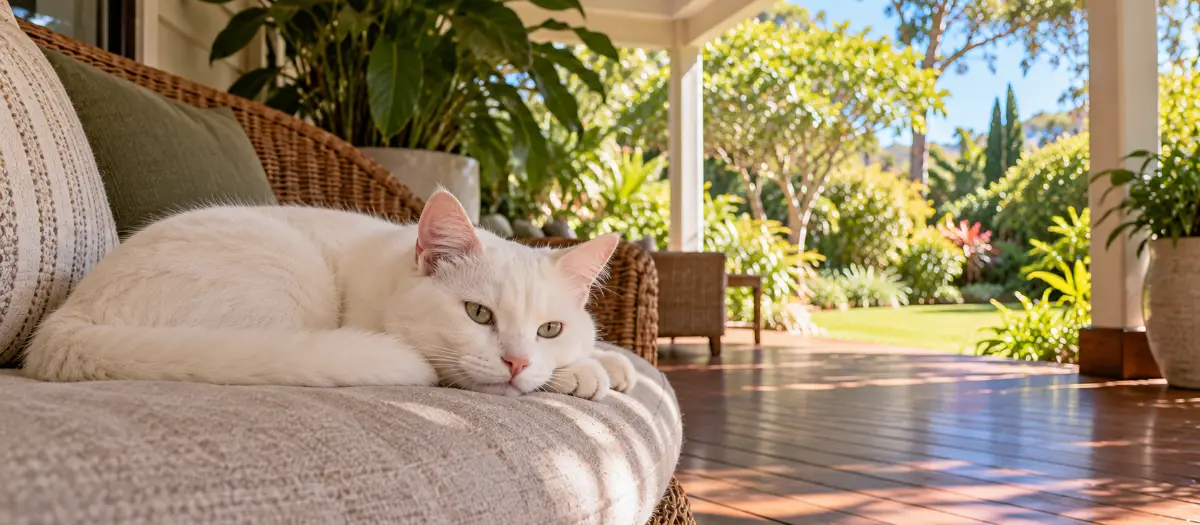
White cats are the most at risk. Cat Protection Society of NSW says white cats are the most vulnerable because of their light fur and skin pigment, and cats with light-coloured noses or ears are also more susceptible. Repeated sunburn damages skin cells over time, which raises the chance of skin cancer (Cat Protection Society of NSW, Skin cancer in cats factsheet, page read 1 November 2026).
The ASPCA lists the nose, ear tips, eyelids and lips as the spots where light-coloured pets are more prone to skin cancer. Thin or missing fur makes the skin more exposed, so cats with sparse coats can also be at risk. Cats that love to sunbake on a hot windowsill are exposed for longer than they look.
How do I protect my cat from sunburn?
Shade comes first. Keep pale-eared and white cats inside, or at least inside during the hottest part of the day. Cat Protection Society of NSW gives roughly 11am to 4pm for that window, and says some glass still lets enough UV through to burn an indoor cat.
Sunscreen is a back-up, not a plan. Vetstreet describes keeping pets out of the sun, especially in the middle of the day, as the most reliable protection. Cat Protection Society of NSW says a pet sunscreen or zinc can be applied to the ears and nose of a cat that does go outside, and to reapply as the pack directs. The ASPCA warns that zinc oxide licked off repeatedly can cause zinc toxicity, so the two sources don't fully agree. That is exactly the kind of question to settle with your vet, who knows your cat's coat and habits, before you buy anything.
What does sunburn look like on a cat?
Sun damage tends to show on the ears, nose and eyelids, where fur is thin. Cat Protection Society of NSW lists redness or flaky skin, sores or scratch-like marks, hair loss, scratching or over-grooming of those areas, and black discolouration around the ear tips, especially on white cats.
These signs can have other causes, such as allergies, mites or fights, so a vet has to look. Don't try to work out what it is at home. If a patch is sore, crusty or not healing, book a visit.
Shade-first sun protection for cats
These steps do most of the work, and none of them involve putting anything on your cat.
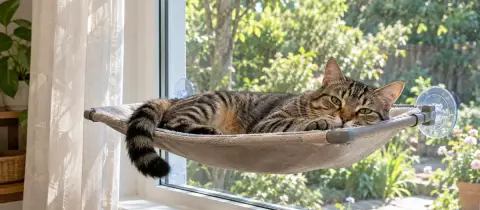
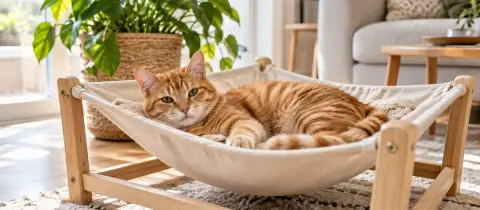
- Keep white and pale-eared cats inside at peak UV. Make the indoor space appealing so it doesn't feel like a punishment, with a window hammock set back from direct sun, or an elevated cat bed in a shaded corner.
- Block the glass. Since some glass lets UV through, move sunny perches out of the full afternoon beam, or shade that window. Curtains or blinds work.
- Offer safe outdoor time in shade. A catio or cat enclosure with a solid roof or shade cloth gives fresh air without full sun.
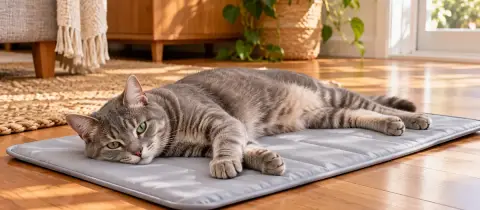
- Keep cats cool. Sun exposure and heat often go together. A cat cooling mat can give a hot cat somewhere cool to lie, and the same shade, water and cool-room tips are in our summer guide.
- Check ears, nose and eyelids regularly. A quick look each week in summer helps you spot changes early. Cat Protection Society of NSW also suggests a yearly vet exam.
Our dog sunscreen guide is for dogs. Don't use dog products on cats, because ingredients and safety advice differ.
When to see a vet
See your vet if your cat has:
- sores, crusting or scabs on the ear tips, nose or eyelids that don't heal
- redness, flaking, hair loss or black discolouration on the ear tips
- a patch they keep scratching or over-grooming
- swallowed sunscreen or a human skin product (vomiting, diarrhoea, drooling or lethargy)
If your cat has eaten sunscreen, call your vet or an emergency vet straight away. Cat Protection Society of NSW advises contacting a vet as soon as you notice skin changes on the ears, eyes or nose (Cat Protection Society of NSW factsheet). Heat stress is a separate emergency, see our cat summer guide.
Frequently asked questions
Do they make sunblock for cats?
Yes, some pet-specific sunscreens are sold, and Cat Protection Society of NSW says a pet-safe product can be used on the ears and nose of a cat that goes outside. Because cats lick their skin and pet sunscreens are not always checked for how well they work, ask your vet which one suits your cat before buying.
What is the best sunscreen for cats in Australia?
We don't name one, because we haven't checked pet sunscreens against vet advice and their effectiveness is not always assessed, as the ASPCA notes. Your vet knows your cat's coat, colour and habits, so ask them which pet-specific product, if any, suits your cat, and follow the label's reapplication directions.
Should you sunscreen your cat?
For most indoor cats, no. Shade and keeping pale-eared cats inside at peak UV do most of the work. A vet may suggest a sunscreen for a white or thin-coated cat that spends time outdoors. Don't apply anything to your cat's skin without checking with your vet first.
Is it okay for cats to sunbathe?
Short, shaded sunning is usually fine for dark-coated cats, but white and pale-eared cats can burn, even through some window glass. Move their favourite spot out of the strongest afternoon sun, offer cool shaded alternatives, and always leave fresh water out.
Can I use baby sunscreen on my cat?
We don't suggest it. Baby sunscreens can still contain zinc oxide, and Cat Protection Society of NSW says human sunscreen is toxic to cats. Cats lick whatever is on their skin, so "gentle for babies" doesn't mean safe for a cat. Your vet can advise a suitable product.
Can indoor cats get sunburnt?
They can. Cat Protection Society of NSW says sunburn can come through some types of glass. A white cat that sleeps in a sunny window for hours may be exposed more than you'd think. Shade the window, or give them a cooler spot out of the direct beam.
Why do white cats get sunburn on their ears?
Ear tips have thin fur and little pigment to shield the skin, so UV reaches it easily. Cat Protection Society of NSW says repeated sunburn damages skin cells over time, which raises skin cancer risk. Shade and checking the ears regularly are the best habits.
Related guides
- Keeping your cat cool in summer
- Best cat cooling mat
- Best cat window hammock
- Best elevated cat bed
- Catio ideas for Australian homes
- Best cat enclosure
- All our cat guides
Sources
- Cat Protection Society of NSW, Factsheet: Skin cancer in cats, page read 1 November 2026 (https://catprotection.org.au/cat-care-factsheets/factsheet-skin-cancer-in-cats/)
- ASPCA, Pets and Sunscreen: Don't Get Burned by the Myths!, 7 August 2019 (https://www.aspca.org/node/62447)
- Vetstreet, What You Need to Know About Pet Sun Protection This Summer, updated 19 June 2015 (https://www.vetstreet.com/our-pet-experts/what-you-need-to-know-about-pet-sun-protection-this-summer)
This guide provides general information and isn't a substitute for veterinary advice. If you're concerned about your cat's skin, speak with your vet.