Heated cat beds: self-warming beds and safe heat options
By Anish PuriUpdated 1 Nov 202615 min readResearched, not tested by us
Research guide. WhiskerFinds may earn a commission from links, at no extra cost to you.
Quick answer: A heated cat bed is either self-warming, which uses no power and, the listings say, reflects your cat's own body heat, or electric. For most homes a self-warming bed or pad is the simpler choice, and the Knupis self-heating cat blanket is our top pick. Electric beds need extra checks for cords, plugs and escape from the heat.
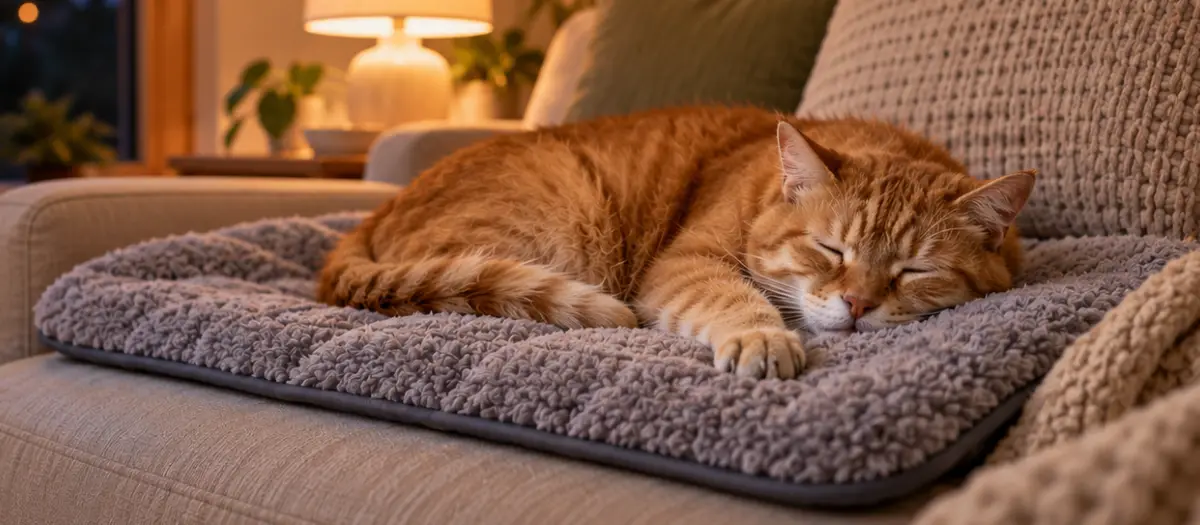
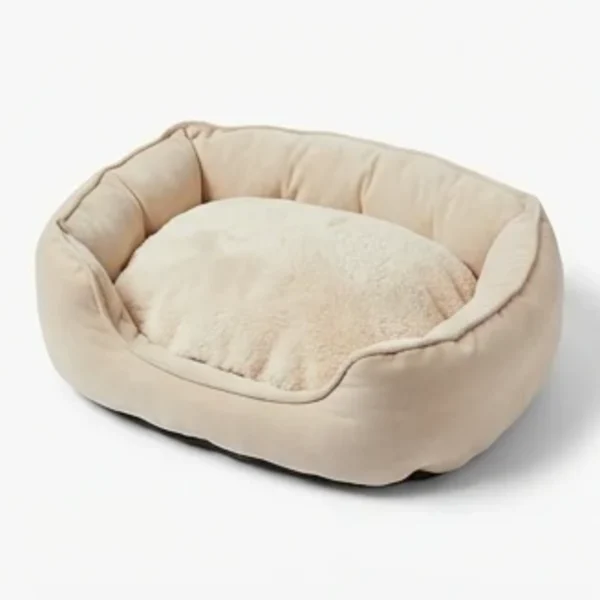
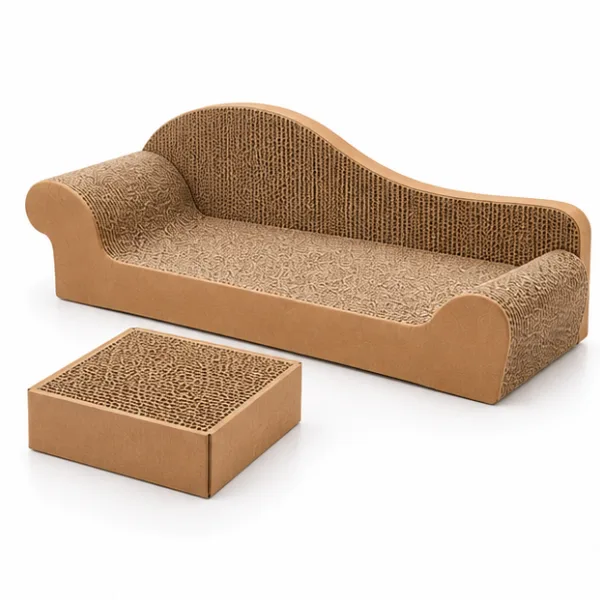
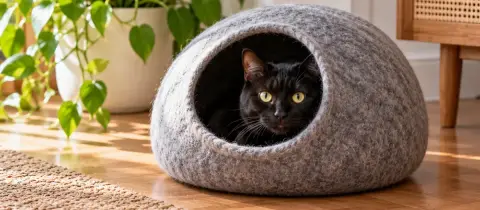
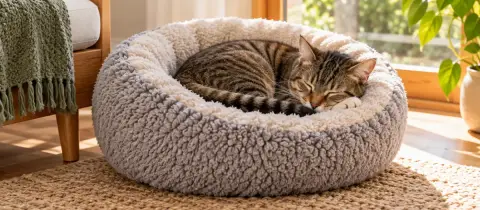
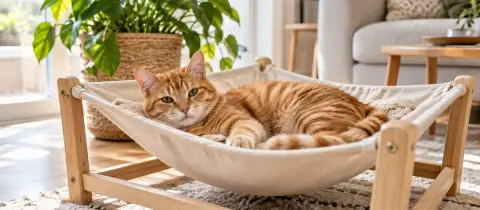
Illustration, not the actual product
Our top pickKnupis self-heating cat blanket, 60 x 45 cm
Plenty of cats go hunting for a warm spot on cool nights, and older cats often seem to love one. This guide explains the difference between self-warming and electric beds, compares four options on Amazon Australia, and covers safety. If you're still choosing the bed itself, start with our cat bed guide, or see the cat cave bed guide for cats who like to hide.
Quick picks
Our top pickBest overall
Knupis self-heating cat blanket, 60 x 45 cm
No plug or batteries, washable zip cover and a non-slip underside
Pictures are illustrations, not the actual products.
None of these plug in. The FurDreams bed sits on a radiator your home already has. We cover why we left out electric beds in the How we chose section.
What is the difference between self-warming and heated cat beds?
A self-warming bed has no power source. It uses a reflective layer or insulating filling to hold on to your cat's body heat and bounce it back, so it feels warm once the cat is lying on it. A heated bed plugs in and has a heating element, so it makes heat itself.
That matters for safety and for how warm the bed gets. Self-warming beds have no cord, no switch and no element to fail, but they can't warm a cold cat, they just stop heat escaping. The K&H listing describes its pad as capturing the pet's body heat and radiating it back, and the Knupis listing says the inner sheet reflects body heat. Those are the makers' claims, and results vary with the cat and the room.
Do self-warming cat beds work?
They can help, but they're a mild effect, not a heater. The listings say the beds hold in a cat's own warmth, so a thick, snug bed on a cold floor will feel cosier than a thin one. Expect a gentle boost, and don't expect the bed to feel hot to the touch.
A few things make a real difference. Put the bed off cold tiles or in a draught-free spot, pick a size your cat can curl up on, and add a soft blanket on top. RSPCA Tasmania says indoor pets need a warm, raised sleeping spot away from draughts, and that short-haired, young and unwell animals may need extra warmth (RSPCA Tasmania, 19 June 2023). If your cat ignores the bed, try a different spot before giving up.
Our picks in detail
1. Knupis self-heating cat blanket, 60 x 45 cm: best overall
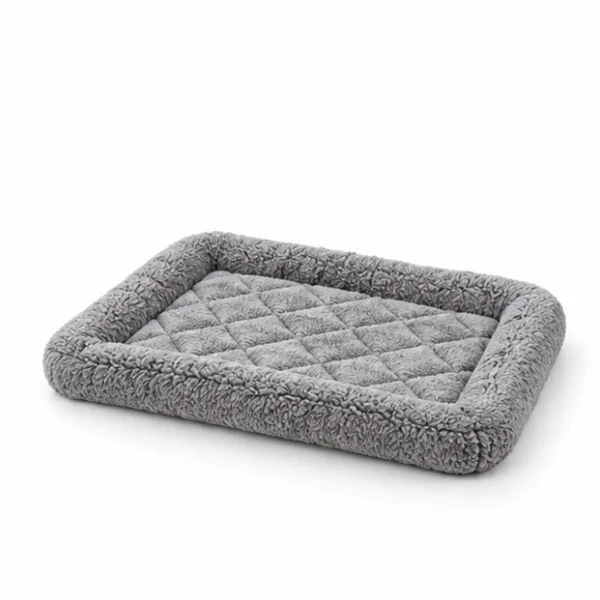
This is a rectangular blanket that needs no plug or batteries. The listing says an inner sheet reflects your pet's body heat and gives quiet warmth, and that an extra felt layer made from recycled PET fibres adds warmth and noise insulation. Those are the brand's claims. It measures 60 x 45 cm, is about 3 cm thick, and has a non-slip underside so it stays put on smooth floors.
The cover comes off with a zip, though the care instructions on the listing say hand wash only. The listing recommends it for pets up to 8 kg and lists it for small breeds, so it suits most cats but is snug for a large one.
Pros: no power; zip cover; non-slip underside; light enough to move around the house
Cons: the listing says hand wash only; best for cats up to 8 kg; a flat blanket, so there are no sides for a cat who likes to be tucked in
Best for: most average-sized cats, and use on a couch, a windowsill or inside a cat cave
Skip it if: your cat is large, or you want a machine-washable bed
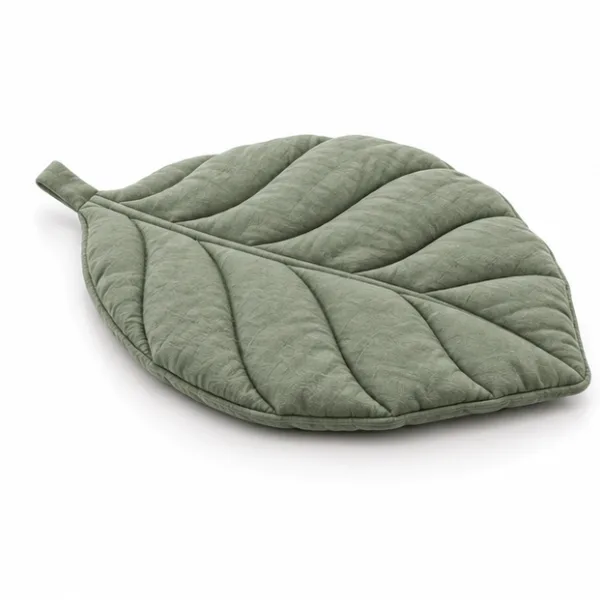
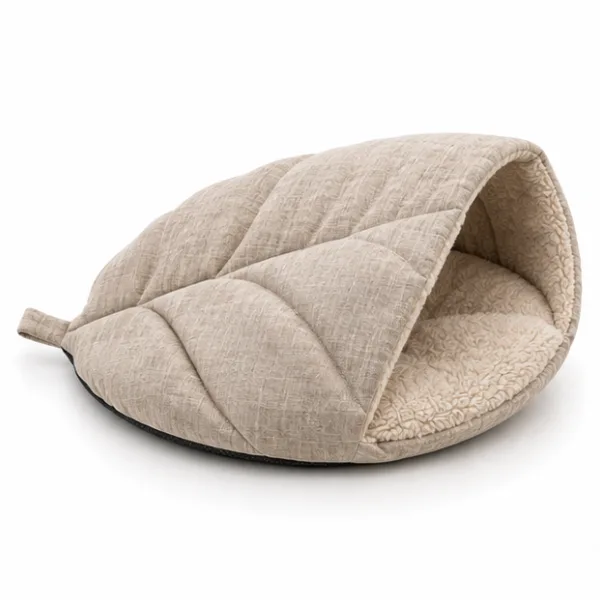
2. Letalong leaf-shaped cotton warming mat: best warming mat
A cotton mat shaped like a leaf, with polyester filling. The listing calls it warming and says it keeps heat well, a brand claim. It is 30 x 20 inches (76.2 x 50.8 cm), about 1.8 cm thick, and the listing says both sides can be used. It's machine washable on a gentle cycle with air drying recommended, and folds or rolls up small for storage and travel.
The listing says it arrives in vacuum packaging, so it may look flat at first and needs a pat to spread out. The listing gives a weight limit of 6.8 kg.
Pros: machine washable; both sides usable; folds up small; soft cotton cover
Cons: thin at 1.8 cm, so it gives less insulation from a cold floor; weight limit of 6.8 kg; no non-slip base mentioned
Best for: small to average cats and a bed that can move from room to room
Skip it if: your cat is large, or you want a thick, cushioned bed for stiff joints
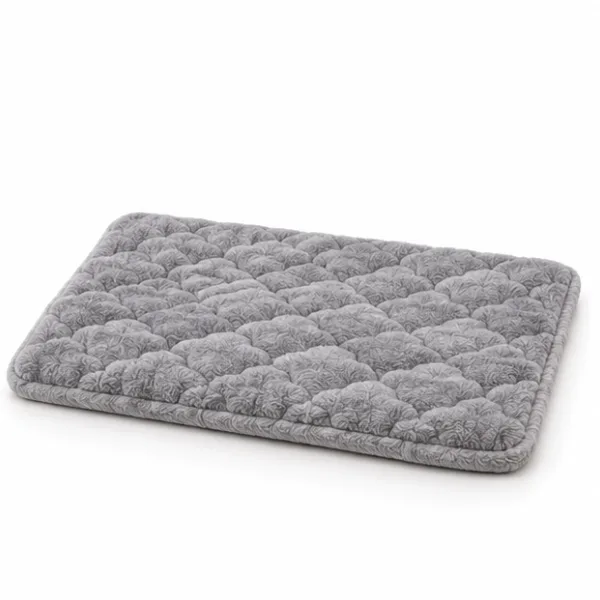
3. K&H self-warming pad, small: best self-warming pad
The K&H pad is sold as a crate pad. The listing says a microfleece top and a thin plush polyester fill capture your pet's body heat and radiate it back. It measures 63.5 x 50.8 cm and is 2.5 cm thick, with a non-slip base and slit corners so it can be fitted into a crate. The product title and bullets mention both dogs and cats, though its listed target species is dogs.
It's machine washable on a gentle, cold cycle. The listing suggests a windowsill, cat furniture or anywhere in the home. It also appears in our dog crate bed guide.
Pros: machine washable; non-slip base; flat and easy to move; fits crates, per the listing
Cons: the listing's main target is dogs; flat with no sides; the weight figure on the listing looks like it covers the whole range
Best for: cats that already have a bed you want to warm up, or a pad for a carrier or windowsill
Skip it if: you want a cave or sides to curl into
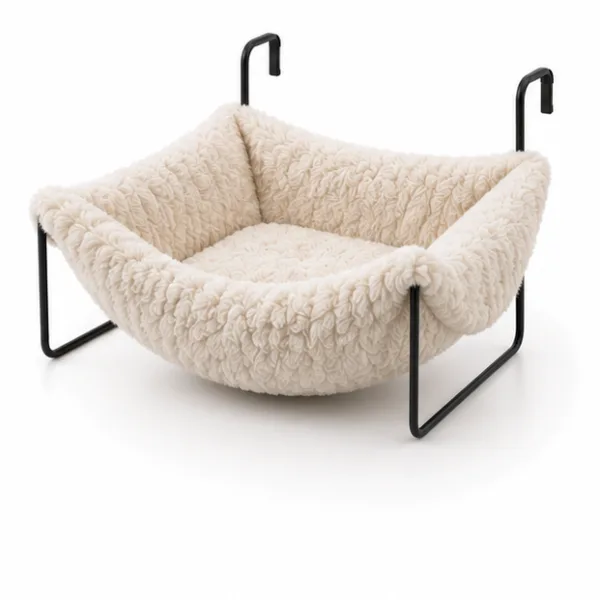
4. FurDreams radiator hammock bed: best radiator bed
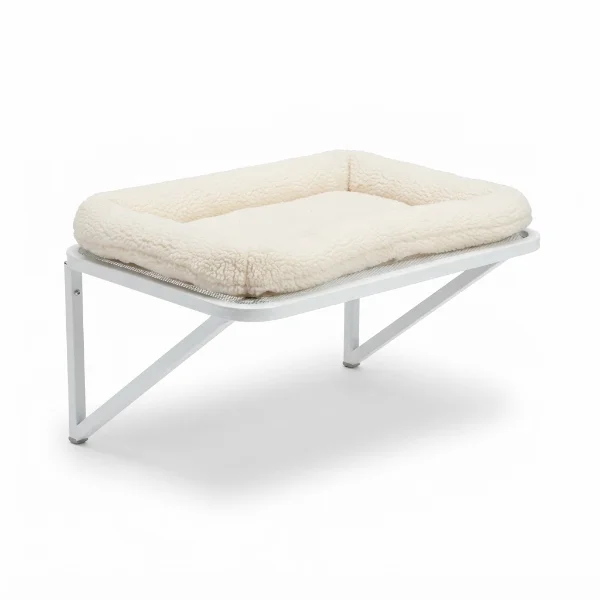
A fold-flat steel frame with a removable faux fur cover that hooks over a wall radiator, lifting your cat off the floor. The listing says it holds up to 5 kg and measures about 25 cm high, 46 cm wide and 30 cm deep. The title says "heated", but the bed has no heating element: it borrows warmth from your radiator.
Fit and safety depend on your radiator. The listing says to hook the frame over a "suitable" radiator, so check it matches yours before you buy. Radiators can get hot, and a cat that sits tight against one can overheat.
Pros: no cords; lifts a cat off the floor; folds flat; machine-washable cover
Cons: works just with a wall radiator the frame fits; 5 kg limit; the radiator surface can get hot, and the listing doesn't give a safe temperature
Best for: small cats in a home with a wall radiator and a way to keep the temperature under control
Skip it if: you have a hot or unsupervised radiator, an older or thin-skinned cat, or a radiator the listing doesn't fit
Are heated cat beds safe?
Self-warming beds have no electrical risk. Electric beds can be safe when used as the maker directs, but they add risks: damaged cords, chewing, and a cat that can't move off the heat. Choose a model with clear Australian plug and approval details, and let your cat leave the bed whenever it likes. For heat pads for dogs and cats, including microwave discs, self-warming mats and what to check on an electric pad, see our pet heat pad guide.
For electric beds, work through this list:
Follow the maker's instructions for use, washing and how long the bed can stay on.
Check the cord and plug before each winter and stop using the bed if either is damaged or the fabric is worn or frayed. Energy Safe Victoria says electric blankets can become dangerous if damaged, worn or left on for long periods, and advises checking them for wear or damage before each winter (Energy Safe Victoria, 15 June 2026, page read 1 November 2026). That page is about electric blankets, but the same common sense applies to any plug-in pet heat.
Let your cat move away. Never leave an electric pad on when you're out, and always leave room for your pet to move off it. RSPCA Tasmania says pets must be able to move away from a heat pad (RSPCA Tasmania). Put the bed in a room with cooler spots nearby.
Keep cords out of reach of chewers, and don't use a kitten's first bed as an experiment with a cord.
Check the plug and approvals suit Australia. If a listing doesn't make that clear, skip it, or ask your state electrical safety regulator.
Never warm a pet with a hot water bottle or a microwaved heat pack held against it. Skin burns easily, and you can't control how hot those get.
Are heated beds good for older cats?
Warmth can be a comfort for older cats, and many seem to enjoy it. But a bed isn't a treatment. If your cat is slow to get up, stiff, limping or reluctant to jump, the cause could be several things, so a vet check comes first.
RSPCA Tasmania says older pets often have arthritis, which can make winter harder, and advises a veterinary check-up if a pet is slow to rise or has reduced mobility (RSPCA Tasmania). RSPCA Queensland lists stiffness and difficulty on stairs among the signs to watch for in senior pets, and its Chief Veterinarian says to take your pet to the vet if you notice signs of arthritis discomfort (RSPCA Queensland, 13 July 2022). A low-sided bed with an easy step in is usually kinder to stiff joints than a tall one.
Can I leave a heated cat bed on overnight?
It depends on the bed, so follow the maker's instructions. A self-warming bed has no power, so there is nothing to switch off. For an electric bed, don't assume it's fine to leave on. RSPCA Tasmania says owners should never leave heating pads on when they're not at home (RSPCA Tasmania).
Energy Safe Victoria adds that electric blankets shouldn't be left on for long periods (Energy Safe Victoria). If you want overnight warmth and can't check on your cat, a self-warming bed with a cosy blanket is the simpler, lower-risk choice.
Do cats need a heated bed in Australia?
Not every cat does. A healthy adult cat with a good coat, indoors in a mild area, is often fine with ordinary soft bedding. Cats that may appreciate extra warmth include older, thin, short-haired or unwell cats, kittens, and any cat in a cold house, such as one in the high country or Tasmania.
RSPCA Tasmania says short-haired, young and unwell animals may need extra warmth, and suggests cats have a cosy space such as an igloo bed (RSPCA Tasmania). A cat cave bed holds heat well on its own, and you can pop a self-warming pad inside. For hot weather, see our cat cooling mat guide.
Heated cat beds compared
Details come from each Amazon Australia listing, checked on 1 Nov 2026.
The K&H listing gives a weight figure in pounds that looks like it applies across the whole range, not the small size, so rely on the pad's dimensions instead.
How we chose
We searched Amazon Australia for heated and self-warming cat beds, then shortlisted ones that met all of these checks:
Well rated: a strong average rating with plenty of buyer reviews.
No red flags: no pattern of poor reviews, safety complaints or listing problems.
Available on Amazon Australia when we checked.
Power needed or not is clear on the listing.
Size and weight limit are stated.
Washable cover or mat, with care instructions given.
For electric options: plug and safety details are stated on the listing.
These are researched picks, not products we've personally tested. We compared the specifications and features shown on each Amazon Australia listing, checked on 1 Nov 2026. We didn't accept payment from any brand, and no brand saw this page before it was published.
Left out this time: electric heated cat beds. We found few on Amazon Australia with clear Australian plug details or a track record, so none made the list this time.
How do I choose the right size?
Measure your cat curled up and stretched out, then compare the numbers with the listing's dimensions and weight limit. A pad should be big enough for your cat to stretch fully, and a bed with sides should let the cat turn around. Most of these picks are made for small cats.
Larger breeds and heavier cats often need more room than these beds offer. If that's your cat, see our guide to a cat bed for large cats and put a self-warming pad on top.
How do I set up a warm bed?
Put it in a quiet, draught-free spot your cat already likes, off cold tiles and away from the cold side of the house. Add a soft blanket your cat knows the smell of. Keep it away from direct sun in summer and from heaters, so the cat can always choose a cooler spot.
If you're setting up a desk or window spot too, our cat desk bed guide has options. Lilies are dangerous to cats, so keep any bunch of flowers away from the bed (see our kitten-proofing guide).
How do I clean a heated cat bed?
Check the care label first. Cover and mat washing instructions differ, and the Knupis listing says hand wash only. Wash covers regularly, use mild detergent, skip bleach as the K&H and Knupis listings say, and let everything dry fully before your cat uses it again, because a damp pad holds no warmth.
Never wash an electric bed unless the maker's instructions say it is safe, and unplug it first. Wash the bed before it has a smell that bothers your cat, since cats can avoid a bed that smells strange.
When to see a vet
Your cat seeks warm spots much more than usual, or seems cold, lethargic or off their food. A change from their normal habits can have many causes, so tell your vet.
Your cat is slow to get up, stiff, limping or reluctant to jump. Older cats often have joint problems, and a vet can check and suggest options. See our cat bed guide for comfortable low-entry beds.
You see red, sore or hairless skin where your cat lies on a heat source.
Your cat has chewed a cord, fabric or stuffing. Call your vet or an emergency clinic straight away.
Frequently asked questions
Can I put a self-warming pad inside a cat cave?
Yes, that is one of the easiest ways to add warmth. Check the pad fits the cave floor without bunching, and make sure the cave still has a clear way out so your cat can leave when it feels warm enough. RSPCA Tasmania suggests an igloo-style bed for cats in winter.
How do I know if my cat is cold?
Look at the pattern, not one sign. A cat that seeks out heaters, curls tightly, shivers or stays tucked up more than usual may be feeling the cold. RSPCA Tasmania says short-haired, young and unwell animals may need extra warmth. If the change is sudden or your cat seems unwell, see your vet.
Can a kitten use a self-warming bed?
Yes. A self-warming pad has no cord or element, so it suits a kitten better than an electric bed. Pick a size the kitten can stretch on and check the fabric for loose threads as they chew and play. Give the kitten a cooler spot to move to as well.
Can I use a hot water bottle or wheat bag to warm my cat's bed?
We don't recommend hot water bottles or wheat bags made for people, because they can be far hotter than they feel through a cover, and a cat can't tell you it's burning. The pet version is a microwave pad made for pets, heated only for the time printed on it and used in its cover. See our pet heat pad guide for how they compare. A self-warming pad, a thick blanket and a draught-free spot are other safe ways to add warmth.
Is a self-warming bed safe to leave out all day?
Yes. With no power, cord or switch, a self-warming bed can stay out around the clock, which is one reason we favour them over electric beds. Keep it off wet floors, shake it out and wash the cover as the listing says, and let your cat choose when to use it.
Which is better for an older cat, a heated bed or a self-warming bed?
For most older cats we'd start with a self-warming bed in a low-sided shape that's easy to step into, placed in a warm, draught-free spot. An electric bed adds cords and heat your cat may not move away from. Whatever you choose, book a vet check first if your cat is stiff or slow to rise.
Why does my cat keep sitting on the radiator or heater?
Many cats like warm spots, and it can be completely normal. But radiators and heaters can get hot enough to burn thin skin, so offer a safer warm bed nearby. If your cat seeks heat much more than usual or seems unwell, mention it to your vet.
Product details from each linked Amazon Australia listing, checked on 1 Nov 2026.
This guide provides general information and isn't a substitute for veterinary advice. If you're concerned about your cat's comfort or health, speak with your vet.