Quick answer: Can dogs eat ice cream? A small lick of plain vanilla is unlikely to harm most healthy dogs, but it isn't a good treat. Dairy, sugar and fat can upset their tummies. Chocolate, coffee, xylitol, raisin and macadamia flavours can be dangerous, so call your vet straight away if your dog has had one.
It's a hot day, you're holding a cone, and a hopeful face is watching every bite. This guide covers what's actually wrong with ice cream for dogs, which flavours are the real danger, and what to do if your dog has already helped themselves. We finish with frozen swaps that are far kinder to their stomachs. For a full list of recipes and treats, see our dog ice cream guide.
Can dogs eat vanilla ice cream?
A tiny taste of plain vanilla is usually not an emergency for a healthy adult dog, but it's still a poor treat. PetMD says dogs can have a small taste of plain vanilla or strawberry on occasion, though it doesn't recommend it, and Hill's Pet Nutrition advises keeping dogs away from ice cream altogether (PetMD, Hill's Pet Nutrition).
Three things count against it:
- Dairy. Many dogs struggle to digest milk sugar, which can bring gas, bloating or diarrhoea.
- Sugar. Hill's says a small scoop can hold more calories than a dog needs in a day, so the extra adds up and can lead to weight gain.
- Fat. PetMD points to the extra fat in cones and cafe "pup cups" as a pancreatitis risk, on top of the sugar and dairy.
Dogs with diabetes, pancreatitis or a sensitive stomach should skip it. If you're unsure, ask your vet first.
Are dogs lactose intolerant?
Many dogs are, to some degree. Dogs don't make much lactase, the enzyme that digests milk sugar, so dairy can cause diarrhoea or other stomach upset (ASPCA). PetMD adds that many dogs lose some of this ability as they age.
It varies from dog to dog. Some cope with a lick of yoghurt, others get gassy from a spoonful. Watch how yours responds, and remember that lactose-free ice cream still carries the sugar and fat.
What ice cream flavours are toxic to dogs?
Any flavour or mix-in containing chocolate, coffee, xylitol, raisins or macadamia nuts is dangerous for dogs. The flavour name isn't always a clue, so read the whole ingredients list: sugar-free, "diet" and some protein ice creams are where xylitol tends to hide, and chocolate chips or sauce can sit inside a vanilla tub.
Here's what each one can do, according to the ASPCA and PetMD:
- Chocolate and coffee contain methylxanthines, which can cause vomiting, diarrhoea, panting, tremors, seizures and heart rhythm problems. The ASPCA says the darker the chocolate, the greater the risk, with baking chocolate and cocoa powder the most concentrated and white chocolate the least.
- Xylitol (sometimes listed as birch sugar) can drop a dog's blood sugar and may damage the liver. Early signs include vomiting, lethargy and wobbliness. The ASPCA says liver damage can show up within 12 to 24 hours.
- Grapes and raisins, including rum and raisin flavours, can lead to kidney damage.
- Macadamia nuts can cause weakness, wobbliness, vomiting, tremors and a raised temperature.
Matcha and other caffeine flavours belong on the same list, since caffeine is a methylxanthine too. Our frozen KONG and lick mat recipes page holds the full list of foods to avoid, and it's worth a read before you share anything off your plate.
My dog ate ice cream: what should I do?
Check the flavour and the label first. If it was plain vanilla and a small amount, watch your dog for the next day or so for vomiting, diarrhoea or a sore tummy. If it contained chocolate, coffee, xylitol, raisins or macadamias, ring your vet or nearest emergency vet straight away, even if your dog seems fine.
Have these ready for the call:
- The flavour, brand and the ingredients list (take a photo of the tub).
- About how much your dog ate.
- Your dog's weight and when it happened.
Follow your vet's advice on what to do next, rather than trying home remedies. The ASPCA says xylitol liver damage can appear within 12 to 24 hours, and macadamia signs usually within 12 hours, so waiting to see what happens isn't a safe plan.
Can dogs eat ice cream cones?
A plain wafer cone is not toxic, but it adds sugar and refined carbohydrate to a treat that already has too much. Cones also come with the ice cream, so the dairy, fat and sugar come along too. PetMD notes that cones and pup cups usually have more sugar, fat and dairy than a quick lick.
Check the extras. Chocolate-dipped cones, choc-chip cones, sprinkles, sauces and nut toppings are where the real danger sits. Soft serve is the same as regular ice cream for a dog: plain is a minor risk, flavoured needs the ingredient check. A "sundae" cup or ice cream sandwich often has chocolate in it, so treat it as a toxic-flavour case.
What can dogs have instead of ice cream?
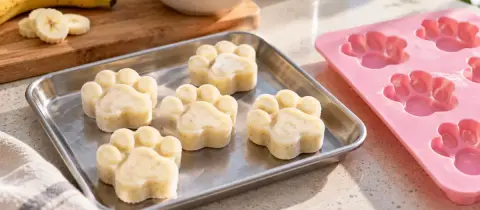
Frozen foods made for dogs, or simple frozen fruit and plain yoghurt, give the same cooling fun without the dairy overload, sugar and risky mix-ins. Hill's suggests frozen banana, frozen apple sauce or pumpkin puree in moulds and plain ice cubes. PetMD suggests dog-formulated ice cream, frozen blueberries or watermelon cubes, or plain yoghurt if your dog tolerates dairy.
Safer frozen swaps
Here are the easy options, roughly from simplest to most effort:
- Ice cubes. Plain, or made from diluted, unsalted bone broth with no onion or garlic. Pop one in the water bowl on a hot day.
- Frozen fruit pieces. Blueberries, or seedless watermelon cubes with the rind removed. Mango is another option, once the stone and skin are out.
- Stuffed and frozen toys. Fill a KONG or spread a lick mat with a dog-safe filling, then freeze. Brands advise supervision with these.
- Moulded frozen treats. Our best frozen dog treats guide compares silicone moulds and simple fillings you can freeze at home.
Whatever you pick, keep it small. Treats should make up no more than about 10% of your dog's overall diet, according to PetMD. Introduce new foods slowly, and on a hot day, a frozen treat is no replacement for shade and fresh water. See keeping your dog cool in summer.
When to see a vet
Call your vet, an emergency vet or the Animal Poisons Helpline (1300 869 738, 24/7) straight away if your dog has eaten ice cream or a frozen dessert that contains:
- chocolate, coffee or matcha
- xylitol (check the label for sugar-free or "diet" products)
- grapes, raisins or sultanas, including rum and raisin flavours
- macadamia nuts
Don't wait for symptoms, as some, such as xylitol poisoning, can take hours to show.
The full list of foods to avoid is in our frozen KONG recipes guide.
Also see your vet if your dog has repeated vomiting or diarrhoea, seems weak or wobbly, has a swollen or painful belly, or stops eating after ice cream. Dogs with diabetes or a history of pancreatitis should be checked early.
Frequently asked questions
Is it okay if a dog has a little bit of ice cream?
A small lick of plain vanilla is usually not a problem for a healthy adult dog, but it isn't a good habit. Dairy can upset the stomach, and the sugar and fat add up. Make sure there's no chocolate, coffee, xylitol, raisins or macadamias in it, and choose a frozen dog treat instead.
Is a pup cup just vanilla ice cream?
Often it's a small cup of plain vanilla soft serve or whipped cream, but recipes vary between cafes and chains. If you're unsure what's in it, ask. PetMD says pup cups can carry more sugar, fat and dairy than a quick lick, so treat them as an occasional extra, not a regular reward.
Can dogs have soft serve?
Soft serve is still ice cream, so the same advice applies. A lick of plain soft serve is unlikely to cause trouble for most dogs, but it has dairy, sugar and fat. Skip chocolate or flavoured swirls, dips and sprinkles, and keep it to a taste, not a whole serve.
Which ice cream is dog friendly?
Look for frozen desserts made for dogs, and read the label for anything on the toxic list. Regular human ice cream isn't dog friendly. Homemade options like frozen banana, pumpkin or plain yoghurt in moulds are simpler. See our dog ice cream guide for ideas.
My dog ate an ice cream sandwich. Is that safe?
It depends on the filling and the biscuit. Many ice cream sandwiches have chocolate biscuit or chocolate coating, which can be dangerous. Check the packaging, work out how much your dog ate, and call your vet if there's chocolate or anything else on the toxic list.
Is sherbet or sorbet okay for dogs?
Sorbet has less dairy but plenty of sugar, and some flavours have added sweeteners or fruit that dogs shouldn't eat, like grapes. Check for xylitol and raisins. A lick won't usually cause harm, but plain frozen fruit is a better choice.
Can puppies have ice cream?
It's best to skip it. Puppies have small stomachs and are still settling into their food, and dairy, sugar and fat can set off diarrhoea quickly. Offer a plain ice cube or a puppy-safe frozen treat, and ask your vet about anything new.
Related guides
- Dog ice cream: easy dog-safe recipes for hot days
- Best frozen dog treats
- Can dogs eat watermelon?
- Can dogs eat mango?
- Frozen KONG and lick mat recipes
- Keeping your dog cool in summer
- All our dog guides
Sources
- ASPCA, People foods to avoid feeding your pets, page read 1 November 2026 (https://www.aspca.org/pet-care/animal-poison-control/people-foods-avoid-feeding-your-pets)
- Hill's Pet Nutrition Australia, Can dogs eat ice cream? page read 1 November 2026 (https://www.hillspet.com.au/dog-care/nutrition-feeding/can-dogs-eat-ice-cream)
- PetMD, Can dogs eat ice cream? page read 1 November 2026 (https://www.petmd.com/dog/nutrition/can-dogs-eat-ice-cream)
This guide provides general information and isn't a substitute for veterinary advice. If you're concerned about your dog's diet or health, speak with your vet.